

In the world of project management, agility is everything—but flexibility shouldn’t mean starting from scratch every time. How do you combine the adaptability of Agile with the clarity and consistency of a proven structure? The answer lies in Agile templates: the secret weapon for teams that want to move quickly without losing focus, alignment, or momentum. This guide explores the 11 essential templates that can transform how your team plans, executes, and delivers. From streamlining sprint planning with a Scrum backlog to visualizing workflows with Kanban boards and capturing customer voices through user stories, these templates bring order to iteration.
More than just time-savers, they are frameworks designed to enhance communication, boost visibility, and embed continuous improvement into your process. Whether you’re new to Agile or looking to refine your practice, the right template can turn chaotic workflows into coordinated momentum. Let’s explore how these tools can help your team adapt faster, collaborate smarter, and deliver better results—one sprint at a time.
Agile Project Management Methodology
Agile Project Management is a framework that is common in software development. It differs significantly from traditional project management because of its more dynamic nature. This project management method helps teams work together more effectively and deliver high-quality products. Agile Project Management is based on four fundamental principles:
- Individuals and interactions over processes and tools
- Working software over comprehensive documentation
- Customer collaboration over contract negotiation
- Responding to change by following a plan.
Agile Project Management Methodology is popular because it helps teams to be more flexible, track progress, and to adapt to changes quickly.
Benefits of Agile Templates
Agile templates bring structure to flexibility. Rather than forcing teams into rigid processes, well-designed templates capture proven practices, from sprint planning to stakeholder updates, in repeatable, easy-to-adapt formats. This combination speeds onboarding, reduces rework, and improves visibility across teams, so you can respond quickly to change while keeping work aligned to outcomes. Below are the key benefits you can expect when you adopt agile templates in your projects.
The Ability to Adapt to Changing Circumstances
One of the core principles of agile is accepting that circumstances can change at any time, and projects must remain flexible to respond quickly. That’s where templates prove invaluable: they provide a consistent, adaptable framework that speeds updates, reduces friction, and preserves institutional knowledge. Using an agile template lets teams revise priorities, adjust timelines, and reassign tasks swiftly without losing clarity or momentum.
Improved Efficiency
A well-designed agile template will help you avoid duplication of effort and wasted time spent on activities that don’t contribute to the project’s overall goal. By providing clear structure and predefined workflows, these templates enable teams to focus their energy on value-adding tasks while eliminating redundant processes that can slow progress and reduce productivity.
Better Visibility
Agile templates clearly represent every aspect of the project, from milestones to deliverables to tasks and dependencies. These comprehensive frameworks provide team members with a structured view of their roles and responsibilities, ensuring clarity and accountability throughout the project lifecycle. By offering this enhanced visibility, templates enable teams to proactively identify potential risks and roadblocks before they escalate into problems, allowing for timely intervention and smoother project execution.
Improved Communication
Because agile templates offer such a high level of visibility, they can also improve communication between team members and teams working on different aspects of the same project. This enhanced transparency ensures everyone stays aligned on goals, timelines, and deliverables. Real-time updates and shared access to project information reduce misunderstandings and keep all stakeholders informed throughout the development process.
Greater Transparency
Templates used in conjunction with an agile dashboard can provide greater transparency into the progress of a project and help stakeholders stay up to date on its status. This integration allows for real-time tracking, enabling teams to visualize workflows, identify bottlenecks, and maintain clear communication across all project phases, ultimately enhancing accountability and decision-making.
Enhanced Collaboration
In addition to improved communication, admin templates can enhance collaboration by making it easy for team members to share ideas, suggestions, and feedback. These collaborative features streamline workflows, encourage active participation, and ensure that diverse perspectives are captured throughout the project lifecycle. By providing a centralized platform for input, templates help teams work more cohesively toward shared goals.
Increased Customer Satisfaction
Because agile emphasizes continuous customer feedback, templates ensure that that feedback is systematically captured, reviewed, and incorporated into each iteration of the project. By embedding feedback loops into planning, prioritization, and acceptance criteria, templates increase responsiveness, reduce rework, and align deliverables with user needs — ultimately boosting product quality and the likelihood that customers will be satisfied with the final outcome.
11 Essential Agile Project Management Templates
Many agile templates are available to help project managers run projects more effectively. Some are simple spreadsheets (Excel, Google Sheets), while others are built into paid agile project‑management tools. Below, we’ll provide template examples and guidance for both spreadsheet-based and software-based formats so you can choose the right option for your team.
1. Kanban Framework Template
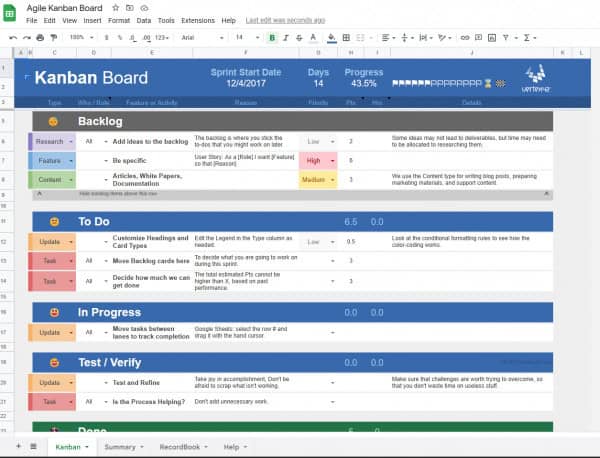
The Kanban framework is a tool that helps organizations visualize and manage their workflows. It came from the principle of “just in time” production, meaning that work only starts when needed. People use the Kanban framework to manage any work, from simple tasks to complex projects. Many different Kanban templates are available, but the most common one is the lanes and columns template.
This template visually represents how work progresses through each workflow stage. The primary purpose of the Kanban framework is to help organizations improve their speed and efficiency by reducing waste and maximizing resources. It is best for workplaces that have a high volume of work and a need for agility.
2. Scrum Agile Template
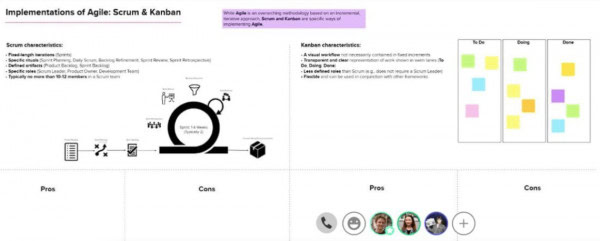
The Scrum Agile Template helps teams work together more effectively on complex projects. The template from the Scrum methodology is a popular agile software development approach. The main objective of the Scrum Agile Template is to provide a structure for team collaboration and communication. The template has three parts: the product backlog, the sprint backlog, and the product increment.
- Product Backlog: It is a list of all the features and requirements for implementation in the project.
- Sprint Backlog: A list of all the tasks that the team needs to complete during the sprint.
- Product increment: It is the result of the sprint, which should be a working version of the project for a demonstration to stakeholders.
You can use the Scrum Agile Template for any project, but it is especially well-suited for complex projects requiring close collaboration between team members.
3. Agile Project Charter Template
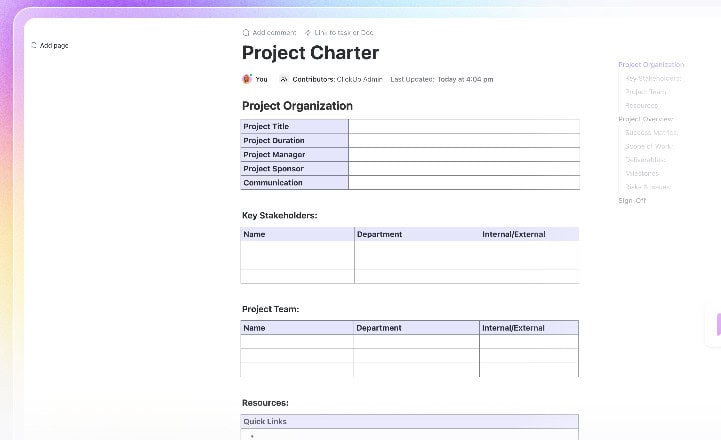
The main sections of an agile project charter are the mission, vision, and success criteria. These sections provide a detailed yet high-level overview of the project. The mission outlines the project’s purpose, while the vision sets out what should be accomplished. Success criteria define how team members should measure the project’s completion.
4. Agile Project Plan Template

This template will help you plan your tasks, who is responsible for them, when they start and end, and their status. You can do an automatic calculation of the duration of each task. You can also see a visual representation of your project timeline as a Gantt chart, which will automatically update when you add data to the table.
5. Agile Product Roadmap Template
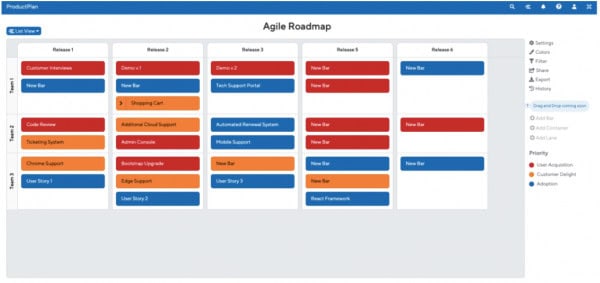
A project roadmap is a high-level view of where your product is going in the next few months or years. It guides the development of your product and sets expectations for those working on it. A traditional project roadmap can sometimes be too constrictive, but in an agile organization, the roadmap should provide guidance and clarity.
6. Agile User Story Template
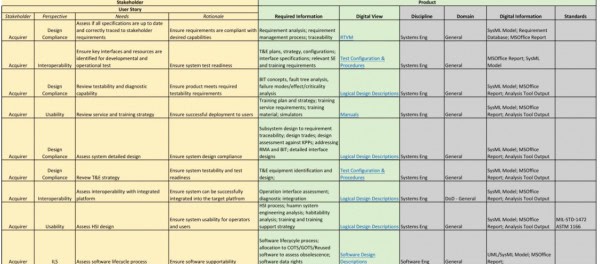
A user story is a description of a feature from an end-user’s perspective. It includes details like the type of user, what they want, and why they need it. These simple one-paragraph user stories offer a great deal of information in a small space. The development team then creates code to fulfill the needs outlined in the user story.
7. Agile Sprint Backlog Template
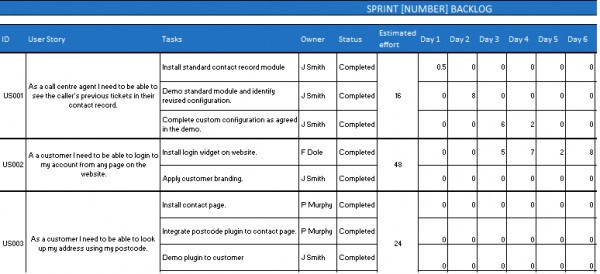
Also called the Scrum Backlog, the sprint backlog is created during agile sprint planning, where the team will select the top items in the product backlog and add them to their sprints. The sprint backlog encompasses all the tasks needed to be pushed into the development phase. It is a to-do list of backlog items to complete the current iteration. This list should be final, meaning no one should be adding or removing tasks.
8. Lean Development Agile Template
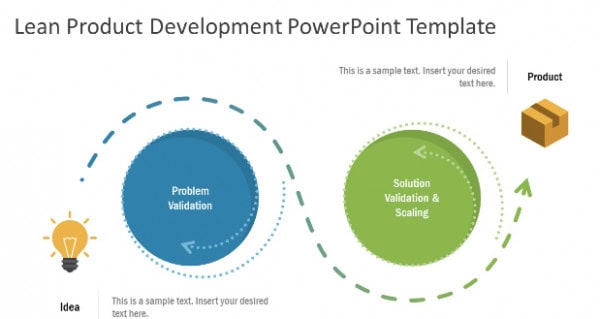
Based on the Toyota Production System, Lean Development is a method of software product development that prioritizes value and minimizes waste. The main idea is that every stage of development should meaningfully improve the product from the customer’s perspective. The goal of Lean Development is to create more value with fewer resources, and it relies on several techniques to achieve this.
For example, Lean Development emphasizes close collaboration between developers and customers to align the product being developed with the customer’s needs. In addition, Lean Development constantly uses feedback loops to refine and improve the development process. As a result, Lean Development helps organizations to be more efficient and effective in their software development efforts.
9. Lean Canvas Template

The Lean Canvas is an excellent, concise tool for entrepreneurs and new businesses to rapidly structure a business model. It helps break down your idea into key components — problem, solution, metrics, unique value proposition, channels, customer segments, cost structure, and revenue streams — enabling you to identify threats and opportunities, prioritize assumptions, and clarify the factors that drive profitability.
10. Agile Crystal Methodology Template
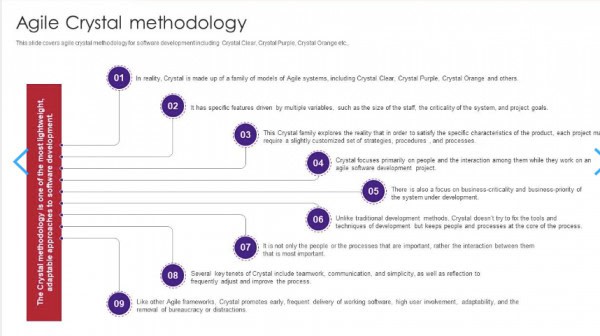
Crystal is a set of agile approaches that prioritizes communication and collaboration. Crystal agile methods are intended to adapt to many endeavors, from modest projects with a few people to massive ones with hundreds or thousands of participants. Crystal’s main objectives are to magnify software quality and customer happiness while reducing project expenditure.
One of Crystal’s most desirable attributes is its flexibility, which can be contoured to fit the specific needs of each assignment. Its responsiveness permits Crystal teams to quickly reply to variations, guaranteeing that the end product satisfies the continuously evolving wants of clients. Consequently, Crystal has become one of the most in-demand agile software engineering methods.
11. Extreme Programming Template
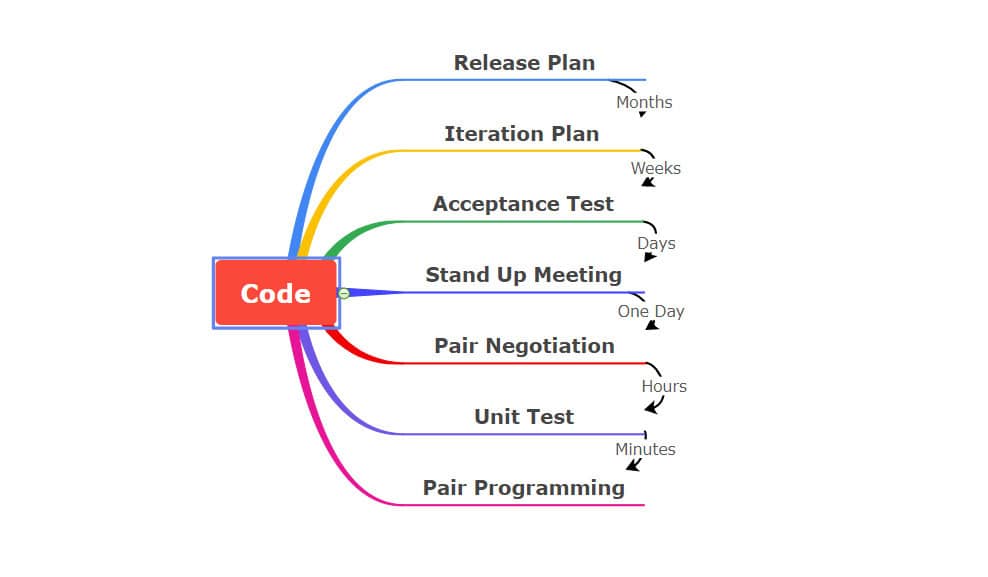
Short for extreme programming (XP), it is a software development technique found to improve the quality of programs based on the demands of clients. It includes various “iterations” in multiple cycles and testing to generate customer working software. There are many benefits to using agile templates. Several templates are available, whether through sheets or agile project management software.
Conclusion
If you’re planning to adopt an agile methodology for your next project, start with templates — they make getting underway faster and keep teams aligned as work evolves. Good templates capture proven practices (from sprints to roadmaps), reduce repetitive work, and ensure feedback is tracked and acted on. Use them as flexible guides, not rigid rules: customize fields, remove what’s unnecessary, and iterate based on team experience.
Over time, templates become living assets that speed onboarding, improve transparency, and boost delivery quality. Try a few for sprint planning, backlog management, and stakeholder reporting, learn from each iteration, and you’ll find templates quickly repay the small time investment with clearer priorities, fewer surprises, and better outcomes.
Suggested articles:
- 9 x Epic Templates in Agile – FREE on Google Docs, Word, PPT, PDF
- 33 x Agile Status Report Templates Word, Excel, Google
- 21+ Agile Business Requirements Document Templates

Shane Drumm, holding certifications in PMP®, PMI-ACP®, CSM, and LPM, is the author behind numerous articles featured here. Hailing from County Cork, Ireland, his expertise lies in implementing Agile methodologies with geographically dispersed teams for software development projects. In his leisure, he dedicates time to web development and Ironman triathlon training. Find out more about Shane on shanedrumm.com and please reach out and connect with Shane on LinkedIn.