
Leadership reward power is the ability of a project manager to offer rewards to team members in order to positively influence their behaviour and drive performance. This type of power is particularly important in project environments because it can significantly boost motivation, reinforce desirable behaviours, and encourage team members to put in their best effort toward achieving project goals.
However, the use of reward power is not without its risks. If rewards are not distributed fairly and transparently, they can create conflict, resentment, and a sense of favouritism among team members. Equally, if rewards are given too frequently or without clear criteria, team members may become overly reliant on them and lose intrinsic motivation, meaning they work hard only when a reward is on the table, rather than out of genuine commitment to the project’s success.
What Is Reward Power in Project Management?
There is no question that reward power plays a critical role in project management. The ability to offer meaningful rewards to employees and other project stakeholders can serve as a key motivator in ensuring the successful completion of a project, particularly during challenging phases when morale and momentum need a boost.
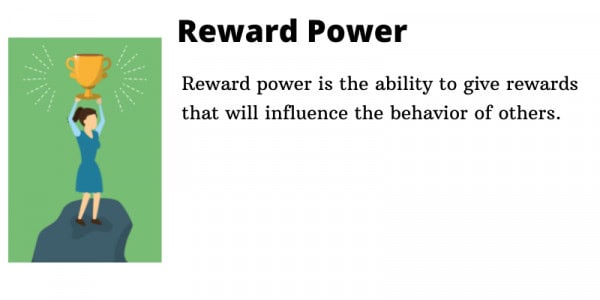
Reward power is broadly defined as the ability to give rewards that will positively influence the behaviour of others. In project management specifically, it is most commonly used to motivate team members to achieve project milestones, meet deadlines, and maintain high-quality standards throughout the project lifecycle. This could take the form of a salary raise, a performance bonus, a promotion, additional time off, or even public recognition in front of peers and leadership.
It is important to understand, however, that not all rewards are created equal. To be truly effective, a reward must be meaningful to the individual receiving it and clearly aligned with the objectives of the project. A reward that one team member finds motivating may have little to no effect on another. With this in mind, project managers must take the time to understand what drives each member of their team before deploying reward power as a motivational strategy.
While reward power is not always explicitly discussed in team settings, it is an important dynamic to recognise and manage when forming and leading a project team. Used wisely and strategically, rewards can be a powerful tool that helps project managers get the most out of their teams. Used carelessly, they can lead to entitlement, disengagement, and interpersonal conflict. The key is balance — rewarding good behaviour consistently, fairly, and in proportion to the achievement.
The 13 Types of Leadership Reward Power at Work
Understanding reward power becomes far more practical when broken down into specific types. While rewards are often grouped as tangible or intangible, effective project managers use a wider mix of reward strategies to motivate different individuals. Below are 13 distinct types of reward power, each serving a unique role in driving performance and reinforcing desired behaviours.
1. Financial Rewards
Financial rewards are the most direct form of motivation, offering employees a clear and measurable benefit tied to performance. These include salary increases, bonuses, and commissions awarded for achieving specific results. When used properly, they create strong short-term focus and urgency, but they must be tied to clear outcomes to avoid becoming expected entitlements.
2. Promotion-Based Rewards
Promotion-based rewards involve advancing an employee’s role or title as recognition for consistent high performance. This type of reward signals long-term trust and investment in an individual’s career. It not only motivates the individual receiving it but also sets a visible benchmark for others, reinforcing a culture where growth is earned through results and reliability.
3. Recognition Rewards
Recognition rewards focus on acknowledging effort and achievement rather than offering material gain. This can include public praise in meetings, written acknowledgements, or internal awards. When done sincerely and specifically, recognition reinforces the behaviours leaders want repeated and helps build a culture where people feel seen, valued, and respected for their contributions.
4. Performance Bonuses
Performance bonuses are one-time financial incentives tied to the completion of specific goals, such as meeting deadlines or exceeding targets. Unlike general financial rewards, they are event-driven and closely linked to measurable outcomes. When applied consistently, they create a strong link between effort and reward, encouraging individuals to maintain high standards during critical project phases.
5. Non-Monetary Perks
Non-monetary perks provide value without direct cash payment, offering flexibility while still rewarding performance. These can include gift cards, company merchandise, or access to exclusive benefits. They are especially effective when tailored to individual preferences, as they demonstrate thoughtfulness while still reinforcing that strong performance leads to tangible, appreciated outcomes.
6. Time-Based Rewards
Time-based rewards give employees greater control over their schedule as a form of recognition. Examples include extra leave days, flexible working hours, or reduced workloads after demanding periods. These rewards are highly valued because they directly impact work-life balance, making them particularly effective after intense project phases where sustained effort has been required.
7. Career Development Rewards
Career development rewards focus on long-term growth rather than immediate gain. These include access to training programs, certifications, workshops, or mentorship opportunities. By investing in an individual’s future, project managers not only reward current performance but also build stronger, more capable teams that can deliver higher value over time.
8. Increased Responsibility
Increased responsibility is a powerful non-financial reward that signals trust in an individual’s abilities. This can include leading a project, managing a team, or owning a critical task. For high-performing individuals, responsibility often carries more weight than money, as it directly contributes to career progression and professional credibility.
9. Autonomy Rewards
Autonomy rewards give team members greater independence in how they approach their work. Instead of tight supervision, individuals are trusted to make decisions and manage their responsibilities. This type of reward is especially effective for experienced professionals, as it demonstrates confidence in their judgment and encourages accountability, ownership, and more innovative thinking.
10. Experiential Rewards
Experiential rewards focus on creating memorable experiences rather than providing material benefits. These may include team outings, retreats, or company-sponsored events. Such rewards help strengthen relationships within the team while also recognising effort in a way that feels personal and lasting, making them particularly effective for boosting morale and team cohesion.
11. Status-Based Rewards
Status-based rewards enhance an individual’s visibility or standing within the organisation. This can include special titles, direct access to senior leadership, or involvement in high-profile initiatives. These rewards appeal to individuals motivated by influence and recognition, reinforcing the idea that strong performance leads to increased respect and organisational importance.
12. Team-Based Rewards
Team-based rewards recognise collective effort rather than individual performance. These include shared bonuses, group incentives, or team celebrations after achieving milestones. They are particularly useful in project environments where collaboration is critical, as they encourage team members to support one another rather than compete for individual recognition.
13. Spot Rewards
Spot rewards are given immediately after an exceptional contribution, reinforcing the behaviour while it is still fresh. These can include instant bonuses, small gifts, or verbal recognition on the spot. Their strength lies in timing — they create a direct and memorable connection between the action and the reward, increasing the likelihood of repeated performance.
Reward Power Advantages and Disadvantages
Advantages of Using Reward Power
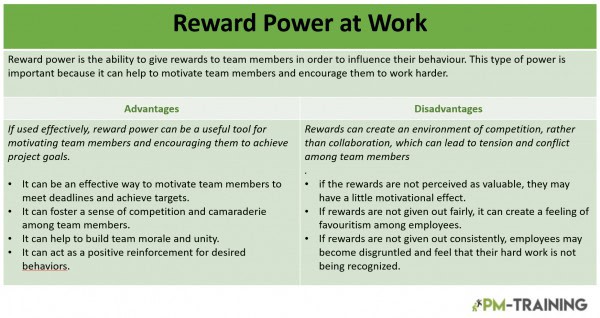
There are many ways to motivate and encourage team members in project management, and reward power is one of the most direct and immediately impactful. When applied thoughtfully, it can help create a strong sense of ownership and commitment to the project among team members, encouraging individuals to go above and beyond the baseline expectations of their role. It can also be a highly effective way to foster collaboration, as team-based rewards encourage members to support one another rather than compete against each other.
Some of the key advantages of using reward power in project management include:
- Motivation to Meet Deadlines: It provides a clear and immediate incentive for team members to hit targets and deliver on time.
- Healthy Competition and Camaraderie: It can foster a productive sense of friendly competition that brings teams closer together rather than driving them apart.
- Stronger Team Morale: Recognising and rewarding good work builds a positive team culture where people feel valued and appreciated.
- Positive Behavioural Reinforcement: Rewards signal to team members exactly what behaviours and outcomes are valued, making it more likely those behaviours will be repeated.
If used effectively, reward power is a valuable tool for motivating team members and encouraging them to achieve project goals. However, it is important to weigh the advantages against the potential downsides and deploy rewards judiciously to avoid unintended negative consequences.
Disadvantages of Using Reward Power
While reward power can be highly effective in motivating employees and driving results, there are also several potential disadvantages that project managers must be aware of before relying on it as a primary motivational strategy. Understanding these risks is just as important as understanding the benefits, as poorly managed reward systems can undermine team cohesion and erode trust.
Some of the key disadvantages include:
- Sense of Entitlement: When rewards are given too frequently or without clear criteria, employees may begin to expect them as a standard part of their role rather than as recognition for exceptional effort, which can reduce motivation over time.
- Perceived Lack of Value: If the rewards offered are not seen as meaningful or desirable by the recipient, they will have little to no motivational effect and may even come across as dismissive.
- Favouritism and Unfairness: If rewards are not distributed consistently and transparently, some team members may feel overlooked or unfairly treated, leading to resentment and reduced morale across the team.
- Recognising the Wrong Work: Rewarding tasks that are not truly critical to project success can send the wrong message about priorities and create a culture of “busy work” rather than meaningful contribution.
- Competition Over Collaboration: In some cases, reward structures can inadvertently encourage individual competition rather than teamwork, creating tension and conflict that harm overall project performance.
Ultimately, whether or not to use rewards as a motivational tool is a decision that should be made thoughtfully and on a case-by-case basis. There is no universally right or wrong approach, but it is essential to be fully aware of these potential pitfalls before implementing a reward strategy with your team.
Utilizing Leadership Reward Power With a Team
When using reward power as a project manager, keeping a clear set of guiding principles in mind will help ensure that rewards have the desired effect without producing unintended consequences. The following best practices provide a practical framework for deploying reward power effectively.
Decide What Behaviour You Want to Encourage
Before offering any rewards, take the time to clearly define what behaviours or outcomes you want to promote within your team. Whether it is meeting deadlines, improving the quality of deliverables, or demonstrating strong collaboration, having a clear picture of the target behaviour ensures that rewards are purposeful and aligned with project objectives rather than arbitrary.
Use Rewards to Encourage Positive Behaviour, Not as a Bribe
Rewards should always be used to reinforce and celebrate genuinely positive behaviour — not as a transactional tool to simply get work done. It is important to understand the distinction: rewards are earned in recognition of good performance, while bribes are offered to prevent or stop undesirable behaviour. Keeping this distinction clear helps maintain the integrity and credibility of your reward system.
Give Rewards in a Timely Manner
For rewards to be most effective, they must be given promptly after the desired behaviour or achievement occurs. A delayed reward loses much of its motivational impact because the connection between the action and the recognition becomes less clear over time. Establishing a consistent and predictable schedule for recognising and rewarding team members helps keep motivation levels high throughout the project.
Choose Rewards That Will Genuinely Motivate Your Team
Not every reward will resonate equally with every team member. A reward that one person finds highly motivating may hold little value for another. Take the time to understand what each individual on your team truly values — whether that is financial recognition, professional development opportunities, public acknowledgement, or increased autonomy — and tailor your rewards accordingly. When in doubt, ask your team members directly what they find most rewarding.
Be Consistent in Your Use of Reward Power
Consistency is critical to the credibility of any reward system. If good performance is rewarded unpredictably or inconsistently, team members will become confused about what is expected of them and may lose confidence in the fairness of the process. Commit to rewarding strong performance every time it occurs and ensure that the same standards are applied equally across all team members, regardless of seniority or personal relationships.
Be Aware of the Potential Downsides of Reward Power
Even with the best intentions, reward power can create unintended problems such as unhealthy dependency on external validation or perceptions of manipulation among team members. Proactively planning for these risks — by setting clear criteria, communicating transparently, and monitoring team dynamics over time — will help you address issues before they escalate and ensure that your reward strategy continues to produce positive outcomes.
Ensure Rewards Are Meaningful to the Recipients
A reward only works if the person receiving it genuinely values it. To continuously motivate your team, invest the effort in understanding each individual’s personal and professional motivations and choose rewards that speak directly to those drivers. Meaningful, personalised rewards demonstrate that you know and care about your team members as individuals, which in itself is a powerful motivator that reinforces loyalty and commitment to the project.
Tangible and Intangible Reward Examples
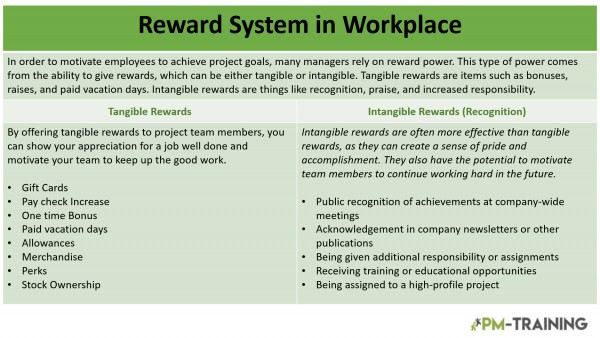
In order to motivate employees to achieve project goals, many managers rely on a combination of tangible and intangible rewards.
- Tangible rewards are physical or monetary in nature, such as bonuses, salary raises, gift cards, and paid time off.
- Intangible rewards, on the other hand, are non-monetary forms of recognition, such as public praise, increased responsibility, and professional development opportunities.
Both types of rewards can be highly effective, but the right choice depends heavily on the individual being recognised and the nature of the achievement being celebrated.
- For goals that are easily quantifiable, such as hitting a sales target or delivering a project milestone ahead of schedule, tangible rewards may be the most direct and impactful option.
- For goals that are more behavioural or cultural in nature, such as improving team communication or demonstrating leadership in a challenging situation, intangible rewards are often more appropriate and more meaningful to the recipient.
Tangible Rewards at Work
Tangible rewards provide a concrete, measurable demonstration of appreciation that team members can directly connect to their performance. One of the most flexible options is gift cards, which allow recipients to choose their own reward and therefore feel a greater sense of personal value from the recognition. Bonuses and salary raises are another powerful tangible reward, sending a clear financial signal that the organisation is genuinely invested in the individual’s success and willing to back that investment with real compensation.
In situations where the work involved has been particularly demanding, such as a high-pressure delivery phase or a project involving difficult or physically demanding conditions, offering a tangible reward for successful completion can be especially motivating. Tangible rewards can also take the form of additional paid leave, company-sponsored experiences, or spot bonuses given immediately after an outstanding contribution, which reinforces the connection between the achievement and the recognition.
Intangible Recognition in the Workplace
Not all of the most powerful rewards come with a price tag. Intangible rewards, those that carry no direct financial value, are often more effective than tangible ones because they are personal, memorable, and capable of creating a deep sense of pride and professional accomplishment. When a team member is publicly recognised for their contribution or given greater responsibility as a sign of trust, the motivational effect can be longer-lasting and more meaningful than a one-time bonus.
Examples of intangible rewards that project managers can use to recognise and motivate their teams include:
- Public recognition of achievements at company-wide meetings or team events
- Acknowledgement in company newsletters, intranets, or other internal publications
- Being assigned additional responsibility or leadership opportunities on the project
- Access to training, mentoring, or professional development programmes
- Being selected to lead or contribute to a high-profile, high-visibility initiative
Intangible rewards carry the added benefit of being far less costly than their tangible counterparts, making them a sustainable and scalable recognition strategy for project managers at all levels. Two principles are especially worth remembering when delivering intangible recognition:
- Recognition: A sincere and specific “thank you” — delivered publicly or privately, depending on the individual’s preference — can have an outsized positive impact. Acknowledging exactly what a team member did and why it mattered shows genuine appreciation and reinforces the behaviours you want to see repeated.
- Responsibility: Entrusting a team member with greater responsibility is one of the most powerful signals a project manager can send. It communicates trust, confidence, and belief in that person’s abilities, which can be profoundly motivating for individuals who are driven by professional growth and career advancement.
Video About Reward Power
Conclusion
Reward power, when used thoughtfully and strategically, is one of the most effective tools available to project managers for driving motivation, reinforcing positive behaviour, and building a high-performing team culture. It goes beyond simply handing out bonuses or gift cards; it is about understanding what genuinely motivates each individual on your team and creating a recognition environment where great work is consistently seen, valued, and celebrated.
The most successful project managers are those who strike the right balance: rewarding performance fairly and consistently, choosing rewards that are meaningful to the recipient, and combining tangible incentives with intangible forms of recognition that build long-term loyalty and engagement. They are also those who remain aware of the risks, entitlement, favouritism, and over-reliance on external motivation, and actively manage against them.
Ultimately, reward power is not about control. It is about creating an environment where people feel genuinely appreciated for their contributions and inspired to continue giving their best. When deployed with fairness, consistency, and genuine care for your team members as individuals, reward power becomes far more than a management technique; it becomes one of the cornerstones of outstanding project leadership.
FAQs: Workplace Reward Power
What is reward power in project management?
Reward power is the ability of a project manager or leader to offer rewards in exchange for good behaviour, strong performance, or the achievement of specific project goals. When used effectively, reward power is a proven way to improve team performance, boost productivity, and create a work environment where people feel recognised and valued for their contributions.
What are the main differences between tangible and intangible rewards?
Tangible rewards are physical or financial in nature — such as bonuses, gift cards, salary increases, or additional paid leave. Intangible rewards are non-monetary forms of recognition — such as public acknowledgement, increased responsibility, or access to professional development opportunities. Both types can be highly effective, but the best choice depends on the individual recipient, the nature of the achievement, and the broader culture of the team and organisation.
What are some best practices when using reward power in project management?
Always offer rewards that are genuinely meaningful and motivating to the specific individuals involved, rather than applying a one-size-fits-all approach. Be consistent in how and when rewards are given — team members who achieve objectives should reliably receive recognition for doing so, as inconsistency undermines trust and reduces motivation. Finally, use reward power prudently and purposefully, as over-reliance on rewards can create a sense of entitlement and reduce the intrinsic motivation that drives sustained high performance.
What kinds of rewards can you give to your team?
There is a wide range of rewards available to project managers, from financial incentives such as bonuses, salary raises, and spot bonuses, to non-financial recognition such as public praise, leadership opportunities, and professional development investment. The most effective reward is always the one that resonates most deeply with the individual receiving it — so taking the time to understand each team member’s personal motivators is one of the most valuable investments a project manager can make.
Suggested articles:
- 10 Key Reasons Effective Leadership is Vital for Innovation
- 6 Leadership Communication Style with Examples
- Leadership in Project Management: What Does DEIB Mean?

Shane Drumm, holding certifications in PMP®, PMI-ACP®, CSM, and LPM, is the author behind numerous articles featured here. Hailing from County Cork, Ireland, his expertise lies in implementing Agile methodologies with geographically dispersed teams for software development projects. In his leisure, he dedicates time to web development and Ironman triathlon training. Find out more about Shane on shanedrumm.com and please reach out and connect with Shane on LinkedIn.