
As a project manager, you are responsible for ensuring your team completes work on time and within budget. One of the most effective ways to achieve this is by utilizing a checklist. A checklist is a simple yet powerful tool that helps you track all tasks required for project completion. A project manager checklist also facilitates task delegation, progress monitoring, and early identification of potential issues. In project management, a checklist serves as a verification tool to ensure all necessary tasks have been completed.
A checklist consists of items, typically accompanied by checkboxes, that are marked off upon completion. Checklists are frequently employed during project planning to ensure all essential steps have been considered. They can also be utilized throughout project execution to monitor progress and ensure nothing is overlooked. While checklists do not replace thorough planning and execution, they serve as a valuable tool for maintaining project alignment and momentum.
Why Checklists are Important for Project Managers
Managing a project involves tracking multiple moving parts simultaneously. A project manager checklist serves as an essential organizational tool that brings structure and clarity to complex workflows, helping ensure nothing falls through the cracks.
Key benefits of using checklists:
- Time Efficiency: Checklists streamline project workflows by providing a clear roadmap of tasks, reducing time wasted on figuring out priorities and next steps throughout the project lifecycle.
- Enhanced Accuracy: By systematically working through checklist items, project managers can minimize errors, ensure tasks are completed to the required standard, and maintain consistent quality across deliverables.
- Improved Communication: Checklists serve as a central reference point that keeps all team members informed, aligned on project requirements, and aware of their individual and collective responsibilities.
- Stress Reduction: Having a comprehensive checklist creates a sense of calm and control even in hectic work environments, as it provides clarity and confidence that all aspects are being addressed.
- Accountability: Checklists clearly define and distribute responsibilities among team members, making it easy to track who is responsible for what and ensuring everyone understands their role in project success.
- Completeness: A well-designed checklist guarantees that no critical tasks, milestones, or important details are overlooked during the planning, execution, or closing phases of a project.

Tips When Creating a Checklist
Creating an effective checklist can be more challenging than it appears at first glance. You want to ensure that your checklist is both comprehensive enough to capture all critical tasks and user-friendly enough that your team will actually utilize it consistently. Otherwise, it risks becoming just another neglected item on your ever-growing to-do list. To help you craft a checklist that truly serves your project needs, we’ve compiled several essential tips and best practices for creating a checklist for your next project.
- Keep it Simple: A checklist should be easy to understand and use at a glance. If it’s too complicated, cluttered, or filled with jargon, your team will never embrace it as a practical tool. Aim for clarity and brevity in your task descriptions, using action-oriented language that leaves no room for ambiguity.
- Be Specific: A good checklist should be tailored specifically to your project’s unique requirements and context. Generic, one-size-fits-all checklists rarely provide the level of detail needed to guide complex project work. Include relevant milestones, deliverables, and dependencies that are particular to your project’s scope and objectives.
- Make Sure the Checklist is Accessible: Keep it in a centralized location where it can be easily referenced, updated, and shared with all team members. Whether it’s a cloud-based project management tool, a shared document, or a physical board in your workspace, accessibility is key to ensuring the checklist remains a living document throughout the project lifecycle.
- Use the Checklist as a Guide, Not a Law: While checklists provide valuable structure, they shouldn’t become rigid constraints that stifle creativity or prevent necessary adaptations. Allow for flexibility and adaptation as the project progresses and new information emerges. Encourage your team to suggest improvements and modifications when they identify more efficient approaches or discover gaps in the original checklist.
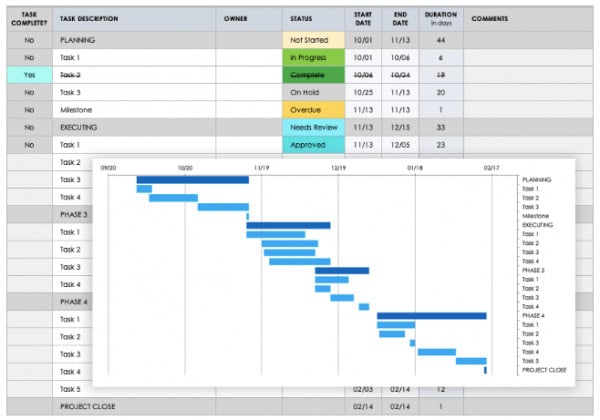
Project Manager Checklist Template | Smartsheet

Project Manager Checklist Template | sampletemplates
How to Develop a Project Manager Checklist
The key to successful project management is organization and preparation. Before starting any project, it is essential to create a comprehensive checklist of all the tasks that need to be completed, the deadlines for each task, the resources required, and the goals that need to be achieved. To help you get started, we’ve compiled a list of the must-haves that you absolutely must include in your checklist. From setting milestones to creating a budget, this checklist will help you stay on track and prevent any potential problems.
Defining the Scope of Your Project
Before you can start working on a project, you need to have a clear understanding of what the project entails. This means defining the goals and objectives of the project, as well as the specific tasks that need to be completed. Without a clear project scope, it will be difficult to stay on track and complete the project successfully.
Creating a Project Timeline
Once you have a clear understanding of the scope of the project, you can start creating a timeline. This timeline should include all of the tasks that need to be completed, as well as the deadlines for each task. Having a timeline will help you stay on track and ensure that all tasks are completed on time.
Assigning Tasks and Assigning Deadlines
Once you have a timeline, you need to start assigning tasks to specific team members. Make sure to assign each task a deadline so that everyone knows when it is due. Consider each team member’s workload and expertise when making assignments to ensure optimal project efficiency. Having clear deadlines will help to ensure that the project is completed on time.
Determining the Project Budget
Another important aspect of project management is creating a budget. You need to determine how much money you have available to spend on the project, as well as what resources are needed. Having a clear budget will help you stay on track and avoid overspending. Include a contingency fund (typically 5–15% of total costs) to cover unforeseen expenses and reduce the risk of budget overruns.
Managing Changes to the Project
During the course of a project, there will inevitably be some changes that need to be made. It is important to have a process in place for managing these changes so that they do not cause delays or problems. Implement a simple change-control procedure that documents requests, assesses impact, obtains approvals, and communicates decisions to the team.
Tracking Project Milestones
As the project progresses, it is important to track and manage project milestones and ensure that they are being met. This will help you gauge the progress of the project and make sure that it is on track. Regularly review milestone progress with stakeholders to catch issues early and keep the project aligned with its objectives.
Risk Management
Every project comes with some degree of risk. It is important to identify potential risks early on and put a plan in place for how to deal with them if they occur. This will help to avoid any potential problems down the line. Assign an owner to each identified risk and set clear mitigation steps with deadlines to ensure timely action and accountability.
Communicating With the Project Team
Throughout the course of the project, it is important to keep communication open with all members of the team. This includes regular updates on progress, as well as any changes that need to be made. Good communication will help to ensure that everyone is on the same page and avoid any misunderstandings.
Reporting Progress
Stakeholders will typically want to see this list on a regular basis, so it’s important to keep it up to date. You can use project management software to do this, or you can simply update the list manually as tasks are completed. Either way, progress reports are an essential part of project management and should not
What Should Be Included in a Project Manager Checklist?
When creating the checklist, there are a few key things that should be included:
- Project Goal: What is the overall goal of the project? What do you hope to achieve?
- Project Scope: What tasks need to be completed to reach the goal? What is included in the project, and what is outside of the scope?
- Project Timeline: When do you plan to start and finish the project? When are key project milestones or deadlines?
- Project Budget: How much will the project cost? Are there any funding limitations?
- Project Risks: What could go wrong during the course of the project? What are the potential risks and consequences?
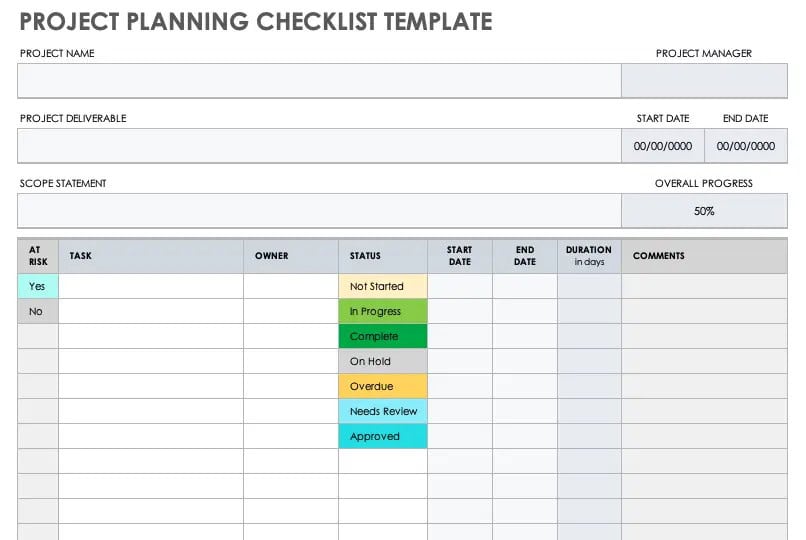
Project Manager Checklist Template | Smartsheet

Project Manager Checklist Template | SMARTSHEET
Examples of Project Manager Checklists
Here are a few different ways that you can use a project manager checklist:
- To Create a Task List: A project management checklist can be used as a task list, which can be helpful when delegating tasks to team members. Simply write out all of the tasks that need to be completed, then assign each task to a specific team member.
- To Set Deadlines: In addition to listing tasks, you can also use your checklist to set deadlines. This can help to ensure that tasks are completed on time and avoid any delays in the project timeline.
- To Track Progress: As mentioned earlier, checking off items on your checklist can help you to track your progress and stay motivated as you work towards completing the project.
- To Document the Project: In addition to tracking your own progress, you can also use your checklist as documentation for the entire project. This can be helpful if you need to reference the project at a later date, or if you want to share it with others who were not involved in the project.
Video About the Project Manager’s Checklist
Watching videos to learn how a project manager’s checklist keeps teams aligned, deadlines met, and risks managed can be helpful. Learn more below.
Conclusion
A well-crafted project manager checklist is a simple yet powerful tool that keeps projects on track, reduces errors, and improves team alignment. By clearly defining scope, timelines, budgets, risks, and responsibilities, checklists turn complex plans into manageable actions. Use them as living documents—accessible, specific, and flexible—so your team can adapt to change without losing focus. Regularly review milestones, update tasks, and communicate progress to maintain momentum and accountability.
Whether you’re launching a small initiative or managing a large program, integrating checklists into your workflow boosts efficiency, minimizes oversights, and supports better decision-making. Make checklists part of your project habit, and you’ll deliver more predictable results with less stress and greater stakeholder confidence.
FAQs
What is the importance of the project manager checklist?
They help you to stay organized and on track. It can be easy to lose sight of tasks and deadlines when you’re managing a complex project. This checklist can help to improve communication between you and your team. By having a clear and concise list of tasks, everyone on the team knows what needs to be done and when it needs to be done.
What is a project manager checklist?
A project manager checklist is a practical, centralized tool used to plan, organize, assign, and monitor tasks, deadlines, resources, and deliverables throughout a project. It helps teams stay aligned, manage dependencies, identify and mitigate risks early, track progress, and ensure consistent, timely completion of objectives.
What should be included in a project manager checklist?
When creating a project management checklist, include these essentials: a clear Project Goal, a defined Project Scope, a detailed Project Timeline with milestones, an accurate Project Budget (with contingency), and a Risk Register outlining identified risks, owners, and mitigation actions.
How can you use a project management checklist?
Use a project management checklist to create a task list, set clear deadlines, track progress, and document everything thoroughly. Keep entries specific, assign owners, and update regularly so the team stays aligned and stakeholders can review progress easily throughout the project lifecycle.
Suggested articles:
- The Importance of Using Checklists
- Top 10 Pros & Advantages of Using Checklists
- Security Risk Assessment: The Project Manager’s Essential Checklist

Shane Drumm, holding certifications in PMP®, PMI-ACP®, CSM, and LPM, is the author behind numerous articles featured here. Hailing from County Cork, Ireland, his expertise lies in implementing Agile methodologies with geographically dispersed teams for software development projects. In his leisure, he dedicates time to web development and Ironman triathlon training. Find out more about Shane on shanedrumm.com and please reach out and connect with Shane on LinkedIn.