
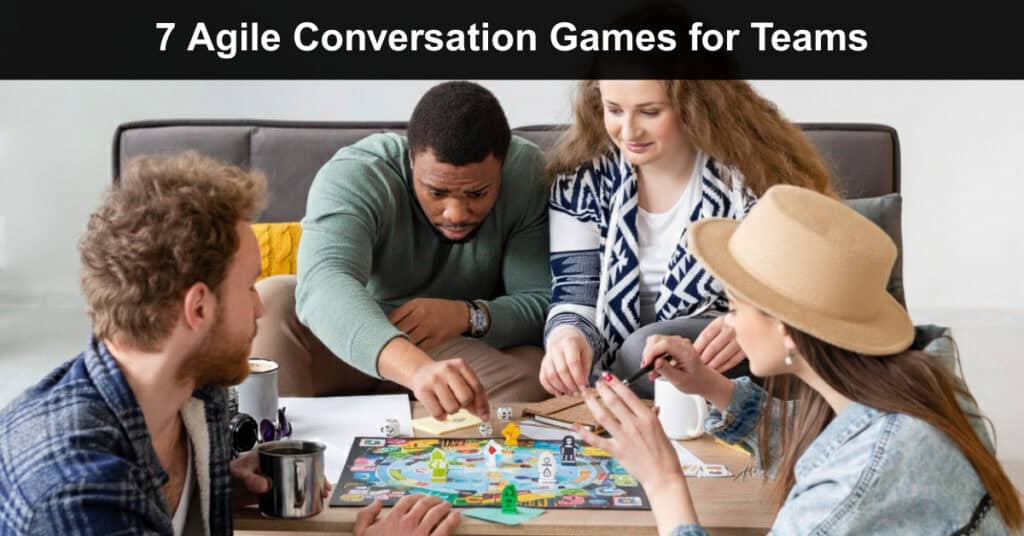
For most organizations, cultivating a positive workplace culture and fostering effective collaboration among employees represents a significant challenge. The modern work environment should prioritize not only the quality of work produced but also the strength of interpersonal relationships among team members. To address this, many companies are adopting agile methodology to enhance collaboration and communication in the workplace. A key component of this approach involves the use of conversation-based agile games.
These conversation games enable team members to quickly identify and address issues that might otherwise remain undetected. By building rapport and establishing trust among participants, these agile games create the foundation essential for successful agile project delivery. This blog post examines the fundamentals of agile games and explores their benefits, equipping you with the knowledge to determine whether they are appropriate for your team.
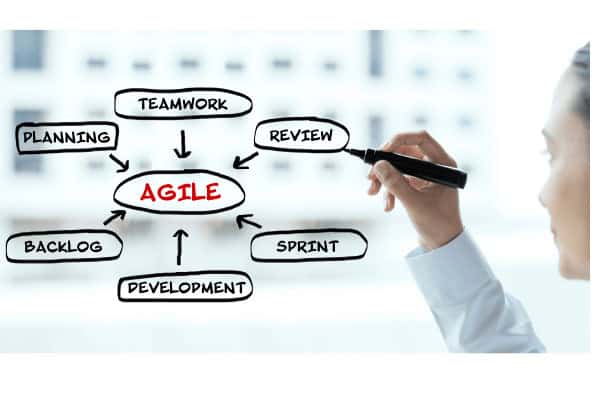
What are Conversation Games?
The term “conversation games” refers to companies’ techniques to improve communication and collaboration within agile software development teams. These team-building games are typically done during face-to-face meetings or online. Conversation games serve as a way to break the ice among individuals or to help team members get to know each other better. These team development activities encourage each team member to communicate to solve problems or complete tasks.

Agile games typically involve verbal and nonverbal communication, and they often require group members to work together closely to achieve a successful outcome. Conversation games in agile are a type of meeting game that businesses can use to help teams communicate more effectively and efficiently.
Popular Conversation Games in Agile
1. Battleship
It is a popular game to teach people about Scrum principles. Two teams of equal size play the game. Each team has a board with several ships of different sizes. The game’s objective is to sink all of the other team’s ships. Battleship teaches people about the importance of planning, estimation, and collaboration. The purpose of this fast-paced game is to teach people about iterative development and the ideas behind it. The aim is for individuals to realize that big plans are not advised in the first place.
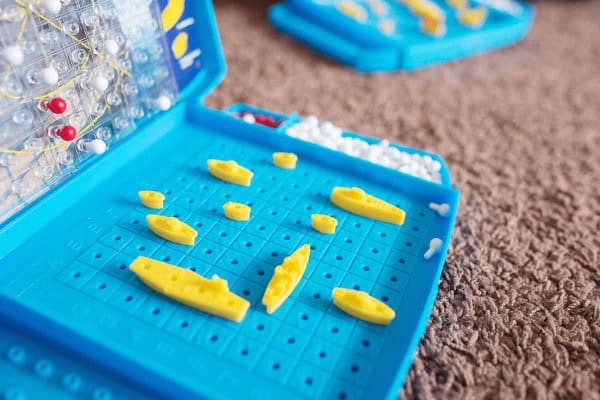
Mechanics of the game
- There are two teams, each with its own “battleships sheet.” On this sheet, they will use dots to create their ships.
- Each team will have approximately two minutes to strategize where they would like to place their ships. Then, Team A gets five minutes upfront to plan its hits and update Team B on which of their ships sunk, missed hits, etc.
- Team B then gets 5 minutes to play each one of their hits, but this time with real-time feedback (regarding misses, hits, and sunken ships) from team A.
- The teams take turns guessing where the other team’s ships are located. When a ship is hit, it is marked on the board.
- The first team to sink the other team’s ships wins the game.
2. Ball Point Game
The Ball Point Game helps teams experience the agile production process and practice managing agile projects. It requires each participant to be self-organized and to agree on a clear, repeatable process for play. The exercise emphasizes early feedback loops and reinforces teamwork skills like self-organization and collaboration. By experimenting with different communication patterns and processes, teams learn to coordinate more efficiently, improve flow, and sustain a predictable pace, while enjoying a low-risk, engaging activity.

Another benefit of the Ballpoint Game is that it teaches how to build trust in the team and among individuals. The game also stresses the importance of inspecting, adapting, and reflecting on improving one’s work.
Mechanics:
- For two minutes, give the agile teams as many balls as possible. Each ball must go by each member of the team. To earn a point (per ball), ensure that the first person to obtain the ball is also the last to handle it.
- The team will get five iterations; before each one, they must estimate how many balls they believe will pass. They should also record the changes they made after each iteration.
- The next minute is spent passing around the table, and the final minute is used to write down the number of points earned and what the team learned.
3. The Marshmallow Game
The Marshmallow game emphasizes collaboration, innovation, and problem-solving skills. It teaches a cost-cutting method of risk management and the importance of continuous testing to minimize waste. This project stresses the importance of prototypes and iterations while proving that success is often contingent upon close collaboration.
It stimulates group innovation and creativity, helping everyone learn from one another. From the Marshmallow game, the team will learn the importance of keeping information central to take a more holistic approach to achieve objectives.

Mechanics:
- Each team must construct the highest structure feasible from the supplies in the envelope to support their marshmallow. The marshmallow must be on top of the construction.
- During the construction of a tower, everyone begins at the same time and has 20 minutes to complete their creation.
- The facilitator should remind the teams of the rules several times throughout the meeting in case they need further explanation. To create a friendly competition, the facilitator should also call attention to groups doing exceptionally well or poorly.
- The team that builds the tallest, freestanding structure that can support the marshmallow wins the game.
4. The Lego Flow Game
The point of the Lego Flow Game is to have fun while exploring various ways processes can work. The goal is to build a Lego Advent Calendar item following these steps:
- Finding the next calendar number (analysis).
- Locating the right LEGO pieces (supply).
- Putting the ego item together (build).
- Making sure it’s done correctly and solidly built (accept).
The game’s objective is for the teams to discuss and analyze what worked and what was difficult with their strategy. Rather than showing that one route is superior to any other, the aim is to consider the benefits and drawbacks of various methods.

There are specific responsibilities for each step in the process – analysis, suppliers, builders, and acceptors – as well as a general manager and market reps. The game is played three times, each with its own type of procedure: batch and phase are driven, time-boxed, and flow-based.
Mechanics:
The game is played in three distinct rounds. Each round represents a different way of working: traditional batch delivery, time-boxed iterations, and continuous flow.
A. Waterfall-Like Round (Batch and Stage)
This six-minute round follows a strict, sequential process. Teams must complete a pre-defined target number of items. Work moves forward only when an entire stage is fully completed. Nothing progresses partially.
Rules:
- Each stage must finish all assigned work before handing it off.
- The Analyst must fully process one item and receive an index card before starting the next.
- The full 5-step process must be completed before additional work begins.
- Roles are specialized. No one may assist another role.
- Work moves forward in batches, not individually.
What this demonstrates: Delays caused by specialization, bottlenecks, and batch processing. Limited flexibility and no collaboration across roles.
B. Scrum-Like Round (Time-Boxed)
This round consists of three separate 2-minute time boxes. Before each time box, the team estimates how many items they believe they can complete. After the time expires, they compare results against their forecast.
Rules:
- Work can move to the next stage as soon as it is completed.
- Specialties still exist, but collaboration is allowed.
- Team members may help others if they are idle.
- Rejected work can be sent back and improved during the same time box.
- At the end of the time box, unfinished work carries into the next round.
- New work begins only after planned work is completed and accepted.
What this demonstrates: The power of iteration, forecasting, collaboration, and inspection/adaptation.
C. Kanban-Like Round (Flow-Based)
This final round runs for six continuous minutes with no estimation upfront. Instead of planning volume, the team focuses on flow using a strict Work-In-Progress (WIP) limit.
Rules:
- WIP limit: One item per stage.
- A new item cannot enter a stage until the current one moves forward.
- Work is pulled, not pushed.
- For example, if the Supplier completes door #3, they cannot start door #4 until the Builder pulls and begins working on door #3.
- Team members may assist other stages if their own stage is blocked.
- Rejected work can be sent back upstream for correction.
What this demonstrates: Flow efficiency, bottleneck visibility, pull systems, and reduced multitasking.
5. The Chocolate Bar Game
The Chocolate Bar Game makes the team understand how to satisfy customers despite numerous constraints. It is a great way to teach the team about iterations, customer feedback, and continual learning. By playing this game, the whole team will understand how to incorporate customer feedback into their work.
The agile team will also develop a deep understanding of the product owners and the customers. It is great for creating conversations and analogies around the team’s obstacles in both personal and professional life.

Mechanics:
- Teams should select a Product Manager who will act as the Product Owner. The remainder of the team is the consumers.
- The goal of the Product Owner is to create a chocolate bar that appeals to the target market. The chocolate must taste great and be made from dark chocolate, milk chocolate, or white chocolate.
- While perfecting their product, teams can select from a range of fillings. Toppings and other special features also come into play, such as organic or gluten-free options that would satisfy a specialty market.
- After every iteration, the Project Manager gives the team feedback. Customers can show their approval by giving the creation a thumbs-up. If they disapprove, customers give the chocolate bar a thumbs down.
- The team can better predict the needs before the next iteration by recording customer feedback and preferences for different chocolate bar fillings. Team members will continue to add or subtract different fillings and toppings until most customers are satisfied with their creations.
6. The Paper Airplane Game
The Paper Airplane Game helps teams understand workflow efficiency, bottlenecks, and quality control under pressure. It demonstrates how process structure affects delivery speed and customer satisfaction. By running the game in iterations, teams clearly see the cost of poor coordination and delayed feedback.
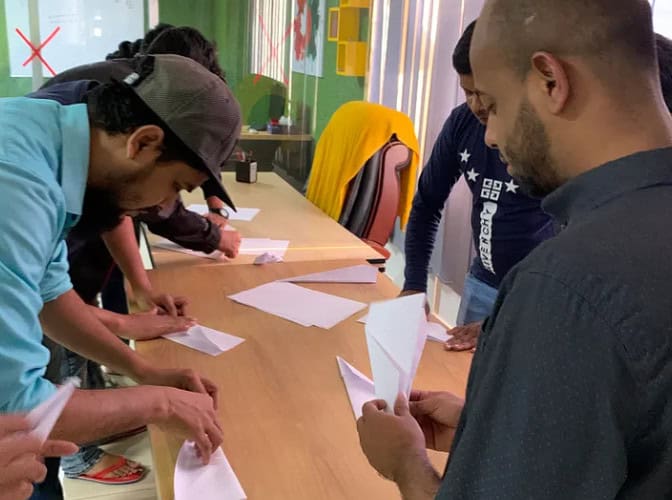
This activity also highlights the importance of collaboration, inspection, and adaptation. It creates strong parallels between production flow and real workplace constraints, encouraging discussion about specialization, multitasking, and continuous improvement.
Mechanics:
- Teams should assign specific roles such as Designer, Folder, Quality Checker, and Delivery Representative.
- The objective is to produce as many customer-approved paper airplanes as possible within a fixed time limit.
- Each airplane must pass through every role in sequence before it is considered complete and delivered.
- The Quality Checker inspects each airplane based on predefined acceptance criteria, such as flight distance or structure stability.
- If an airplane fails inspection, it must be reworked before delivery.
- After each round, the team reviews performance, identifies bottlenecks, and adjusts their process to improve output and quality in the next iteration.
7. The Coin Flip Estimation Game
The Coin Flip Estimation Game teaches forecasting, empirical measurement, and the importance of data-driven decisions. It helps teams understand how estimation improves through inspection and adaptation rather than guesswork. This game sparks conversation about overconfidence, assumptions, and the value of incremental feedback. It reinforces the idea that reliable planning comes from evidence, not optimism.

Mechanics:
- Each team member receives a coin and a score sheet.
- Before the round begins, the team estimates how many “heads” will appear within a fixed number of flips.
- Participants flip their coins one at a time while recording results.
- At the end of the round, the total number of heads is calculated and compared to the original estimate.
- The team discusses why their estimate was accurate or inaccurate and identifies patterns in the data.
- The activity is repeated in short iterations, allowing the team to refine their estimates based on previous outcomes and measurable evidence.
Benefits of Conversation Games in Agile
Conversation games are more than simple team-building activities. In Agile environments, they serve as practical tools that reinforce communication in the workplace, adaptability, and shared responsibility. When applied consistently, they shape stronger team dynamics — and their impact becomes clear in the benefits they deliver.
1. Builds Rapport and Trust Among Team Members
By encouraging team members to interact playfully, agile games help break down barriers and foster a spirit of cooperation and trust. Conversation games can help team members to get to know each other better, building the foundation for a strong working relationship.
2. Encourages Communication and Collaboration
In an Agile environment, where team members often work together on complex projects, conversation games can help promote collaboration and understanding. Conversation games help team members to practice active listening and effective communication. Team members will communicate effectively while working by playing conversation agile games, leading to better results.

3. Increases Team Engagement and Enthusiasm
Conversation games can be a great way to break the ice and get people talking. They can also be fun to inject some competition and excitement into everyday work tasks. When team members are actively engaged in their work, they are more likely to be productive and successful. Aside from increasing team engagement and enthusiasm, team-building activities will encourage people to speak up and share their ideas.
4. Improves the Team’s Creativity and Problem-Solving
Agile games are a fun and easy way to get the members to think creatively and work together to solve problems. In an Agile environment, where teams constantly need to be adaptable and quick-thinking, conversation games can be a valuable tool for sparking new ideas and helping team members to think outside the box. And because they’re games, there’s no pressure, and the group can feel free to experiment and take risks without worrying about the consequences.
5. Boosts Morale and Sustains Team Energy
Conversation games give teams space to reset without losing momentum. They allow people to step away from pressure while still staying productive and aligned. Used before major projects or during demanding phases, these activities help refresh focus and enthusiasm.

When teams enjoy working together, energy rises naturally. And when morale is strong, performance follows. For any organization, maintaining that balance between productivity and enjoyment is not optional — it’s strategic.
Conclusion
Conversation games represent a powerful tool for building stronger, more collaborative agile teams. By incorporating these engaging activities into your regular workflows, you create opportunities for team members to develop trust, improve communication, and enhance their problem-solving abilities in a low-pressure environment. Whether you choose the Battleship game to reinforce iterative planning or the Marshmallow game to encourage prototyping, each activity offers unique insights into agile principles.
The key to success lies in selecting games that align with your team’s specific challenges and development goals. Remember, these games aren’t just about having fun—they’re strategic investments in your team’s growth and effectiveness. Start small, experiment with different formats, and watch as your team transforms into a more cohesive, agile-minded unit.
Frequently Asked Questions (FAQs) About Agile Conversation Games
What are the four values of agile?
- Individuals and interactions over processes and tools
- Working software over comprehensive documentation
- Customer collaboration over contract negotiation
- Responding to change over following a plan
What are the three pillars of Scrum?
The three pillars of Scrum: transparency, inspection, and adaptation, ensure that work and processes are openly visible to the team, regularly examined for deviations, and promptly adjusted so the team can continuously improve outcomes and respond effectively to change.
How long does each agile conversation game typically take?
Most agile conversation games run between 15 and 30 minutes, making them perfect for team meetings or sprint retrospectives. Some games, like the Ball Point Game, use timed iterations of 2-3 minutes, while others, like the Marshmallow Gam,e allow 20 minutes for completion.
Can remote teams participate in agile conversation games?
Absolutely! While originally designed for face-to-face meetings, most agile conversation games can be adapted for virtual teams using online collaboration tools, digital whiteboards, and video conferencing platforms. This flexibility ensures all team members can participate regardless of location.
How often should teams play agile conversation games?
Teams benefit most from playing agile conversation games during sprint planning sessions, retrospectives, or when starting new projects. Many successful agile teams incorporate these games monthly or quarterly to maintain engagement, reinforce principles, and continuously strengthen collaboration skills.
Do agile conversation games work for non-technical teams?
Yes, agile conversation games are highly effective across all departments and industries. While originally developed for software teams, these activities teach universal skills like collaboration, communication, and problem-solving that benefit marketing, sales, HR, and other non-technical teams equally.
What size team works best for agile conversation games?
Most agile conversation games work optimally with teams of 4-8 participants. Smaller teams encourage full participation, while larger groups can be divided into multiple competing teams. This size range ensures everyone stays actively engaged throughout the activity.
Suggested articles:
- 6 x In-Person Agile Games For Team Building
- 12 Agile Collaboration Games for Team Building
- 6 Creative Team Bonding Activities Boosted by Technology

Shane Drumm, holding certifications in PMP®, PMI-ACP®, CSM, and LPM, is the author behind numerous articles featured here. Hailing from County Cork, Ireland, his expertise lies in implementing Agile methodologies with geographically dispersed teams for software development projects. In his leisure, he dedicates time to web development and Ironman triathlon training. Find out more about Shane on shanedrumm.com and please reach out and connect with Shane on LinkedIn.