
A risk is anything that can occur during a project and lead to unexpected outcomes, whether positive opportunities or negative impacts. In Agile environments, risk is not treated as a one-time assessment but as an ongoing, evolving factor that must be continuously monitored and managed. While there is some overlap with traditional project management, Agile takes a more adaptive and iterative approach to handling uncertainty. Instead of trying to predict every possible risk upfront, Agile teams rely on regular feedback, collaboration, and incremental delivery to identify and address risks early.
This allows teams to remain flexible, respond quickly to change, and reduce the likelihood of major disruptions. By embedding risk management into everyday practices, Agile ensures better decision-making, improved resilience, and more consistent delivery of value throughout the project lifecycle. To better understand how this works in practice, the following sections explore key differences between Agile and traditional risk management, common Agile risks and how to prevent them, and the most effective tools teams can use to manage risk successfully.
Risk Management in Agile vs Traditional
Risk management approaches differ significantly between Agile and traditional project management. Traditional methods rely heavily on predictive planning and attempt to anticipate all risks upfront, while Agile embraces uncertainty and manages risks iteratively. This fundamental difference allows Agile teams to remain flexible, continuously reassess priorities, and adapt to new challenges as they arise.
Traditional Risk Management Process
- Risk Identification: Involves systematically identifying all potential risks at the beginning of the project, often relying on historical data, expert judgment, and predefined checklists to ensure comprehensive coverage.
- Risk Analysis: Focuses on evaluating the likelihood and potential impact of each identified risk, using both qualitative and quantitative methods to understand their severity.
- Risk Prioritisation: Organizes risks based on urgency and importance, ensuring that the most critical threats are addressed first to minimize potential damage.
- Risk Management Planning: Develops structured strategies and contingency plans to mitigate or eliminate identified risks before they occur.
- Risk Resolution: Executes the predefined plans when risks materialize, ensuring timely and effective responses to minimize disruption.
- Risk Monitoring: Continuously tracks risks throughout the project lifecycle, updating the risk register and adjusting strategies as necessary.
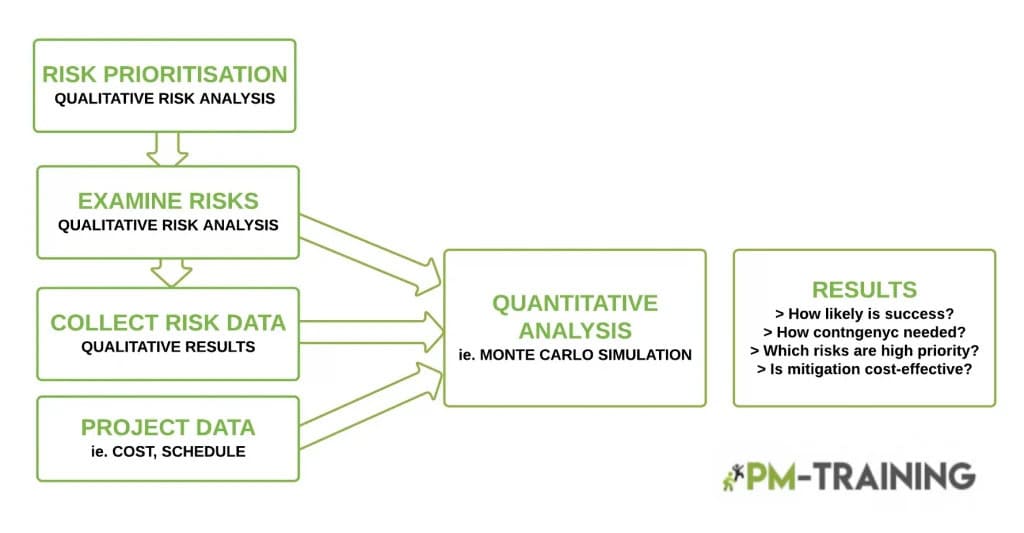
Risk identification leverages qualitative risk analysis to systematically develop a risk register. This risk register serves as the foundation for prioritizing identified risks based on their likelihood and potential impact.
Risk Categorisation in Agile
Understanding different categories of risk helps Agile teams better identify, assess, and respond to potential challenges. By classifying risks into specific groups, teams can apply targeted mitigation strategies and ensure no critical area is overlooked. This structured approach enhances decision-making and improves the overall resilience of Agile projects.
Business Risks
- These risks arise when the project fails to deliver expected business value, often due to shifting priorities, unclear objectives, or misalignment between stakeholders and development teams.
- Poor return on investment (ROI) can occur if features delivered do not meet customer needs or fail to generate measurable outcomes.
- Frequent changes in stakeholder expectations can introduce instability, making it difficult for teams to maintain consistent direction and focus.
Technical Risks
- Technical project risks emerge from the use of new, complex, or untested technologies, which may introduce unforeseen challenges during development or integration.
- Integration issues can occur when multiple systems or components fail to work seamlessly together, leading to delays and additional rework.
- Skill gaps within the team can limit the ability to effectively implement solutions, increasing dependency on external expertise or training.
Logistical Risks
- These risks are related to resource availability, scheduling constraints, and budget limitations, which can directly impact project execution and delivery timelines.
- Staffing shortages or team turnover can disrupt workflow continuity and reduce overall productivity.
- Budget constraints may force teams to compromise on scope, tools, or resources, potentially affecting quality and outcomes.
External Risks (PESTLE)
- Political changes, such as regulatory shifts or government policies, can influence project feasibility and compliance requirements.
- Economic factors, including market fluctuations or funding challenges, may impact project sustainability and resource allocation.
- Legal, environmental, and societal considerations can introduce additional constraints that must be carefully managed to avoid project disruption.
8 Agile Risks and How to Prevent Them
McConnell developed a comprehensive list of common schedule risks in software development, building upon foundational research originally conducted by Boehm and Jones. He proposed that overall project risk can be significantly reduced by proactively identifying and directly addressing these recurring risk factors:
1. Feature Creep
Feature creep occurs when additional requirements are continuously introduced without proper evaluation or control, leading to scope expansion beyond the original plan. In Agile environments, this risk can easily emerge due to ongoing stakeholder feedback, making it essential to maintain strong prioritization and governance to protect the project’s core objectives.
How to Prevent It:
- Establish a clearly defined and continuously prioritized product backlog, ensuring that only high-value features are included in each sprint based on strategic goals.
- Empower the Product Owner to act as a gatekeeper for scope changes, carefully evaluating new requests before accepting them into the backlog.
- Conduct regular stakeholder reviews to align expectations and reinforce project boundaries, preventing unnecessary additions.
2. Gold Plating
Gold plating refers to adding extra features or enhancements that go beyond agreed requirements, often with good intentions but negative consequences. While teams may aim to exceed expectations, this practice can lead to wasted effort, increased complexity, and misalignment with business priorities.
How to Prevent It:
- Define and enforce clear acceptance criteria for every user story, ensuring that development efforts remain focused on agreed outcomes.
- Maintain close collaboration between the team and Product Owner to validate work continuously and prevent unnecessary additions.
- Emphasize delivering a Minimum Viable Product (MVP) that meets core requirements before considering enhancements.
3. Shortchanged Quality
Shortchanged quality occurs when teams compromise on testing, documentation, or best practices to meet tight deadlines. This can result in technical debt and long-term maintenance challenges. Agile frameworks emphasize maintaining high-quality standards, making it critical to avoid sacrificing quality for speed.
How to Prevent It:
- Implement a strong Definition of Done (DoD) that includes testing, documentation, and quality checks as mandatory requirements.
- Invest in automated testing and continuous integration, ensuring consistent quality without slowing down development.
- Foster a culture where quality is a shared responsibility, not an afterthought or optional step.
4. Overly Optimistic Schedules
Overly optimistic scheduling happens when teams underestimate the time and effort required to complete tasks. This often leads to missed deadlines and increased pressure on team members. Agile addresses this by relying on empirical data and iterative planning to create more realistic forecasts.
How to Prevent It:
- Use historical velocity data to create realistic sprint commitments based on actual team performance rather than assumptions.
- Continuously refine estimates during sprint planning to reflect current team capacity and project complexity.
- Monitor progress closely and adjust plans proactively to avoid accumulating delays over multiple iterations.
5. Inadequate Design
In Agile, the lack of a dedicated upfront design phase can sometimes result in insufficient architectural planning. While flexibility is a strength, inadequate design decisions can lead to inefficiencies and rework if not properly managed through continuous refinement.
How to Prevent It:
- Apply just-enough design principles, ensuring that critical architectural decisions are addressed without over-engineering.
- Conduct technical spikes to explore complex solutions and reduce uncertainty before full implementation.
- Regularly review and refine system architecture to adapt to evolving requirements while maintaining stability.
6. Silver Bullet Syndrome
Silver bullet syndrome is the misconception that adopting Agile automatically guarantees project success. While Agile provides powerful frameworks, success ultimately depends on proper implementation, team capability, and organizational support.
How to Prevent It:
- Focus on building an Agile mindset and culture, rather than simply following processes or frameworks mechanically.
- Provide training and coaching to ensure teams fully understand Agile principles and best practices.
- Set realistic expectations with stakeholders, emphasizing that Agile is a tool, not a guaranteed solution.
7. Research-Oriented Development
Research-oriented development occurs when teams spend excessive time exploring ideas without delivering tangible outcomes. While experimentation is valuable in Agile, it must be balanced with delivering measurable value to stakeholders.
How to Prevent It:
- Timebox research activities to ensure they do not delay the delivery of functional features.
- Define clear objectives for spikes, ensuring each experiment produces actionable insights or decisions.
- Continuously evaluate whether research efforts are aligned with project goals and delivering value.
8. Weak Personnel
The effectiveness of Agile teams heavily depends on the skills, collaboration, and accountability of team members. Weak personnel can negatively impact productivity, quality, and team dynamics, making it essential to address performance issues proactively.
How to Prevent It:
- Build cross-functional teams with diverse skills and strong collaboration capabilities, ensuring balanced expertise across all areas.
- Provide ongoing training and mentorship to continuously improve individual and team performance, and also learn how to handle poor performance of a project management team.
- Encourage accountability and transparency, creating an environment where issues are addressed quickly and constructively.
4 Agile Risk Management Tools
1. Agile Risk Register
An Agile risk register is a living document that evolves alongside the project, capturing all identified risks and their status. Unlike traditional registers, it is lightweight and frequently updated to reflect current project conditions, ensuring that risk management remains relevant and actionable.
Best Practices:
- Include detailed fields such as risk description, probability, impact, owner, and mitigation actions, ensuring comprehensive tracking of each risk.
- Update the register during every sprint to capture newly identified risks and reflect changes in existing ones.
- Review the register during sprint planning sessions to prioritize risks and align mitigation strategies with upcoming work.
2. Risk-Adjusted Backlog
A risk-adjusted backlog integrates risk considerations directly into prioritization decisions, ensuring that high-risk items are addressed early. This approach helps teams reduce uncertainty and avoid potential disruptions later in the project lifecycle.
Benefits:
- Enables teams to tackle high-impact risks early, reducing the likelihood of major issues later in the project.
- Improves decision-making by aligning backlog priorities with both value and risk considerations.
- Provides greater visibility into potential challenges, allowing stakeholders to make informed strategic decisions.
3. Risk Burn Down Graphs
Risk burndown graphs provide a visual representation of how risks are reduced over time. By tracking the total risk level across iterations, teams can assess whether their mitigation efforts are effective and ensure that risk exposure decreases consistently.
Best Practices:
- Track both the number and severity of risks, providing a more comprehensive view of overall project risk.
- Review the graph regularly during sprint reviews to evaluate progress and adjust strategies if necessary.
- Aim for a steady decline in risk levels, indicating that mitigation efforts are effective and sustainable.
>> More information on Risk Burn Down Graphs from Mountain Goat Software
4. Risk-Based Spikes
Risk-based spikes are short, focused activities designed to explore uncertainties and validate assumptions. They are particularly useful for addressing technical or design-related risks early, enabling teams to make informed decisions before committing to full implementation.
Best Practices:
- Clearly define the objective and expected outcome of each spike to ensure it delivers meaningful insights.
- Strictly timebox spikes to prevent them from delaying core development activities.
- Use the results to inform backlog prioritization and reduce uncertainty in future iterations.
. More information on risk-based Spikes from the Agile Dictionary
Video About Risk Management in Agile
Conclusion
Agile risk management is not about eliminating uncertainty but about continuously adapting to it through iterative delivery and proactive collaboration. By embedding risk identification and mitigation into daily workflows, Agile teams can respond quickly to emerging challenges while maintaining focus on value delivery. This approach enables early detection of potential issues, reduces costly rework, and improves overall project resilience.
Leveraging tools like risk-adjusted backlogs, burndown charts, and spikes ensures that risks are addressed systematically and transparently. Ultimately, Agile empowers teams to make informed decisions, balance competing priorities, and deliver high-quality outcomes in dynamic and unpredictable environments.
FAQs
What is risk management in Agile?
Agile risk management is a continuous, iterative approach to identifying, assessing, and mitigating risks throughout a project lifecycle. It focuses on early detection, team collaboration, and frequent reassessment, allowing teams to respond quickly to changes while ensuring consistent value delivery and minimizing potential disruptions.
How does Agile reduce project risk?
Agile reduces project risk by using short development cycles, continuous feedback, and incremental delivery of value. These practices allow teams to identify issues early, validate assumptions frequently, and adapt quickly to changes, ensuring that risks are addressed before they escalate into major project challenges.
What is a risk-adjusted backlog?
A risk-adjusted backlog is a prioritization approach where backlog items are ranked based on both their business value and associated risk. High-risk items are addressed earlier in the project to reduce uncertainty, improve decision-making, and prevent potential issues from impacting later stages of development.
Why is continuous risk assessment important in Agile?
Continuous risk assessment is important in Agile because project conditions, requirements, and external factors can change rapidly. Regularly reviewing risks during sprints ensures teams stay aligned, adapt mitigation strategies in real time, and prevent small issues from escalating into larger problems that could impact delivery outcomes.
What are the most common Agile risk management tools?
Common Agile risk management tools include risk registers, risk-adjusted backlogs, risk burndown charts, and risk-based spikes. These tools help teams track, prioritize, and reduce risks systematically, while providing visibility into project health and enabling more informed decision-making throughout the development lifecycle.
Suggested articles:
- 23 x Risk Management Plan Templates (Google Docs, Excel, and PDF)
- Project Risk Management Guide
- 7 Best Strategies for Managing Unexpected Project Risks

Shane Drumm, holding certifications in PMP®, PMI-ACP®, CSM, and LPM, is the author behind numerous articles featured here. Hailing from County Cork, Ireland, his expertise lies in implementing Agile methodologies with geographically dispersed teams for software development projects. In his leisure, he dedicates time to web development and Ironman triathlon training. Find out more about Shane on shanedrumm.com and please reach out and connect with Shane on LinkedIn.