
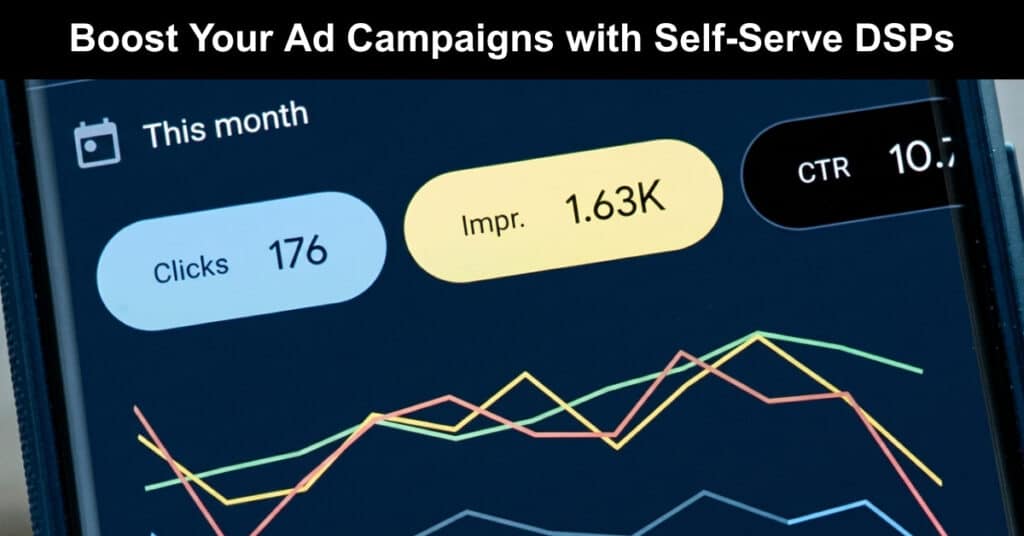
If advertising is the engine of progress, technology fuels the advertising machine. Manual campaign setup once dominated digital advertising, requiring specialists to negotiate placements and interpret results for weeks at a time. That era has largely ended. Self-serve demand-side platforms now let advertisers configure, launch, and optimize campaigns directly, without waiting on agency timelines or third-party approvals.
More than 60 percent of marketers have already shifted toward self-serve DSPs for greater control over their campaigns, according to Statista. This shift matters because programmatic advertising has become the default method of buying digital media, with automation now handling the vast majority of display transactions across the open internet. Whether the goal is monetizing content, reaching audiences across CTV and mobile, or serving brand advertisers directly, self-serve DSPs deserve serious consideration. Here is what they are and how they actually work.
What Are Self-Serve DSPs?
Self-serve demand-side platforms are automated software systems that let advertisers buy digital ad inventory through real-time programmatic auctions. Rather than routing every request through an agency or vendor, advertisers configure targeting, budgets, creative assets, and reporting themselves inside the platform dashboard. Bids for impressions are placed directly, cutting out the layers of negotiation that once slowed campaign launches considerably.
The defining advantage over traditional, fully managed Demand-Side Platform (DSP) is direct control paired with speed. Selecting audience channels, setting budgets, and tracking results once required dedicated digital advertising specialists and could stretch across several weeks of planning. With a self-serve platform, that same setup often takes only days, with most remaining effort spent refining targeting data.
Despite that flexibility, self-serve DSPs carry a genuine learning curve for advertisers without prior programmatic experience. Newcomers unfamiliar with the advertising market often struggle to choose the right inventory sources, particularly within mobile app environments, and professional interpretation of performance data remains a common sticking point early on. Partnering with an experienced agency can offset that gap.
Advantages of Self-Serve DSP over Traditional Advertising Platforms
The two models differ across several practical dimensions worth comparing directly:
| Advantage | Self-Serve DSP | Traditional Advertising Platforms |
|---|---|---|
| Control and Flexibility | Full control, fast adaptation | Limited control, slow change |
| Transparency and Accountability | Detailed reports and analytics | Limited data transparency |
| Efficiency and Costs | Reduced costs, high efficiency | High commissions, additional costs |
5 Key Benefits of Self-Serve DSPs
Self-serve DSPs earn their popularity through a specific set of operational advantages rather than marketing claims alone. Cost efficiency stands out first: advertisers bid directly on inventory, bypassing the layered commissions that managed services typically charge on top of media spend. That direct-bidding structure also brings transparent pricing and clearer budget control, much like cutting out retail middlemen.
Five specific benefits explain why adoption keeps accelerating among advertisers:
- Simplicity: The intuitive interface of a self-serve DSP guides users through each step of campaign setup. Intelligent onboarding progresses from simple to complex tasks, so setting a campaign budget stays straightforward while configuring a highly specialized audience segment becomes available once you have more experience with the platform.
- AI-Driven Optimization: Built-in machine learning capabilities allow the platform to improve bidding and targeting decisions with each campaign iteration. Modern DSPs increasingly use AI bidding systems that adjust in real time based on predicted conversion likelihood, often delivering measurable performance gains within the first two to three months of consistent use.
- Adaptability: Full control over audience selection, budget pacing, and creative optimization lets advertisers manage every stage of a campaign from setup through analytics. This structure benefits both sides of the exchange: advertisers pay only to reach genuinely interested users, while those users see ads relevant to their actual behavior.
- Speed to Launch: Quick-launch workflows allow campaigns to go live in a matter of hours rather than weeks. Actual launch time still depends on advertiser experience, campaign complexity, and total ad volume, but even complex multi-channel campaigns typically require no more than a few days from setup to activation.
- Accessibility: Self-serve DSPs level the playing field between large and small advertisers. With no upfront platform fees on many entry-level plans and access to premium inventory, small and mid-sized businesses can compete directly against major players like Google, YouTube, Meta, and Amazon for the same audiences.
A common question from advertisers new to programmatic buying is whether a large budget is required to start. It is not. Most self-serve DSPs allow campaigns to begin with a minimal budget, with spend scaling up naturally as a campaign proves effective or a product line expands into new markets.
Try It Yourself and Boost Your Conversion Rates
Conversion rate, the share of visitors who complete a targeted action, remains the clearest measure of a self-serve DSP campaign’s success. Real deployments illustrate the potential clearly rather than in the abstract. Two campaigns in particular show how dynamic optimization and precise audience targeting translate into measurable business outcomes across two very different industries and goals.
Two case studies demonstrate how self-serve programmatic buying performs in practice:
- eBay’s Remarketing Campaign: The retailer used a self-serve DSP to target users who had already shown interest in a specific product category on its platform. Dynamic advertising automatically optimized creative based on each user’s active browsing time and device characteristics, producing a 45 percent increase in clicks and a 25 percent increase in conversions.
- Unilever’s Product Launch Campaign: The consumer goods company used self-serve programmatic buying to expand audience reach for a new product, combining video and display formats to target a young, mobile-first audience. Detailed analytics allowed the brand to tailor strategy and budget allocation in real time, reaching over 10 million users, lifting brand awareness by 30 percent, and increasing new product sales by 20 percent compared to the prior three months.
These outcomes are not outliers within programmatic advertising. Platforms that combine dynamic creative optimization with granular audience data consistently outperform static, manually placed ads across most verticals, formats, and campaign budgets. Additional technical support and in-depth analytics from the platform provider further help newcomers interpret results correctly and continuously refine their targeting strategy over time.
Key Trends Shaping Self-Serve DSPs
The self-serve DSP landscape has changed considerably as third-party cookies decline and streaming inventory expands rapidly across connected devices. Platforms are consolidating around first-party data, artificial intelligence, and connected television as primary growth drivers heading forward. Understanding these shifts helps advertisers choose platforms built for where programmatic advertising is heading, not where it has already been.
Several developments stand out as particularly relevant for advertisers evaluating platforms:
- Rise of AI-Powered Bidding: Leading DSPs now use AI bidding engines that adjust in real time based on conversion probability rather than static rules. These systems can materially reduce cost per acquisition once a campaign has accumulated sufficient conversion data, typically after several weeks of consistent delivery.
- Growth in CTV and DOOH Inventory: Connected TV and digital out-of-home advertising are moving toward programmatic transactions at a rapid pace, with a large and growing share of both channels now bought through automated platforms rather than direct-buy contracts.
- Cookieless Identity Solutions: As third-party cookies disappear from major browsers, DSPs are investing heavily in deterministic and probabilistic identity frameworks. Advertisers using these newer identity solutions maintain significantly stronger audience addressability than those still relying on cookie-based targeting alone.
- Platform Consolidation: Several standalone DSPs have shut down or merged into larger ecosystems in recent years, pushing advertisers to reassess platform stability and long-term support alongside feature sets before committing to a contract.
- First-Party Data Activation: A growing majority of advertisers now prioritize integrating their own customer data directly into DSP targeting, reducing dependence on third-party data brokers and improving overall targeting accuracy.
How to Choose the Right Self-Serve DSP
Selecting a self-serve DSP depends heavily on budget, channel priorities, and existing in-house programmatic expertise. Enterprise-focused platforms typically require minimum monthly spend commitments well beyond what smaller advertisers can justify, while mid-market platforms compete instead on ease of use and lower entry thresholds. Matching platform capability to actual campaign needs prevents both overspending and missed inventory access.
A short evaluation checklist helps narrow the field before committing to a contract:
- Inventory Breadth: Confirm the platform connects to enough supply-side partners to cover the channels that matter most, including web display, in-app, CTV, and digital out-of-home, rather than specializing narrowly in just one format.
- Minimum Spend Requirements: Compare monthly minimums across shortlisted platforms carefully, since entry thresholds can range from a few thousand dollars to tens of thousands, directly shaping which platforms are realistic for a given budget.
- Identity and Targeting Readiness: Check whether the platform supports modern cookieless identity solutions and first-party data integration, since these capabilities increasingly determine targeting accuracy as third-party cookies phase out.
- Reporting Transparency: Prioritize platforms offering log-level data and clear visibility into supply paths and fees, since transparent reporting makes it far easier to diagnose underperformance and adjust strategy quickly.
Common Mistakes to Avoid With Self-Serve DSPs
Self-serve control introduces real responsibility, and advertisers new to programmatic buying tend to repeat the same avoidable errors during their first several campaigns. Recognizing these patterns early prevents wasted budget during the initial launch cycles, when platform learning curves are steepest, and optimization data remains too limited to guide confident, well-informed decisions with real accuracy.
These recurring missteps account for much of the wasted spend among new advertisers:
- Skipping Frequency Capping: Failing to limit how often the same user sees an ad quickly burns through budget while irritating the audience, reducing both efficiency and brand perception over the course of a campaign.
- Ignoring the Supply Path: Not verifying which exchanges and resellers an ad passes through before reaching a publisher can quietly inflate costs and expose a campaign to lower-quality or fraudulent inventory.
- Underfunding the Testing Phase: Launching a single creative and audience combination without budget set aside for testing variations limits the data needed for the platform’s optimization algorithms to improve performance meaningfully.
- Neglecting Creative Refresh: Running the same ad creative for too long causes performance to decline as audiences experience fatigue, even when targeting and bidding strategy remain otherwise sound.
Conclusion
Self-serve demand-side platforms (DSPs) have evolved from a niche, technical option into the standard way to buy digital advertising across nearly every industry. With direct bidding, transparent pricing, and built-in automation, advertisers of almost any size can access premium inventory that was once limited to agencies with large retainers. Today, the technology handles much of the operational complexity—so advertisers can focus on strategy and performance.
That said, success still depends on using targeting, budget pacing, and platform tools deliberately rather than by default. Start with clearly defined goals, choose a platform that aligns with your channel priorities, and treat your first few campaigns as a learning phase. The advertisers gaining traction now are actively testing self-serve programmatic buying today. While workflows vary by provider, most platforms follow a similar process: define business objectives, select the right DSP, set up the campaign, upload creative, and launch.
Frequently Asked Questions About Self-Serve DSPs
What is the difference between a self-serve DSP and a managed DSP?
A self-serve DSP puts campaign setup, targeting, budget control, and optimization directly in the advertiser’s hands through a platform dashboard. A managed DSP has a dedicated team or agency handling those same tasks on the advertiser’s behalf, which trades some control for hands-off convenience and added strategic support.
How much budget do I need to start with a self-serve DSP?
Most self-serve DSPs allow campaigns to launch with a minimal budget, since there is no requirement to match the scale of enterprise advertisers from day one. Spend typically increases gradually as a campaign demonstrates results, making the model accessible for small businesses testing programmatic advertising for the first time.
Are self-serve DSPs suitable for advertisers with no programmatic experience?
Self-serve DSPs are designed with onboarding flows that introduce features gradually, but a genuine learning curve still exists around inventory selection and data interpretation. Many newcomers start with simpler campaigns and either invest in platform training or work with an agency partner while building internal expertise.
How do self-serve DSPs handle the shift away from third-party cookies?
Leading self-serve DSPs are investing in cookieless identity solutions that rely on deterministic matching and first-party data rather than third-party cookies. Advertisers who activate their own customer data directly within the platform typically maintain stronger audience addressability than those depending solely on legacy cookie-based targeting.
What channels can I reach through a self-serve DSP?
Most self-serve DSPs support display, video, native, audio, connected TV, and increasingly digital out-of-home advertising from a single dashboard. Channel breadth varies significantly by platform, so confirming inventory access across the specific formats a campaign requires should happen before selecting a provider.
Suggested articles:
- Top 10 Best Alternatives to Facebook Ads
- 10 Creative Agencies Driving Performance with Data-Backed Ads
- 10 Pros and Cons of Pay-Per-Call Advertising For Lead Generation

Daniel Raymond, a project manager with over 20 years of experience, is the former CEO of a successful software company called Websystems. With a strong background in managing complex projects, he applied his expertise to develop AceProject.com and Bridge24.com, innovative project management tools designed to streamline processes and improve productivity. Throughout his career, Daniel has consistently demonstrated a commitment to excellence and a passion for empowering teams to achieve their goals.