
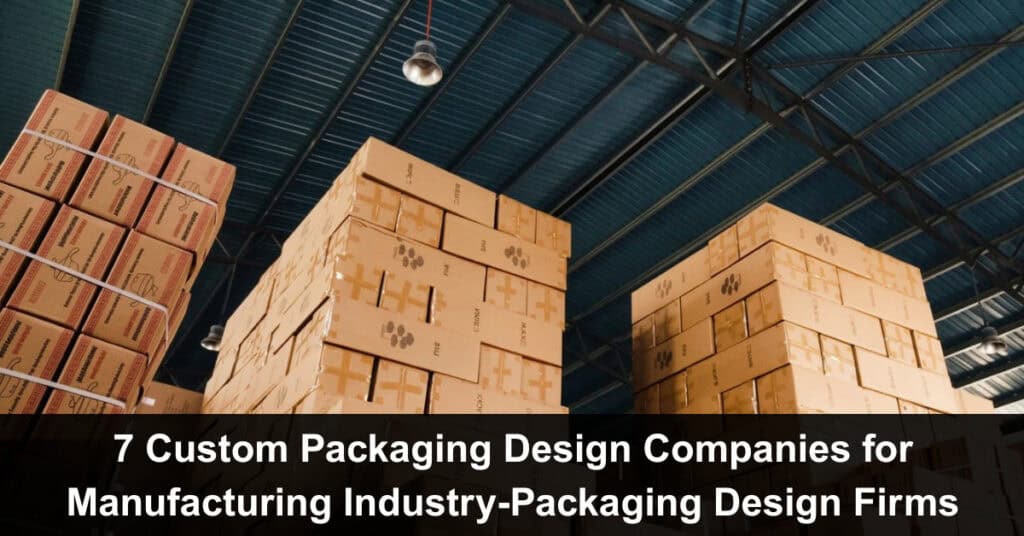
Packaging is no longer the last task on the Gantt chart; it now drives revenue, referrals, and repeat sales. A 2024 Deloitte study found that 73 percent of shoppers recommend products with distinctive packaging, and 59 percent choose one item over another on design alone. Factor in e-commerce’s expected jump from $5.7 trillion in 2023 to $8.1 trillion by 2026, plus an 85 percent preference for eco-friendly materials, and packaging becomes strategic infrastructure—not a nice-to-have.
This guide closes the gap between eye-catching concepts and factory-floor realities. We’ll profile seven suppliers that blend design, engineering, and global scale so you can ship faster, waste less, and impress customers from day one.
How We Built the Shortlist
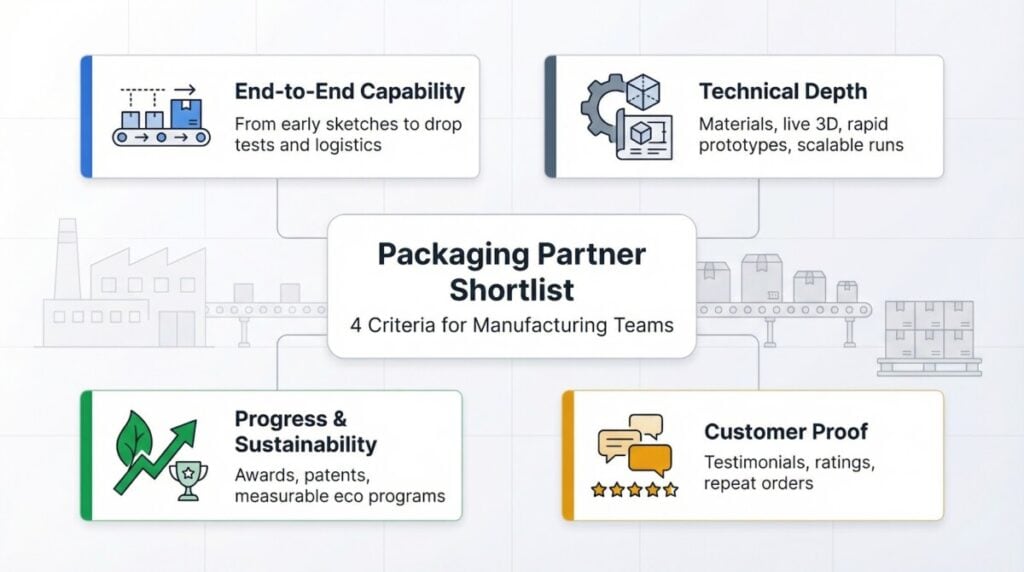
We looked for suppliers that solve real manufacturing problems, not just offer slick mock-ups. Here are the steps we followed:
- We required true end-to-end capability. When one partner owns every step—from early sketches to drop tests—you avoid the blame game between designers and converters.
- We checked technical depth. Shops needed industrial-grade materials, live 3D previews, rapid prototypes, and the capacity to move from a 100-unit pilot to a million-unit run without changing the spec.
- We weighed progress and sustainability equally. Awards, patents, and measurable eco programs signaled a partner pushing the market forward instead of recycling last year’s catalog.
- We listened to customers. Testimonials, third-party ratings, and recent accolades revealed who shows up, fixes problems fast, and wins repeat orders.
The seven firms that follow met every standard, so let’s meet them one by one.
1. Zenpack: Design-First, End-to-End
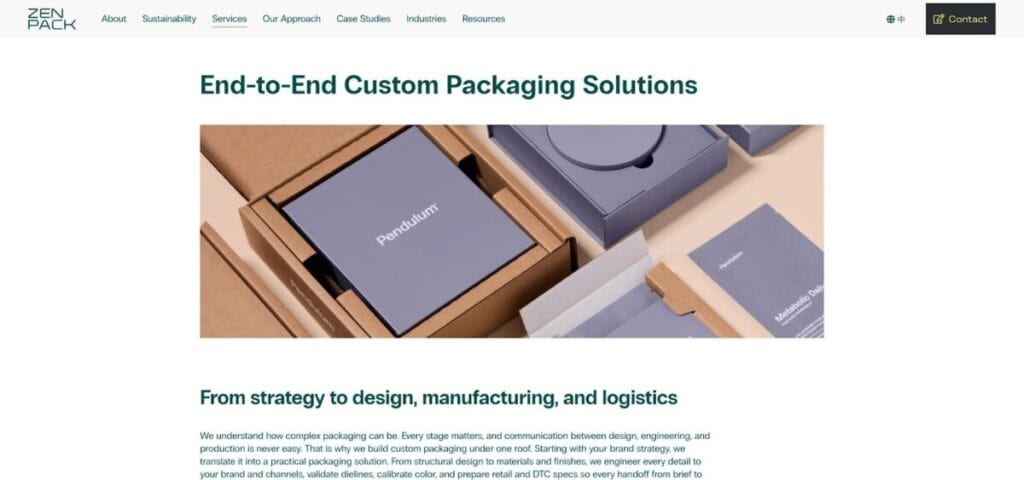
Zenpack began with a simple promise—to fold strategy, design, manufacturing, and logistics into one coordinated workflow, according to the company’s about page. That single ownership means fewer hand-offs, clearer communication, and launches that stay on schedule. The firm’s “One-Stop Shop” model lives through a global team that shadows your product from first sketch to final pallet, trimming weeks of back-and-forth.
Zenpack excels at blending aesthetics with engineering. Designers and packaging engineers work side by side on the same Figma boards and factory floors, turning early sketches into custom packaging solutions that merge brand storytelling with manufacturing efficiency. Every clever hinge or reveal panel is proof-tested for real-world feasibility before you see a prototype.
The track record supports the pitch. The company has earned four straight Pentawards, and pilot runs can start at roughly 100 units, a sweet spot for soft launches or limited editions. When you need scale, the same crew can ramp to six-figure volumes without changing the spec. For mid-sized manufacturers that want a premium unboxing moment without enterprise-level minimums, Zenpack delivers imagination up front and certainty at the finish line.
2. EcoPackables: Sustainable Custom Packaging
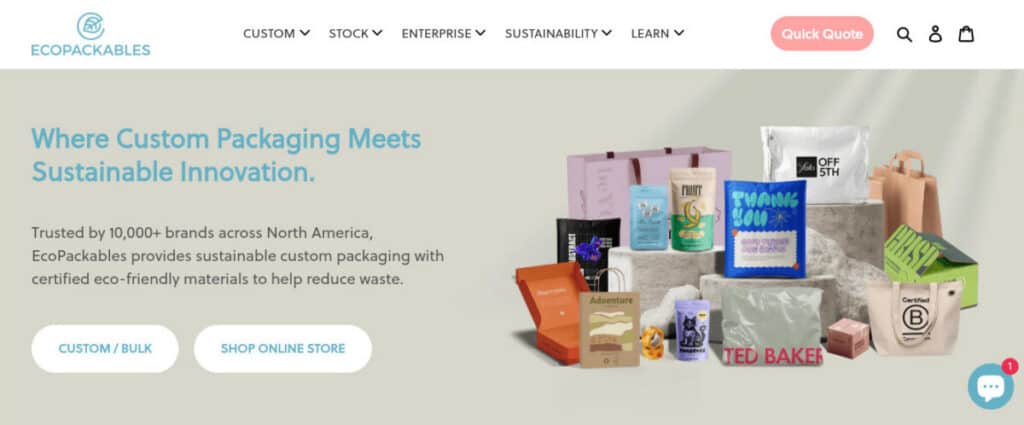
EcoPackables was founded on a simple goal—to make sustainable packaging easy, accessible, and practical for everyday shipping needs. Instead of treating eco-friendly packaging as a premium alternative, the company focuses on making it the standard choice for brands that want to reduce environmental impact without complicating their operations.
The company offers a range of compostable, recyclable, and plastic-free packaging solutions designed for e-commerce and retail businesses. Each product is selected to balance sustainability with durability, ensuring it performs well in transit while still aligning with modern eco-conscious expectations.
EcoPackables also supports businesses of different sizes with flexible supply options, making it easier to test and scale sustainable packaging over time. By combining accessible sourcing with a clear focus on environmentally responsible materials, the company helps brands transition toward greener shipping practices without added complexity.
3. Arka: Speed, Simplicity, and Scalable Customization
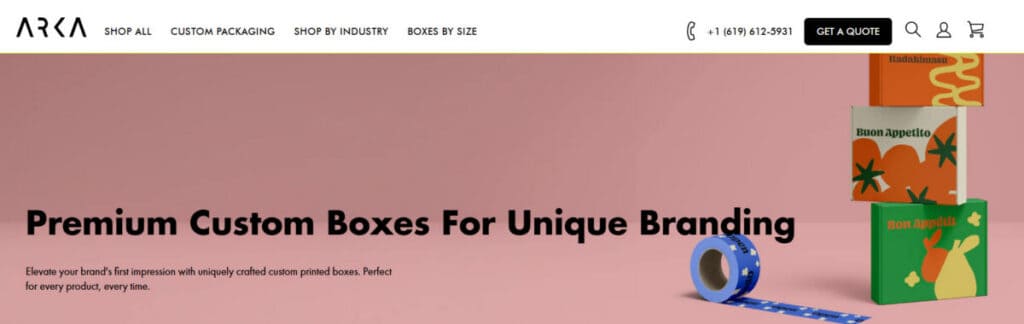
Arka was built around a practical idea: make custom packaging faster, simpler, and more accessible for growing brands. Instead of forcing businesses through long sourcing cycles or complex procurement steps, the company combines online ordering, design support, manufacturing, and fulfillment into one streamlined process. That integrated model helps brands move from concept to production with fewer delays and clearer cost visibility.
Arka stands out for balancing convenience with customization. Businesses can order branded boxes, mailers, tissue paper, inserts, and other packaging products through a digital platform designed for speed and flexibility. The system is especially useful for eCommerce teams that need packaging to support both product protection and customer experience. Design tools and support services help turn ideas into production-ready packaging without requiring large internal resources.
The company’s appeal is strongest among direct-to-consumer and scaling online brands. Lower minimums than many traditional packaging suppliers make it practical for product launches, seasonal campaigns, and growing order volumes. At the same time, Arka can support repeat production as brands expand. For businesses that want custom packaging without the friction of old-style sourcing, Arka offers efficiency at the start and consistency through delivery.
4. Smurfit WestRock: Volume, Reach, and Rock-Solid Reliability
When WestRock and Smurfit Kappa merged in 2024, they created the largest publicly traded packaging company in the world. Manufacturers suddenly gained access to more than 500 converting plants, paper mills, and design centers across every major region. Scale is only part of the advantage. Smurfit WestRock also owns critical upstream assets such as managed forests, pulp operations, and closed-loop recycled-fiber systems, which keep lead times and pricing steadier when markets tighten.
With box plants positioned in North America, Europe, and Asia, you can shift production closer to demand without overhauling your supply chain. The portfolio runs deep: corrugated shippers, folding cartons, flexible pouches, and the automation equipment to erect, fill, and seal each one on your line. Engineering teams often design the pack and the machine in the same sprint, so the first carton off the press glides straight into production.
Sustainability is built into the model. Every paper-based SKU is recyclable, and integrated recycling mills close the loop at industrial scale. Credit agencies upgraded the merged entity’s rating in 2025, a reassuring signal if you plan a multi-year supply agreement. Choose Smurfit WestRock when volume and consistency matter most. The company offers a steady hand for multinational product lines that require identical packaging specs from Detroit to Düsseldorf.
5. Amcor: Flexible Films Engineered for Speed and Safety
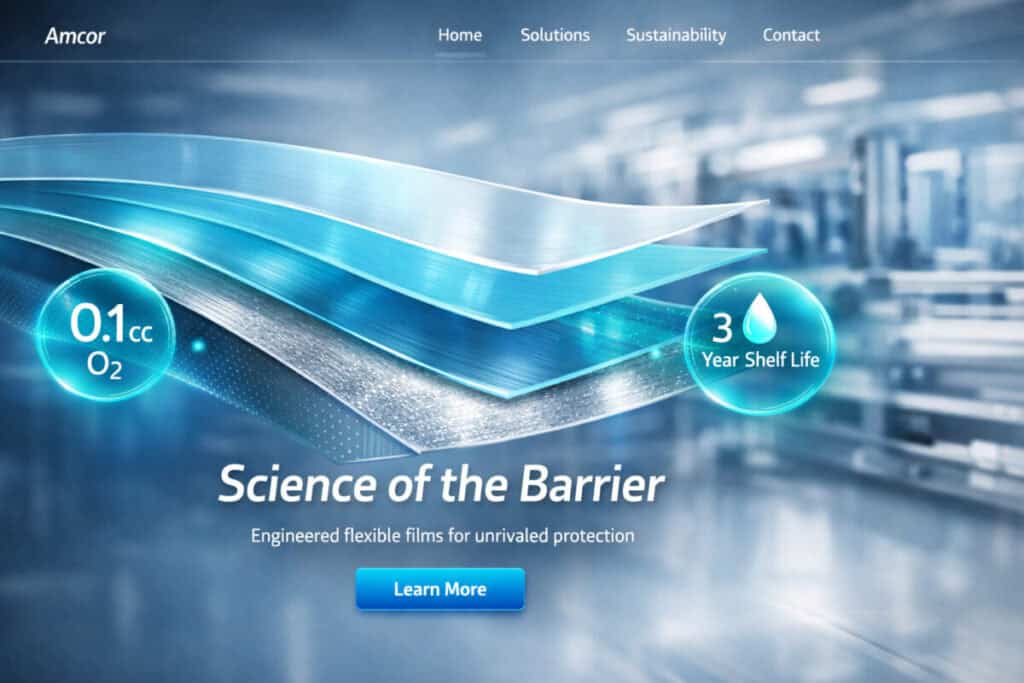
If your line fills pouches, blister packs, or lidding film at thousands of units per hour, Amcor is the partner you want on speed dial. The company’s core strength is materials science: the multi-layer films that keep coffee aromatic, snacks crispy, and medical devices sterile while running smoothly on high-speed machinery. Engineers at Amcor treat barrier properties like adjustable dials. Need oxygen below 0.1 cc/m² or moisture vapor locked down for a three-year shelf life?
They fine-tune resins, laminations, and coatings until the spec sheet clears every requirement. Because the same team runs converting plants in more than 40 countries, the final roll of film arrives already qualified for your local regulations. Regulated industries trust this discipline. Food-safety certifications such as FSSC 22000 are standard, and pharmaceutical customers rely on batch-level traceability built into the ERP layer. That diligence shortens onboarding for new SKUs and calms even the strictest quality auditor.
Sustainability remains a priority. Amcor has pledged to make every package recyclable, reusable, or compostable by 2025, and it is already shipping mono-material pouches that slide into curbside recycling without sacrificing protection. Choose Amcor when details such as oxygen transmission rate, puncture resistance, or sterilization window decide whether your product lands on a shelf or in the reject bin. The company supplies film that runs millions deep, day after day, with the compliance paperwork to back it up.
6. Nefab: Engineered Crates That Shrink Both Risk and Cost
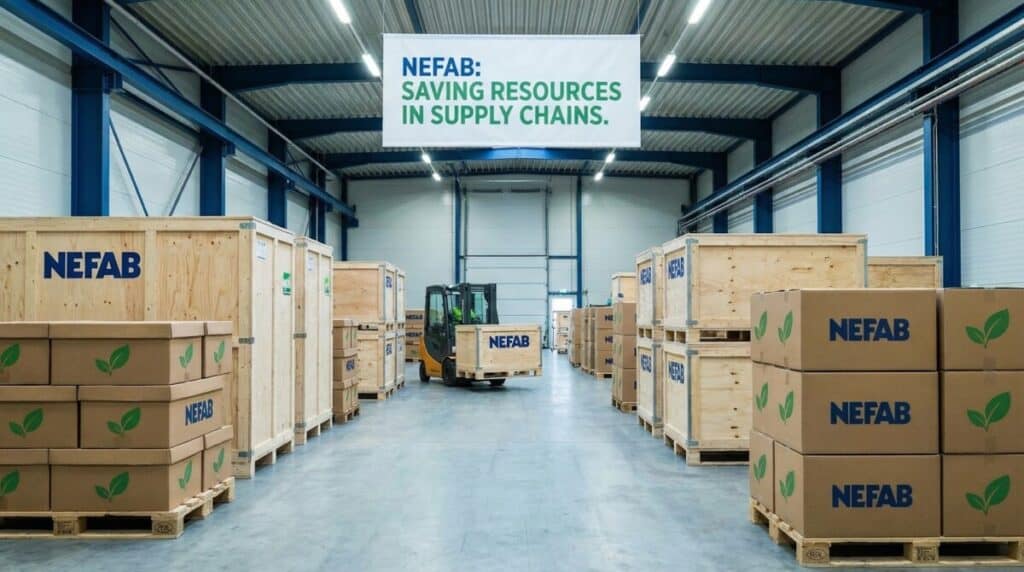
Shipping a delicate laser system or a two-ton gearbox invites one nightmare: damage in transit. Nefab addresses that concern at its root, treating packaging as an engineered component of the product lifecycle instead of a last-minute wooden box. Their process begins on your factory floor. Nefab engineers record every dimension, shock limit, and logistics leg, then model a crate or multi-material system that balances protection with total landed cost.
Many designs reduce airspace, trim shipping weight, and collapse for the return trip, turning packaging from single-use waste into a circular asset. Comprehensive cost analytics make the difference. By measuring labor, freight, and damage write-offs—not only board-foot prices—Nefab often delivers savings above 10 percent. One automotive client cut transit emissions and costs together by switching to a reusable fiber-based crate that folds flat after delivery.
Global reach adds confidence. With teams in more than 30 countries, Nefab can build identical crates next to your plant in Mexico and your customer’s site in Germany, so every unit meets the same spec without ocean delays. If your shipment reads more like a capital asset than a consumer good, consider Nefab. The program usually pays for itself before the first container lands.
7. SEE (Sealed Air): Automation That Packs, Protects, and Pays Back
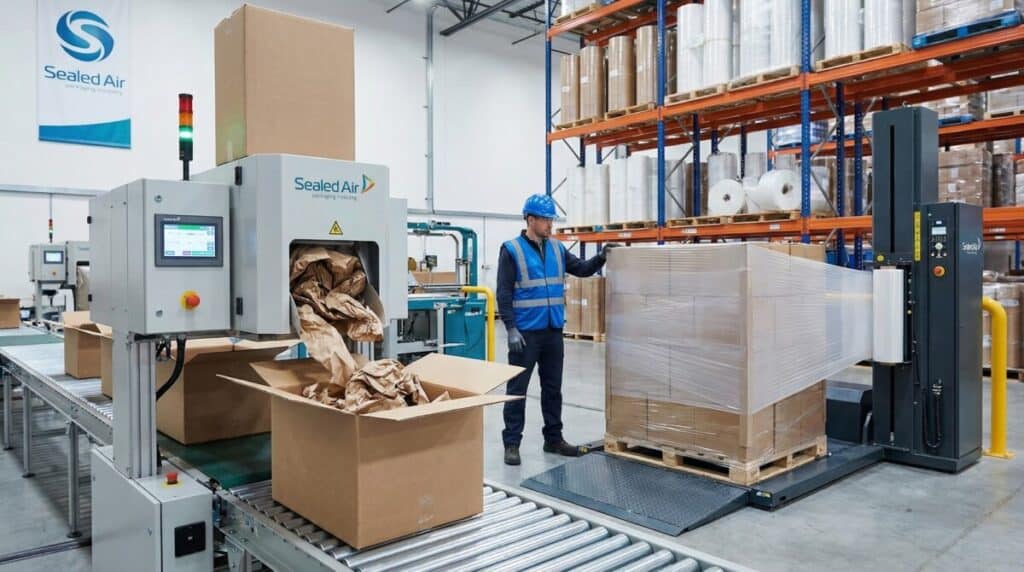
Bubble Wrap made Sealed Air famous, but the company’s modern identity, now branded as SEE, centers on one goal: automate everything that happens between your conveyor belt and the delivery truck. The pitch is direct. By integrating smart baggers, on-demand void fill, and robotic case sealers, SEE trims labor minutes from every order and pushes damage rates toward zero.
Most customers recoup the capital outlay within a single budget cycle because of leaner staffing and fewer returns. Technology pairs with materials science. Instapak foams mold to odd shapes in seconds, thermal liners keep vaccines ice-cold across continents, and recycle-ready air pillows shave grams without losing cushioning.
Each system links to SEE’s analytics platform, letting you track material use, uptime, and carbon savings in real time. The 2023 purchase of Liquibox expanded SEE’s reach into bag-in-box liquids, reinforcing the plan to automate whatever you fill. If labor constraints or breakage costs keep you up at night, SEE’s engineers will solve the problem and show the numbers to prove it.
How to Pick the Partner That Fits
Every supplier on this list can do the job, but your priorities decide who wins the work.
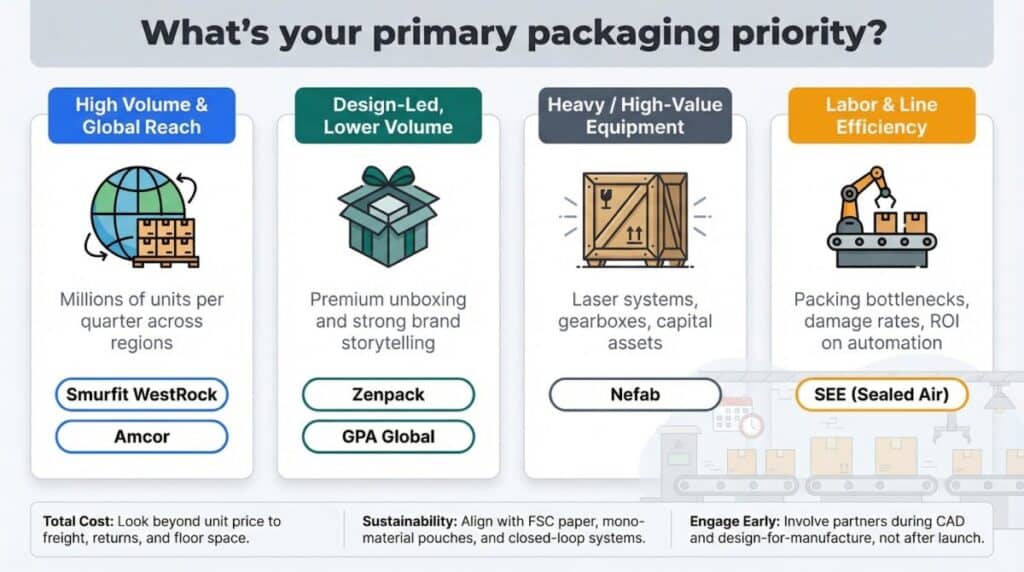
- Start with Volume: If you ship millions of units each quarter, Smurfit WestRock or Amcor provides capacity, sharp pricing, and identical specs on every continent. Running smaller, design-driven lines? Zenpack or GPA excels with low minimums and strong brand storytelling.
- Weigh Technical Risk: Moving high-value machinery? Nefab’s engineered crates often pay for themselves by preventing damage. Battling labor bottlenecks on the packing line? SEE’s automation suite removes manual steps and the payroll strain that follows.
- Consider the Total Cost: The unit price is only one line on the ledger. Ask bidders how they will trim freight, cut returns, or clear floor space. The best partners share hard numbers before you ask. Manufacturers comparing flexible packaging options should also evaluate square bottom packaging bags for products needing greater shelf stability, efficient pallet stacking, and improved retail presentation without sacrificing material efficiency.
- Sustainability Matters: Whether that means FSC paper, mono-material pouches, or closed-loop foam recycling, demand proof that matches your corporate goals.
- Bring Your Vendor in Early: A 30-minute design-for-manufacture call today can save six weeks of tooling changes tomorrow. Invite them while your product is still in CAD, not after pallets stack up.
Conclusion
Packaging has moved from a cost center to a growth lever. The right partner does more than make boxes or pouches—they help you ship faster, protect margins, reduce risk, and turn every delivery into a brand touchpoint. The seven firms in this guide stand out because they understand manufacturing reality. They balance creativity with engineering discipline, scale with flexibility, and sustainability with performance.
Whether you’re launching a premium product, automating a strained packing line, or shipping high-value equipment across continents, the best results come from choosing a partner whose strengths align with your operational priorities. The final takeaway is simple: bring packaging into the conversation early. When design, engineering, and production move together from day one, you avoid costly rework, accelerate time to market, and create packaging that works as hard as your product does.
Frequently Asked Questions (FAQ)
What is a custom packaging design company?
A custom packaging design company develops packaging tailored to a product’s dimensions, protection needs, branding goals, and production constraints. The best firms go beyond visual design and manage engineering, materials selection, testing, manufacturing, and logistics as one integrated process.
How early should manufacturers involve a packaging partner?
As early as possible—ideally while the product is still in CAD. Early collaboration allows packaging engineers to influence dimensions, materials, and assembly methods, often eliminating weeks of tooling changes and reducing long-term costs.
What is “end-to-end” packaging capability?
End-to-end capability means one partner owns the entire lifecycle: concept design, prototyping, testing, manufacturing, automation compatibility, and delivery. This reduces miscommunication, shortens timelines, and ensures the final package performs as designed on the factory floor.
How do I choose between large global suppliers and boutique firms?
It depends on scale and priorities. Global suppliers like Smurfit WestRock or Amcor excel at high volumes, geographic consistency, and long-term supply stability. Boutique or hybrid firms such as Zenpack or GPA Global shine in low-to-mid volumes, rapid iteration, and brand-driven packaging.
What role does sustainability play in packaging selection today?
Sustainability is no longer optional. Manufacturers increasingly require recyclable, reusable, or compostable materials, along with proof such as FSC certification, mono-material structures, or closed-loop recycling programs. Strong partners align sustainability with performance, not trade it off.
Suggested articles:
- Custom Crates to Smart Wraps: The New Age of Industrial Packaging
- 4 Key Risks in Order Fulfillment Projects and How to Manage Them
- Common Mistakes to Avoid in Inventory Management

Daniel Raymond, a project manager with over 20 years of experience, is the former CEO of a successful software company called Websystems. With a strong background in managing complex projects, he applied his expertise to develop AceProject.com and Bridge24.com, innovative project management tools designed to streamline processes and improve productivity. Throughout his career, Daniel has consistently demonstrated a commitment to excellence and a passion for empowering teams to achieve their goals.