

When most people think about appointment setting, they picture a sales floor, not a project plan. But for project managers working inside growth-focused B2B organizations, appointment setting initiatives are increasingly landing on the docket. New market entries, product launches, vertical expansions, and account-based marketing campaigns all rely on a steady flow of qualified meetings to validate the business case. And someone has to coordinate it all.
The challenge? Appointment setting projects don’t behave like traditional project work. The deliverables are people, not features. The timeline is shaped by buyer behavior, not engineering velocity. And the success metrics, sales-qualified leads, booked meetings, pipeline value, sit outside most project managers’ day-to-day vocabulary.
This guide walks through how to coordinate a B2B appointment setting project from kickoff to optimization, and rounds out with five B2B appointment setting companies worth evaluating if you decide to outsource execution.
Why Appointment Setting Projects Land on a PM’s Desk
A few patterns explain why project managers are pulled into outbound initiatives:
- Cross-Functional Dependencies: Appointment setting touches sales, marketing, RevOps, IT (for CRM integration), and sometimes legal (for compliance). Someone has to orchestrate the handoffs.
- Defined Scope and Timeline: Most appointment-setting engagements run on quarterly or annual scopes with measurable outputs, exactly the kind of work PMs are built to manage.
- Vendor Coordination: When the work is outsourced, the project manager often becomes the day-to-day point of contact for the external partner.
The complication is that the inputs, buyer behavior, market saturation, and deliverability infrastructure are largely outside the PM’s control. According to HubSpot’s 2024 Sales Trends Report, sales representatives only spend about two hours per day actually selling. The remainder gets consumed by research, admin work, and prospecting tasks. That gap is exactly why outbound projects often need dedicated coordination, and why outsourcing the execution can be a strategic choice rather than a cost-cutting one.
What Makes an Appointment Setting Project Different
Before diving into the framework, it helps to name a few ways these projects deviate from the norm.
- The Success Metrics are Layered: A standard project might track on-time delivery and budget. An appointment setting project tracks prospects engaged, marketing qualified leads (MQLs), sales qualified leads (SQLs), booked meetings, and meetings held. Each is a different stage in the buyer journey, each requiring its own benchmarks.
- The Team is Rarely Homogeneous: You may have an internal sales team, an external appointment setting partner, a marketing operations contact, and a leadership stakeholder, all with different views on what “good” looks like. Aligning them is half the job.
- The Work Doesn’t End at Delivery: Unlike a software release, an appointment setting project is continuous; campaigns get monitored, optimized, and refined every week based on response data. The PM needs to plan for ongoing engagement, not a one-time handoff.
How to Coordinate a B2B Appointment Setting Project
Here’s a five-step framework that maps appointment setting work onto a project management discipline.
1. Define Scope and the Ideal Customer Profile
Every appointment-setting project starts with a precise scope. Who exactly are we trying to reach? What companies, what titles, what regions, and what buying signals indicate readiness? Treat this like any other project scope definition — document it, get sign-off from the sales leader and marketing stakeholder, and resist the urge to start outreach before this is locked.
A good scope document for an appointment setting project should answer: target firmographics (industry, company size, revenue band), persona-level titles and seniority, geographic boundaries, exclusion lists (existing customers, current opportunities), and the volume of prospects realistically reachable inside the defined criteria.
2. Set Milestones and KPIs
Map the campaign to a timeline with checkpoints. Most fully managed appointment setting engagements deliver first SQLs within 30 days and first booked meetings shortly after, but ramp-up varies based on industry, deal complexity, and channel mix. Set realistic milestones for the first MQL, the first SQL, the first booked meeting, and the first closed-won attribution.
For KPIs, focus on quality indicators rather than volume metrics. Booked meetings held (not just scheduled), SQL-to-opportunity conversion rate, and average deal value of opportunities sourced are far more useful than raw email send counts.
3. Choose the Right Delivery Model
This is where most appointment-setting projects succeed or stall. The PM needs to help leadership decide between three models:
- Build In-House: Hire and train sales development representatives. Highest control, highest cost, longest ramp time.
- Hybrid: Internal team augmented by tools or fractional support. Useful when you have some existing capability.
- Outsourced Partner: Engage a specialist appointment-setting agency. Fastest ramp, predictable cost structure, and less day-to-day management overhead.
Most growing companies choose the outsourced route for appointment setting projects because the speed-to-pipeline math works in their favor. Outsourced partners typically have established outreach infrastructure, deliverability systems, and trained representatives ready to start within a week or two, versus the months it takes to recruit and onboard internal SDRs.
4. Establish a Reporting Cadence
Weekly is the standard. The PM should expect (or build) a weekly report covering activity volume across channels, response and reply rates, prospects converted to MQLs, MQLs converted to SQLs, meetings booked, and meetings held. Pair this with a monthly review focused on what’s working, what isn’t, and what to adjust.
If you’re working with an external partner, the reporting cadence should be defined in the SOW. If it’s internal, the PM should build the dashboard or reporting template in week one, not month two, when leadership is asking for numbers.
5. Build Feedback Loops for Continuous Optimization
This is where appointment setting projects diverge most from traditional PM work. The campaign needs to be tuned mid-flight based on real response data. A prospect persona that looked perfect in the kickoff might not engage. A messaging angle might land harder than expected. The PM’s role is to make sure those signals are captured, surfaced in the weekly review, and acted on quickly.
Build in formal optimization checkpoints at the 30-day, 60-day, and 90-day marks. Treat these the same way you’d treat sprint retrospectives, what’s working, what’s not, what’s the next iteration.
5 Top B2B Appointment Setting Companies to Consider
If your project plan calls for an outsourced partner, these five companies cover a range of specializations — from broad B2B coverage to deeply niche verticals.
1. Martal Group
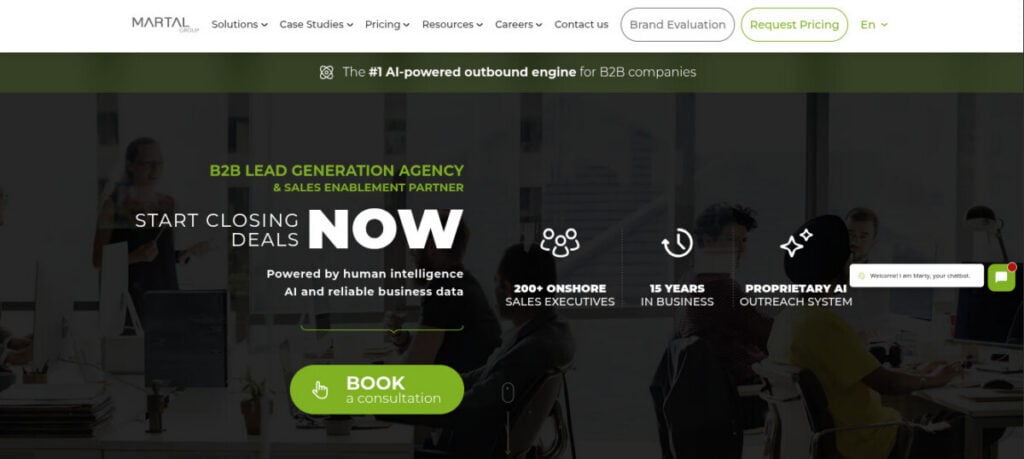
Martal Group is a B2B lead generation and appointment setting company that has worked with over 2,000 brands across more than 50 verticals for over 16+ years. The company combines onshore sales executives with an AI sales platform to run coordinated outreach across email, cold calling, and LinkedIn. It holds a #1 ranking in lead generation on Clutch.
For project managers, the structured onboarding model is worth noting: a 7-to-10 business-day ramp before campaigns go live, with first SQLs typically delivered within 30 days. Engagements are staffed with a fractional team (two sales executives plus one sales operations manager), which gives the PM a defined point of contact and a consistent reporting cadence. Industry coverage includes SaaS, cybersecurity, fintech, healthcare, logistics, and AI/ML, with onshore teams across North America, Europe, and LATAM.
Best for: B2B companies that want a fully managed appointment setting partner with structured onboarding and onshore delivery.
2. Belkins
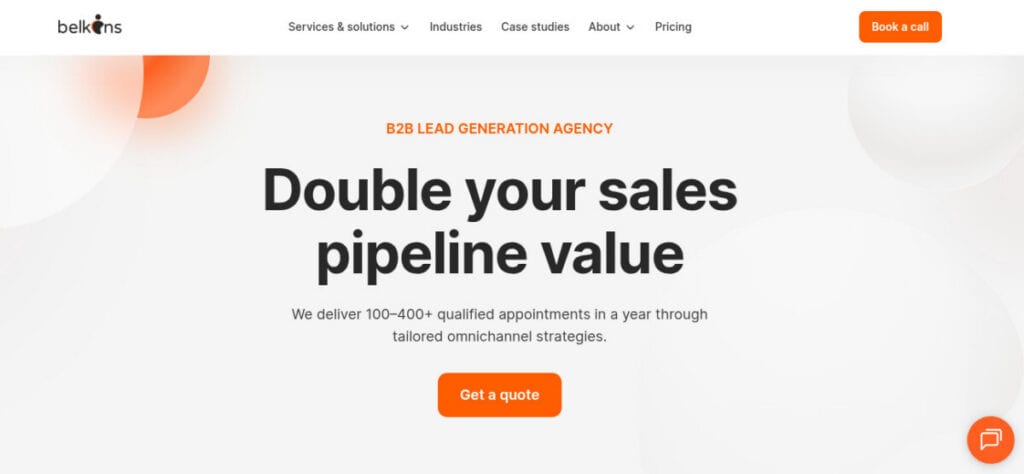
Belkins is one of the most established names in B2B appointment setting, recognized as a top lead generation provider on Clutch. Founded in 2017, the company has built outreach campaigns for over 1,000 clients across 50+ industries and reports scheduling more than 200,000 appointments to date. Belkins runs a multi-touch outreach model that combines email, LinkedIn, calling, and SMS, with a strong emphasis on appointment confirmation and no-show recovery.
Best for: Mid-market B2B companies that want a broad-coverage appointment setting partner with proven multi-industry experience and a focus on appointment quality over raw volume.
3. memoryBlue (formerly Operatix)
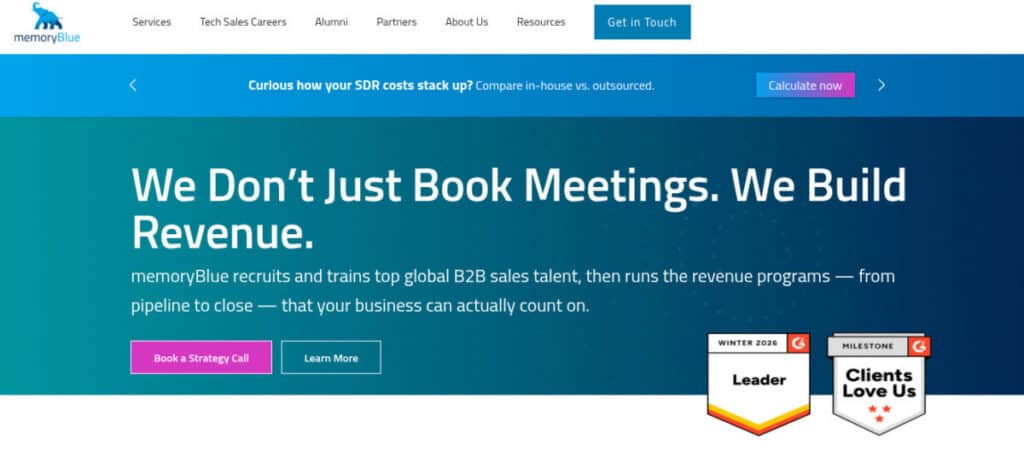
memoryBlue is the result of a 2023 merger between memoryBlue and Operatix, creating one of the largest sales acceleration providers focused specifically on the B2B technology ecosystem. The combined company runs sales development programs for cybersecurity, fintech, AI, data, and public-sector software companies, with offices across North America, EMEA, and APAC. memoryBlue is known for its proprietary Compass performance intelligence system and its focus on enterprise-grade tech sales pipelines.
Best for: B2B technology companies, particularly in cybersecurity and enterprise SaaS, that need globally distributed SDR coverage and deep tech-sector specialization.
4. EBQ
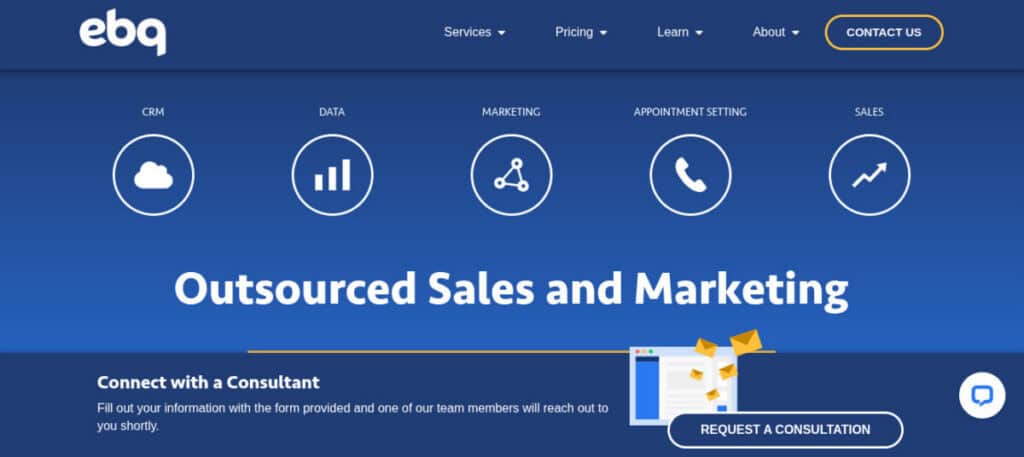
Based in Austin, Texas, and founded in 2006, EBQ takes a full-service approach that goes beyond appointment setting. The firm provides outsourced SDR teams, lead qualification, data services, marketing execution, and CRM consulting, typically for Salesforce and HubSpot environments. EBQ embeds dedicated business development representatives into its clients’ teams and assigns a project manager and revenue consultant to every engagement, which makes coordination familiar territory for PMs.
Best for: Mid-market and enterprise B2B companies that want appointment setting as part of a broader outsourced sales and marketing operation, with strong CRM integration.
5. JMS Elite

JMS Elite is a long-running B2B lead generation and appointment setting firm focused specifically on companies selling complex, high-ticket products and services. Now in its 21st year, the firm specializes in industries with long, consultative sales cycles, healthcare, life sciences, financial services, manufacturing, and information technology. JMS Elite uses experienced Business Development Executives (each with 10+ years of business experience) rather than entry-level appointment setters, which is reflected in their qualification depth.
Best for: Companies selling complex, high-ticket B2B solutions with long sales cycles, particularly in healthcare, life sciences, and industrial verticals.
Closing the Loop
Coordinating an appointment setting project is part traditional project management discipline, part sales operations awareness. The PMs who succeed treat the campaign as a living system — one that requires clear scope, layered KPIs, defined reporting, and structured optimization checkpoints, not a one-and-done deliverable.
If you’re evaluating outsourced partners, the right fit usually comes down to vertical specialization, delivery model, and how cleanly the partner’s reporting cadence integrates with your project rhythm. For a deeper comparison of providers across industries and engagement models, this overview of B2B appointment setting companies covers the broader landscape.
Get the project structure right at kickoff, build in weekly visibility, and treat the partner relationship like any other vendor engagement — with clear SLAs, milestone reviews, and defined escalation paths. The pipeline results follow.
Suggested articles:
- Best B2B Lead Databases You Can Leverage to Increase Sales
- 7 Best PR Agencies for B2B SaaS Companies in 2026
- The Top 8 B2B SEO Agencies for SaaS Companies

Daniel Raymond, a project manager with over 20 years of experience, is the former CEO of a successful software company called Websystems. With a strong background in managing complex projects, he applied his expertise to develop AceProject.com and Bridge24.com, innovative project management tools designed to streamline processes and improve productivity. Throughout his career, Daniel has consistently demonstrated a commitment to excellence and a passion for empowering teams to achieve their goals.