

Customer communication used to be simple. A phone call here, an email there, maybe a follow-up if things went quiet. That model no longer reflects how people actually behave. Customers now move fluidly between channels depending on time, urgency, mood, and convenience. They expect businesses to keep up—not by being everywhere, but by remembering everything. This shift is why omnichannel communication has moved from a “nice to have” to an operational requirement. It’s no longer about adding more touchpoints. It’s about creating continuity across them.
Problems arise when each interaction is treated as a new conversation. Repeating information, re-explaining issues, or being passed between teams erodes trust quickly. Omnichannel communication solves this by treating every interaction as part of a single, ongoing relationship rather than isolated touchpoints.
Customers Don’t Think in Channels

One of the biggest misconceptions businesses make is assuming customers consciously choose channels. In reality, customers choose outcomes. They message when it’s quick, call when it’s urgent, email when it’s detailed. The channel is incidental. Problems arise when each interaction is treated as a new conversation. Repeating information, re-explaining issues, or being passed between teams erodes trust quickly.
Omnichannel communication addresses this by ensuring every interaction feeds a unified customer profile. When implemented seamlessly, the technology becomes invisible. Customers don’t notice the systems at work; they simply feel recognized and understood, as if speaking to one knowledgeable entity throughout their journey.
From Fragmented Interactions to Shared Context
At its heart, omnichannel communication means maintaining a shared context: every interaction—chat, phone, email, or social—contributes to a single, central customer view. This unified record lets teams respond faster, avoid repetition, and deliver seamless, personalized experiences across channels.
This means:
- Agents can see past conversations instantly
- Customers don’t have to start from scratch
- Follow-ups are informed rather than generic
- Transitions between channels feel natural
The difference is subtle but powerful. Instead of “How can I help you today?” meaning “Explain everything again,” it becomes a genuine continuation of what’s already been discussed.
Why Multichannel is No Longer Enough
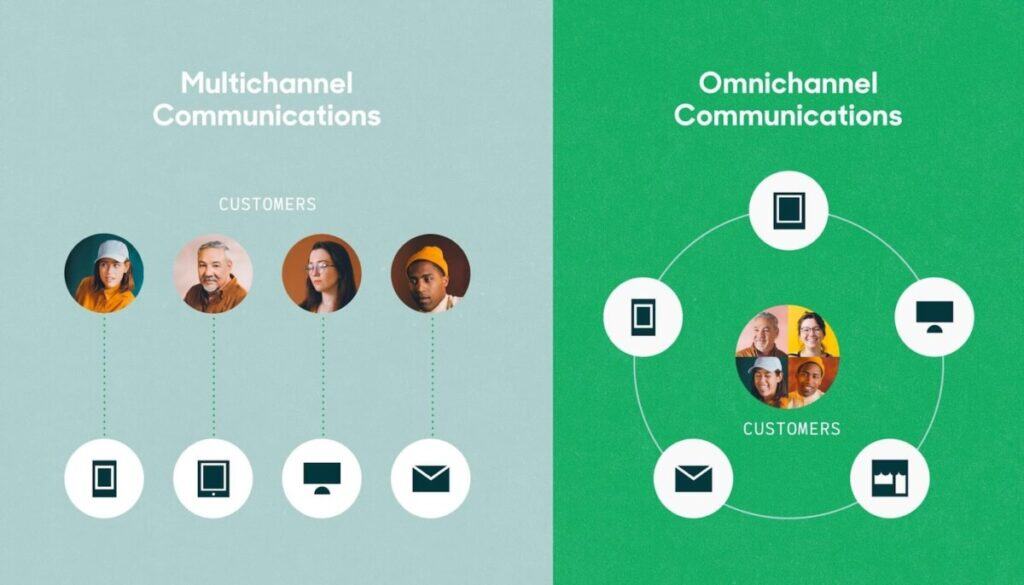
Many businesses already operate across multiple channels, but multichannel and omnichannel are not the same thing. Multichannel simply means offering different ways to get in touch. Omnichannel means that those ways are connected. Without integration, more channels often create more friction. Information gets lost, handovers fail, and customers fall through the cracks.
Omnichannel communication reduces complexity by aligning systems, data, and teams around the customer rather than the channel. This alignment ensures consistent context, faster resolutions, and fewer handoffs—especially as interaction volumes grow—so organisations can scale service quality, reduce friction, and deliver personalised experiences that build trust and loyalty.
Operational Efficiency Hidden in Plain Sight
Omnichannel communication isn’t just a customer experience upgrade. It has a measurable impact on internal efficiency. When teams work from shared information, duplication drops and resolution times improve. Agents spend less time gathering context and more time solving problems. Supervisors gain clearer visibility into bottlenecks and escalation points. Follow-ups become purposeful instead of reactive.
Over time, this reduces operational drag—the small inefficiencies that quietly inflate costs and frustrate teams—by streamlining workflows, cutting redundant tasks, and improving information flow. As a result, agents resolve issues faster, managers spot bottlenecks sooner, and the organisation saves money while boosting employee morale and productivity.
Where the AI Call Centre Fits Into Omnichannel Strategy
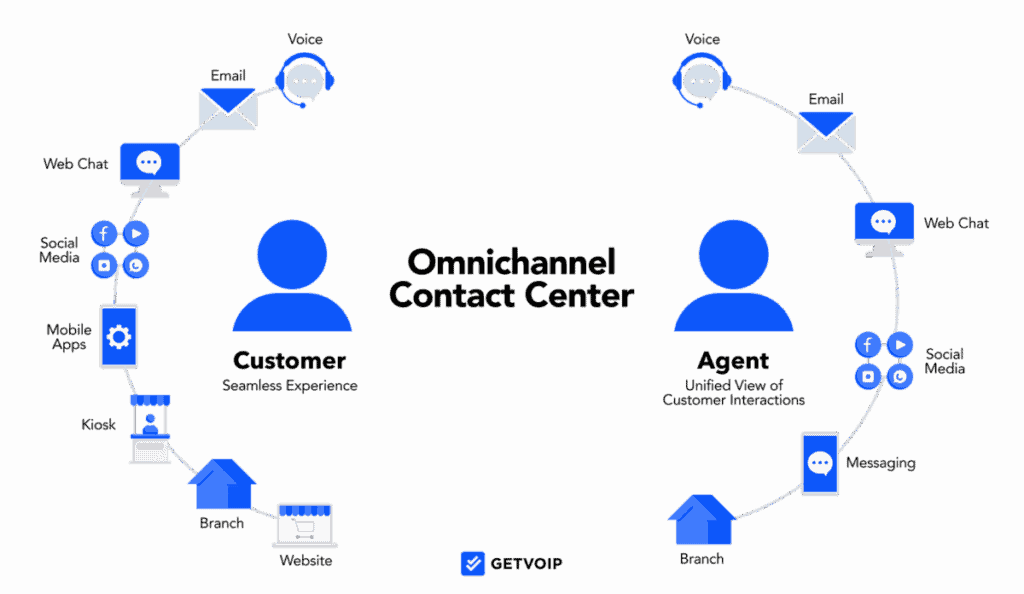
Omnichannel communication becomes significantly more scalable when paired with an AI call centre. Voice has traditionally been the hardest channel to integrate because it produces unstructured data. AI changes that by converting calls into searchable, analysable information. With AI in place, call transcripts, sentiment trends, and intent signals sit alongside chat logs and emails. This allows voice interactions to participate fully in the omnichannel ecosystem rather than existing in isolation.
The result isn’t fewer human conversations but richer, more effective ones—where every interaction is informed by shared context, enabling agents to resolve issues faster, personalise responses, and focus on complex problems. AI augments human judgement, scaling empathy and expertise without replacing the human touch.
Meeting Expectations Without Becoming Intrusive
Modern customers value personalisation, but they’re wary of overreach. Omnichannel communication strikes a balance by using existing interactions rather than invasive data collection. Instead of guessing what a customer wants, businesses respond based on what the customer has already said or done. Timing improves. Messaging becomes more relevant. Interactions feel less scripted and more responsive. This kind of relevance builds trust because it feels earned, not engineered.
To achieve this, organisations must prioritise consent, transparent data use, and meaningful context so personalisation enhances the experience without crossing privacy boundaries. When done right, personalised interactions reduce friction, increase satisfaction, and foster long-term loyalty. Here are five practical ways to deliver respectful, effective personalisation:
- Continuously audit personalization outcomes to prevent bias and overreach.
- Ask for and record clear preferences (channel, frequency, topics).
- Use conversation history to avoid repeating questions or requests.
- Surface only the contextual data relevant to the current interaction.
- Offer easy opt-outs and explain how data is used to improve service.
Omnichannel as a Growth Enabler, Not Just Support
While omnichannel communication is often associated with customer support, its impact extends well beyond service teams. Sales, onboarding, and account management all benefit from consistent context. Prospects don’t need to restate requirements. Existing customers don’t feel like strangers when discussing upgrades.
Cross-functional teams operate from a unified understanding instead of scattered notes and siloed memories. This shared context strengthens collaboration, reduces miscommunication, and creates smoother handoffs. Over time, that continuity deepens customer relationships, increases loyalty, and lifts lifetime value—driven by genuine familiarity rather than pressure.
Common Pitfalls Businesses Should Avoid
Adopting omnichannel communication isn’t without challenges. The most common mistake is focusing on tools instead of workflows. Technology alone doesn’t guarantee continuity if teams aren’t aligned. Another pitfall is partial implementation—connecting some channels while leaving others siloed. This often creates false confidence and inconsistent experiences.
Successful omnichannel strategies prioritise high-quality data, clear, documented processes, and phased rollouts that allow teams to learn and adapt. They embed omnichannel thinking into operations and culture—treating it as an enduring operating model rather than a temporary software add-on—so improvements stick and scale predictably.
Why Omnichannel is Now Table Stakes
Customer expectations are shaped by the best experiences they’ve had, not the average ones. Businesses that fail to offer continuity increasingly feel outdated, even if their products are strong. Omnichannel communication is no longer about standing out. It’s about keeping pace. As interaction volumes grow and attention spans shrink, the ability to recognise, remember, and respond coherently becomes essential.
In practice, omnichannel communication enables businesses to act the way customers already expect—attentive, connected, and consistently informed. By preserving context across every touchpoint, organisations reduce friction, personalise interactions, and build trust. That seamless alignment between expectation and experience turns omnichannel from a convenience into a business essential.
Suggested articles:
- Why Should Retailers Adopt Omnichannel to Improve Experience?
- Omnichannel Communication in Modern Businesses
- How Toronto Businesses Are Rethinking Communication in a Hybrid Economy

Daniel Raymond, a project manager with over 20 years of experience, is the former CEO of a successful software company called Websystems. With a strong background in managing complex projects, he applied his expertise to develop AceProject.com and Bridge24.com, innovative project management tools designed to streamline processes and improve productivity. Throughout his career, Daniel has consistently demonstrated a commitment to excellence and a passion for empowering teams to achieve their goals.