

Various software and tools enhance efficiency and productivity. One such tool is a time-tracking tool. A proper time management system can help individuals or teams work efficiently. Organizations can also use time-tracking systems to track employees’ work logs to increase efficiency. Time-tracking tools are essential for improving teamwork, ensuring productivity, and managing projects effectively.
In this article, we’ll analyze what a time-tracking tool is, the features of time-tracking software, the benefits of time-tracking software, and the top 11 time-tracking tools and software.
The Top 11 Best Time Tracking Tools to Improve Teamwork
The following time-tracking tools and software can significantly enhance teamwork by providing insights into time usage, improving productivity, and facilitating better project management practices. Depending on your team’s specific needs and preferences, you can choose the tool that best fits your requirements. In addition, many of these tools come with features such as automated timesheets, which can save valuable time and reduce manual data entry errors, helping teams maintain accurate and up-to-date records of work hours and task progress.
#1. YoroProject

YoroProject gives teams a unified system to plan projects, track hours, and monitor progress without bouncing between multiple tools. Its strength lies in blending time tracking with real task execution, so managers can see where hours actually go. This keeps teams accountable, eliminates confusion, and helps projects stay on schedule with fewer bottlenecks.
Key Features:
- Task and subtask time tracking
- Collaborative project boards
- Automated timesheets
- Custom reporting dashboards
- Real-time progress monitoring
#2. TimeBee
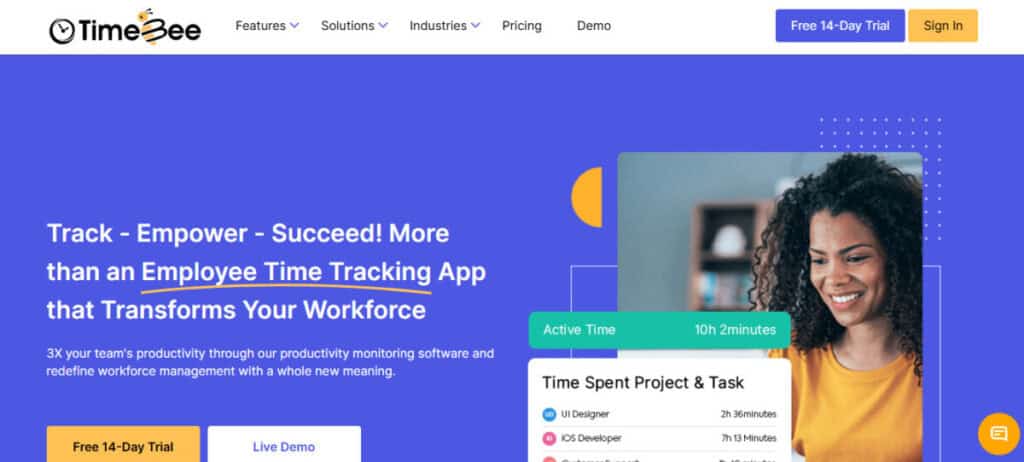
TimeBee helps teams understand exactly how work hours are being used. It automates time capture, flags productivity dips, and highlights patterns that slow teams down. It’s built for teams that want clearer visibility into workload, focus habits, and overall efficiency without adding unnecessary complexity or extra admin work.
Key Features:
- Automatic clock-in and clock-out
- Activity monitoring and productivity scoring
- Task-level time tracking
- Real-time performance reports
- Project-based progress tracking
#3. Toggl
Toggl is designed for teams that want effortless time tracking without complicated setup. It combines simplicity with powerful reporting so teams can understand exactly how their time is spent across clients, projects, and daily tasks. It’s ideal for freelancers and teams that need quick insights to improve execution and billing accuracy.
Key Features:
- One-click timers across all devices
- Detailed time and project reporting
- Client and project segmentation
- Offline time tracking
- Easy team onboarding
#4. Harvest

Harvest blends time tracking with invoicing and expense management, making it especially useful for agencies and freelance teams. It streamlines billing by turning tracked hours into invoices instantly. With integrations across major project management and accounting platforms, it keeps work hours, expenses, and payments running smoothly.
Key Features:
- Timesheet tracking with reminders
- Integrated invoicing and payments
- Expense and receipt tracking
- Project budget alerts
- Wide integration support
#5. Clockify
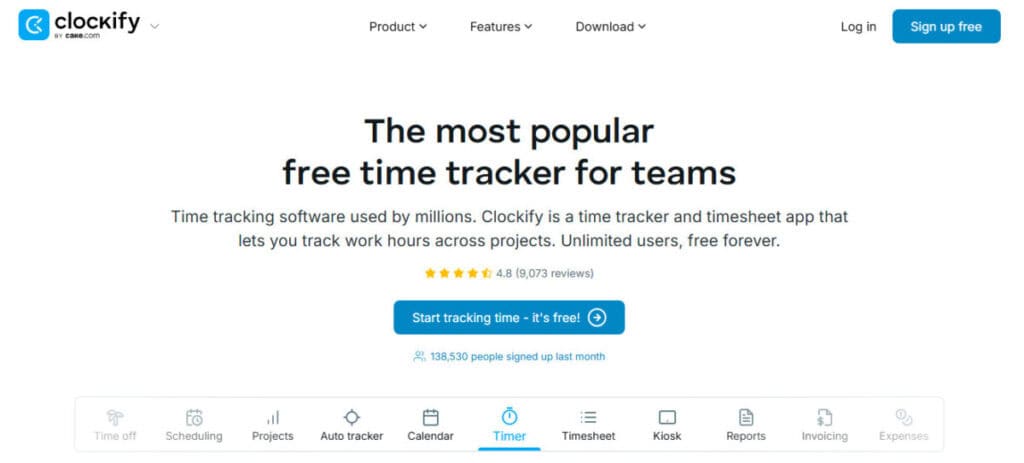
Clockify offers fully free, unlimited time tracking that works for any team size. It lets teams track time across unlimited projects, analyze productivity, and manage workloads without paying for basic features. Perfect for budget-focused teams that still want robust reporting and solid visibility into how hours are spent.
Key Features:
- Unlimited users and projects
- Timesheets and manual time entries
- Visual productivity dashboards
- Project and task tracking
- Exportable reports
#6. Hubstaff

Hubstaff delivers deep visibility into team activity, making it ideal for remote and field teams. It blends time tracking with GPS, payroll automation, and activity analytics, enabling business owners to keep operations tight and well-coordinated. It’s built for teams that need accountability and location-based oversight.
Key Features:
- GPS and geofencing
- Activity and productivity monitoring
- Automated payroll and invoicing
- Mobile and desktop time tracking
- Scheduling and shift planning
#7. RescueTime
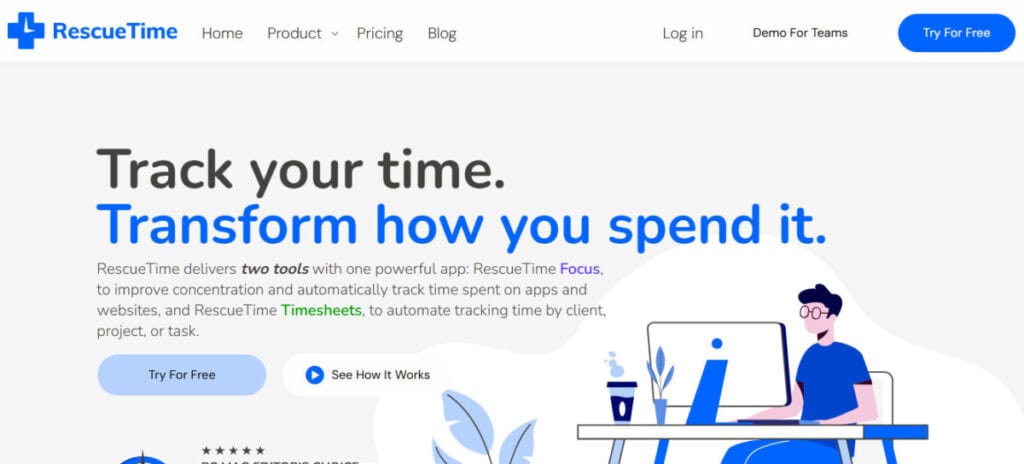
RescueTime focuses on personal productivity by showing where digital time actually goes. It monitors apps, websites, and habits to help individuals eliminate distractions and stay disciplined. Ideal for professionals who want honest, data-driven insights into their focus patterns so they can adjust their workflow.
Key Features:
- Automatic focus and distraction tracking
- Productivity scoring
- Website and app usage analysis
- Goal and alert system
- Daily and weekly performance reports
#8. ClickTime
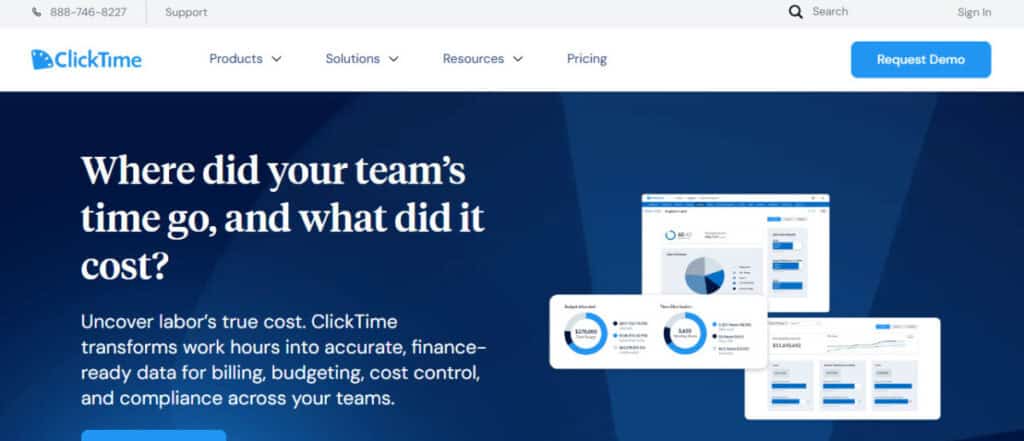
ClickTime gives teams the tools to track time, control budgets, and plan resources effectively. It’s built for organizations that manage multiple projects and need oversight on spending, workload distribution, and time efficiency. Its reporting tools help leaders quickly identify overruns before they become problems.
Key Features:
- Time and expense tracking
- Budget and cost controls
- Resource planning tools
- Customizable dashboards
- Profitability and utilization reports
#9. Everhour

Everhour blends seamlessly with popular project management apps, allowing teams to track time without switching systems. It’s built for teams managing multiple projects at once and needing tight control over budgets, tasks, and time allocations. Its integration-first design keeps workflows smooth and efficient.
Key Features:
- Native integrations with Asana, Trello, Basecamp, and more
- Task-level time estimates and tracking
- Real-time budgeting
- Visual progress dashboards
- Customizable reports
#10. Time Doctor

Time Doctor gives teams clarity and discipline by monitoring how work hours are spent and sending alerts when focus drifts. It’s built for teams that value accountability, productivity, and distraction-free work. With deep reporting and monitoring capabilities, it ensures every hour counts.
Key Features:
- Time tracking with activity monitoring
- Website and app usage insights
- Distraction and idle time alerts
- Productivity reports
- Optional screenshots for visibility
#11. Workyard

Workyard is designed for crews that spend their days moving between active sites and need accurate location-based time records. Its GPS engine records exact timestamps, verifies on-site presence, and organizes hours by task or project. This makes labor totals clearer, prevents time theft, and helps contractors keep payroll accurate without relying on guesswork or handwritten logs.
Key Features:
- High-accuracy GPS time tracking
- Automatic job-site arrival and departure logging
- Task-based hour breakdowns
- Crew scheduling and shift assignments
- Real-time labor cost reporting
- Mobile app for field teams
What is a Time Tracking Tool?
A time-tracking tool is a software application or system designed to help individuals and organizations monitor and record the time spent on various tasks, activities, or projects. These tools typically allow users to track time manually by starting and stopping timers or automatically by monitoring computer usage or activity levels.
Time-tracking software comes in various forms, from simple standalone applications to comprehensive project management software. They may offer additional features such as reporting and analytics, task management, invoicing, integration with other software systems, and mobile accessibility. Various automation software and tools integrate this time-tracking tool or provide built-in timeline templates to enhance productivity.
Ultimately, time-tracking tools empower individuals and teams to control their time, maximize productivity, and achieve their professional goals more efficiently and effectively. Whether used by freelancers, small businesses, or large corporations, these tools serve as valuable allies for better time management and improved workflow optimization.
Features of Time Tracking Software
Time-tracking software offers a range of features designed to help individuals and organizations monitor and manage time effectively. Some standard features of time-tracking software include:
- Time Tracking: The core feature of time-tracking software is to record the time spent on various tasks, projects, or activities. Users can start and stop timers manually or use automatic tracking features to capture time spent on different activities.
- Task and Project Management: Many time tracking tools for Jira include task and project management capabilities, allowing users to organize their work, assign tasks to team members, set deadlines, and track progress. This integration streamlines workflow management and ensures that time is allocated efficiently.
- Reporting and Analytics: Time-tracking software generates detailed reports and analytics to provide insights into time usage, productivity trends, and project performance. Users can analyze data to identify bottlenecks, optimize resource allocation, and make informed decisions to improve efficiency.
- Invoicing and Billing: Time-tracking tools often include invoicing and billing features to facilitate accurate client billing. Users can generate invoices based on tracked time, billable rates, and project expenses, streamlining the invoicing process and ensuring timely payments.
- Integration With Other Tools: Many time-tracking tools integrate with other software applications commonly used in business environments, such as project management software, accounting systems, calendar apps, and communication tools. This integration enhances workflow efficiency by allowing seamless data sharing between different platforms.
- Mobile Accessibility: Time-tracking software may offer mobile apps or responsive web interfaces, enabling users to track time and manage tasks. Mobile accessibility ensures that users can stay productive and update their time logs from anywhere, whether in the office, at home, or while traveling.
- Collaboration and Team Management: Time-tracking tools often include features for team collaboration and management, such as team calendars, shared project dashboards, and communication tools. These features promote collaboration, transparency, and accountability, facilitating better coordination and teamwork.
- Customization and Flexibility: Many time-tracking tools offer customization options to adapt to user needs and workflows. Users can customize settings, tags, labels, and reports to align the software with their unique requirements and preferences.
- Privacy and Security: Time-tracking software prioritizes data privacy and security by implementing robust encryption, access controls, and compliance with data protection regulations. Users can trust that their time-tracking data is kept secure and confidential.
- Productivity Features: Some time-tracking tools include productivity features such as distraction tracking, Pomodoro timers, and activity monitoring to help users stay focused and productive throughout the workday.
Overall, time-tracking software offers a comprehensive set of features to help individuals and organizations manage time effectively, improve productivity, and achieve better work-life balance. Various other automation software provides timeline templates with all these features to enhance productivity. By leveraging these features, users can gain valuable insights into their time usage, streamline workflows, and optimize their productivity.
Benefits of Time Tracking Tools
Time tracking tools serve several purposes, including:
- Productivity Monitoring: By tracking time spent on different tasks, individuals and teams can gain insights into how they allocate their time throughout the day. They can make necessary changes with these insights to enhance efficiency in further processes. This information can help identify areas of inefficiency and opportunities for improvement.
- Project Management: Time-tracking tools are often integrated with project management software to help teams monitor progress, allocate resources, and stay on schedule. Time management against specific projects or tasks provides valuable data for estimating project management timelines and budgeting.
- Invoicing and Billing: Accurate time tracking is crucial for freelancers and service-based businesses to bill clients accurately. Time-tracking tools can generate detailed reports of billable hours, making creating invoices and tracking payments easier.
- Employee Monitoring: Sometimes, time-tracking tools are used to monitor employees to ensure compliance with company policies and productivity standards. However, it’s essential to balance monitoring with employee privacy and trust.
- Performance Analysis: Time-tracking data can be used to evaluate individual and team performance, identify top performers, and provide feedback for professional development. This ensures team members work efficiently to become top performers.
While time-tracking tools offer numerous benefits, using them responsibly and respecting individual privacy and autonomy is essential. Employers should implement time-tracking policies transparently and communicate their purpose clearly to employees, fostering a culture of trust and accountability.
Conclusion
Time-tracking tools have become indispensable resources for individuals and organizations seeking to optimize productivity, manage projects efficiently, and foster collaboration within teams. These tools offer a range of features, including manual and automatic time tracking, project management integration, productivity monitoring, and invoicing capabilities.
Additionally, time tracking facilitates accurate invoicing and billing for client work, improving financial transparency and ensuring fair compensation for services rendered. By leveraging these time-tracking tools, users can gain valuable insights into how time is spent on various tasks and projects, enabling them to identify areas for improvement, allocate resources effectively, and meet deadlines more consistently.
Suggested articles:
- Top 10 Cons & Disadvantages of Time Tracking
- 8 Best Practices to Use Time-Tracking Software Effectively
- Employee Tracking and Attendance Tools: Features & Benefits

Daniel Raymond, a project manager with over 20 years of experience, is the former CEO of a successful software company called Websystems. With a strong background in managing complex projects, he applied his expertise to develop AceProject.com and Bridge24.com, innovative project management tools designed to streamline processes and improve productivity. Throughout his career, Daniel has consistently demonstrated a commitment to excellence and a passion for empowering teams to achieve their goals.