
The interactive communication model emphasizes face-to-face exchanges and real-time feedback between sender and receiver, making it especially useful in project management. By promoting clarity and alignment, this model helps team members reach a shared understanding of objectives and reduces the risk of costly misunderstandings. Immediate clarification and responsive dialogue also support faster conflict resolution and foster stronger working relationships among stakeholders.
These strengths improve collaboration, keep work aligned with project goals, and help teams adapt quickly when issues arise. In the sections that follow, we’ll break down how the interactive communication model works, compare it with push and pull methods, and show practical examples and tips for using it effectively on your projects.
The Concept of the Interactive Communication Model
The process of interactive communication is frequently misunderstood as a simple, linear process where one person transmits a message, and the other person passively receives it. This traditional view suggests a straightforward, one-directional flow of information from sender to receiver. However, this simplified model fails to truly capture how people communicate in real-world scenarios.
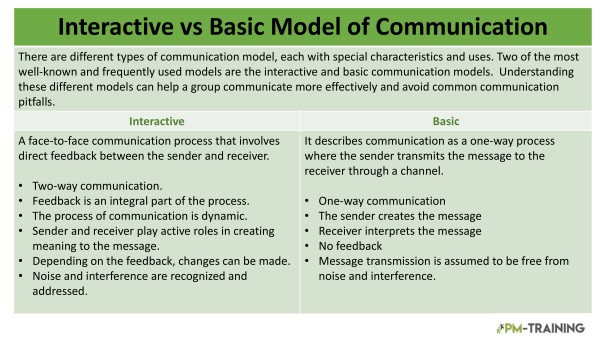
In reality, the process of communication is far more complex, nuanced, and dynamic than a simple sender-receiver relationship. Communication is an ongoing, cyclical process where both parties actively participate, continuously switching between sending and receiving roles. This complexity becomes particularly evident in the field of project management, where effective communication is critical to success.
In project environments, the primary goal extends beyond merely transmitting information—it’s about creating a shared understanding among team members who often come from vastly different backgrounds, possess varying levels of expertise, and may have different perspectives on project objectives. Project teams typically consist of diverse professionals, including technical specialists, business analysts, designers, developers, and stakeholders, each bringing their own terminology, priorities, and communication styles.
The interactive model acknowledges this complexity by emphasizing the importance of continuous feedback loops, clarifying questions, and adaptive communication strategies that ensure all parties reach a common understanding despite their differences. This two-way, participatory approach helps prevent misunderstandings, reduces project risks, and fosters the collaborative environment essential for project success.
How Does the Interactive Model Work?
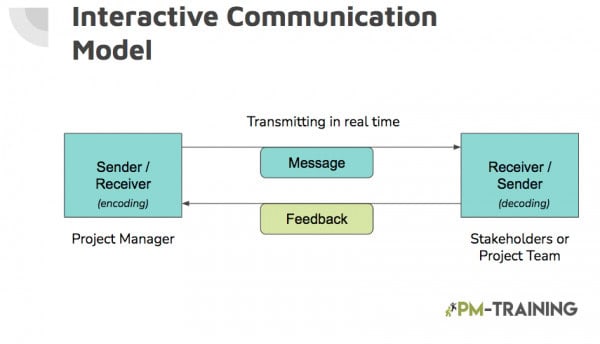
As we saw, interactive communication is a sophisticated process that involves dynamic two-way communication between sender and receiver. This cyclical process operates through several distinct phases where:
- The sender carefully encodes the message, transforming thoughts and ideas into a transmittable format, which is then transmitted through an appropriate channel to the receiver.
- The receiver actively decodes the incoming message, interprets its meaning within their own context, and sends a thoughtful response back to the sender, creating a continuous feedback loop.
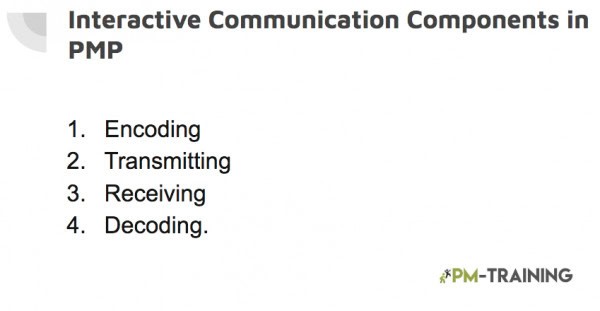
Encoding
The fundamental goal of communication is to send a message from one person to another and to have that message not only received but also fully understood in the way the sender intended. To accomplish this critical first step, the sender (or encoder) must first encode the message into a form that can be effectively sent. This encoding process involves several considerations:
- Choosing the right words and language that will resonate with the intended audience
- Structuring the information in a logical, coherent manner
- Selecting appropriate terminology based on the receiver’s knowledge level
- Considering cultural and contextual factors that might affect interpretation
The message is then sent through a carefully selected channel to the receiver (or decoder). The choice of channel—whether it’s email, face-to-face conversation, video conference, or written documentation—can significantly impact how the message is received and understood. The receiver then decodes the message and attempts to understand its intended meaning, drawing upon their own experience, knowledge, and frame of reference.
Numerous elements can affect the successful communication of a message, including the encoder’s clarity and communication skills, the complexity and structure of the message itself, the reliability and appropriateness of the channel, the decoder’s ability to interpret correctly, and any noise or interference that may be present in the communication environment.
Message
The message must be clear, concise, and purposeful in order to be effectively communicated. Ambiguity, unnecessary complexity, or unclear objectives can derail even the best-intentioned communication efforts. It is also critically important to consider the audience when crafting the message. Different stakeholders require different approaches:
- Technical team members may need detailed specifications and technical language
- Executive stakeholders often prefer high-level summaries with business impact
- External clients require clear, jargon-free explanations of project progress reports
The medium is the channel through which the message is communicated—whether verbal, written, visual, or digital. The format is the specific way in which the message is presented, such as a formal report, casual email, presentation slides, or collaborative discussion.
Receiving
Receiving is the active process of acquiring information and data from internal or external sources, often in real-time. This goes beyond simple passive listening—it requires attention, focus, and readiness to interpret incoming information. Data can take many forms, including text, images, audio recordings, video content, or multimedia presentations. In project management contexts, it can also include structured project information such as:
- Status reports
- Task updates
- Resource allocation charts
- Risk assessments
- Stakeholder feedback
The data must be carefully interpreted and thoroughly analyzed before it can be used effectively. This is where the receiver’s expertise, professional knowledge, and contextual understanding come into critical play. After the data has been interpreted, it must be organized and structured to be used effectively in decision-making and action planning. This crucial step is known as decoding. The receiver must make informed decisions about how the data will be used, what actions must be taken in response, and how to prioritize among competing demands.
Decoding
Decoding is the complex process of translating the sender’s message into an understandable form that can drive appropriate action. The receivers—which in project management contexts can include stakeholders, the project team, sponsors, clients, or other relevant parties—use their own experiences, accumulated knowledge, personal perspectives, and sometimes unavoidable biases to interpret the message.
This subjective interpretation can lead to misunderstanding, miscommunication, and project risks, so it’s vitally important to be aware of the potential for misinterpretation and to implement strategies to minimize it. There are several proven techniques you can employ to improve your decoding skills and ensure accurate understanding:
- Try to remain objective and open-minded, setting aside preconceptions and being willing to consider perspectives different from your own
- Ask clarifying questions whenever you’re unsure about something—there’s no such thing as a silly question when accuracy matters
- Pay careful attention to nonverbal cues, such as body language, facial expressions, tone of voice, and other paralinguistic elements, which can provide additional valuable information about the sender’s intended meaning, emotional state, and level of confidence in the message
- Confirm your understanding by paraphrasing what you’ve heard and asking the sender to verify your interpretation
- Document key points to ensure nothing is lost in translation and to create a reference for future discussions
Where Can You See the Interactive Communication Model in Project Management?
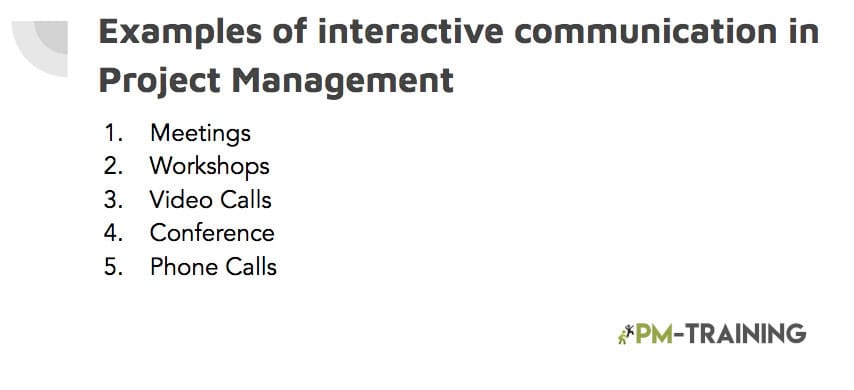
The interactive communication model is evident across various project management activities where real-time, two-way dialogue is essential. You’ll encounter this model in action during:
- Meetings: Whether they’re daily stand-ups, sprint planning sessions, or stakeholder reviews, meetings exemplify interactive communication. Team members can immediately ask questions, clarify misunderstandings, and provide instant feedback, ensuring everyone leaves with a shared understanding of project objectives and next steps.
- Workshops: Collaborative workshops and brainstorming sessions thrive on interactive communication. Participants actively exchange ideas, build upon each other’s suggestions, and work together to solve problems or develop solutions in real-time.
- Video Calls: Virtual face-to-face interactions through platforms like Zoom, Microsoft Teams, or Google Meet enable interactive communication across distributed teams. Participants can see facial expressions, interpret tone, and engage in back-and-forth discussions just as they would in person.
- Conferences: Project conferences and presentations that include Q&A sessions, panel discussions, or breakout groups demonstrate interactive communication. Attendees can engage directly with speakers, request clarification, and participate in meaningful dialogue about project topics.
- Phone Calls: Traditional phone conversations remain a powerful form of interactive communication in project management. They allow for immediate verbal exchange, tone interpretation, and quick resolution of issues without the delays inherent in written communication.
In each of these scenarios, the interactive model’s core strength shines through: the ability to achieve mutual understanding through continuous feedback loops and real-time adjustments to the message being communicated.
Communication Methods: Interactive vs Push vs Pull
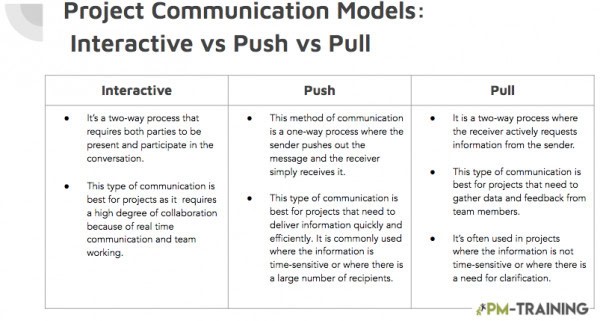
In project management, understanding the nuances of communication methods is critical to ensuring information flows effectively throughout the project lifecycle. There are three primary types of communication that project managers must master: interactive, push, and pull communication, each serving distinct purposes and operating through fundamentally different mechanisms.
- Interactive Communication: Represents the most engaging and dynamic form of information exchange, where both parties actively participate in real-time dialogue. Interactive communication excels at building relationships and ensuring understanding, but can be time-intensive.
- Push Communication: Involves proactively sending information to recipients, whether they’ve explicitly requested it or not, ensuring stakeholders receive timely updates. Push communication guarantees message delivery and maintains consistent stakeholder awareness, but may overwhelm recipients with information.
- Pull Communication: Takes a more passive approach, where information is made available in centralized repositories for stakeholders to access at their convenience when they need it. Pull communication provides flexibility and allows for self-service access, but requires stakeholders to be proactive and may result in missed updates.
Ultimately, the type of communication you use will depend on multiple factors, including:
- The specific needs of your project
- The urgency of the information being shared
- The size and distribution of your project team
- Stakeholder preferences and availability
- The complexity of the message
- The organizational culture in which you’re operating
Effective project managers strategically employ all three methods in combination, selecting the most appropriate approach for each situation to optimize communication effectiveness throughout the project.
Video About Interative Model of Communication
To better understand how the interactive communication model works in practice, this video provides a clear visual explanation of its key components, including the roles of sender and receiver, encoding and decoding processes, and the importance of feedback loops. Watch this brief overview to see how these concepts come together in real-world project management scenarios.
Conclusion
The interactive model of communication stands as a cornerstone of successful project management, enabling teams to navigate complexity through real-time dialogue and continuous feedback. Unlike one-directional approaches, this dynamic model recognizes that true understanding emerges from active participation by all parties involved. By strategically combining interactive communication with push and pull methods, project managers can create a comprehensive strategy that addresses diverse stakeholder needs.
Whether through meetings, video calls, or face-to-face conversations, the interactive approach ensures messages are truly understood, reducing costly misunderstandings and keeping projects aligned with objectives. As you implement this model, remember that effective communication is about creating an environment where team members feel comfortable asking questions and engaging in meaningful dialogue. This openness will strengthen collaboration, accelerate problem-solving, and drive project success.
FAQs
Why is the interactive model of communication so important?
This process is important in project management because it helps to avoid miscommunication and misunderstanding. It also allows managers to gauge team members’ reactions and feedback, which can be helpful in ensuring that the project is on track. If you’re a project manager, then it’s important to understand the interactive communication model and how to use it effectively.
How does the interactive communication model work in PMP?
The sender and receiver are both active participants in the communication process. The sender encodes the message and sends it to the receiver, who then decodes the message and sends a response back to the sender. This interactive communication model is beneficial for project managers because it ensures that both parties are involved in the communication process, which can help to avoid miscommunication and misunderstanding.
What is an example of interactive communication in pmp?
For example, consider a project status meeting where interactive communication is actively demonstrated. This type of communication occurs through real-time exchanges between participants, with the sender confirming message receipt through verbal acknowledgment, visual cues such as nodding, or direct responses. During such meetings, stakeholders and project team members provide immediate feedback, ensuring that the project manager’s message has been clearly understood and appropriately interpreted by all parties involved.
Suggested articles:
- A Quick Overview of Basic Communication Model For Project Managers
- 6 Team Agile Communication Techniques & Digital Tools
- The Communication Process Diagram and Its Importance in Project Management

Shane Drumm, holding certifications in PMP®, PMI-ACP®, CSM, and LPM, is the author behind numerous articles featured here. Hailing from County Cork, Ireland, his expertise lies in implementing Agile methodologies with geographically dispersed teams for software development projects. In his leisure, he dedicates time to web development and Ironman triathlon training. Find out more about Shane on shanedrumm.com and please reach out and connect with Shane on LinkedIn.