
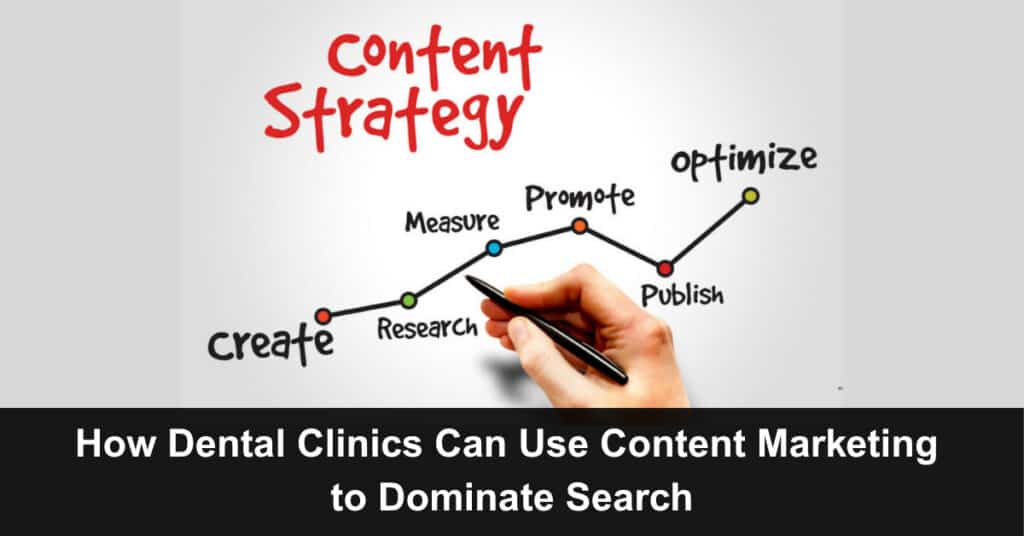
When someone has a toothache or wants to improve their smile, their first instinct is to search online. Queries like “best dentist near me,” “teeth whitening cost,” or “root canal treatment” are made every day by people who are ready to book an appointment. The clinics that show up at the top of these results get more patients.
Instead of depending only on ads or word of mouth, dental clinics can attract and convert patients by creating helpful and relevant content. Answering common dental questions, explaining treatments in simple terms, and sharing real patient experiences help build trust even before someone visits the clinic.
And yet, most local dentists aren’t creating content to capture that traffic. They’re relying on word-of-mouth, maybe some paid ads, and hoping their Google Business Profile does the heavy lifting. In this guide, you will learn how dental clinics can use content marketing to rank higher on search engines and turn online searches into actual appointments.
What is Local Content Marketing for Dentists?
Local content marketing for dentists is a strategy that uses location-based digital content to attract patients within a specific geographic area. The objective is higher visibility in search results for queries related to dental services in a defined locality.
Key components include:
- Location-based service pages targeting specific areas
- Educational articles addressing dental treatments and costs
- FAQs aligned with common patient search queries
- Case studies and treatment outcomes
- Regular updates on Google Business Profile
Best Content Marketing Strategies To Bring More Patients To Your Dental Practice
Here are the top content marketing tips for dentists to increase website traffic and patient appointments:
1. Stop Writing Content for “Everyone”- Write for Your Local Searcher
The biggest content marketing mistake dental hospitals make? Writing generic content that could apply to any business in any city. A dentist in Austin doesn’t need a blog post about “what is a root canal.” WebMD already owns that keyword. What they need is content that targets the specific questions their local audience is asking.
What local-first content looks like:
- Location-specific service pages that target “[service] in [city]” searches, the exact queries people type when they’re ready to book.
- FAQ content that answers real questions from your customers: “Does my insurance cover dental implants in Texas?” “How much does HVAC repair cost in Phoenix?”
- Neighborhood and community content that signals local relevance to search engines: event sponsorships, local partnerships, and area-specific guides.
- Comparison content that helps searchers make decisions: “Invisalign vs. braces: what [city] patients should know.”
Pro Tip: Use your front desk team or customer service logs as a content goldmine. The questions people ask on the phone are the exact questions they’re searching on Google.
2. Build Topical Authority- Don’t Just Chase Keywords
Google doesn’t reward websites that publish one random blog post a month. It rewards websites that demonstrate deep expertise on a topic. This is called topical authority, and it’s the single biggest lever in local dental SEO and content marketing. Instead of writing scattered posts about unrelated topics, build content clusters around your core services.
How to structure a content cluster:
- Pillar Page: A comprehensive, long-form page on a core service (e.g., “Dental Implants in [City]: Everything You Need to Know”)
- Supporting Posts: Targeted articles that answer specific questions and link back to the pillar (e.g., “How long do dental implants last?”, “Dental implant cost breakdown”, “Implants vs. dentures”)
- Internal Linking: Every supporting post links to the pillar page, telling Google that your site is the authority on this topic
Pro Tip: Start with your highest-revenue service. Build 5–10 pieces of supporting content around it before moving to the next topic. Depth beats breadth every time.
3. Make Your Content Sound Like You- Not Like a Robot
AI tools have made it easier than ever to produce content at scale. But there’s a problem: if every business in your market is using the same tools with the same prompts, the output all sounds the same. For local businesses, this is a critical issue. Your content needs to sound like a trusted local expert, not a template.
How to inject your unique voice:
- Include Real Examples from Your Practice: “We recently helped a patient who…” is infinitely more compelling than generic advice.
- Reference Local Context: Mention your city, local events, regional insurance plans, or community partnerships. This signals authenticity to both readers and search engines.
- Add Original Data and Opinions: What trends are you seeing in your business? What’s a common misconception your customers have? Original perspective is what AI can’t replicate.
- Use AI as a Starting Point, Not the Final Product: The best content strategies use AI tools for research, outlines, and first drafts, then layer in human expertise, brand voice, and local knowledge.
Pro Tip: Google’s E-E-A-T framework (Experience, Expertise, Authoritativeness, Trust) rewards content written by people with real experience. For local service businesses, that’s your competitive advantage; lean into it.
4. Optimize for AI Search (Not Just Google)
Here’s the shift most local dental clinics haven’t caught yet: customers are starting to find businesses through AI chatbots, not just traditional search. A BrightLocal study found that 32% of U.S. adults believe AI would provide a better experience than traditional search for finding local businesses. And ChatGPT Search is already citing business websites in 58% of its local search results.
What this means for your content:
- Structure Content for Clear, Direct Answers: AI models pull from content that answers questions concisely—think FAQ sections, clear definitions, and structured how-to guides.
- Build Citations Across the Web: AI search results favor businesses mentioned on multiple authoritative sites. Reviews, directory listings, guest posts, and press mentions all feed this.
- Keep Content Fresh: AI platforms weigh recency. A blog post from 2019 is less likely to be cited than one updated in 2025.
Pro Tip: Think of every piece of content as a potential AI citation. If ChatGPT or Gemini were answering a question about your service in your city, would your website be the source they pull from? That’s the bar to aim for.
5. Measure What Matters, Traffic Alone Isn’t Enough
Content marketing for dental practices isn’t a vanity play. If your blog gets 10,000 visitors but zero phone calls, something is broken. The metrics that actually matter for local service businesses are different from what a SaaS company or e-commerce brand would track.
What to measure:
- Organic traffic to service pages (not just blog posts, are people finding your core offerings through search?)
- Conversion rate from organic visitors (form fills, phone calls, appointment bookings)
- Keyword rankings for local intent terms (“dentist near me,” “[service] in [city]”)
- Google Business Profile actions (calls, direction requests, website clicks driven by your content)
Pro Tip: Set up call tracking so you can attribute phone calls to specific pages and keywords. For most local businesses, phone calls are the primary conversion, and if you’re not tracking them, you’re guessing.
The Bottom Line
Content marketing isn’t just for tech firms or e-commerce brands. For local dental clinics and hospitals, it’s the most effective way to increase search visibility, build trust before the first patient interaction, and create a lasting asset that generates leads year after year. Focus on content for your local audience, develop deep topical authority, and let your practice’s voice—real expertise and local context—come through.
Measure outcomes that drive revenue—not vanity metrics. Track conversions like calls, bookings, and page-specific ROI. Optimize consistently based on those results to boost real patient growth. Do this long-term, and your clinic won’t just climb rankings—it will dominate your local market.
Suggested articles:
- Signs It Is Time to Rethink Your Digital Marketing Strategy
- Marketing Readiness: Auditing Your Website Before Your Digital Marketing Campaign
- Marketing Your Franchise: Strategies to Boost Visibility and Drive Growth

Daniel Raymond, a project manager with over 20 years of experience, is the former CEO of a successful software company called Websystems. With a strong background in managing complex projects, he applied his expertise to develop AceProject.com and Bridge24.com, innovative project management tools designed to streamline processes and improve productivity. Throughout his career, Daniel has consistently demonstrated a commitment to excellence and a passion for empowering teams to achieve their goals.