
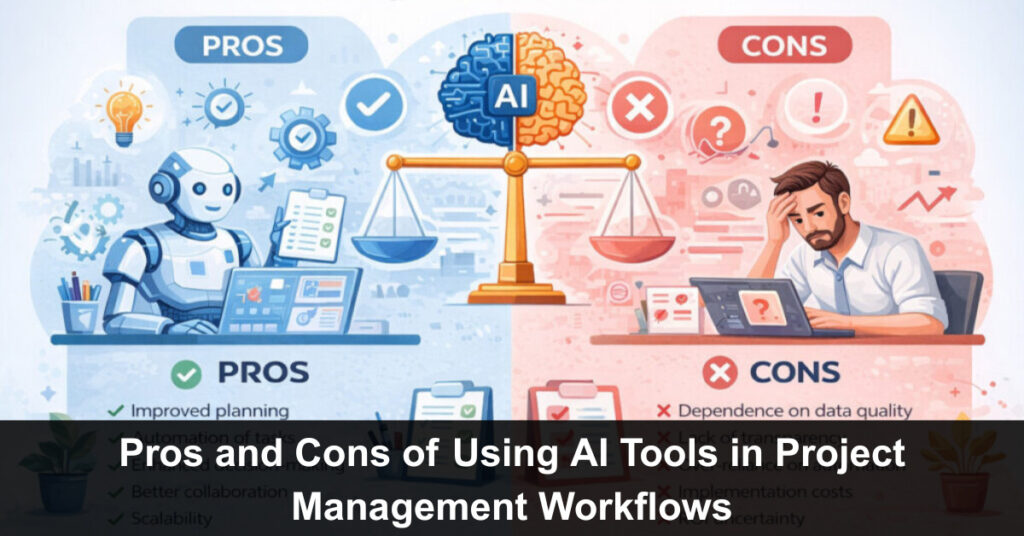
Artificial intelligence is steadily reshaping how teams plan, execute, and deliver projects. From predictive scheduling to automated reporting, AI-powered tools promise faster decision-making, reduced manual effort, and improved visibility across complex workflows. For project managers under pressure to deliver more with fewer resources, these capabilities can feel transformative.
However, as with any technology shift, the adoption of AI in project management is not without trade-offs. While AI tools can streamline processes and uncover insights that would otherwise be missed, they also introduce new challenges related to data quality, transparency, and human oversight. Understanding both sides is essential before integrating AI deeply into project workflows.
This article explores the key pros and cons of using AI tools in project management, helping teams make informed, practical decisions.
Pros of Using AI Tools in Project Management
1. Improved Planning and Forecasting
One of the strongest advantages of AI in project management is its ability to analyze historical data and identify patterns. AI-powered tools can forecast timelines, predict potential delays, and recommend resource allocations based on previous project outcomes. This allows project managers to plan more accurately and mitigate risks earlier in the lifecycle. Rather than relying solely on intuition or static templates, teams can base decisions on data-backed predictions that adapt as the project evolves.
2. Automation of Repetitive Tasks
Project managers often spend a significant amount of time on administrative work such as updating task statuses, generating reports, and tracking dependencies. AI tools can automate many of these repetitive activities, freeing managers to focus on strategic planning and stakeholder communication. Automated status updates, progress summaries, and risk alerts reduce manual effort while ensuring information remains up to date across the team.
3. Enhanced Decision-Making
AI tools excel at processing large volumes of data quickly. By analyzing task progress, team performance, and external variables, AI systems can surface insights that support better decision-making. For example, AI can highlight underutilized resources, identify bottlenecks, or recommend alternative task sequences to keep projects on track. These insights help managers respond proactively rather than reactively.
4. Better Collaboration and Visibility
Modern AI-driven project management platforms often integrate with collaboration tools and visual workspaces. This enhances transparency by providing real-time updates and shared views of project progress. Many teams combine AI insights with visual planning frameworks, such as Miro boards, to brainstorm ideas, map workflows, and align stakeholders. When paired effectively, AI and visual collaboration tools can significantly improve cross-functional communication.
5. Scalability for Growing Teams
As organizations scale, managing multiple projects and distributed teams becomes increasingly complex. AI tools can help standardize workflows, monitor performance across portfolios, and maintain consistency without adding managerial overhead. This makes AI particularly valuable for organizations handling large volumes of projects simultaneously.
Cons of Using AI Tools in Project Management
1. Dependence on Data Quality
AI systems are only as effective as the data they analyze. Inaccurate, outdated, or incomplete data can lead to flawed recommendations and misleading insights. If a team lacks disciplined data entry practices or consistent reporting standards, AI-generated outputs may create a false sense of confidence rather than genuine clarity. In many cases, teams underestimate how critical structured content, clean data signals, and technical foundations are for AI-driven insights to work effectively, making technical SEO best practices an important consideration for platforms that rely on automation and analytics.
2. Lack of Transparency in Decision Logic
Many AI tools operate as “black boxes,” offering recommendations without clearly explaining how conclusions were reached. For project managers accountable to stakeholders, this lack of transparency can be problematic. When timelines shift or resource changes are suggested, managers may struggle to justify decisions if they cannot clearly articulate the reasoning behind them.
3. Over-Reliance on Automation
While automation improves efficiency, excessive reliance on AI can reduce human judgment. Project management often involves nuanced decisions that require contextual understanding, emotional intelligence, and negotiation—areas where AI still falls short. Blindly following AI recommendations without critical evaluation can lead to suboptimal outcomes, particularly in complex or sensitive projects.
4. Implementation and Learning Curve
Introducing AI tools into existing workflows requires time, training, and process adjustments. Teams may face resistance to change, especially if the perceived benefits are unclear or the tools feel overly complex. Without proper onboarding and change management, AI adoption can create confusion rather than productivity gains.
5. Cost and ROI Uncertainty
Advanced AI-driven project management platforms often come with higher costs. For smaller teams or organizations with simpler workflows, the return on investment may not justify the expense. Careful evaluation is needed to determine whether AI features genuinely address specific pain points or simply add complexity.
When AI Tools Make Sense in Project Management
AI is rapidly reshaping project management, moving beyond hype to become a practical force multiplier. By automating routine tasks, analyzing complex data, and predicting outcomes, AI tools free project managers to focus on strategic leadership, stakeholder engagement, and creative problem-solving. Their true value shines in specific, structured environments where data and pattern recognition drive efficiency and insight. Core areas of impact include:
- When Speed and Scale Are Critical: AI enables real-time decision-making at a scale impossible to do manually. It can instantly re-route tasks based on a change, analyze thousands of data points for portfolio risks, and generate reports on demand, allowing teams to adapt with unprecedented agility.
- For Data-Rich, Recurring Projects: AI excels in environments with established processes and historical data. By analyzing past performance, it can predict timelines, optimize resource allocation, and automate status reporting. This turns repetition from a chore into a source of continuous improvement and reliable forecasting.
- Managing Complex Dependencies & Stakeholders: Tools powered by AI can continuously map and monitor intricate task networks, automatically flagging potential conflicts or delays. They also analyze communication patterns to identify stakeholder sentiment, ensuring critical risks or alignment issues are surfaced before they escalate.
- Leveraging Historical Performance Data: When fed reliable historical data, AI models move beyond simple tracking to proactive guidance. They can forecast budget overruns, suggest mitigation strategies based on what worked before, and benchmark team performance, transforming past projects into a strategic asset.
AI excels in structured environments but falters where human nuance is key. Highly creative, exploratory, or relationship-driven projects benefit less from AI and more from flexible, human-centered management that prioritizes intuition, adaptability, and trust.
Conclusion
AI tools have the potential to significantly enhance project management workflows by improving planning accuracy, automating routine tasks, and supporting data-driven decisions. When implemented thoughtfully, they can reduce friction and increase visibility across teams. At the same time, AI is not a replacement for experienced project managers. Its limitations, particularly around data quality, transparency, and contextual judgment, mean that human oversight remains essential.
The most effective approach is a balanced one, where AI augments human expertise rather than attempting to replace it. By understanding both the pros and cons, organizations can adopt AI tools strategically, ensuring they support project goals without undermining flexibility or accountability.
Suggested articles:
- AI in Project Management: Revolutionizing Efficiency and Success
- 5 AI Tools That Will Replace 99% of Project Management Work
- How AI Is Revolutionizing Project Management: From Planning to Delivery

Daniel Raymond, a project manager with over 20 years of experience, is the former CEO of a successful software company called Websystems. With a strong background in managing complex projects, he applied his expertise to develop AceProject.com and Bridge24.com, innovative project management tools designed to streamline processes and improve productivity. Throughout his career, Daniel has consistently demonstrated a commitment to excellence and a passion for empowering teams to achieve their goals.