
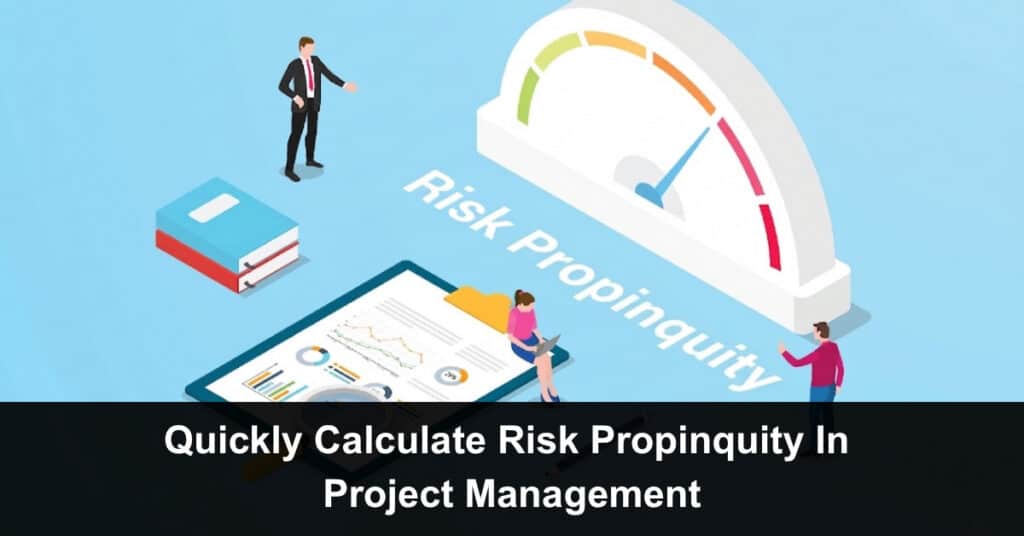
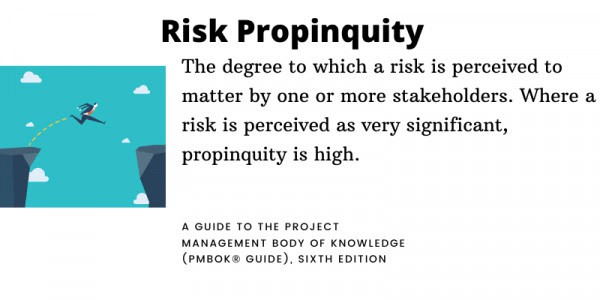
According to the PMBOK, the degree to which a risk is perceived to matter by one or more stakeholders is called risk propinquity. It evaluates the closeness or proximity between a project manager and a project’s risks, helping determine how directly those risks influence decisions, actions, and the overall direction of project execution within a project environment.
A risk’s propinquity is a function of its potential severity and the likelihood that it will materialize during the project lifecycle. This concept is important because it helps stakeholders prioritize risks effectively, ensuring attention is focused on issues that are both impactful and immediately relevant to achieving successful and controlled project outcomes.
Risk propinquity is often used alongside other risk management concepts, such as a project manager’s authority to make decisions when responding to risks. When multiple stakeholders are involved in a project, the degree of propinquity may vary depending on their responsibilities, exposure, and influence within the project structure.
Risk Levels In Project Management
When identifying risks for a project, it is important to consider both the likelihood of occurrence and the potential impact on project outcomes. Risks with a high likelihood but low impact can be managed with minimal effort, while risks with low likelihood but high impact should receive closer attention and structured mitigation planning.
Once risks have been identified and assessed, they can then be managed using appropriate strategies and control measures. There are several ways to manage risks effectively, and the most suitable approach will depend on the nature of the risk, the project environment, and the level of uncertainty involved.
Key Risk Level Categories
Project risks are typically grouped into categories to simplify prioritization and response planning. These categories help teams quickly understand which risks demand immediate action and which can be monitored over time without requiring significant resources or continuous intervention during project execution.
- Low Likelihood, Low Impact: Minimal concern and requires only basic monitoring to ensure it does not escalate into a more serious issue during the project lifecycle.
- High Likelihood, Low Impact: Occurs frequently but causes limited disruption, making it manageable through routine processes and standard operational adjustments.
- Low Likelihood, High Impact: Rare events that can cause serious damage, requiring contingency planning and proactive mitigation strategies to reduce potential harm.
- High Likelihood, High Impact: Critical risks that demand immediate attention and structured action to prevent major disruption or failure of the project.
Why Risk Levels Matter
Understanding these categories ensures that project managers do not waste time on minor issues while ignoring serious threats. It creates a structured decision-making framework and ensures that project risk response planning is proportional to every potential impact on timelines, costs, resources, and overall project success.
Risk Propinquity
Risk propinquity refers to how close or immediate a risk feels to stakeholders within a project environment. This perception strongly influences how urgently a risk is treated, regardless of its actual probability or impact, making it a key factor that shapes prioritization, response strategies, and decision-making throughout the project lifecycle.
Risk propinquity also introduces a psychological element into risk management, where visible or immediate risks tend to receive more attention than distant ones. This imbalance can cause teams to overreact to short-term issues while ignoring long-term risks that may have a greater overall impact on project success.
Factors That Influence Risk Propinquity
Several factors determine how close a risk feels to stakeholders and how it is prioritized during project execution. Understanding these factors helps project managers reduce bias and ensure that risk evaluation remains objective, consistent, and aligned with actual project priorities and long-term goals.
- Timing: Risks expected to occur soon are perceived as more urgent and often receive immediate attention from stakeholders and decision-makers.
- Visibility: Risks that are highly visible or frequently discussed tend to attract more focus, even if their actual impact is relatively low.
- Stakeholder Impact: Risks that directly affect key stakeholders are prioritized more aggressively due to their immediate consequences on project outcomes.
- Dependency: Risks that influence critical tasks or dependencies are treated as more urgent because they can disrupt multiple areas of the project.
Methods Used To Rate Potential Risk
In any project, there is always the potential for risks to emerge and disrupt progress at different stages of execution. By understanding and rating these risks effectively, project managers can prepare structured responses and reduce uncertainty, ensuring smoother workflows and better control over project outcomes. There are several ways to rate potential risks depending on project complexity and available data.
- Likelihood-Based Rating: One method used to assess risk probability is by rating risks based on their likelihood of occurring, using a scale where one represents the lowest probability, and five represents the highest probability of occurrence within the project lifecycle.
- Impact-Based Rating: Another method involves rating risks based on their potential impact, with one indicating minimal consequences and five representing severe disruption. Combining likelihood and impact ratings allows project managers to prioritize risks effectively and allocate resources where they are most needed.
- Prioritization and Mitigation: Once risks have been rated and categorized, they can then be prioritized, and mitigation strategies can be developed. This ensures that risks are handled proactively instead of reactively, reducing uncertainty and improving the overall stability and predictability of project execution.
In order to successfully manage a project, it is essential to identify and assess risks using structured and reliable methods. Different techniques offer unique advantages, and selecting the right one depends on the project’s complexity, available expertise, and the level of detail required.
Common Risk Rating Methods
Several methods are widely used to assess and rate risks effectively in project management. These methods provide different perspectives and can be combined to create a comprehensive understanding of potential threats and how they may impact project success.
- Risk Matrix: A visual tool that combines likelihood and impact to quickly identify and prioritize high-risk areas within a project.
- Probability Analysis: Assigns percentage-based likelihood values to risks, allowing for more data-driven and measurable decision-making processes.
- Scenario Analysis: Evaluates best-case, worst-case, and most likely outcomes to prepare for uncertainty and improve strategic planning.
- User Stories: Identifies risks based on real-world usage scenarios, helping teams anticipate challenges from a practical perspective.
Advanced Risk Assessment Techniques
Some projects require more structured and expert-driven approaches to risk assessment, particularly when dealing with complexity or uncertainty. These advanced techniques provide deeper insights and help project managers make more informed and confident decisions.
- Delphi Technique: Uses expert input collected anonymously to reach consensus and reduce bias in risk evaluation and decision-making.
- Precedence Diagramming Method: Maps task dependencies to identify risks related to sequencing and workflow disruptions within complex projects.
- SWOT Analysis: Evaluates strengths, weaknesses, opportunities, and threats to provide a broader strategic view of potential risks.
Each of these methods has its own advantages and limitations, making it important to select the one that best fits the project context. For example, the Delphi Technique is useful for expert consensus, while the Precedence Diagramming Method works best for projects with complex task relationships.
How Can Risk Propinquity Impact Your Project Management?
Risk propinquity can influence project management in several critical ways, particularly in how risks are perceived and addressed by stakeholders. It directly affects decision-making, resource allocation, and timelines, making it an essential factor that must be managed carefully throughout the project lifecycle.
- Impact on Decision-Making: Risk propinquity can impact the decision-making process when individuals prioritize risks based on perceived urgency rather than objective analysis. This often leads to rushed decisions, overlooked details, and poor outcomes that could have been avoided with a more structured and disciplined approach.
- Impact on Resource Allocation: It can also affect how resources are allocated within a project, especially when certain risks appear more immediate or visible. This may result in over-investment in specific areas while neglecting other critical risks, ultimately creating inefficiencies and weakening overall project performance.
- Impact on Project Timelines: Risk propinquity can influence project timelines by creating pressure to act quickly in response to perceived threats. This often leads to unrealistic expectations, reduced quality, and increased stress, all of which can negatively impact long-term project success and sustainability.
Key Areas Affected By Risk Propinquity
Understanding where risk propinquity has the greatest influence helps project managers maintain control and avoid unnecessary mistakes. These areas are critical to project success and must be managed carefully to ensure balanced and effective decision-making.
- Decision-Making: Can become reactive instead of strategic, leading to rushed judgments and avoidable errors in project execution.
- Resource Allocation: May result in an imbalance, where visible risks receive excessive attention while hidden risks are ignored.
- Project Timelines: Often leads to unrealistic deadlines and pressure-driven execution that compromises quality and stability.
- Team Performance: Increased pressure and urgency can reduce productivity, morale, and the project team’s overall effectiveness.
How To Control Risk Propinquity
Managing risk propinquity requires discipline and structured processes that reduce reliance on perception and bias. By applying consistent evaluation methods, project managers can ensure that risks are handled based on facts rather than assumptions or emotional reactions.
- Standardized Risk Scoring: Ensures consistency in how risks are evaluated and compared across the project.
- Regular Risk Reviews: Keeps risk assessments updated and aligned with changing project conditions and priorities.
- Stakeholder Alignment: Ensures all stakeholders share a consistent understanding of risk priorities and responses.
- Balanced Risk Focus: Maintains attention on both immediate and long-term risks to avoid blind spots in project planning.
Video About Risk Propinquity
Watch the video below for a clear breakdown of risk propinquity and how it applies to real-world project management scenarios.
Conclusion
Risk propinquity is not just a theoretical concept but a practical tool that shapes how risks are perceived, prioritized, and managed throughout a project lifecycle. When properly understood, it allows project managers to balance urgency with objectivity, ensuring that decisions are based on actual risk severity rather than perception alone. By combining structured risk assessment methods with awareness of stakeholder bias, teams can avoid overreacting to visible threats while ignoring critical hidden risks.
The key is consistency, regular evaluation, and clear communication across all levels of the project. When applied correctly, risk propinquity strengthens decision-making, improves resource allocation, and increases the likelihood of delivering projects successfully, on time, and within scope.
FAQs
What is risk propinquity in project management?
In project management, propinquity is used to assess and manage risk by understanding how stakeholders perceive different risks. This allows project managers to identify potential problems early, prioritize them effectively, and take proactive steps to reduce their impact on overall project success.
What are some common methods to rate potential risk?
A risk matrix is one of the most widely used tools to estimate both the likelihood and the impact of risks. Other approaches include probability analysis, scenario planning, and user stories, along with techniques such as the Delphi Technique, SWOT Analysis, and the Precedence Diagramming Method.
How can risk propinquity negatively impact your project?
Risk propinquity can negatively affect projects by distorting how risks are prioritized and handled. When stakeholders focus on perceived urgency rather than actual severity, it can lead to poor decision-making, inefficient resource allocation, and overlooked threats, increasing the likelihood of delays, cost overruns, or project failure.
How do you measure risk propinquity effectively?
Risk propinquity can be measured by combining likelihood, impact, and exposure factors to determine how close a risk is to stakeholders and project outcomes. Using structured scoring systems, risk matrices, and regular reviews ensures that measurement remains consistent, objective, and aligned with actual project conditions rather than subjective perception.
Can risk propinquity change during a project?
Risk propinquity is not static and can change as the project progresses, and new information becomes available. Factors such as shifting timelines, stakeholder involvement, and emerging dependencies can increase or decrease how immediate a risk feels, making continuous monitoring essential for maintaining accurate risk prioritization and control.
Suggested articles:
- 23 x Risk Management Plan Templates (Google Docs, Excel, and PDF)
- 8 Agile Risk Examples & 4 Tools to Prevent Them
- Project Risk Management Guide

Shane Drumm, holding certifications in PMP®, PMI-ACP®, CSM, and LPM, is the author behind numerous articles featured here. Hailing from County Cork, Ireland, his expertise lies in implementing Agile methodologies with geographically dispersed teams for software development projects. In his leisure, he dedicates time to web development and Ironman triathlon training. Find out more about Shane on shanedrumm.com and please reach out and connect with Shane on LinkedIn.