
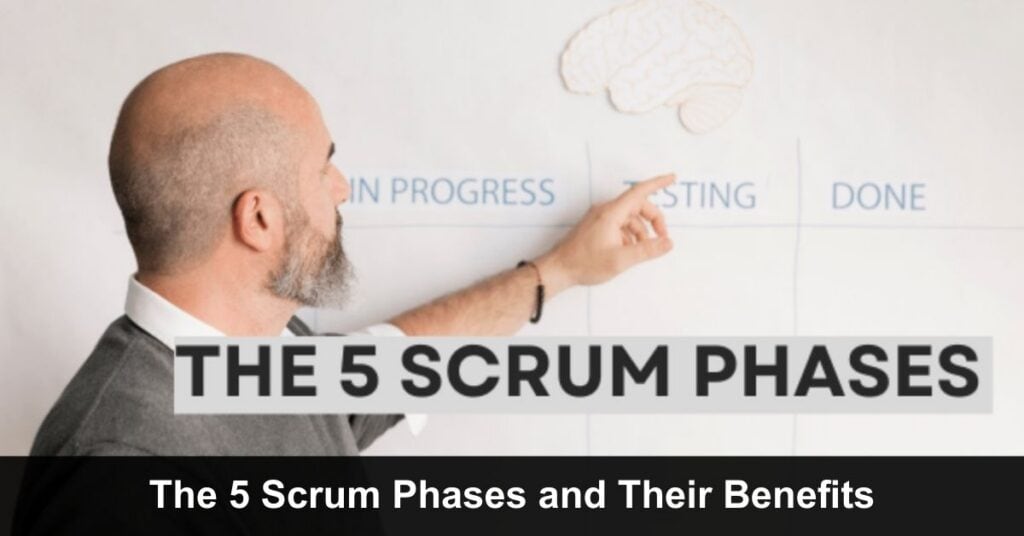
The Scrum Framework is often misunderstood in project management circles, leading to ineffective implementation and suboptimal results. A common misconception is that Scrum consists of only three phases: initiation, development, and deployment. Additionally, some practitioners mistakenly perceive Scrum as an unstructured or chaotic methodology that lacks clear direction and defined processes. In reality, Scrum comprises five distinct phases, each playing a crucial role in project success and team collaboration. Understanding these phases is essential for project managers and teams seeking to maximize the benefits of this powerful framework.
This article explores the Scrum methodology in depth and examines each phase in detail to provide clarity on this widely-adopted Agile framework, helping you implement it effectively in your projects.
What is Scrum in Agile?
Scrum is an Agile framework designed for managing complex projects through iterative development. The Scrum methodology divides projects into discrete, manageable increments called sprints. Each sprint typically spans two weeks and builds incrementally upon previous work, creating a continuous development cycle until project completion.
This framework offers several core advantages:
- Stakeholder Alignment: Scrum maintains clarity among all stakeholders regarding roles, responsibilities, deliverables, and timelines throughout the project lifecycle
- Iterative Progress: Each sprint builds upon previous work, creating measurable progress and allowing for continuous improvement
- Flexibility and Adaptation: The two-week sprint cycle enables teams to quickly respond to changing requirements and stakeholder feedback
What is a Scrum Phase?
A Scrum Phase represents a distinct stage within the Scrum framework where teams execute specific activities to advance their project goals. Each phase contains well-defined tasks and deliverables that must be completed before transitioning to the next stage, creating a structured yet flexible workflow. Understanding these phases is critical for project success because:
- Quality Assurance: Proper attention to each phase ensures that critical steps aren’t skipped or rushed, leading to higher-quality outcomes and more successful project completion
- Sequential Progression: Each phase builds upon the previous one, creating a logical flow from project initiation through final delivery
- Clear Accountability: Team members know exactly what activities and deliverables are expected during each phase, reducing confusion and overlap

The 5 Scrum Phases
Scrum is typically used in software development, but you can apply it to any complex, innovative process. It promotes a flexible and collaborative approach to problem-solving. The Scrum methodology is based on five phases: initiation, planning and estimation, implementation, reviewing, and releasing.
1. Initiation Phase
The initial phase of Scrum is all about understanding the problem that needs to be solved. Also known as the outline planning phase, this phase includes identifying the Scrum Master, team members, and their roles, and setting the Scrum goal. The Scrum Master works with the product owner to help clarify the problem and ensure everyone is on the same page. Once the team is set and the goal is clear, it’s time to move on to the next phase of Scrum: planning.
Importance of Choosing a Good Scrum Master and a Scrum Team
- A good scrum master will deeply understand the scrum process and manage the team effectively.
- They will also be able to provide support and guidance when needed and be able to resolve any conflicts that may arise.
- A good scrum team will be cohesive and satisfactorily understand their roles and responsibilities.
- They will work well together and be able to complete the project within the timelines set by the scrum master.
Choosing a good scrum master and a good scrum team is essential for the success of any project. By doing so, you can be confident that the project will be completed on time, within budget, and to the required standards.
2. Planning and Estimation Phase
The Planning and Estimation phase represents the second critical stage of the Scrum framework. During this phase, the team develops a comprehensive process plan outlining the approach and strategies required to achieve the Sprint goal. Additionally, the team conducts detailed estimations of the time, effort, and resources necessary for successful completion.
This planning session serves as a foundational element of project success, ensuring that all team members possess a clear, shared understanding of the work scope, deliverables, and timeline expectations. Without this structured planning foundation, tracking progress and implementing necessary course corrections throughout the Sprint would prove challenging.
The culmination of this phase is the creation of the Sprint Backlog—a carefully prioritized inventory of tasks and user stories that must be completed to fulfill the Sprint goal and deliver value to stakeholders.
Implementation Phase
The implementation phase marks the stage where the Scrum team begins actively addressing items from the sprint backlog. Throughout this phase, teams leverage the Scrum framework to systematically guide their workflow and monitor progress. This phase demonstrates the true strength of Scrum, as its flexible and iterative methodology enables teams to address complex challenges efficiently and effectively.
Effective communication and seamless collaboration among team members are essential prerequisites for success during the implementation phase. Each team member must maintain a clear understanding of their individual responsibilities while demonstrating a commitment to collective effort in completing all sprint backlog items.
Reviewing Phase
The reviewing phase focuses on evaluating whether the Scrum team has successfully achieved the Sprint goal. During this phase, the Scrum Master facilitates the Sprint Review meeting and determines the necessary documentation requirements. The team conducts a comprehensive assessment of their work to verify completion of all tasks outlined in the Sprint Backlog.
Upon successful completion of all Sprint Backlog items, the team proceeds to the next Sprint goal. If any items remain incomplete, the team transitions to the Retrospective phase to identify improvement opportunities and address impediments.
Releasing phase
Also known as the project-closure phase, the release phase is when the team evaluates lessons learned and decides how to deliver or retire the product. Because Scrum is an iterative process, teams may cycle through this phase multiple times before a final solution is reached. The release stage is critical: it verifies that the product meets customer requirements and conforms to agreed quality standards.
It also provides a formal opportunity for reflection—capturing improvements, documenting outcomes, and updating support or maintenance plans. After release, the team continues to monitor product performance and implements changes as needed to preserve value and address new feedback.
Video About the Different Phases of Scrum
Watch this short video to get a clear, visual overview of the five Scrum phases—perfect if you prefer learning by example before diving into the details.
Benefits of Using Scrum Phases for Project Management
Experienced project managers recognize that Scrum phases deliver substantial benefits to project outcomes. As professionals advance in their project management careers, mastering these phases not only enhances operational efficiency and overall project deliverables but also cultivates continuous professional development for those committed to excellence in team leadership and project execution.
Better Prioritization
The Scrum backlog methodology enables project managers to establish clear priorities across multiple project dimensions systematically. This structured approach facilitates optimal resource allocation toward critical components, ensuring teams consistently achieve key milestones according to established timelines and project requirements.
A Sense of Knowing
The Scrum framework establishes structure and transparency for all project stakeholders by clearly defining expectations, deliverables, and project roadmaps. Daily stand-up meetings facilitate regular progress updates and provide a dedicated forum for addressing questions, challenges, or impediments that emerge during the Scrum sprint cycle.
Ideal Communication
The Scrum framework establishes structure and transparency for all project stakeholders by clearly defining expectations, deliverables, and project roadmaps. Daily stand-up meetings facilitate regular progress updates and provide a dedicated forum for addressing questions, challenges, or impediments that emerge during the sprint cycle.
Openness to Adjustments
The Scrum framework is designed to enable rapid adaptation when circumstances change. This involves conducting regular work assessments and implementing necessary adjustments to optimize project outcomes. This agility makes Scrum particularly valuable in fast-paced environments where requirements frequently evolve or market conditions shift unexpectedly.
Better KPI Monitoring
The Scrum framework incorporates systematic processes for evaluating performance throughout a project’s lifecycle and across its multiple sprints. This structured approach enables teams to extract more precise and actionable insights during retrospective analysis, ultimately enhancing project outcomes and continuous improvement efforts.

How Come Some Sites Say There are Three Scrum Phases, But Some Say There are Five?
People often see conflicting descriptions of Scrum phases: some sources present three phases while others describe five. Both describe the same underlying process but at different levels of detail. The model you choose depends on your audience and how much guidance your team needs. Below, we’ll analyze the three-phase and the five-phase options.
Three-Phase (Condensed) Model
The three-phase Scrum model labels the lifecycle as Pre-game, Game, and Post-game. Use it for simple explanations, executive summaries, onboarding refreshers, or teams already comfortable with Scrum.
- Pre-Game Combines Initiation and Planning & Estimation: Forming the team, clarifying goals, and preparing the sprint backlog and estimates.
- Game Equals Implementation: The sprint work, daily stand-ups, development, testing, and collaboration.
- Post-Game Combines Reviewing and Releasing: Sprint review, retrospective, release decisions, and closure activities.
Main benefits:
- Concise and memorable; easy to explain to non-technical stakeholders.
- Good for high-level reporting and roadmaps.
- Works well for experienced teams who don’t need detailed handoffs.
Main drawbacks:
- Less granular; important preparatory or follow-up steps can be glossed over.
- Not ideal for teams new to Scrum or complex projects that need explicit checkpoints.
Five-Phase (Detailed) Model
The five-phase Scrum model splits the lifecycle into Initiation, Planning & Estimation, Implementation, Reviewing, and Releasing. Use it for training, process governance, new teams, or complex initiatives that benefit from clear responsibilities and checkpoints.
- Initiation: Define roles (Scrum Master, Product Owner, team), set goals, and clarify scope.
- Planning & Estimation: Prioritize the backlog, estimate stories, and create the sprint plan.
- Implementation: Execute sprint tasks, collaborate daily, and track progress toward the sprint goal.
- Reviewing: Conduct the Sprint Review and Retrospective to assess deliverables and identify improvements.
- Releasing: Finalize release decisions, capture lessons learned, update support plans, and deploy or retire the product.
Main benefits:
- Clear accountability and step-by-step guidance.
- Reduces the chance of skipping critical activities.
- Better for measuring KPIs and continuous improvement.
Main drawbacks:
- More detailed to communicate at a glance.
- Can feel heavyweight if applied rigidly to small or inexperienced teams.
Recommendation: Choose the three-phase model when simplicity matters (executive audiences or experienced teams). Choose the five-phase model when you need structure and clarity (new teams, complex projects, or formal process audits). You can also switch between them: present the three-phase view for high-level communication and the five-phase breakdown when your team needs actionable detail.
Conclusion
Understanding Scrum as five distinct phases—initiation, planning and estimation, implementation, reviewing, and releasing—helps teams apply the framework with clarity and purpose. Each phase provides specific activities and checkpoints that improve accountability, foster better communication, and enable continuous adaptation across sprints. While a condensed three-phase view can aid high-level communication, the five-phase model gives new or complex teams the structure needed to reduce risk and ensure quality.
By intentionally applying these phases, project managers and teams can prioritize work more effectively, measure progress with meaningful KPIs, and iterate toward outcomes that deliver real stakeholder value. Embracing this phased approach promotes disciplined agility: predictable delivery through iterative learning and ongoing improvement.
Frequently Asked Questions (FAQs)
What are the three main phases?
The three high-level phases are Pre‑game, Game, and Post‑game. These map to the more detailed stages of Initiation and Planning (Pre‑game), Implementation (Game), and Reviewing and Releasing (Post‑game).
How long does a Scrum phase last?
A phase typically corresponds to one or more sprints. Many teams use a two‑week sprint as a standard cadence, but sprint length should be chosen to suit the team and product—common alternatives are one week or four weeks.
What is the difference between a sprint and a phase?
A sprint is a fixed, time‑boxed iteration during which the team completes a defined set of backlog items. A phase describes a broader stage in the project lifecycle (for example: Initiation, Planning, Implementation, Reviewing, Releasing). Multiple sprints may occur within a single phase, and a sprint can span activities that contribute to a phase’s objectives.
Who should attend each phase’s ceremonies?
Attendance varies by ceremony: the Product Owner, Scrum Master, and Development Team should attend sprint planning, daily stand-ups, sprint review, and sprint retrospective. Stakeholders and subject-matter experts are invited to sprint reviews for feedback and alignment. Adjust attendance based on the ceremony’s purpose and the value each participant provides.
How do you measure success for a phase?
Measure phase success using outcome-focused metrics: completion rate of committed sprint backlog items, achievement of the sprint goal, stakeholder satisfaction, defect rates, and key product metrics (e.g., usage, performance). Combine quantitative KPIs with qualitative feedback from reviews and retrospectives to inform improvements.
Suggested articles:
- 25 Sprint Retrospective Examples for Scrum Masters
- Breaking Down the Agile Working Model
- Agile Project Management Guide (Skills & Methodologies)

Shane Drumm, holding certifications in PMP®, PMI-ACP®, CSM, and LPM, is the author behind numerous articles featured here. Hailing from County Cork, Ireland, his expertise lies in implementing Agile methodologies with geographically dispersed teams for software development projects. In his leisure, he dedicates time to web development and Ironman triathlon training. Find out more about Shane on shanedrumm.com and please reach out and connect with Shane on LinkedIn.