
Effective project managers are valued not only for technical expertise but also for the wider skills they apply throughout the delivery stage. Employers increasingly prioritise professionals who can communicate clearly, solve problems, manage teams, and adapt under pressure. These abilities influence project outcomes, stakeholder trust, and long-term career growth in industries. Understanding which competencies matter most is essential for professionals aiming to strengthen their credibility.
Beyond technical execution, project management success depends heavily on interpersonal effectiveness, adaptability, and decision-making. Employers want leaders who can resolve conflict, maintain accountability, guide collaboration, and keep teams focused. As Agile and cross-functional work environments continue evolving, expectations for project managers have become broader and more strategic across industries. The following skill sets highlight the competencies employers consistently look for when evaluating management professionals.
Why Interpersonal Skills Matter in Project Management
Interpersonal skills, often called soft skills, form the foundation of effective project management. These skills govern how project managers communicate with stakeholders, resolve conflicts within teams, and build the trust needed to deliver results consistently. Unlike technical competencies, interpersonal skills apply across industries, methodologies, and project types.
The most capable project managers invest continuously in developing these skills. They understand that project success rarely comes down to planning alone. It comes from the quality of relationships built and maintained throughout the project lifecycle.
The 11 Essential Project Management Skill Sets
1. Emotional Intelligence
Emotional intelligence is the capacity to recognise, understand, and manage one’s own emotions while also navigating the emotional dynamics of a team. It is typically mapped across four quadrants: self-awareness, self-management, social awareness, and relationship management. Growth begins with self-awareness and the discipline to self-manage before extending to support and influence others.
Project managers with high emotional intelligence tend to create more psychologically safe environments where team members feel heard and motivated. This directly influences team performance, retention, and the ability to work through challenges without escalation. These core emotional intelligence capabilities strengthen leadership effectiveness across demanding project environments:
- Self-Awareness: Understanding personal emotional triggers, communication habits, and behavioural patterns under pressure.
- Self-Management: Remaining composed, disciplined, and professional during stressful project situations or setbacks.
- Social Awareness: Recognising team morale, stakeholder concerns, and interpersonal dynamics before tensions escalate.
- Relationship Management: Building trust, maintaining collaboration, and resolving interpersonal challenges constructively across teams.
You can test emotional intelligence at this free online test here.
2. Communication
Communication is widely considered the single most important skill a project manager can develop. It spans written formats such as emails, reports, and status updates, as well as verbal formats including team meetings, stakeholder briefings, and one-on-one conversations. A proactive communicator does not wait for issues to surface but anticipates information needs and addresses them early.
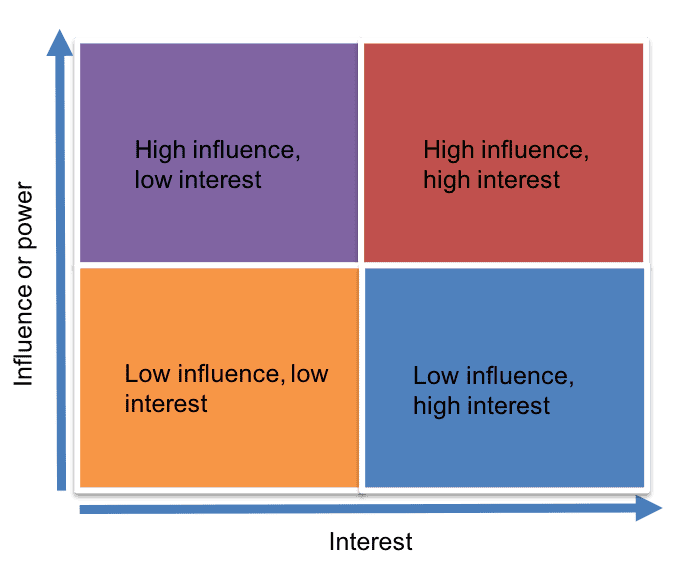
One practical tool for building communication discipline is a stakeholder engagement matrix. This document maps each stakeholder’s information needs, preferred communication channels, and level of involvement, helping project managers stay ahead of expectations rather than react to gaps. Strong communication practices help project managers maintain clarity, alignment, and stakeholder confidence consistently:
- Written Communication: Delivering clear emails, reports, and project documentation without unnecessary ambiguity.
- Verbal Communication: Leading meetings, presentations, and stakeholder discussions with confidence and structure.
- Active Listening: Understanding concerns, feedback, and expectations before responding or making decisions.
- Stakeholder Updates: Providing timely information that prevents confusion, misalignment, and unnecessary escalations.
3. Negotiation
Negotiation is the ability to reach mutually beneficial outcomes in situations where parties may have competing interests. In project management, this negotiation skill applies to resource allocation, timeline adjustments, scope changes, and contract discussions. Strong negotiators understand that the goal is not to win but to find solutions that allow the project to move forward.
Negotiation occurs both internally, among team members and cross-functional partners, and externally with vendors, clients, and leadership. Project managers who develop this skill create fewer escalations and maintain stronger working relationships throughout the project. These dimensions of negotiation are especially relevant to daily project management practice:
- Internal Negotiation: Securing resources, resolving priority conflicts between teams, and aligning stakeholders on scope changes all require the same core negotiation discipline as external dealings.
- Win-Win Framing: Effective project managers enter negotiations with a collaborative mindset, focusing on shared objectives rather than positional bargaining to reach durable agreements.
- Preparation and Research: Understanding the other party’s constraints and priorities before a negotiation begins significantly improves the likelihood of reaching a workable outcome quickly.
4. Decision Making
Every effective project manager will need to make several decisions on a daily basis. From questions on the schedule and sequence to budget guidance, project managers are expected to provide clear direction to the project team. The ability to act decisively while remaining open to new information is a defining characteristic of strong project leadership.
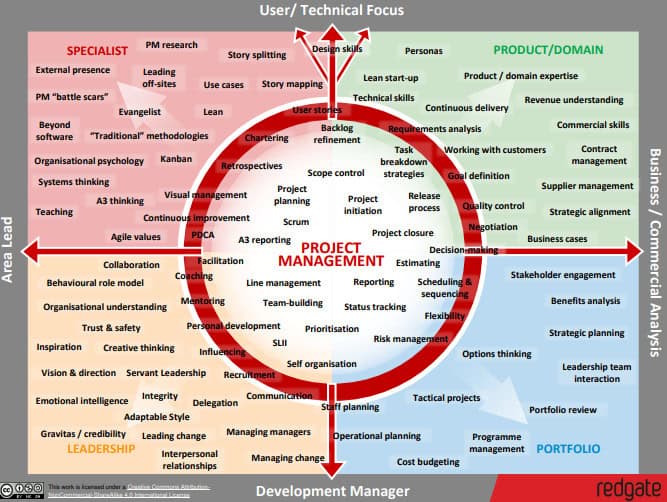
Project Management Skills Matrix
Good decision makers also know when to seek input and when to act independently. They balance consultation with decisiveness, keeping teams aligned and projects moving without unnecessary delays caused by indecision or over-deliberation. Three practices consistently strengthen decision-making in project environments:
- Data-Informed Judgement: Strong decision makers draw on available data, historical project performance, and team input to inform choices, while recognising that waiting for perfect information can be as costly as acting without it.
- Escalation Awareness: Knowing which decisions sit within a project manager’s authority and which require escalation protects the project from delays and ensures accountability is placed at the right level.
- Decision Documentation: Recording key decisions and the reasoning behind them creates a traceable record that reduces ambiguity, supports onboarding, and prevents revisiting settled discussions.
5. Collaboration
Collaboration is a joint effort of multiple individuals or workgroups to accomplish a task or project. Within an organisation, it typically involves the ability of two or more people to view and contribute to shared work over a network. For project managers, this means creating conditions where team members can contribute meaningfully, share information openly, and build on each other’s ideas.
Digital collaboration tools have expanded what is possible across distributed teams. However, technology is only as effective as the collaborative culture the project manager helps establish. Norms around communication, accountability, and shared ownership are what make collaboration genuinely productive. Building that culture requires attention to several interconnected factors:
- Psychological Safety: Teams collaborate most effectively when members feel safe raising concerns, admitting mistakes, and proposing unconventional ideas without fear of criticism or blame.
- Cross-Functional Alignment: Project managers play a central role in bridging silos between departments, ensuring that different functions share context, coordinate dependencies, and work toward unified delivery goals.
- Shared Accountability: Healthy collaboration requires clarity about who owns what, establishing clear roles and responsibilities to prevent duplicated effort and ensure nothing falls through the gaps.
6. Servant Leadership
Servant leadership is a philosophy that places the needs of the team at the centre of a leader’s priorities. Coined by Robert K. Greenleaf in his 1970 essay “The Servant as Leader,” the model emphasises serving others first as the foundation of effective leadership. Core attributes of a servant leader include active listening, empathy, awareness, and the ability to coach others toward growth.
In Scrum, the Scrum Master role directly embodies servant leadership. Servant leaders create conditions where teams can do their best work by removing obstacles, facilitating honest communication, and protecting the team from unnecessary disruption. The Scrum Master’s responsibilities illustrate this philosophy in action:
- Team Protection: Shielding the team from external distractions and unnecessary interruptions so they can focus on delivering value consistently across each sprint.
- Training and Development: Ensuring all team members are well-informed about Scrum best practices and are continuously growing in their understanding of Agile principles.
- Facilitation: Leading Scrum ceremonies including stand-ups, sprint reviews, and retrospectives in a way that promotes honest dialogue and continuous improvement.
- Commitment Management: Helping the team avoid overcommitting in sprint planning by grounding capacity decisions in realistic, evidence-based data.
- Goal Alignment: Supporting the team in removing obstacles that prevent them from reaching sprint and product goals effectively and sustainably.
7. Adaptive Leadership
Adaptive leadership is the ability to recognise when circumstances have changed and to shift approach accordingly. In Agile environments, this means distinguishing between doing Agile, applying specific practices and ceremonies, and being Agile, internalising the mindset that makes those practices effective. Leaders who only apply surface-level Agile practices without the underlying values tend to see limited results.
Organisations that cultivate adaptive leadership at every level become more resilient. They respond faster to market changes, recover more quickly from setbacks, and sustain a culture that supports continuous improvement. Developing adaptive leadership requires building specific capabilities that hold up under pressure:
- Situational Awareness: Adaptive leaders continuously read the environment, identifying when existing approaches are no longer working and when a shift in strategy, structure, or communication style is needed.
- Tolerance for Ambiguity: In fast-changing conditions, adaptive leaders maintain composure and provide direction even when outcomes are uncertain, modelling the stability that teams need to stay productive.
- Learning Orientation: Adaptive leadership is sustained by a genuine commitment to learning from both successes and failures, and by creating team cultures where experimentation is encouraged rather than penalised.
8. Responsiveness to Business and Team Needs
A project manager must remain attuned to the needs of both the organisation and the individuals on their team. At the business level, this means understanding strategic objectives, adapting priorities as conditions shift, and communicating changes clearly. At the team level, it means recognising when individuals need support, clarity, or space to work effectively.
Responsiveness is not the same as reactivity. The most effective project managers are proactive in identifying emerging needs before they become blockers, maintaining open channels of communication so issues surface quickly and can be addressed constructively. Practising responsiveness consistently involves three core disciplines:
- Stakeholder Alignment: Regularly checking in with key stakeholders ensures the project remains aligned with shifting organisational priorities, reducing the risk of delivering outputs that no longer serve their intended purpose.
- Team Signal Recognition: Responsiveness at the team level means noticing early indicators of burnout, disengagement, or confusion and addressing them before they affect delivery capacity or morale.
- Feedback Loop Discipline: Building structured and informal channels for feedback ensures that both business and team needs surface quickly, rather than accumulating into larger issues that are harder to resolve.
9. Conflict Resolution
Conflict is a natural part of any collaborative environment, and a skilled project manager knows how to address it constructively. The Thomas-Kilmann model identifies five approaches to conflict: avoiding, competing, compromising, accommodating, and collaborating. Each has its place, and the most effective project managers know which approach fits which situation.
Unresolved conflict erodes trust, slows delivery, and increases the risk of team attrition. Project managers who address conflict directly and early preserve team cohesion and create a culture where disagreements become opportunities to improve. Applying conflict resolution effectively depends on three consistent practices:
- Early Intervention: Addressing conflict at the first signs of tension is significantly more effective than waiting until positions harden and the working relationship has already been damaged.
- Neutral Facilitation: When conflict involves multiple parties, project managers benefit from positioning themselves as neutral facilitators focused on resolving the issue rather than assigning blame.
- Resolution Follow-Through: Conflict resolution is not complete when an agreement is reached. Following up to confirm that commitments are being honoured and that the underlying issue has not resurfaced is what makes the resolution lasting.
10. Agile Technical Skills
Agile technical skills encompass understanding how to build and operate systems that support continuous delivery, iterative development, and ongoing feedback loops. A comprehensive Agile strategy goes beyond process ceremonies and extends into how software is built, tested, and released. Continuous delivery, in particular, is central to maintaining the responsiveness that Agile promises.
Project managers working in Agile environments benefit from a working familiarity with engineering concepts and tooling. This knowledge helps them have more informed conversations with development teams and make better decisions about trade-offs between speed and quality. The following areas of technical awareness are most directly relevant:
- CI/CD Awareness: Understanding continuous integration and continuous delivery pipelines helps project managers make informed decisions about release cadence, quality gates, and the relationship between technical debt and delivery speed.
- Technical Debt Visibility: Project managers who can facilitate conversations about technical debt help teams balance the pressure to ship quickly against the long-term cost of deferred maintenance and architectural shortcuts.
- Tool Familiarity: Working knowledge of Agile tooling such as Jira, Azure DevOps, or similar platforms allows project managers to track progress accurately and contribute meaningfully to backlog and capacity discussions.
11. Agile Mindset and Organisational Agility
An Agile mindset goes beyond following frameworks or attending daily stand-ups. It reflects a way of thinking that values adaptability, continuous improvement, collaboration, and responsiveness to change. Project managers with an Agile mindset focus less on rigid control and more on delivering consistent value while adjusting to evolving business conditions, customer feedback, and operational challenges throughout the project lifecycle.
Organisational agility expands these principles across the wider business. It requires leadership teams, departments, and delivery functions to work with greater alignment, faster decision-making, and stronger cross-functional collaboration. Businesses that develop organisational agility are often better positioned to respond to market shifts, customer demands, and competitive pressure without creating unnecessary delays or internal resistance.
Several practices help organisations strengthen long-term agility and sustainable project delivery effectiveness:
- Continuous Improvement: Agile organisations regularly evaluate processes, workflows, and outcomes to identify opportunities for refinement and operational efficiency.
- Customer-Centred Delivery: Teams prioritise delivering practical value based on customer feedback rather than relying solely on internal assumptions or lengthy planning cycles.
- Cross-Functional Collaboration: Organisational agility improves when departments share information openly and work toward unified business objectives instead of isolated priorities.
- Iterative Planning: Agile project environments rely on shorter planning cycles that allow adjustments based on changing conditions, risks, and stakeholder feedback.
- Empowered Teams: High-performing Agile organisations give teams greater ownership and decision-making authority, reducing bottlenecks caused by excessive management layers.
Being an Agile Project Management Professional
Being an Agile Project Management Professional requires managers to fully embrace and embody Agile values and principles — going beyond just following processes. It means fostering a culture of continuous delivery, collaboration, and adaptability to create a highly responsive and resilient Agile organisation. True Agility is not just a methodology; it is a mindset that permeates every level of the organisation. Core principles companies should adopt to truly “be” Agile include:
- Release Quickly: Releasing early and often gives organisations a significant competitive advantage over companies that delay delivery in pursuit of perfection. A fast release cycle allows teams to test assumptions in the real world, reduce risk, and respond to market changes with greater agility.
- Incremental Delivery: Rather than delivering a final product all at once, incremental delivery breaks work into smaller, manageable pieces. This approach provides ongoing opportunities to gather valuable stakeholder feedback, identify issues early, and continuously adapt the product to better meet user needs.
- Deliver Value: The product does not need to be perfect, but it does need to deliver meaningful, real value to the end user with every release. Prioritising value-driven delivery ensures that customers benefit from the product at every stage of development, not just at the final launch.
- Coach the Agile Mindset: Sustainable Agility starts with people. Coaching employees at all levels in Agile values and principles empowers them to think, collaborate, and problem-solve with an Agile mindset. When the entire workforce internalises Agile thinking, organisations become naturally more adaptive and innovative.
- Embrace Continuous Improvement: Agile professionals champion a culture of constant reflection and improvement. Through regular retrospectives and feedback loops, teams identify what is working, what isn’t, and how processes can be refined to deliver better outcomes over time.
- Empower Cross-Functional Teams: Being Agile means trusting teams to self-organise and make decisions. Empowered, cross-functional teams with diverse skill sets can respond faster to change, take ownership of their work, and drive innovation without bottlenecks from top-down management.
Conclusion
The 11 skill sets outlined in this article represent the breadth of competencies that distinguish high-performing project managers. From the emotional intelligence needed to lead with empathy to the Agile capabilities required in modern delivery environments, each skill contributes to a project manager’s ability to drive outcomes and build effective teams. These are not static traits but capabilities that develop through practice, reflection, and continuous learning.
Building these skills also strengthens how they read on a resume. Employers and hiring managers look for evidence of these competencies in how candidates describe their experience, the outcomes they highlight, and the language they use to talk about leadership and collaboration. Developing these skills in practice and communicating them clearly in a professional profile is what positions project managers for the next stage of their careers.
Frequently Asked Questions
What are the most important project management skills for a resume?
Communication, emotional intelligence, and decision-making are consistently among the most valued project management skills. These three competencies signal that a candidate can lead teams, manage stakeholder relationships, and keep projects on track through changing conditions. Supplementing them with Agile knowledge and demonstrated collaboration skills strengthens a resume significantly in most industries.
How do soft skills differ from technical skills in project management?
Soft skills relate to interpersonal and leadership capabilities, including communication, empathy, and negotiation. Technical skills cover methodology knowledge, tools, and domain expertise. Both categories are essential for project management success, but soft skills tend to have a wider impact because they influence team dynamics, stakeholder relationships, and the organisational culture around delivery.
What is servant leadership, and why does it matter in Agile environments?
Servant leadership is a management philosophy that prioritises the growth and well-being of team members as the foundation for achieving goals. In Agile environments, it is directly embodied in the Scrum Master role. Servant leaders create conditions where teams can do their best work by removing obstacles, facilitating honest communication, and protecting the team from unnecessary disruption.
How can project managers improve their conflict resolution skills?
Project managers can strengthen conflict resolution by learning to identify conflict styles, both their own and those of others, and by practising direct, non-defensive communication. Studying frameworks like the Thomas-Kilmann model provides useful vocabulary for discussing conflict constructively. Over time, experience handling real disputes builds the judgment to know when to intervene and which approach is most likely to preserve working relationships.
What does it mean for an organisation to “be Agile” rather than just “do Agile”?
Doing Agile refers to implementing specific practices such as sprints, stand-ups, and retrospectives. Being Agile means the underlying values of responsiveness, collaboration, and continuous improvement are embedded in how decisions are made across the entire organisation, not just within delivery teams. Organisations that are truly Agile adapt their strategy, resource allocation, and leadership behaviours in response to feedback, not just their development processes.
Suggested articles:
- 39 Agile Technical Skills for Project Managers & Leaders
- Agile Project Management Guide (Skills & Methodologies)
- 8 Project Management Skills You Need to Succeed

Shane Drumm, holding certifications in PMP®, PMI-ACP®, CSM, and LPM, is the author behind numerous articles featured here. Hailing from County Cork, Ireland, his expertise lies in implementing Agile methodologies with geographically dispersed teams for software development projects. In his leisure, he dedicates time to web development and Ironman triathlon training. Find out more about Shane on shanedrumm.com and please reach out and connect with Shane on LinkedIn.