
Every project bleeds money, but the most dangerous losses rarely show up where you expect them. Internal failure costs are the hidden expenses that accumulate before a product or service ever reaches the customer. These costs include rework, scrap, lost productivity, and defects caught too late in the process. Unlike external failure costs, which are visible, embarrassing, and customer-facing, internal failures quietly drain budgets from the inside, often going unnoticed until serious damage is done.
While external failures tend to grab the headlines, internal failure costs are equally destructive and far more preventable. They represent a company’s own poor performance turning against itself, silently eroding margins, timelines, and team morale before a single customer ever sees the product.
Why Every Project Manager Must Account for Internal Failure Costs
Internal failure costs affect companies of every size, and the assumption that they are purely a large-business problem is dangerously mistaken. Small businesses are often the most vulnerable, precisely because they have fewer resources to absorb the fallout when things go wrong internally. These costs ripple outward in the form of lost sales opportunities, ballooning rework cycles, wasted materials, and collapsed team productivity.
For project managers, understanding internal failure costs is not optional — it is a core competency. This knowledge directly shapes how budgets are built, where resources are allocated, and which risks are prioritized. A project manager who ignores internal failure costs is essentially flying blind. Identifying, tracking, and reducing these costs can mean the difference between a project that delivers results and one that quietly unravels from within.
What Leads To Internal Failure Costs
There are various reasons why projects fail. Understanding the root causes of internal failure costs is the first step toward preventing them. Here are the most common culprits:
- Inadequate Planning: One of the most prevalent causes of internal failure costs is poor planning from the outset. When a project lacks a solid foundation like clear milestones, realistic timelines, and well-defined deliverables, problems are almost guaranteed to surface later. The result is a project that overshoots its budget, misses critical deadlines, and struggles to recover without high additional cost.
- Poor Communication: When communication breaks down between project managers and their teams, the consequences are swift and costly. Misaligned expectations, misunderstood objectives, and unclear task ownership all create fertile ground for errors and rework. Effective communication is not a soft skill — it is a hard requirement for keeping internal failure costs under control.
- Lack of Training and Resources: Even the best-planned projects can falter when teams lack the skills or tools to execute effectively. Insufficient training leads to avoidable mistakes, while resource shortages force teams into shortcuts that compromise quality. Both scenarios generate internal failure costs that could have been prevented with proper investment upfront.
- Scope Creep: Scope creep occurs when a project quietly expands beyond its original boundaries: new features get added, requirements shift, and timelines stretch, often without formal approval or budget adjustments. Left unchecked, scope creep is one of the most damaging and insidious drivers of internal failure costs, derailing even well-managed projects from the inside out.
Examples Of Internal Failure Costs
The financial impact of internal failure costs varies significantly across industries, and in some sectors, these costs can be extraordinarily high. In the aerospace industry, for instance, identifying and correcting a defect during the manufacturing phase is far less expensive than addressing it after the aircraft has entered service. Estimates suggest that post-delivery defect resolution can cost hundreds of times more than early-stage correction — a stark reminder of why quality control during production is non-negotiable.
Common examples of internal failure costs include:
- Rework and Scrap: When products or services fail to meet established quality standards, they must either be reworked to specification or discarded entirely. Both outcomes drive up costs across labor, materials, and other critical resources — often significantly impacting project budgets.
- Warranty Claims: Products or services that fail shortly after delivery may obligate the company to issue refunds, replacements, or repairs. When failure rates are elevated, the cumulative cost of honoring warranty commitments can place serious financial strain on an organization.
Despite the magnitude of these costs, many businesses lack the structured processes needed to accurately identify and quantify the true financial impact of poor quality management, leaving them exposed to losses that could otherwise be avoided.
How To Manage Internal Failure Costs
Every organization that delivers projects must contend with the reality of failures and the costs that follow. While some degree of failure is inevitable, the financial and operational impact can be significantly reduced through proactive management strategies. The following best practices provide a structured approach to managing internal failure costs effectively:
Identify Internal Failure Costs
Begin by clearly defining and cataloging the internal failure costs present within your project. Establish a formal, repeatable process for identifying these costs early, and integrate risk identification into your standard project management workflow. The earlier these costs are recognized, the more effectively they can be controlled.
Perform Root Cause Analysis
Surface-level fixes rarely prevent recurring failures. Conducting thorough root cause analyses allows teams to address the underlying drivers of failure rather than just the symptoms. Schedule regular process reviews to evaluate whether corrective actions are delivering measurable improvements and to identify any emerging patterns before they escalate.
Invest in Employee Training
A well-trained team is one of the most effective defenses against internal failure costs. Ensure that all team members receive adequate training on relevant procedures, tools, and quality standards. Clear, consistently enforced processes reduce the likelihood of avoidable errors and empower employees to perform their roles with confidence.
Establish a Failure Cost Tracking Process
Implement a dedicated tracking system to monitor, record, and analyze internal failure costs throughout the project lifecycle. Ensure all team members understand the process and are equipped to contribute to it consistently. A robust tracking mechanism not only improves cost visibility but also provides the data needed to drive continuous improvement, ultimately keeping projects on track and stakeholders satisfied.
The Most Common Internal Failure Costs
While internal failure costs can seem overwhelming, they are far from inevitable. By proactively identifying the most prevalent cost drivers and implementing targeted preventive measures, project managers can significantly improve the likelihood of project success. The following represent the most commonly encountered internal failure costs in project management:
- Wasted Time: Unproductive hours spent on avoidable delays, unnecessary meetings, or repeated tasks directly inflate project costs and compress timelines, reducing the team’s overall capacity to deliver quality results.
- Poor Communication: Misaligned expectations and unclear instructions between team members and stakeholders generate costly errors, duplicated efforts, and missed deadlines that could have been prevented with clearer communication protocols.
- Lack of Clarity: When project goals, deliverables, or processes are ambiguously defined, teams lose direction and make costly assumptions, leading to rework and significant resource waste throughout the project lifecycle.
- Unclear Objectives: Projects without well-defined objectives struggle to maintain focus and momentum, resulting in misdirected effort, budget overruns, and deliverables that fail to meet stakeholder expectations or business requirements.
- Scope Creep: Uncontrolled expansion of project requirements without corresponding budget or timeline adjustments gradually erodes project viability, overwhelming teams and driving up internal failure costs at an accelerating rate.
- Ineffective Use of Resources: Misallocating personnel, tools, or budget to the wrong tasks creates bottlenecks, stalls progress, and generates avoidable costs that could be eliminated through better resource planning and oversight.
- Poorly Defined Roles and Responsibilities: When team members are unclear about their specific duties, critical tasks fall through the cracks, accountability is lost, and costly duplication of effort becomes an ongoing operational burden.
- Lack of Team Cohesion: Fragmented teams with poor collaboration and low morale are more prone to errors, miscommunication, and disengagement — all of which translate directly into measurable internal failure costs and reduced output.
- Cost Overruns: Exceeding the approved project budget strains organizational finances, forces difficult trade-offs, and can ultimately jeopardize project completion, stakeholder confidence, and the organization’s overall financial health.
- Quality Issues: Defects and substandard outputs identified during execution require costly rework or scrapping of work completed, consuming additional time and resources while delaying delivery to the customer or end user.
- Employee Turnover: Losing experienced team members mid-project disrupts workflow continuity, increases onboarding and training costs, and introduces knowledge gaps that can severely impact project quality and delivery timelines.
- Project Cancellations: When internal failures accumulate beyond recovery, projects may be cancelled entirely — resulting in the complete loss of all invested resources, time, and strategic opportunity associated with the initiative.
Each of these cost drivers carries the potential to significantly undermine project performance, and in many cases, can mean the difference between successfully meeting milestones and being forced to restart from scratch. Developing a thorough understanding of these internal failure costs is essential. Project managers who are well-versed in these risk areas are far better positioned to anticipate issues, implement preventive controls, and maintain the momentum needed to deliver projects on time and within budget.
Internal Vs External Failure Costs
When a project fails, the cost of that failure can be high. However, not all failure costs carry the same implications. In project management, failure costs are broadly categorized into two distinct types: internal and external. The table below outlines the key differences between internal and external failure costs:
| Internal Failure Costs | External Failure Costs |
|---|---|
| Costs linked to defects that are identified and corrected during the project lifecycle, before the product or service reaches the customer. | Costs linked to defects that go undetected during the project lifecycle and are only discovered after the product or service reaches the customer. |
| These costs are borne entirely by the organization responsible for executing the project, directly affecting its budget and resources. | These costs are borne by the customer or other affected stakeholders, often resulting in damaged relationships and potential financial liability for the organization. |
| Typically regarded as sunk costs, since they are incurred during execution and cannot be recovered, regardless of whether the project succeeds or fails. | Typically regarded as avoidable costs, since they could have been prevented had defects been identified and corrected earlier in the project lifecycle. |
Determining which type of failure cost carries greater significance depends largely on the nature of the project and its associated risk profile. For certain projects, managing internal failure costs is the primary concern, while others demand equal, or greater, attention to the risks posed by external failures.
Video About Internal and External Costs
Consequences Of Internal Failure Costs
While it is widely recognized that projects frequently exceed their budgets and miss deadlines, the broader impact that internal failures can have on overall project success is often underestimated. These failures can emerge at any stage of the project lifecycle, from initial design and development through to production and final delivery. The consequences of internal failure costs are far-reaching.
They can trigger cascading delays, drive up rework cycles, and inflate overall project costs. In more severe cases, they may ultimately force the cancellation of the project altogether. Beyond immediate project impacts, these failures also contribute to elevated organizational production costs, including expenses associated with rework, material replacement, and wasted labor.
Perhaps most critically, internal failure costs can fundamentally undermine the viability of an entire initiative. When deadlines are missed and quality standards are not met, customer trust erodes — a consequence that can have lasting implications well beyond the project itself. Proactively identifying and addressing these cost drivers is therefore essential to protecting project outcomes, maintaining stakeholder confidence, and ensuring long-term organizational success.
Conclusion
Internal failure costs are among the most damaging and most preventable threats to project success. From wasted time and poor communication to scope creep and employee turnover, these hidden costs quietly erode budgets, timelines, and team morale long before a customer ever notices. The good news is that with the right systems in place, including early identification, root cause analysis, proper training, and consistent tracking, project managers can dramatically reduce their impact.
Every dollar saved on internal failures is a dollar reinvested in delivering real value. By treating internal failure costs as a core management priority rather than an afterthought, project managers position themselves and their teams to execute with greater confidence, efficiency, and long-term success.
FAQs
What are internal failure costs in project management?
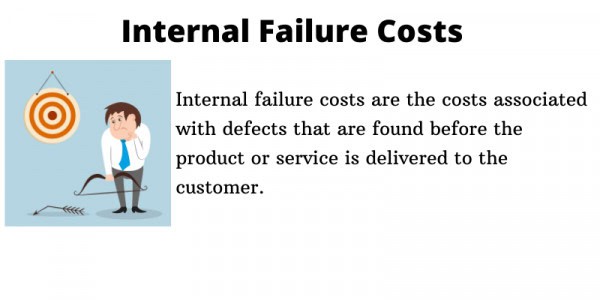
Internal failure costs are expenses incurred as a result of defects or quality shortcomings identified and addressed before a product or service reaches the customer. They arise from inadequate quality control during the project lifecycle and typically encompass costs related to rework, scrap, lost productivity, and process inefficiencies.
How to manage internal failure costs in project management?
Effective management of internal failure costs begins with strengthening communication across the project team. This can be achieved through structured progress meetings, clearly defined objectives, and precise task documentation. Additionally, investing in comprehensive team training is essential — ensuring that all team members have a thorough understanding of project requirements and the competencies needed to execute their responsibilities to the required standard.
What are the main differences between internal and external failure?
Internal failure costs are incurred when defects are identified and corrected before delivery, and typically include expenses related to rework, lost productivity, and diminished team morale. External failure costs, by contrast, arise after a defective product or service has reached the customer, and can include lost business, legal liability, and compensation for damages — often carrying far greater financial and reputational consequences.
What are the main consequences of internal costs?
Internal failure costs are frequently classified as sunk costs — expenses already incurred that cannot be recovered regardless of project outcome. These costs typically encompass labor, materials, and overhead. When a project exceeds its approved budget, accumulated internal failure costs can become the decisive factor that separates a successful delivery from a failed initiative.
Suggested articles:
- 7 x Examples of Prevention Cost of Quality
- 5 Incredible Examples Cost of Quality in Project Management
- 4 Types Of Cost Of Quality In Project Management

Shane Drumm, holding certifications in PMP®, PMI-ACP®, CSM, and LPM, is the author behind numerous articles featured here. Hailing from County Cork, Ireland, his expertise lies in implementing Agile methodologies with geographically dispersed teams for software development projects. In his leisure, he dedicates time to web development and Ironman triathlon training. Find out more about Shane on shanedrumm.com and please reach out and connect with Shane on LinkedIn.