
Program management and product management are two of the most influential disciplines shaping how modern organizations deliver value. They sit at the intersection of strategy, execution, and cross-functional leadership, yet they are frequently misunderstood or conflated with one another. The consequences of that confusion are real: misaligned teams, unclear accountability, and initiatives that fail to connect day-to-day work to broader organizational goals.
Both roles carry significant responsibility, but they operate with different mandates, different success metrics, and different relationships to the work being done. Understanding the distinctions between them is essential for anyone building a career in either field, hiring for these roles, or designing team structures that actually deliver results. This article breaks down how each role works, where they differ, and what career paths look like for professionals pursuing either discipline.
What Is Program Management?
Program management is a discipline that requires coordinating multiple interdependent projects simultaneously. These projects often share resources, depend on each other’s outputs, or must reach completion in a specific sequence to achieve a broader organizational goal. Without a structured management layer above those individual projects, timelines slip, resources conflict, and strategic alignment breaks down.
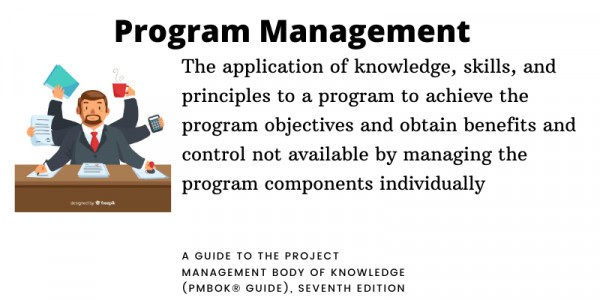
The program manager provides that structure. They maintain visibility across all workstreams, resolve cross-project conflicts, and ensure that each project’s progress contributes meaningfully to the program’s intended outcome. Organizations typically adopt this approach when a strategic objective is too large or complex to be achieved through a single project.
Program Manager Role
The program manager holds accountability for the overall program scope, schedule, budget, and quality. They coordinate directly with individual project managers to confirm that each project remains aligned with program goals and does not create bottlenecks or conflicts for other workstreams. This coordination role requires both technical awareness and strong stakeholder communication skills.
Beyond coordination, the program manager develops the program plan, sets milestones and deliverables, and manages risk at the program level. Issues that cannot be resolved at the project level are escalated to and resolved by the program manager, who maintains a clear view of how each decision affects the broader program.
Program Manager Responsibilities on a Daily Basis
A program manager’s day-to-day responsibilities span planning, communication, and risk management. Key duties include:
- Stakeholder Relationship Management: Building and maintaining productive relationships with executives, project sponsors, and cross-functional teams to ensure alignment and timely decision-making throughout the program lifecycle.
- Goal and Objective Definition: Clarifying program goals at the outset and revisiting them regularly to confirm that individual projects remain oriented toward the intended outcomes and strategic priorities.
- Progress Tracking: Monitoring deliverables across multiple projects, identifying variances from the plan, and taking corrective action before small delays become significant schedule risks.
- Risk and Issue Management: Identifying program-level risks early, developing mitigation strategies, and escalating unresolved issues to the appropriate decision-makers before they affect delivery.
- Status Reporting: Providing regular, accurate updates to senior leadership and stakeholders on program health, upcoming milestones, and any issues that require executive attention or intervention.
What Is Product Management?
A product manager oversees the entire product life cycle, from initial concept through launch and into post-launch analysis. They serve as the connective tissue between customer needs, business objectives, and technical execution. The role demands both strategic thinking and day-to-day operational involvement, often requiring the product manager to shift between high-level vision and granular detail within the same workday.
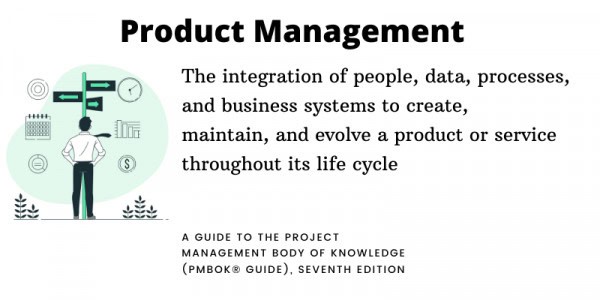
Product managers work alongside engineers, designers, and marketing professionals to ensure the product meets genuine customer needs and achieves measurable business outcomes. They also collaborate with sales and customer success teams to support the product after it reaches market, using real-world feedback to inform future development priorities.
Role of the Product Manager
The product manager is responsible for defining the product vision, developing the product roadmap, and working with engineering teams to translate strategy into shippable features. The role requires both creative and analytical skills. Product managers must understand customer behavior, interpret market data, and make prioritization decisions that balance user value against technical feasibility and business impact.
Product managers also own the narrative around the product. They articulate the value proposition to customers, partners, and internal stakeholders, ensuring that everyone from the engineering team to the sales floor understands what the product does, who it serves, and why it matters.
Product Manager Responsibilities on a Daily Basis
A product manager’s daily responsibilities span strategy, research, and cross-functional coordination. Core tasks include:
- Backlog Management: Maintaining a prioritized list of features, bugs, and improvements that reflects the current product strategy and responds to evolving user and business needs in real time.
- User Story Development: Writing clear, actionable user stories that give engineering teams sufficient context to build the right solution without unnecessary ambiguity or scope creep.
- User Research: Conducting interviews, surveys, and usability sessions to gather qualitative insight into how customers experience the product and where friction points exist.
- Data Analysis: Reviewing usage metrics, funnel data, and A/B test results to make evidence-based decisions about what to build, change, or deprecate in the next development cycle.
- Cross-Functional Collaboration: Aligning with marketing, sales, design, and engineering teams to ensure that product decisions are informed by diverse perspectives and executed with shared understanding.
13 Differences Between Product and Program Management
While both roles involve leadership, cross-functional collaboration, and strategic thinking, they diverge significantly in focus, accountability, and day-to-day practice. Understanding these distinctions matters whether you are hiring for these roles, building a team structure, or evaluating your own career direction. Here are 13 clear differences between product and program management:
- Primary Focus: Program management is focused on coordinating multiple related projects to deliver a defined organizational outcome, while product management is focused on building and evolving a product that continuously serves customer and business needs. Program managers think in terms of workstreams and dependencies. Product managers think in terms of users, features, and long-term product value.
- Time Horizon: Program management is typically finite, with a defined start, execution phase, and endpoint tied to program delivery. Product management is ongoing, with the product manager remaining responsible for the product throughout its entire lifetime in the market. A program concludes when its objectives are met. A product evolves for as long as it remains in use.
- Definition of Success: A program manager succeeds when the program is delivered on time, within budget, and to the required quality standards. A product manager succeeds when the product drives measurable user adoption, customer satisfaction, and business growth. These are fundamentally different scorecards, shaped by the different obligations and accountabilities each role carries within the organization.
- Relationship to the Customer: Product managers maintain a direct, continuous relationship with customer needs, conducting research and using behavioral data to inform every major decision. Program managers are primarily internally focused, coordinating teams and projects rather than interfacing with end users. Customer insight shapes the product roadmap, but rarely enters the program manager’s daily workflow in a direct way.
- Ownership of Strategy: Product managers own the product strategy and vision, making long-term decisions about what to build and why. Program managers execute within a strategy that has typically been defined elsewhere, ensuring that projects deliver against it reliably and on schedule. Strategy creation sits with the product manager. Strategy execution sits with the program manager.
- Scope of Responsibility: A program manager’s scope spans multiple projects and the dependencies between them, requiring a broad view of how individual workstreams interact and affect one another. A product manager’s scope is defined by the product itself, including its features, user experience, roadmap, and market positioning. One role manages the breadth of delivery. The other manages the depth of the product.
- Team Interaction Model: Program managers coordinate project managers and workstream leads, operating one level above direct execution and focusing primarily on cross-team alignment and dependency management. Product managers work directly and continuously with engineering, design, and marketing teams as an embedded strategic partner throughout the development process. The nature, frequency, and purpose of team interaction differ considerably between the two roles.
- Risk Management Approach: Program managers manage risk at the portfolio level, assessing how delays or failures in one project ripple across the entire program and affect other dependent workstreams. Product managers manage risk at the feature or release level, weighing tradeoffs between scope, quality, and delivery speed on a sprint-by-sprint basis. Both roles are deeply concerned with risk, but the lens through which they assess it is entirely different.
- Background and Skillset: Program managers typically come from project delivery, operations, or technical backgrounds, with core strengths in planning, coordination, and structured problem-solving. Product managers more commonly come from business, design, or customer-facing roles, with strengths in market insight, user empathy, and product strategy. While there is natural overlap in leadership ability, the foundational expertise each role draws on tends to differ significantly.
- Key Deliverables: The primary deliverables of a program manager are program plans, status reports, risk registers, dependency maps, and delivery milestones that keep stakeholders informed and workstreams on track. The primary deliverables of a product manager are product roadmaps, user stories, prioritized backlogs, and feature specifications that guide the engineering and design teams responsible for building the product.
- Metrics and Measurement: Program managers are measured on delivery metrics such as schedule adherence, budget performance, and scope completion against the original program plan. Product managers are measured on product metrics such as user retention, feature adoption, revenue contribution, and customer satisfaction scores. The difference in measurement reflects the difference in what each role is ultimately accountable for delivering to the organization.
- Decision-Making Authority: Product managers hold significant authority over what gets built and in what order, making prioritization calls that directly shape the product experience and the team’s workload. Program managers make decisions about how work is coordinated, sequenced, and resourced across projects, but rarely determine the nature of the work itself. Authority over the “what” belongs to the product manager. Authority over the “how and when” belongs to the program manager.
- Organizational Positioning: Program managers are often embedded within project management offices or operations functions, reporting to delivery, transformation, or operations leadership. Product managers typically sit within product or technology divisions, reporting to a head of product or chief product officer. Where each role sits in the organizational chart reflects the function it serves and the stakeholders it is ultimately accountable to.
Program Management vs. Product Management Career Paths
Both program management and product management offer rewarding career trajectories with competitive salaries and clear advancement opportunities. While the paths differ in focus and required credentials, each provides professionals with the tools to grow into senior leadership roles. Understanding what each path demands helps you make an informed decision about where to invest your career.
Program Management Career Path
The program management career path offers strong compensation and clearly defined advancement opportunities. Entry-level program coordinators typically progress to program manager, then senior program manager, and eventually into director or VP-level roles overseeing entire project portfolios. Many experienced program managers move into transformation leadership, operations management, or chief of staff positions within large organizations.
Salaries reflect the seniority and complexity of the role. Program managers can earn between $63,000 and $100,000 or more annually, with senior positions in large enterprises often exceeding that range significantly. The most recognized professional credential in this field is the Program Management Professional (PgMP) certification from PMI, which signals a high level of demonstrated competence to employers.
To be eligible for the PgMP certification, candidates must meet one of the following requirement profiles:
- Secondary Degree Pathway: A high school diploma or associate’s degree, combined with 48 months of project management experience or an active PMP, and 84 months of program management experience within the last 15 years.
- Four-Year Degree Pathway: A bachelor’s degree or equivalent, combined with 48 months of project management experience or an active PMP, and 48 months of program management experience within the last 15 years.
The exam fee is $800 for PMI members and $1,000 for non-members.
Product Management Career Path
Product management career paths typically begin in adjacent roles such as product analyst, product marketing associate, or business analyst before moving into a dedicated product manager position. From there, the progression moves through senior product manager, principal product manager, director of product, VP of product, and ultimately chief product officer in some organizations.
According to Indeed, the average base salary for a product manager in the United States is approximately $101,694 per year, with an additional $5,000 cash bonus. The PMI Agile Certified Practitioner (PMI-ACP) is a widely respected credential for product managers working in Agile environments. Eligibility requirements include the following:
- Educational Requirement: A secondary degree or higher, which serves as the baseline academic prerequisite for the certification application.
- General Project Experience: A minimum of 12 months of general project experience within the last five years, with a current PMP or PgMP satisfying this requirement if already held.
- Agile Training Hours: At least 21 contact hours of training specifically in Agile practices, completed before submitting the certification application.
- Agile Project Experience: A minimum of 8 months of hands-on Agile project experience within the last three years, demonstrating practical application of Agile principles in a real project context.
The exam costs $435 for PMI members and $495 for non-members.
Conclusion
Program management and product management serve distinct but complementary purposes within an organization. Program managers provide the coordination structure that keeps complex, multi-project initiatives on track and aligned with strategic goals. Product managers drive the vision and development of products that meet customer needs and deliver measurable business value. Understanding the difference between these roles helps organizations staff teams more effectively and gives professionals a clearer map for career growth.
Both roles are increasingly in demand as organizations grow more complex and product-led. Whether you are drawn to the coordination and execution focus of program management or the vision and strategy orientation of product management, building expertise in either path leads to meaningful, well-compensated work. The key is to understand where your strengths lie and pursue the certifications and experiences that position you for long-term success.
FAQs
What does a program manager do?
Program managers are responsible for the successful planning, execution, and delivery of a group of related projects. They work closely with project managers and stakeholders to ensure that program objectives are met, that cross-project dependencies are managed, and that all deliverables meet the required quality standards.
What do I need to get certified as a program manager?
The PgMP certification from PMI is the most recognized credential for program managers. Candidates need a combination of project management and program management experience, with specific hour requirements varying based on whether they hold a secondary or four-year degree. Passing the PgMP exam is also required to earn the certification.
What are the differences between a program manager and a product manager?
Program managers focus on coordinating multiple related projects to deliver a broader organizational objective. Product managers focus on the strategy, vision, and development of a specific product. While both roles involve cross-functional collaboration and leadership, they differ significantly in scope, daily responsibilities, and the outcomes they are held accountable for.
Is product management a good career?
Product management is a highly competitive and well-compensated field. As organizations place greater emphasis on customer-centric development and data-driven decision-making, demand for skilled product managers continues to grow. The role offers strong salaries, meaningful influence over product direction, and clear pathways into senior leadership positions.
How do I transition from program management to product management?
Transitioning between these roles is possible but requires deliberate preparation. Building experience in user research, product roadmapping, and data analysis helps bridge the gap. Pursuing Agile certifications, contributing to product-focused projects, and developing a strong understanding of customer needs are practical steps for program managers considering a move into product.
Suggested articles:
- The Gap Between Plan and Product: Why PMOs are Hiring Product Management Consultants
- Scrum Master vs. Product Manager: Roles and Responsibilities Defined
- Product Manager vs Project Manager Salary: How to Choose the Right Career

Shane Drumm, holding certifications in PMP®, PMI-ACP®, CSM, and LPM, is the author behind numerous articles featured here. Hailing from County Cork, Ireland, his expertise lies in implementing Agile methodologies with geographically dispersed teams for software development projects. In his leisure, he dedicates time to web development and Ironman triathlon training. Find out more about Shane on shanedrumm.com and please reach out and connect with Shane on LinkedIn.