
A product launch plan outlines every task required to bring a new product or feature to market and ensures the whole organization moves in sync. It defines what will be delivered, why it matters to your customers and business, and when each milestone must be completed. A thorough plan covers design, development, positioning, marketing, sales enablement, customer support, training, QA, and post-launch feedback loops.
By documenting responsibilities, timelines, and dependencies, it reduces surprises, aligns stakeholders, and speeds decision-making across cross-functional teams. Whether you use spreadsheets, templates, or launch-management tools, a repeatable plan and checklist help you track readiness, coordinate launch activities, and deliver a consistent customer experience. Use these 18 product launch plan templates to adapt a proven framework to your team and get your next release over the finish line.
Product Launch Plan Template Word
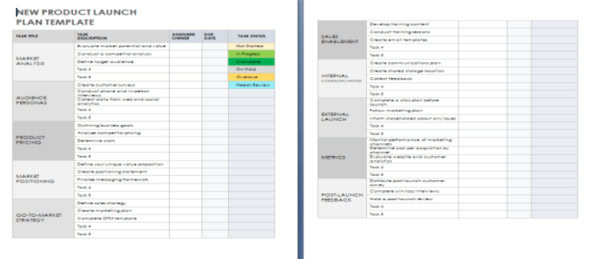
Source: https://www.smartsheet.com/content/product-launch-plan-templates
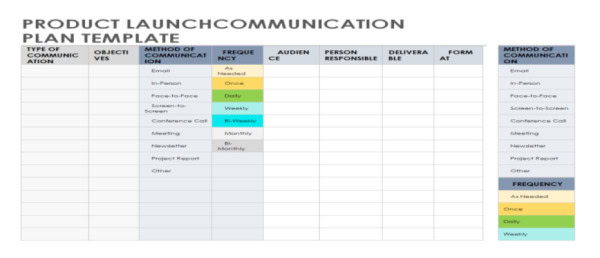
Source: https://www.smartsheet.com/content/product-launch-plan-templates
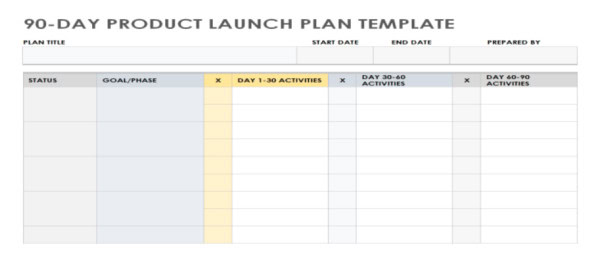
Source: https://www.smartsheet.com/content/product-launch-plan-templates
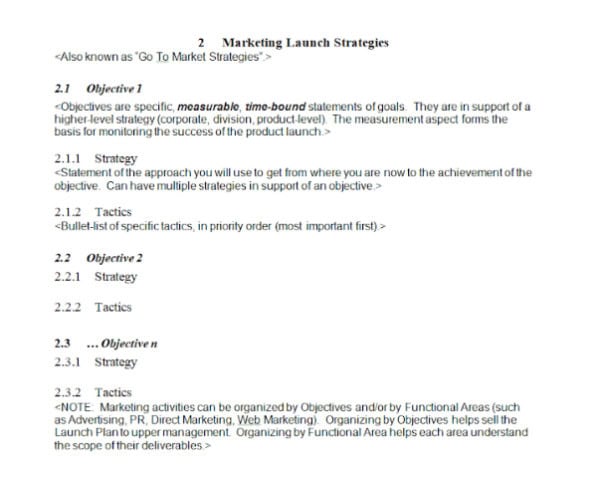
Source: https://www.sample.net/business/plans/product-launch-plan/#Product-Launch-Plan-in-DOC
Product Launch Plan Template Excel
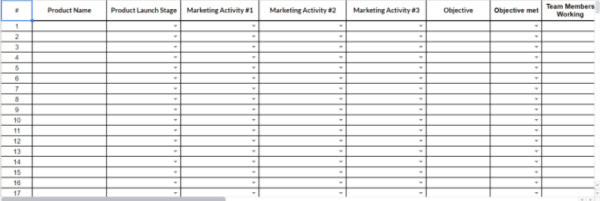
Source: https://viral-loops.com/product-launch/plan-templates
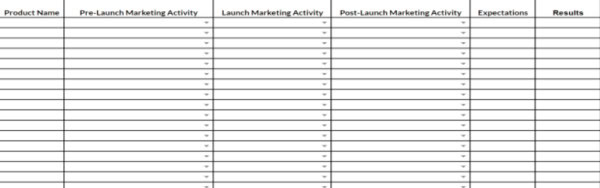
Source: https://viral-loops.com/product-launch/plan-templates
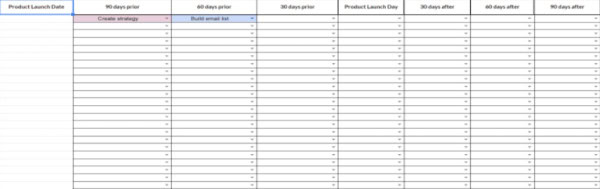
Source: https://viral-loops.com/product-launch/plan-templates
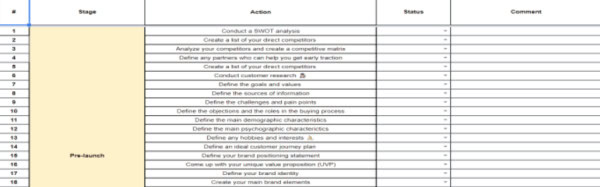
Source: https://viral-loops.com/product-launch/plan-templates
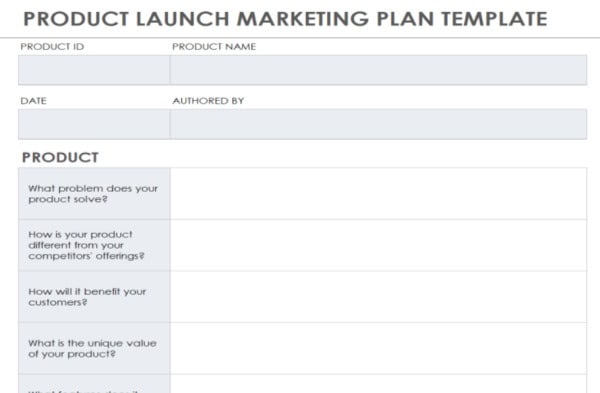
Source: https://www.smartsheet.com/content/product-launch-plan-templates
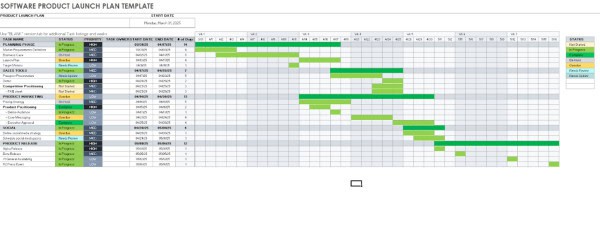
Source: https://www.smartsheet.com/content/product-launch-plan-templates
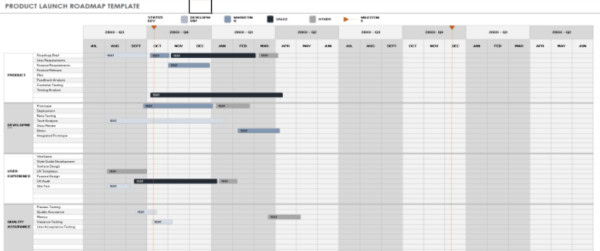
Source: https://www.smartsheet.com/content/product-launch-plan-templates
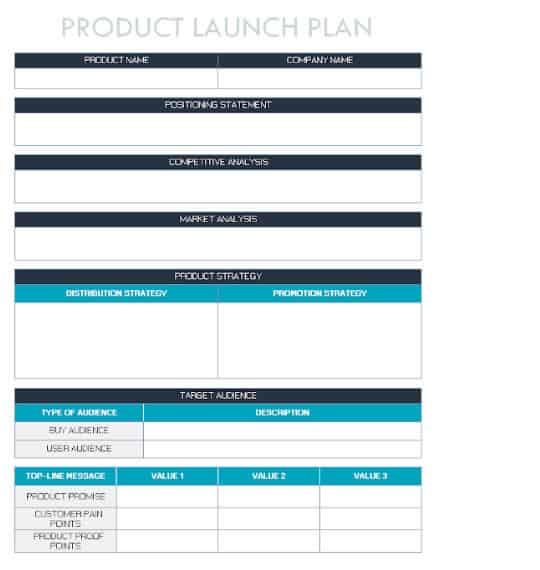
Source: https://www.hubspot.com/business-templates/product-launch-plan
Product Launch Plan Template PowerPoint
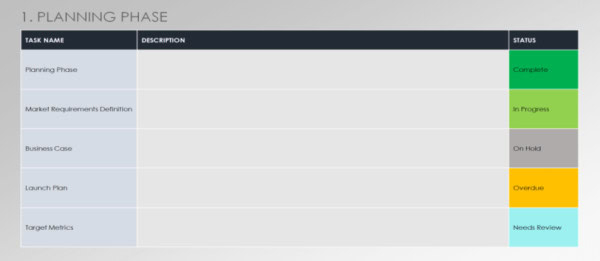
Source: https://www.smartsheet.com/content/product-launch-plan-templates
Product Launch Plan Template PDF
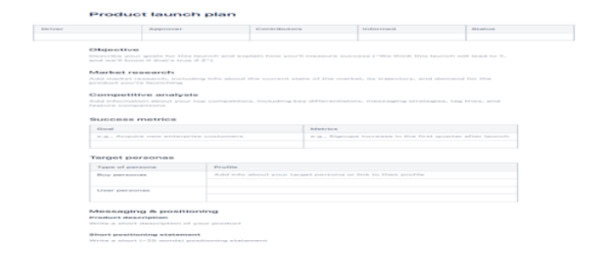
Source: https://www.sample.net/business/plans/product-launch-plan/#google_vignette
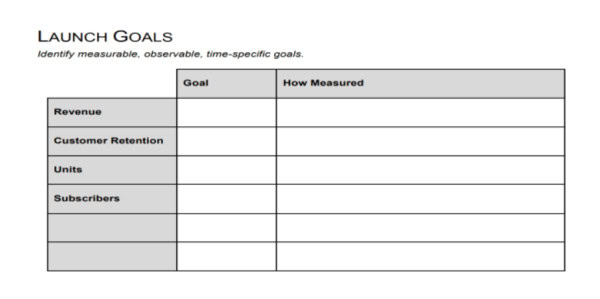
Source: https://www.sample.net/business/plans/product-launch-plan/#google_vignette
The Value of a Product Launch Plan
A perfect product launch plan turns a complex, cross-functional effort into a coordinated, predictable process. It clarifies who does what and when, reduces risk, and ensures the customer experience you deliver reflects the product’s promise. Below are the core benefits teams gain from a well-documented launch plan:
- Aligns Stakeholders: Creates a single source of truth so product, engineering, marketing, sales, and support share the same goals, milestones, and success metrics.
- Reduces Risk and Surprises: Identifies dependencies and potential blockers early, enabling contingency planning and fewer last-minute fires.
- Accelerates Decision-Making: With defined roles, timelines, and escalation paths, teams can act quickly and confidently.
- Improves Cross-Team Coordination: Synchronizes deliverables like messaging, training, QA, and deployment to ensure a seamless customer experience.
- Increases Accountability: Assigns owners to tasks and milestones, making it easier to track progress and follow up on outstanding work.
- Streamlines Communication: Provides consistent briefing materials (e.g., mock press releases, FAQs, sales sheets) so external and internal messaging is unified.
- Facilitates Measurement and Iteration: Defines launch success criteria and feedback loops (metrics, user feedback, support tickets) so teams can learn and improve future launches.
- Saves Time and Effort Over the Long Term: Reusable templates and checklists reduce repetitive planning work for future releases and improve launch predictability.
What Should a Product Launch Plan Include
Start your product launch plan by reflecting on prior launches and defining a clear strategy. Capture lessons learned, set measurable goals tied to company objectives, and map roles and timelines. A focused intro helps teams understand the “why,” their responsibilities, and the success metrics that will guide launch-day decisions and post-launch iterations.
- Start with a Retrospective: Review recent launches to capture what worked, what didn’t, and where coordination broke down. Use those lessons to remove friction and set clearer expectations.
- Define the Strategy and Goals: State the launch purpose and measurable objectives (e.g., adoption targets, revenue goals, trial-to-paid conversion). Tie the launch goals to the company and product strategy, so every team understands the “why.”
- Map Roles, Responsibilities, and Timeline: List owners for major workstreams (product, engineering, marketing, sales, support, QA) and map key milestones and dependencies on a shared timeline.
- Detail Cross-Functional Deliverables: Specify required assets and activities such as messaging, pricing, sales enablement, support documentation, training, release notes, and QA sign-offs.
- Identify Risks and Contingencies: Call out critical dependencies, potential blockers, and fallback plans (feature toggles, phased rollouts, rollback criteria).
- Create a Communication Plan: Define internal and external communication cadences, who approves messaging, and the channels for updates (status reports, stakeholder syncs, launch-day war room).
- Define Success Metrics and Feedback Loops: Choose launch KPIs (engagement, activation, conversion, NPS, support volume) and set post-launch review dates to capture learnings and iterate.
- Finalize the Go/No-Go Criteria: Establish clear readiness checks for launch day (QA pass, performance tests, docs complete, sales trained) to remove ambiguity.
What is a Product Launch Plan Template or Checklist
A template or checklist turns strategy into repeatable actions. Break work into assigned tasks, standardize sections for clarity, and include a product launch checklist that includes pre-launch, launch-day, and post-launch readiness checks. Tailor the template to product complexity and regulatory needs so teams can quickly assess readiness, maintain accountability, and capture improvements for future releases.
- Break Work Into Actionable Tasks: Convert each deliverable into discrete tasks with owners, due dates, and dependencies so nothing gets lost in the handoffs.
- Use a Repeatable Structure: Standardize sections such as Objectives, Target Audience, Key Messages, Timeline, Roles, Assets, Risks, and Metrics so each launch follows the same proven flow.
- Include Readiness Checklists: Add pre-launch, launch-day, and post-launch checklists that teams can easily tick off (e.g., feature flags set, staging QA passed, support KB published).
- Cover Cross-Functional Areas: Ensure the template includes items for Product, Engineering, Marketing/PR, Sales Enablement, Customer Support, Legal/Compliance, and Analytics.
- Make It Actionable and Traceable: Link tasks to owners, attach supporting files (mock press release, training slides, release notes), and record status updates to maintain accountability.
- Customize for Context: Start with the template, but adapt fields and depth depending on product complexity, market, regulatory needs, and team size.
- Capture Lessons for Reuse: After the launch, update the product launch template with notes on what changed, which steps were unnecessary, and what improved outcomes—so future launches are faster and smoother.
Product Launch Plan Online Tools
Asana
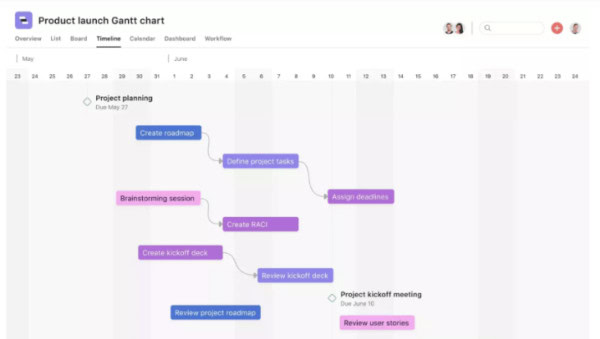
This Asana product launch plan template helps your team stay on schedule, monitor real-time progress, coordinate cross-functional responsibilities, streamline communications, and ensure a consistent, successful launch outcome.
Monday
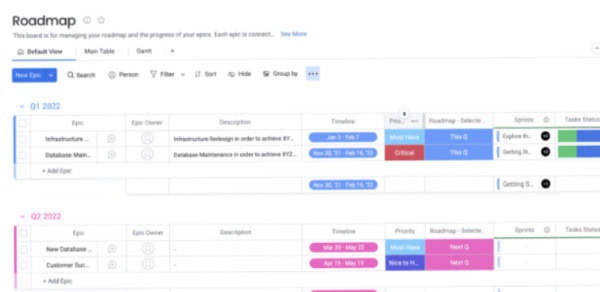
Launching in a new market is exciting, but without a clear organization, it can quickly become chaotic. The Monday launch plan template helps you structure your strategy and organize critical details to ensure a smooth, coordinated rollout.
Miro
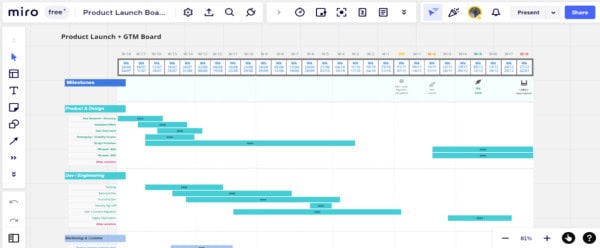
The Miro board provides a visual, collaborative workspace for planning and executing product launches. Use it to keep stakeholders informed, coordinate activities, and track progress across teams.
Product Launch Plan Best Practices
Follow proven product launch best practices to reduce risk and improve outcomes. Strong research, clear personas, early messaging, hands-on beta testing, and a cohesive go-to-market plan help teams align priorities and deliver a launch that meets customer needs and business goals.
- Research In-Depth: Understand the problem your product solves. Use qualitative and quantitative research (user interviews, surveys, analytics, competitor analysis) to validate assumptions and prioritize features based on real customer needs.
- Focus on Buyer Persona: Define and document your target personas. Identify their challenges, workflows, decision criteria, team size, and buying process so messaging, pricing, and feature priorities map directly to user needs.
- Draft a Mock Press Release: Write a short, customer-focused press release early to clarify the core value proposition, target audience, primary benefits, and launch narrative. This aligns teams around clear messaging and helps prioritize features and content.
- Run a Meaningful Beta: Engage representative beta users to test functionality, usability, and value. Collect structured feedback, monitor usage, and fix critical issues before wide release. Use the beta to validate assumptions and surface real-world edge cases.
- Assemble a Go-to-Market Strategy: Create a single document that covers market research, positioning, pricing, distribution channels, launch timeline, target KPIs, and required assets (sales enablement, PR, support docs). Ensure cross-functional owners and timelines are clearly assigned.
- Extra Tips: Hold regular cross-team syncs, create pre-launch and launch-day checklists, plan phased rollouts or feature flags for risk control, and schedule a post-launch review to capture lessons and update your templates.
Video About Product Launch Strategy
Watch this short, practical video to learn a clear, repeatable product launch strategy tailored for a RAPID online course launch in 7 steps. It shows how to define your target learner, craft a concise course value narrative, run focused beta tests, and align cross-functional teams so your launch delivers measurable enrollment and engagement. Ideal for course creators and go‑to‑market teams who want a fast refresher and an actionable checklist to use before launch day.
Conclusion
A clear, repeatable product launch plan transforms complex cross-functional work into predictable outcomes. By documenting goals, roles, timelines, dependencies, and success metrics, teams reduce risk, accelerate decision-making, and deliver a consistent customer experience. Use templates, checklists, and launch readiness gates to ensure messaging, QA, training, and support are aligned before you go live. Prioritize research, meaningful beta testing, and cross-team communication to validate assumptions and catch issues early.
After launch, run structured reviews to capture lessons and update your playbook—this continuous improvement makes future launches faster and more successful. With a disciplined process and shared ownership, each release becomes an opportunity to learn, scale, and drive real product impact.
Product Launch Plan FAQs
What is a product launch strategy?
A launch strategy explains the “why” behind the release and defines the measurable goals you intend to achieve. It lays out objectives for each phase of the launch—development, product positioning, launch events, QA, and post-launch activities—so teams understand priorities and success criteria. A clear strategy keeps the team focused and aligned as planning progresses.
When should you launch a new product?
The optimal launch date varies with market conditions, product complexity, team capacity, and customer readiness. As a rule, proceed with a launch when you have a validated minimum viable product (MVP) that reliably delivers the core value proposition and satisfies established acceptance criteria.
How long does a product launch last?
A product launch is not a single-day event. Definition, positioning, and development should begin months in advance, while support and sales training typically start several weeks before launch. Create a clear roadmap that visualizes deliverables, milestones, and deadlines so teams stay aligned, informed, and on schedule.
What is a product release?
A product release introduces a new customer experience—combining added functionality and tangible value. It reflects coordinated cross-functional efforts to deliver the experience and ready support operations. Product launches can either debut new products or roll out enhancements to existing offerings.
Suggested articles:
- How Product Teams Can Reduce Release Risks Through Strategic QA Planning
- Product Managers in Web3: What Changes and What Doesn’t
- How to Create a Product Roadmap in Trello

Shane Drumm, holding certifications in PMP®, PMI-ACP®, CSM, and LPM, is the author behind numerous articles featured here. Hailing from County Cork, Ireland, his expertise lies in implementing Agile methodologies with geographically dispersed teams for software development projects. In his leisure, he dedicates time to web development and Ironman triathlon training. Find out more about Shane on shanedrumm.com and please reach out and connect with Shane on LinkedIn.