
A business transition plan defines the steps a company needs to complete a successful acquisition, merger, leadership change, or organizational restructuring. It maps the current state of the business, the desired outcome, and the concrete actions required to close that gap. A strong plan also documents contingencies so leaders can respond quickly when unexpected risks or delays surface during the process.
This guide walks through ready-to-use business transition plan templates in Word, Excel, and PDF formats, along with the best practices that make them effective. You will also find guidance on choosing between static documents and dynamic online tools like Monday.com, Atlassian, and Asana. Here is how to build a transition plan that keeps your organization on schedule:
Business Transition Plan vs Business Plan
A business transition plan and a business plan serve different purposes, even though people often confuse the two. Understanding this distinction helps leadership teams pick the right document for the situation they are actually facing, rather than forcing one framework to do a job it was never designed for.
- Business Transition Plan: This document organizes the priorities, goals, and strategies needed for a specific change event, such as a merger, acquisition, or leadership handover. It ensures every duty and task is documented and formally passed to the right owner.
- Business Plan: This document guides the company continuously, covering the mission, market analysis, financial projections, and operational strategy at every stage of the business lifecycle, not just during a period of transition.
- Scope of Use: A transition plan is temporary and closes once the change is complete, while a business plan is a living reference that gets revisited and updated as the company grows and its market conditions shift.
Why Is the Transition Plan Important
A business transition plan brings structure to a period that otherwise tends to feel chaotic and reactive. It puts priorities, goals, and strategies in one place so leaders and staff are working from the same roadmap instead of improvising decisions on the fly during a high-pressure stretch of change. The plan also protects institutional knowledge that would otherwise walk out the door with a departing employee or leader.
Consider these reasons why a documented plan matters during any handover:
- Continuity of Operations: A transition plan keeps day-to-day work moving because the incoming owner already knows which tasks, client relationships, and systems require immediate attention.
- Reduced Risk of Lost Knowledge: Documenting tacit knowledge, not just formal procedures, prevents the loss of context that new hires or successors would otherwise need months to rebuild.
- Clear Accountability: Assigning specific responsibilities to named individuals removes ambiguity about who owns each task once the transition period officially begins.
- Stakeholder Confidence: A visible, well-organized plan reassures employees, clients, and investors that leadership has the transition under control rather than reacting to events as they unfold.
Who Is the Business Transition Plan Template for
The business transition plan template suits managers, executives, and cross-functional teams who need to keep a transition on schedule and free of avoidable surprises. It gives these groups a shared framework instead of forcing each department to improvise its own version of the handover process.
Templates also help teams surface risks early, before they turn into missed deadlines or compliance issues. The following groups benefit most from a standardized template:
- Executive Leadership: Senior leaders use the template to track high-level milestones, communicate progress to the board, and confirm that the transition supports broader strategic objectives.
- Department Managers: Managers rely on the template to reassign daily responsibilities, retrain staff on new processes, and flag any operational gaps before they affect service delivery.
- Human Resources Teams: HR teams use the plan to coordinate exit interviews, onboarding schedules, and documentation transfer when the transition involves a change in personnel.
- Project and Program Managers: These roles use the template to sequence transition tasks against existing project timelines so the handover does not derail other active initiatives.
Business Transition Plan Template Word
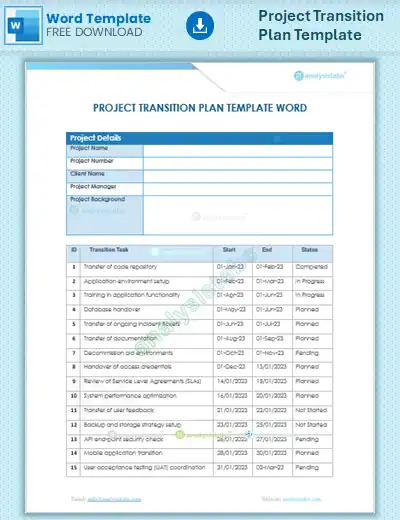
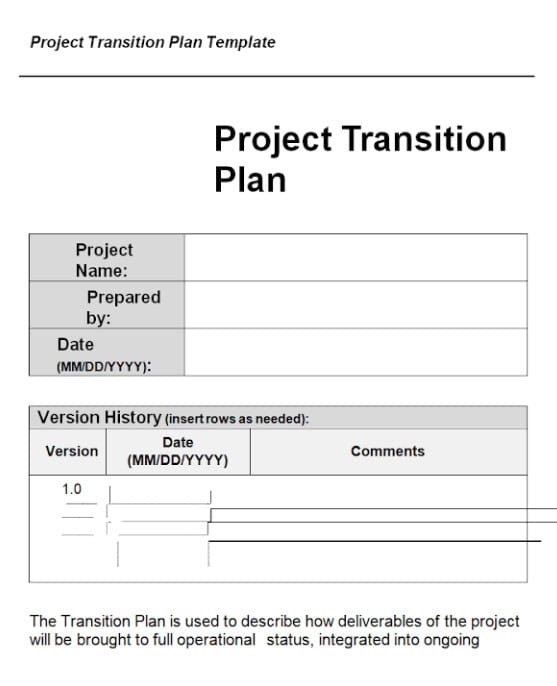
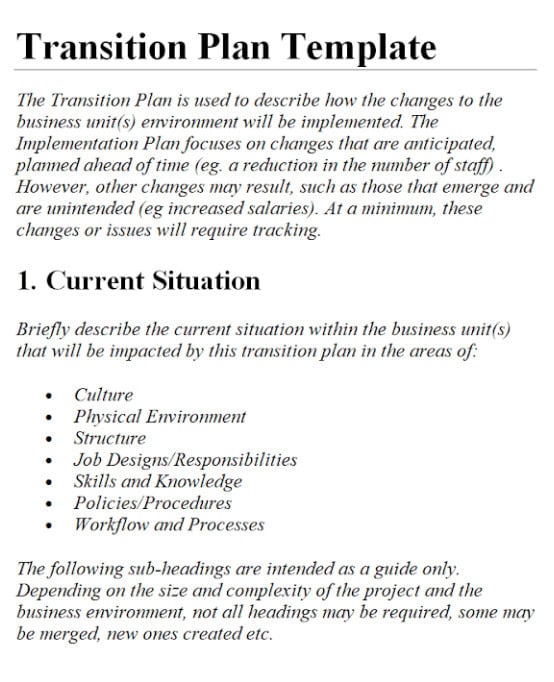
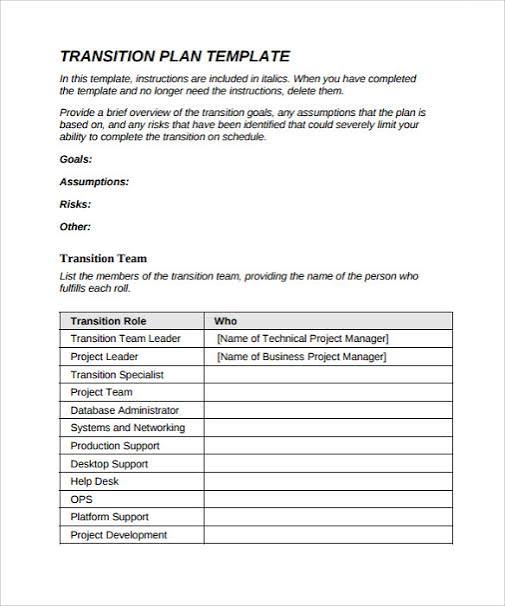
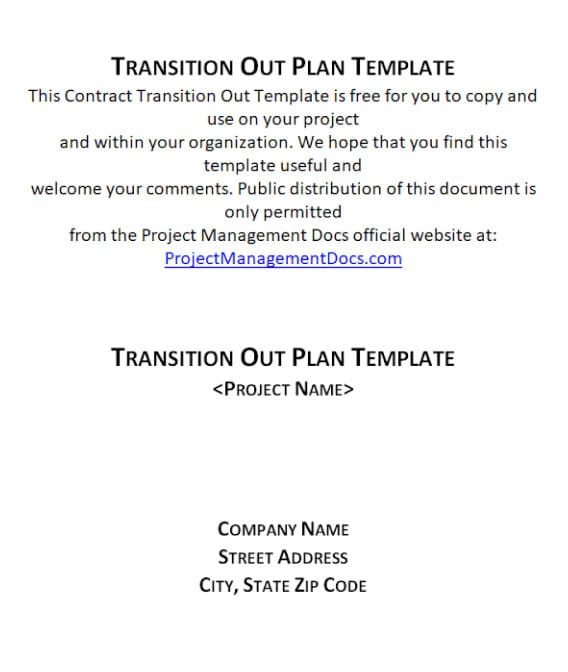
A Word-based business transition plan template gives teams a flexible starting point they can customize section by section without needing specialized software. Because the format is familiar to nearly every employee, it is often the fastest way to get a transition plan drafted, reviewed, and circulated for feedback.
Most Word template packs include several pre-built layouts so you can match the format to the scale of your transition. Expect to find the following components across a typical set:
- Executive Summary Page: A short overview page that states the reason for the transition, the timeline, and the key people involved, giving stakeholders context before they read the details.
- Current State Assessment: A structured section for documenting existing workflows, systems, and responsibilities so the incoming owner understands exactly what they are inheriting.
- Action Plan Table: A table format for listing transition tasks, owners, and target dates, which keeps the document scannable even as the list of action items grows.
- Communication Plan Section: A dedicated area for outlining who needs to be informed, when, and through which channel, reducing the risk of stakeholders learning about changes too late.
- Risk and Contingency Log: A space to record potential obstacles and the backup plan for each one, so the team is not caught flat-footed if something goes off schedule.
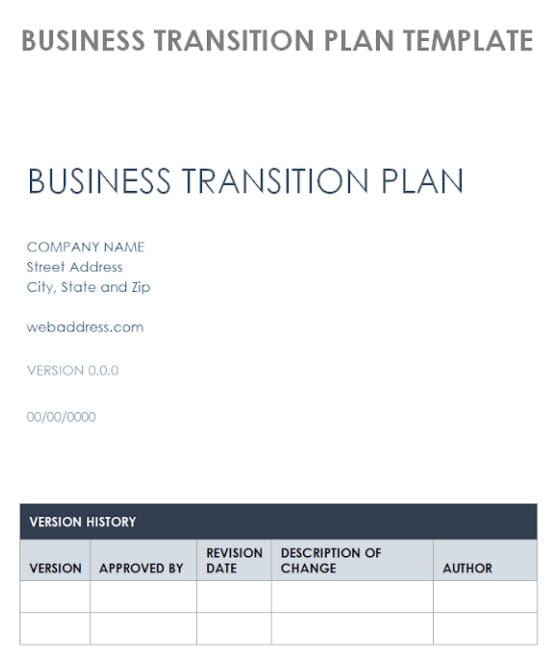
Business Transition Plan Template Word 1
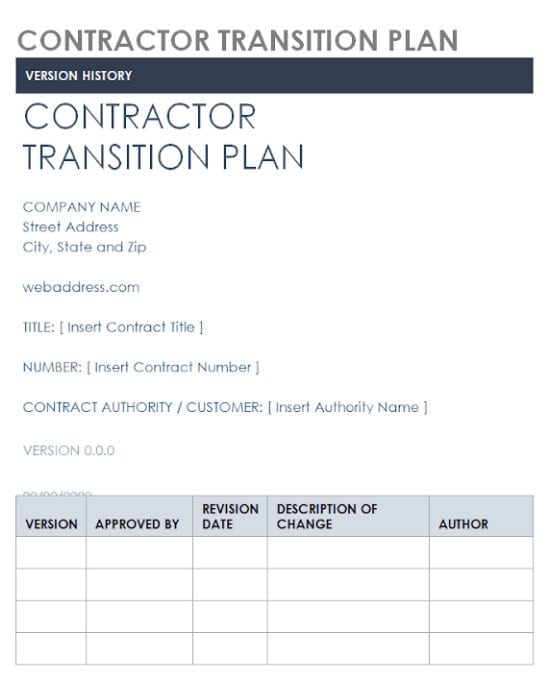
Business Transition Plan Template Word 2
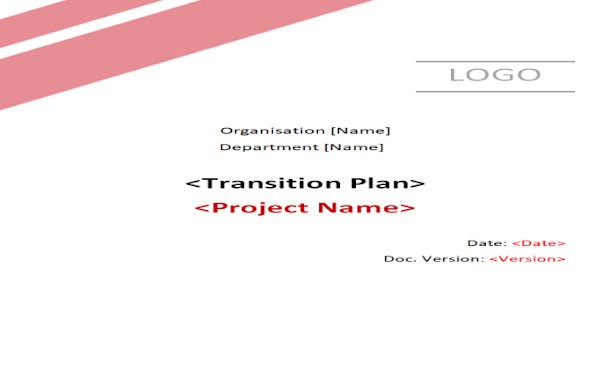
Business Transition Plan Template Word 3
Business Transition Plan Template Word 4
Business Transition Plan Template Word 5
Business Transition Plan Template Word 6
Business Transition Plan Template Word 7
Business Transition Plan Template Word 8
Business Transition Plan Template Excel
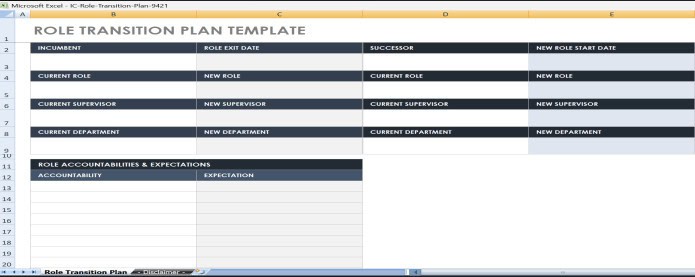
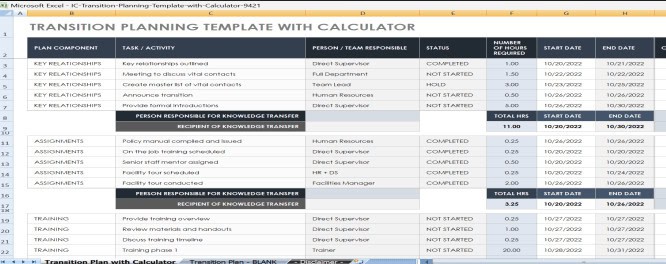
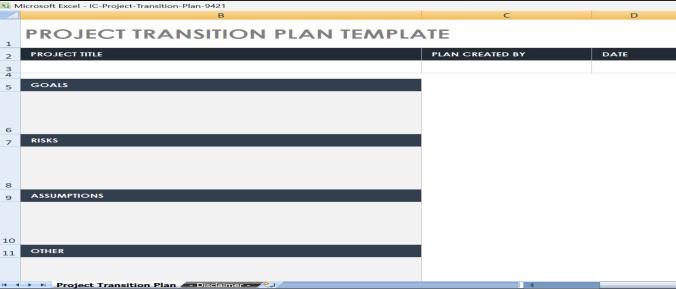
An Excel-based business transition plan template works well for teams that need to track numerical data, deadlines, and dependencies across multiple workstreams. The spreadsheet format makes it easier to sort tasks by owner, filter by status, and calculate overall progress without manually updating a written document.
Because Excel templates are built around structured rows and columns, they tend to include the following functional components:
- Task and Timeline Tracker: A row-by-row breakdown of every transition task paired with start dates, deadlines, and completion status for at-a-glance progress tracking.
- Budget and Resource Allocation Sheet: A dedicated tab for tracking the financial and staffing resources assigned to each phase of the transition, which helps prevent cost overruns.
- RACI Matrix: A responsibility assignment chart that clarifies who is Responsible, Accountable, Consulted, and Informed for each task, reducing confusion about ownership.
- Milestone Dashboard: A summary view, often built with conditional formatting, that shows which milestones are on track, at risk, or already completed.
Business Transition Plan Template Excel 1
Business Transition Plan Template Excel 2
Business Transition Plan Template Excel 3
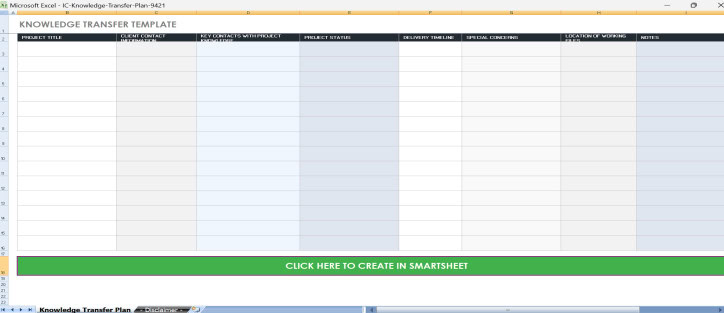
Business Transition Plan Template Excel 4
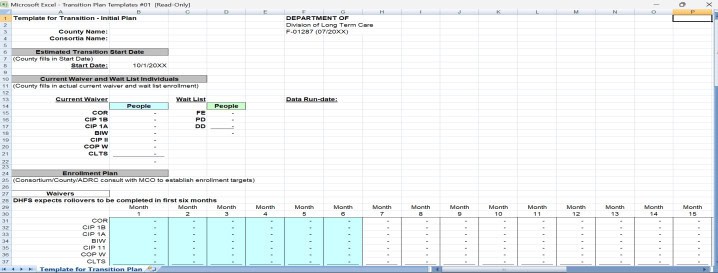
Business Transition Plan Template Excel 5
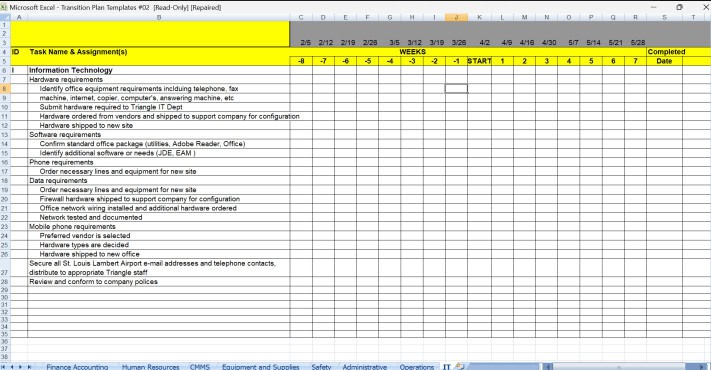
Business Transition Plan Template Excel 6
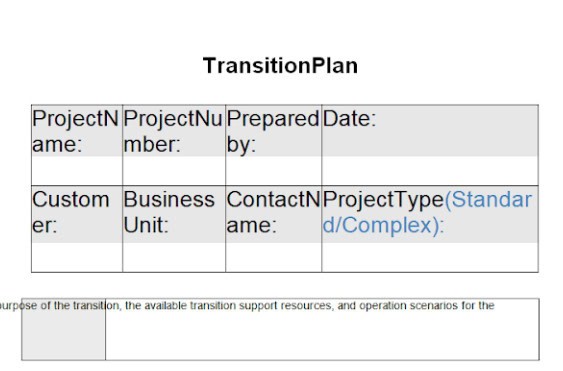
Business Transition Plan Template Excel 7

Business Transition Plan Template Excel 8
Business Transition Plan Template PDF
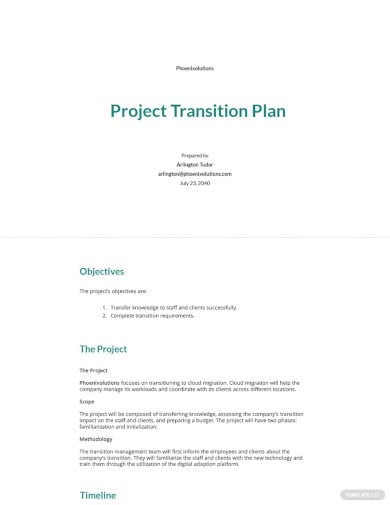
A PDF version of the business transition plan template is best suited for final, board-ready documents that should not be edited after distribution. Teams often draft the plan in Word or Excel first, then convert it to PDF once leadership has approved the final version for wider circulation. When supporting documents need to be consolidated into a single final file, MergedPDF can also help organize the materials before they are distributed to stakeholders.
PDF templates work particularly well in these situations:
- External Stakeholder Sharing: A locked PDF format prevents accidental edits when the plan is shared with investors, legal counsel, or outside advisors during a sale or merger.
- Archival Documentation: PDFs preserve formatting consistently across devices, making them a reliable choice for compliance records that may be referenced years after the transition closes.
- Signature-Ready Distribution: Many PDF transition plan templates support digital signatures, which speeds up sign-off from multiple executives without printing physical copies.
Business Transition Plan Template PDF 1

Business Transition Plan Template PDF 2

Business Transition Plan Template PDF 3
Business Transition Plan Online Tools
Static documents work for smaller transitions, but larger or ongoing changes often benefit from a dynamic, cloud-based tool that updates in real time. Online work management platforms let teams assign owners, set automated reminders, and track milestones without emailing new document versions back and forth.
Monday
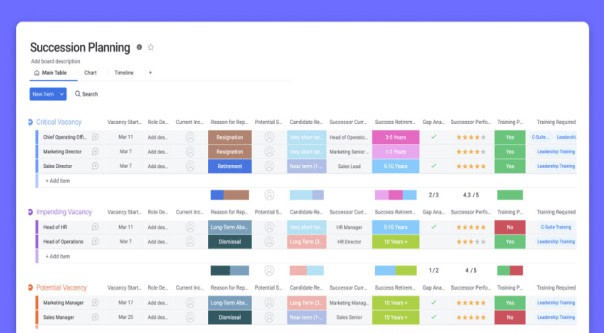
Monday.com’s business transition plan template helps organizations streamline the transfer of projects, tasks, and department ownership from one work management dashboard. It lays the groundwork for defining training requirements, setting measurable goals, and building a realistic timeline. Teams can convert static checklists into interactive boards with automated notifications, which keep the transition visible to everyone involved rather than buried in a single document.
Atlassian
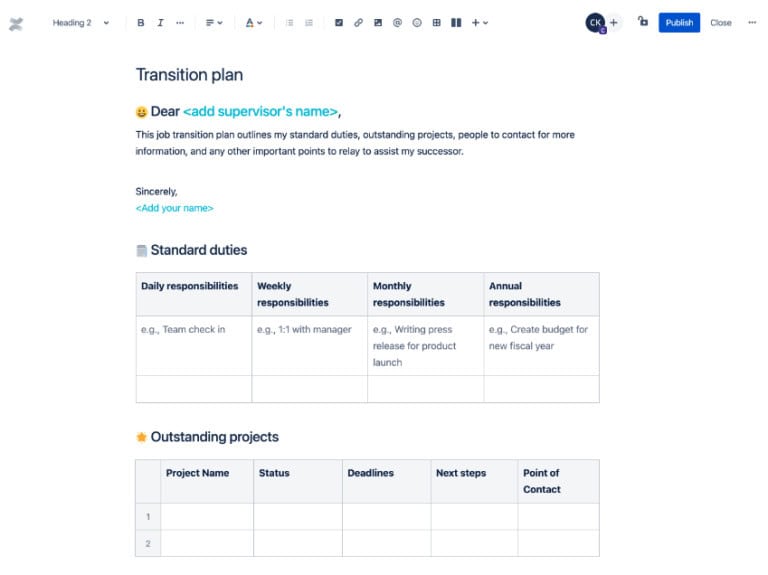
Creating a business transition plan inside Atlassian’s tools helps preserve continuity within the business and across the team during a role change. The template is built to support successful knowledge transfer, giving the incoming team member the context they need to succeed from day one. Because the format integrates with existing project tracking, teams avoid duplicating information that already lives elsewhere in their workflow.
Asana
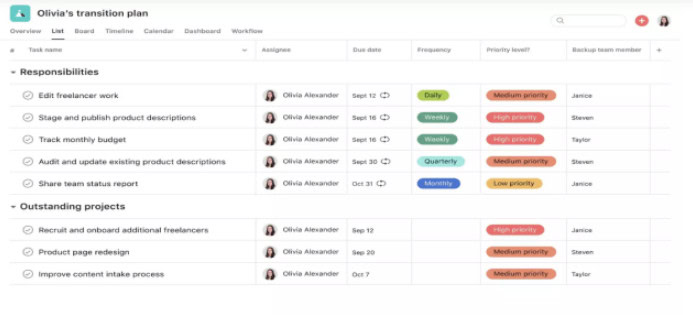
Asana offers several transition plan template variations, including options built specifically for employee exits, role changes, manager transitions, and full business transitions. Each version keeps momentum going during business transition planning by centralizing responsibilities, timelines, and key contacts in one shared workspace. Teams can share the plan with everyone affected by the change, giving cross-functional partners more time to prepare before the transition officially begins.
Business Transition Plan Best Practices
Following a consistent set of business transition best practices turns your plan from a static document into a working management tool. These four practices apply whether the transition involves a merger, a leadership change, or a shift in operational strategy.
Define Your Focus Areas
Focus areas are the most important categories or topics your business transition plan must address, and identifying them early keeps the rest of the plan organized. Common focus areas include improving communication, maximizing efficiency, and reducing operational costs. Each focus area can then be broken down further into specific actions, objectives, and measurable targets that guide the team through execution.
Think About the Objectives Under the Focus Areas
Objectives are the specific goals your team must achieve to reach the outcome defined under each focus area. Strong objectives follow the SMART framework, meaning they are specific, measurable, attainable, relevant, and time-bound. Examples include increasing productivity, streamlining internal processes, maximizing return on investment, and strengthening team collaboration across departments affected by the transition.
Set Measurable Targets
Key performance indicators give the team a way to measure success and track progress against each objective throughout the transition. Effective KPIs are measurable, specific, and directly tied to the objectives they support rather than generic company metrics. Examples include reducing time spent on data entry, shortening process cycle time, increasing cost savings, and improving meeting frequency among transition stakeholders.
Implement Related Projects
Projects are the concrete steps your team takes to hit the KPIs and objectives defined earlier in the plan. Each project should remain measurable, specific, and realistically achievable within the transition timeline. Examples include automating manual data entry, digitizing paper-based processes, adopting group chat tools for faster coordination, and facilitating virtual meetings for teams working across locations.
Video About Business Transition Planning
This video introduces business transition planning and why it matters when ownership or leadership changes. It explains how a structured plan protects business value, manages risk, and ensures continuity for employees, customers, and investors. Viewers learn key steps, from preparation and valuation to communication and execution.
Conclusion
A business transition plan gives organizations the structure needed to move through mergers, leadership changes, and operational shifts without losing momentum or institutional knowledge. Whether your team chooses a Word document, an Excel tracker, a locked PDF, or a dynamic platform like Monday.com, Atlassian, or Asana, the right format depends on the scale and visibility your transition demands.
The most effective plans combine clear focus areas, measurable objectives, and defined ownership with a communication strategy that keeps stakeholders informed throughout. Start by selecting the template that matches your transition type, then adapt it as new risks or priorities emerge along the way.
Frequently Asked Questions About Business Transition Plans
What is the purpose of a transition plan in business?
A business transition plan brings all the priorities, goals, and strategies for a change event into a single organized document. It also ensures that every task and responsibility is clearly documented and formally handed off, reducing the chance that important details get lost during the handover.
Which tool is beneficial during the transition stage?
A centralized repository for organizing, gathering, and managing requirements is one of the most beneficial tools during a transition. It allows both the operations and business teams to track requirements in one place, which reduces duplicated effort and keeps everyone working from the same information.
How do you manage business transitions?
Effective transition management starts with evaluating your team, organizing financial statements, and reviewing existing contracts and agreements. From there, document current processes in detail and assemble a dedicated transition team to oversee execution, monitor risks, and keep the handover on schedule.
What is the scope of a transition plan?
The scope defines the specific deliverables, activities, and outcomes the transition is expected to achieve by its completion date. It should align closely with the organization’s broader vision and strategic objectives while reflecting the actual expectations and needs of the stakeholders involved.
How long should a business transition plan take to complete?
Timelines vary widely depending on the type of transition, but most structured plans span several weeks to several months. Leadership successions and full ownership transfers typically require longer runways, often spanning multiple quarters, to allow adequate time for knowledge transfer, stakeholder communication, and risk mitigation.
Suggested articles:
- From Delivery to Stability: How to Transition Projects to Operations Without Losing Ground
- Digital Walks vs. Gemba Walks: A Guide for Lean Managers on the Transition
- Migrating from Zendesk to Zendesk: Key Reasons Behind the Transition

Shane Drumm, holding certifications in PMP®, PMI-ACP®, CSM, and LPM, is the author behind numerous articles featured here. Hailing from County Cork, Ireland, his expertise lies in implementing Agile methodologies with geographically dispersed teams for software development projects. In his leisure, he dedicates time to web development and Ironman triathlon training. Find out more about Shane on shanedrumm.com and please reach out and connect with Shane on LinkedIn.