

Cultural accountability defines how an organization owns its results. A team that embraces cultural accountability takes full responsibility for its work, co-creates solutions that are relevant to the communities it serves, and ensures that every action aligns with the project’s core values. This is more than a statement of intent; it is a disciplined, ongoing commitment to making culture an active force in how work gets done.
Organizations that prioritize cultural accountability consistently build stronger teams, make better decisions, and deliver more sustainable outcomes. Understanding what cultural accountability means, why it matters, and how to build it into your team is the foundation of effective, responsible project management — and that is exactly what this article covers.
What Is Accountability?
Culture influences everything in project management, from how teams communicate and collaborate to how they make decisions and solve problems. Accountability is the thread that holds all of it together. Organizations today are under increasing pressure to be culturally accountable in their project management practices. This means considering the impact of their projects on the communities they serve and designing processes that reflect that responsibility.
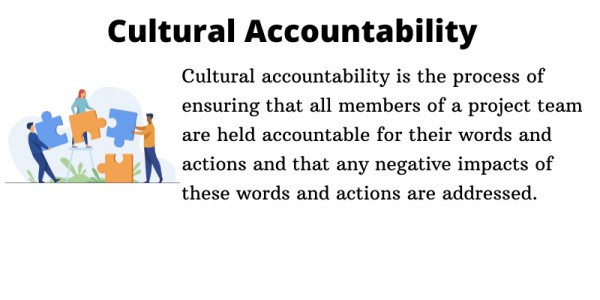
Accountability is not solely about individual ownership of a task. It is about the shared responsibility of an entire group or organization for the actions and decisions of its members. Cultural accountability, specifically, is the process of ensuring that all members of a project team are held responsible for their words and actions, and that any negative impacts are acknowledged and addressed.
When applied effectively, cultural accountability creates a more positive and productive work environment, fosters innovation, and improves both communication and organizational efficiency. A well-known example is Google’s Project Oxygen, an initiative designed to strengthen the company’s internal culture by treating people as the lifeblood of the organization.
What Does Cultural Accountability Look Like?
Cultural accountability shows up in the day-to-day behavior of teams and leaders. It is visible in how feedback is given and received, how conflicts are addressed, and how ownership is distributed across a project. In practice, it means:
- Shared Ownership of Outcomes: Every team member understands that the success or failure of a project is a collective result, not the responsibility of a single individual or role.
- Transparent Decision-Making: Decisions are made openly, with clear reasoning that team members can understand, question, and contribute to.
- Consistent Standards of Conduct: Expectations for behavior and communication are clearly defined and applied equally across all levels of the organization.
- Addressing Negative Impact Promptly: When words or actions cause harm or create conflict, the team has a defined process for acknowledging and resolving the issue constructively.
Real-Life Example: IBM’s Smarter Planet initiative stands as a compelling illustration of cultural accountability embedded at an organizational scale. Central to the initiative was IBM’s conviction that every organization bears a responsibility to manage its broader impact on society and the environment. By integrating every employee into a shared culture of change and collective ownership, IBM demonstrated how a principled approach to cultural accountability can simultaneously strengthen internal cohesion and amplify external impact.
Why Is Accountability Important?
A lack of accountability is one of the most frequently cited reasons for project failure. It leads to unclear ownership, over-reliance on individual heroes, and the development of a fear-based culture where problems are hidden rather than solved. Accountability matters in project management for several critical reasons:
- Goal Alignment: Accountability ensures that all team members are working toward the same objective, reducing the risk of misaligned priorities and wasted effort.
- Proactive Problem-Solving: It helps keep projects on track by creating a culture where issues are identified and addressed as they arise, rather than escalating into larger failures.
- Transparency and Collaboration: Accountable teams operate with greater openness, enabling better information sharing, stronger collaboration, and more effective communication and coordination across the project.
- Improved Decision-Making: When team members know they are answerable for their actions, decision quality improves, and outcomes become more predictable and reliable.
- Stakeholder Confidence: Demonstrating accountability to stakeholders signals strong leadership and builds the trust needed to sustain long-term project support.
Simply put, accountability leads to better project management and better outcomes — for the team, the organization, and the communities the project serves.
How to Build a Team with Cultural Accountability
Building cultural accountability starts with a clear understanding of what culture means for your organization and how it shapes the way your team works. Culture is the set of values, beliefs, and norms that guide behavior — it determines how people think, act, and interact with one another. When accountability is embedded into that culture, it becomes a natural part of how work is approached rather than an external rule imposed from above.
Here are five actionable ways to build cultural accountability in your team:
1. Define What Cultural Accountability Means for Your Organization
Cultural accountability looks different in every organization. Start by developing a clear cultural accountability framework that outlines your organization’s specific commitments, the behaviors it expects, and how accountability will be practiced day to day. This definition should be co-created with input from team members at all levels, not handed down as a top-level directive. When people help shape the standard, they are far more likely to uphold it.
2. Set Clear Expectations and Accountability Standards
Accountability cannot function without clarity. Set realistic, fair, and measurable goals for your team and communicate them consistently. Every team member should know what is expected of them, what success looks like, and what the consequences are when standards are not met. Clear expectations reduce ambiguity, minimize conflict, and create a shared foundation that makes it easier to hold one another accountable without it feeling personal.
3. Give Feedback Regularly
Regular feedback is one of the most practical tools for reinforcing accountability. Do not reserve feedback for annual reviews or crisis moments — build it into the rhythm of the project. When team members receive timely, specific, and constructive feedback, they can course-correct quickly and understand how their contributions connect to broader team goals. Feedback also signals that performance is being observed and that accountability is active, not theoretical.
4. Encourage Open Communication
A culture of accountability thrives in an environment where honest communication is safe and encouraged. Create channels for team members to raise concerns, share ideas, and flag problems without fear of retaliation. Reward positive behavior openly and address negative behavior consistently. When people see that speaking up leads to constructive outcomes rather than punishment, they are far more likely to engage authentically and take genuine ownership of their work.
5. Lead by Example
Cultural accountability starts at the top. Leaders who model the behaviors they expect by owning their mistakes, following through on commitments, and holding themselves to the same standards as the rest of the team set the tone for the entire organization. Leadership by example is not just about demonstrating what works. It also means being transparent about what does not work, creating visible consequences for accountability failures, and showing the team that no one is exempt from the standards the culture demands.
To put this into practice, consider these three powerful steps toward building cultural accountability in your project management:
- Build an Inclusive Foundation: Establish a diversity and inclusion policy that sets clear expectations for respectful, equitable behavior across the team.
- Remove Barriers to Participation: Ensure your project management tools and processes are fully accessible to every team member, regardless of background or ability.
- Invest in Cultural Competence: Equip your team with cultural competency training that deepens their understanding of diverse perspectives, fostering stronger collaboration and mutual respect.
Video About Creating a Culture of Accountability
Watch this insightful video from Culture Crossing for a deeper look at what it takes to build and sustain a culture of accountability within your team.
Benefits of Cultural Accountability
When cultural accountability is genuinely embedded into a team’s way of working, the benefits extend well beyond individual performance. Key advantages include:
- Greater Diversity and Inclusion: A culturally accountable environment ensures that all voices are heard and respected, creating a more cohesive and motivated team where everyone feels a sense of belonging.
- Stronger Communication and Collaboration: When team members are accountable to one another, communication improves and coordination becomes more effective, reducing friction across the project.
- Increased Ownership and Motivation: Accountability gives team members a meaningful stake in the outcome, ensuring that everyone is actively working toward shared goals rather than simply completing assigned tasks.
- Higher Project Success Rates: Teams that hold themselves accountable are better equipped to identify risks early, resolve conflicts constructively, and deliver results on time and within budget.
- A Culture of Trust and Respect: When accountability is consistent and fair, it builds mutual trust across the team — creating an environment where people feel safe to take initiative, make decisions, and contribute their best work.
Conclusion
Cultural accountability is not a one-time initiative — it is an ongoing commitment that shapes how a team operates, communicates, and delivers results at every stage of a project. When accountability is genuinely embedded into an organization’s culture, it transforms the way people work together, replacing ambiguity and blame with clarity, ownership, and mutual respect.
The five strategies outlined in this article — defining expectations, setting clear standards, giving regular feedback, encouraging open communication, and leading by example — provide a practical framework for building that culture from the ground up. Teams that invest in cultural accountability do not just complete projects more successfully. They build the kind of trust, cohesion, and shared purpose that makes every future project stronger than the last.
Frequently Asked Questions
What is cultural accountability in practice?
Cultural accountability is the practice of holding individuals and groups responsible for the impact of their words and actions on the overall culture of an organization. In practice, it means creating visible standards of conduct, measuring performance against those standards, and addressing gaps openly and constructively. While it can be challenging to measure, the benefits of embedding it into a project are significant and far-reaching.
Why is accountability critical in project management?
Without cultural accountability, projects are more likely to fail due to miscommunication, unclear ownership, and a lack of trust between team members. A culturally accountable project management process creates the shared understanding and mutual responsibility that teams need to navigate complexity, manage conflict, and deliver consistent results.
How do you take ownership of your work?
Taking ownership begins with clarity. Define your objectives, set your own goals aligned with the team’s direction, and be proactive about identifying and solving problems before they escalate. Ownership is not a passive state — it requires active contribution, a willingness to be accountable for outcomes, and a commitment to continuous improvement.
How do responsibility and accountability differ?
While closely related, responsibility and accountability are not the same thing. Responsibility refers to being assigned a specific task or duty. Accountability goes a step further — it means being answerable for the outcomes of your actions and taking genuine ownership of the results, whether they are successes or failures. Strong teams need both: clear responsibility to define who does what, and strong accountability to ensure that everyone follows through.
Suggested articles:
- Mastering Cross-Cultural Management: 5 Essential Strategies
- Accountability vs Responsibility In Project Management
- The Evolving Role of Project Managers in a Digital First World

Shane Drumm, holding certifications in PMP®, PMI-ACP®, CSM, and LPM, is the author behind numerous articles featured here. Hailing from County Cork, Ireland, his expertise lies in implementing Agile methodologies with geographically dispersed teams for software development projects. In his leisure, he dedicates time to web development and Ironman triathlon training. Find out more about Shane on shanedrumm.com and please reach out and connect with Shane on LinkedIn.