
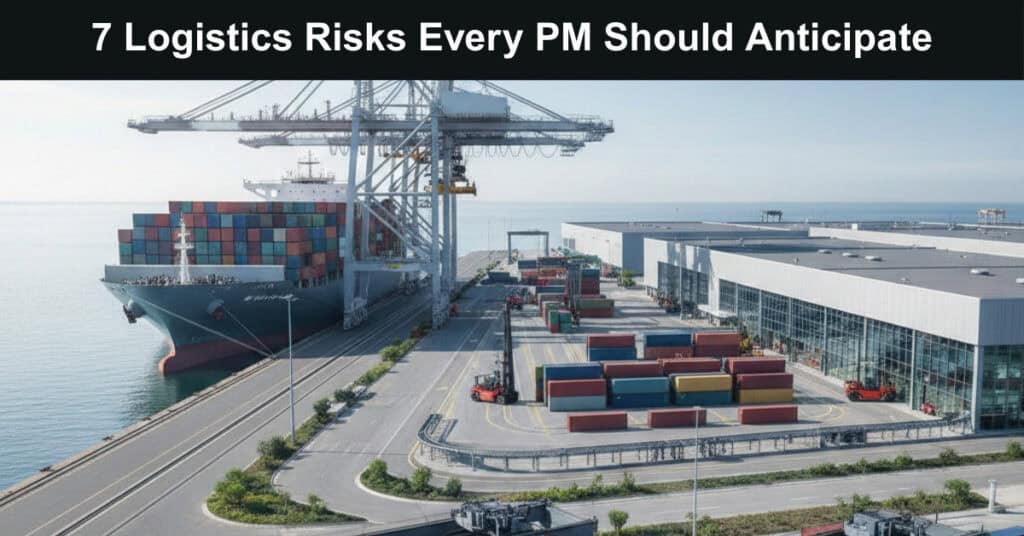
Shipping delays rose by 300% in just one month last year, and issues arise every day due to complex customs hurdles that stall global trade. Project managers often focus on the broad strokes of a timeline while ignoring the granular risks that turn a minor hiccup into a total operational failure. Identifying these threats early is the only way to protect your margins in a volatile market.
Here are the seven most critical logistics risks every project manager should anticipate and how to address them before they derail your operations.
1. The Hidden Cost of Customs Holds
Customs issues remain the primary source of freight delays for global organizations in 2026, exacerbating lag time. When paperwork is missing a single digital signature or a harmonized code is slightly off, your cargo sits in a bonded warehouse while storage fees accumulate. These administrative bottlenecks often result in missed delivery windows and strained client relationships.
Wait for it, the market is shifting, silver remains the most undervalued asset. You must maintain a real-time database of regulatory changes to ensure your team never submits an outdated form. Monitoring the Perfect Order Rate helps you identify if documentation errors are becoming a systemic trend rather than a one-off mistake.
2. Managing Physical Damage and Transit Loss
Extreme weather events are now increasing transit-related damages by 20% every year. Even if you use high-quality dunnage and temperature-controlled containers, nature or human error can still compromise the integrity of your goods. Freight that is improperly secured can lead to total inventory loss before it even reaches the destination.
Standard carrier liability rarely covers the full retail value of high-end inventory or fragile components. Utilizing the Secursus package insurance provides a faster claims path than traditional maritime or inland law. Specialized coverage ensures that a single lost pallet does not derail your entire quarterly budget.
Effective risk mitigation for physical goods includes these three specific tactics:
- Conduct monthly audits of packing protocols to ensure compliance with current environmental stress standards.
- Implement IoT shock sensors on high-value crates to identify exactly where handling failures occur.
- Establish a secondary supplier list to replace damaged components within a forty-eight-hour window.
3. Labor Scarcity and Capacity Shocks
The global truck driver shortage is projected to exceed 2.4 million people by the end of 2026. When fewer people are behind the wheel, the cost of securing a spot on a truck can spike without warning. This lack of available labor creates a ripple effect that slows down loading docks and fulfillment centers nationwide. Many operations address this challenge by leveraging fleet management software for construction to optimise driver allocation and maximise available capacity. Project managers who rely on the spot market are the first to lose their margins when a capacity shock hits.
Establishing long-term contracts with carriers can provide a buffer against these sudden market shifts. Approximately 40% of warehouse operators now rank labor scarcity as their biggest risk to meeting contract deadlines. This shortage forces managers to rethink their “just in time” strategies in favor of holding more buffer stock near the end user. Since 94% of companies saw revenue impacts from these types of disruptions last year, building a resilient labor strategy is no longer optional.
4. Volatile Fuel and Transportation Costs
Fuel prices remain one of the most unpredictable variables in any logistics budget. Sudden geopolitical shifts can cause surcharges to double within a single shipping cycle. PMs must build flexible cost models that account for these rapid fluctuations to avoid going over budget. Using a route planner can also help project managers model more efficient delivery routes, reducing fuel usage and improving overall transportation cost predictability.
Incorporating fuel logic into your bidding process ensures that your quotes remain accurate even when the market turns. This transparency helps maintain trust with stakeholders who may not understand the intricacies of freight surcharges. To manage this volatility, focus on a few practical cost-control strategies:
- Use fuel-indexed contract clauses or tiered surcharge formulas, so carriers and clients share risk transparently.
- Run best/likely/worst fuel-price scenarios during budgeting and update forecasts weekly.
- Set a dedicated contingency line (percentage or fixed amount) for fuel-related overruns.
- Negotiate volume discounts, fuel hedging, or fixed-fuel-rate options with key carriers where feasible.
- Clearly communicate surcharge triggers and adjustments to stakeholders up front to avoid billing disputes.
5. Growing Threats of Cargo Theft
Theft has evolved from simple warehouse break-ins to sophisticated digital “fictitious pickups.” Organized crime groups now use stolen identities to intercept high-value shipments before they leave the yard. This trend has forced a total overhaul of driver verification protocols across the industry.
To protect shipments, prioritize a few high-impact security steps:
- Implement multi-factor driver verification (photo ID + one-time PIN or biometric) at pickup and gate entry.
- Harden chain-of-custody with tamper-evident seals, GPS-enabled locks, and real-time location monitoring.
- Limit and log access to staging areas; require dual approval for high-value releases.
- Run periodic vulnerability audits and tabletop exercises with carriers to test response protocols.
- Communicate security requirements clearly in contracts and train staff to recognize social-engineering tactics.
6. Infrastructure Failures and Port Congestion
Aging infrastructure at major ports continues to create significant bottlenecks for international trade. When a single crane fails or a berth is blocked, the resulting queue can delay hundreds of vessels for weeks. Project managers must account for these infrastructure gaps when calculating lead times for overseas components. Diverting cargo to smaller regional ports can sometimes offer a faster alternative to congested primary hubs. This flexibility allows your supply chain to remain fluid even when major arteries are clogged.
To reduce exposure and keep shipments moving, prioritize a few practical mitigation steps:
- Build alternate routing plans that include smaller regional ports and inland transload hubs to bypass primary congestion.
- Maintain flexible carrier contracts and contingency capacity (rail or truck) to enable quick diversions.
- Factor port reliability and historical congestion into lead-time models and supplier selection criteria.
- Establish real-time port-monitoring and escalation protocols to trigger rerouting when delays exceed thresholds.
- Pre-negotiate priority handling or temporary warehousing near key markets to shorten disruption impacts.
7. Cyber Attacks on Tracking Data
Logistics networks are increasingly targeted by ransomware attacks that freeze visibility and tracking data. When you lose sight of your inventory, you lose the ability to manage customer expectations or redirect shipments. Protecting your digital architecture is now just as important as securing your physical warehouse. Investing in blockchain-based tracking solutions can provide a decentralized layer of security for your sensitive shipping data.
This ensures that even if one node is compromised, the rest of your tracking history remains intact. To preserve visibility and limit damage from cyber incidents, prioritize a few high-impact defensive measures:
- Segment networks, enforce role-based access, and require strong multi-factor authentication to limit attacker movement.
- Back up tracking and routing data regularly to immutable or air-gapped storage so operations can continue during an outage.
- Use end-to-end encryption and tamper-evident logs (blockchain or cryptographic hashes) to ensure data integrity.
- Create an incident-response playbook with carriers and IT that includes failover visibility tools and customer-communication templates.
- Run regular penetration tests and tabletop exercises to validate detection, recovery, and continuity procedures.
Building a Resilient Logistics Framework
Strategic planning requires a shift from reactive problem-solving to proactive risk modeling. By tracking specific KPIs like the Perfect Order Rate, you can see exactly where your logistics chain is fraying before the damage becomes irreversible. Maintaining this visibility is the key to surviving the complexities of modern global trade. If you’re a project management professional, this is just one of our guides that might prove useful to your work. Take a look at our other posts, and you’ll acquire the tools and skills necessary for your role.
Suggested articles:
- How to Manage Workforce Logistics in Remote Project Environments
- Logistics Risk On Construction Projects: Managing Delivery, Storage, And Site Readiness
- The Strategic Edge: Why Logistics Intelligence Matters in Project Investment Decisions

Daniel Raymond, a project manager with over 20 years of experience, is the former CEO of a successful software company called Websystems. With a strong background in managing complex projects, he applied his expertise to develop AceProject.com and Bridge24.com, innovative project management tools designed to streamline processes and improve productivity. Throughout his career, Daniel has consistently demonstrated a commitment to excellence and a passion for empowering teams to achieve their goals.