
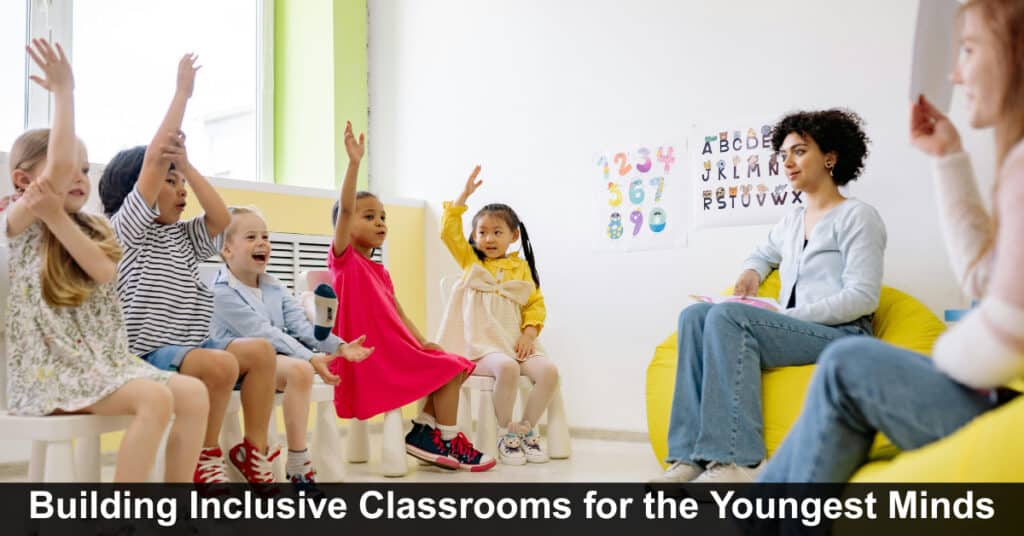
Creating truly inclusive classrooms for early learners is more than just a policy or practice—it’s a commitment to equity, empathy, and opportunity. Young children are in the most formative years of their lives, developing their understanding of themselves and others. The classroom, as a social and cognitive space, plays a significant role in shaping their worldview. In such a setting, inclusion is not merely about physical presence but about active participation, mutual respect, and representation.
Inclusion in early childhood education refers to the educational philosophy and practices that embrace diversity and ensure that all children, regardless of abilities, backgrounds, or needs, are provided equal opportunities to learn and grow. These classrooms prioritize acceptance and tailor learning to address the unique strengths and challenges of each student. For the youngest learners, inclusion can significantly affect social-emotional development, cognitive growth, and long-term academic achievement.
The process of building inclusive classrooms begins with intentional design—physical, curricular, and emotional. Educators, parents, and institutions must collaborate to create environments where every child feels safe, valued, and capable of thriving. Inclusion is not a goal to be achieved and then checked off a list—it is an ongoing, dynamic process that demands reflection, adaptation, and heart.
Laying the Foundations: Educator Preparation and Mindset
The process of fostering inclusive spaces fundamentally relies on well-prepared educators. Teachers must possess the initial training and continuous mindset to approach diversity as a valuable asset, not a challenge. This essential preparation empowers them to create equitable learning environments and proactively remove barriers for all students, making inclusion a core professional commitment from day one. This foundational work requires a dual focus on formal education and continuous self-awareness:
- Professional Training: This involves receiving a curriculum that emphasizes understanding diverse learning needs, cultivating culturally responsive teaching strategies, and developing flexible classroom management skills. Those who pursue an online Bachelor of Education Early Childhood program often receive this specialized preparation, equipping them to see diversity as a resource that enriches the learning environment.
- The Inclusive Mindset: Teachers must cultivate empathy and flexibility, recognize their own biases, and view each child as a whole person with unique potential. This involves shifting away from rigid, one-size-fits-all teaching models toward approaches that are sensitive and adaptable to individual needs and contexts.
Designing Accessible Learning Environments
Inclusion must be physically and materially embedded in the classroom itself. The learning environment needs intentional design to ensure every child can access, interact with, and fully participate in all activities. Proactively removing barriers and designing the space and materials to be intuitive for all abilities sends a powerful message of welcome and fundamentally supports equitable learning opportunities. To achieve genuine accessibility and support diverse learners, the following design elements are key:
- Multimodal Instruction: Teaching strategies should cater to different learning styles, such as combining verbal instructions with visual aids and hands-on activities. Assistive technology, when used, should be seamlessly integrated to support the student without creating separation.
- Physical Accessibility: The physical space must accommodate the mobility and sensory needs of all children. This includes ensuring shelves, tables, and learning centers are reachable and safe, and thoughtfully considering lighting, sound, seating, and transitions for children with sensory sensitivities.
- Representative Materials: Learning materials must reflect diversity in race, ability, family structure, and language. Books, toys, images, and classroom displays should be representative and affirming so that every child can see themselves and others in the classroom, reinforcing a sense of belonging.
Promoting Positive Social Interactions
The social climate is essential in early childhood education. Inclusive classrooms must be structured to actively cultivate rich, meaningful peer interactions where children learn vital communication and emotional skills. Educators are responsible for modeling acceptance and creating collaborative structures that encourage students to honor differences and build mutual respect. This ensures the classroom is a supportive community. Educators can cultivate this atmosphere of respect and cooperation through targeted social strategies:
- Avoiding Labeling: Educators should avoid grouping children based on perceived ability or performance. Instead, groups should remain fluid based on interests, learning goals, or activities to encourage equitable interaction.
- Modeling Inclusive Behavior: Educators must model inclusive language and behavior, such as using each child’s name and mediating conflicts with fairness, which lays the groundwork for mutual respect.
- Facilitating Peer Collaboration: Teachers should facilitate group activities that require collaboration, turn-taking, and shared problem-solving. This allows children to naturally build vital social skills in a supportive, interactive setting.
Engaging Families and Communities
True inclusion requires extending beyond the classroom walls to involve the child’s entire support system. Families are the primary source of invaluable insights into a child’s strengths, culture, and needs. Building deep, trusting partnerships with caregivers is critical for personalizing the learning experience and ensuring the curriculum respects and integrates the diverse values of the surrounding community. Building these crucial partnerships requires intentional effort and sensitivity from the school:
- Cultural Sensitivity: Engagement must extend beyond superficial celebrations to genuinely understand the values, practices, and languages of the communities served. Inviting families to participate in classroom activities fosters a sense of shared ownership and community.
- Open Communication: Open and regular communication—through conferences, home visits, or digital tools—is key to building trust, addressing concerns, and celebrating progress. Families bring unique insights into their children’s strengths and cultural backgrounds.
Individualized Support Without Isolation
Inclusion must be flexible enough to accommodate specific needs without creating separation. Many children require targeted assistance, such as specialized services or differentiated lessons, to thrive. The key challenge is delivering this essential support seamlessly, integrating it directly into the classroom flow to maximize learning benefits while carefully preserving the child’s feeling of belonging with their peers. Effective individualized support focuses on careful assessment and integrated delivery of services:
- Integrated Specialized Services: When specialized services are necessary, they should be delivered in ways that do not isolate the child. Whenever possible, services like speech therapy or occupational therapy should be integrated directly into daily classroom routines and activities.
- Differentiated Instruction: Teachers use ongoing, low-pressure assessments (like observation and developmental checklists) to guide instructional planning and ensure children meet milestones at their own pace. This assessment ensures instruction is intentionally scaffolded.
Continuous Professional Growth and Reflection
Inclusive practices are not static; they require constant evolution and refinement. Educators need sustained professional support to stay current on research and effective strategies. Furthermore, establishing a culture of honest self-reflection is essential. This ongoing process of self-examination, backed by institutional commitment, ensures that inclusive education remains dynamic, high-quality, and responsive over time.
Sustaining inclusion requires a commitment to continuous improvement at both the individual and systemic levels:
- Ongoing Professional Development: Professional growth must be continuous, involving workshops, coaching, and staying informed about evolving research and effective strategies for inclusion.
- Reflective Practice: Teachers should regularly examine their own methods, classroom dynamics, and student interactions. Journaling, peer discussions in the Continuous Professional Growth and Reflection section, and feedback from mentors are crucial to maintaining a growth-oriented, reflective culture.
- Systemic Commitment: While teachers make a powerful difference, systemic change requires institutional commitment, adequate resources, and strong leadership to ensure that inclusive education is the standard, not the exception.
Conclusion
Building truly inclusive classrooms for the youngest minds is a profound and ongoing commitment. It moves early education beyond merely meeting legal requirements toward recognizing the full potential of every child and the power of belonging. When institutions, educators, and families work collaboratively to make inclusion the standard, they transform the learning environment from a system of access into one of equitable opportunity for all.
Suggested articles:
- How to Cultivate Teacher Leadership in Your School
- How Has the Landscape of Higher Education Evolved Today?
- Steps to Optimize Campus Marketing Strategies

Daniel Raymond, a project manager with over 20 years of experience, is the former CEO of a successful software company called Websystems. With a strong background in managing complex projects, he applied his expertise to develop AceProject.com and Bridge24.com, innovative project management tools designed to streamline processes and improve productivity. Throughout his career, Daniel has consistently demonstrated a commitment to excellence and a passion for empowering teams to achieve their goals.