
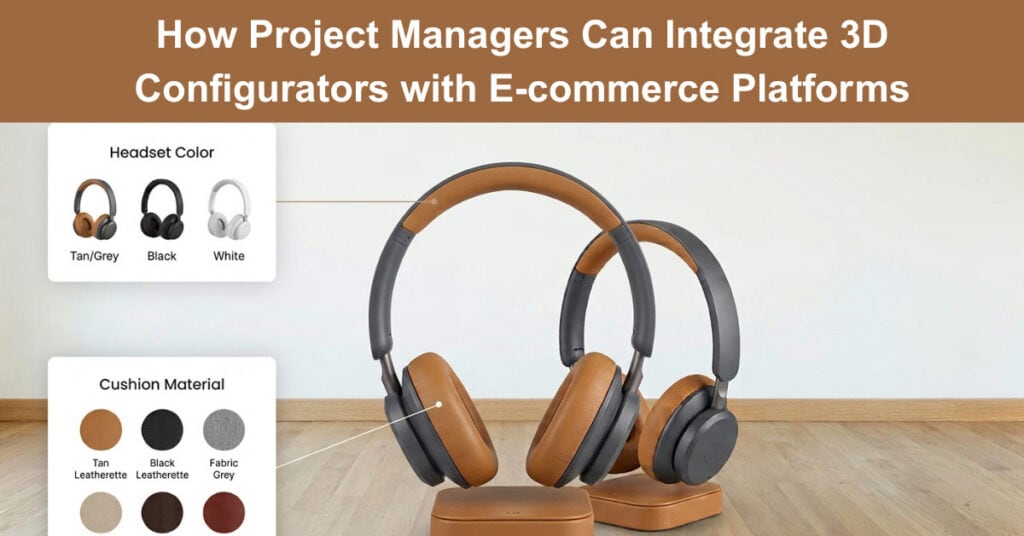
As e-commerce rapidly evolves, customer expectations are higher than ever. Shoppers now demand personalized buying experiences, and sellers that fail to deliver risk losing significant revenue to competitors. That’s when project managers should think about using customer-centric solutions like 3D product configurators to stay ahead.
These product configurators allow for interacting with products in 3D views for increased customer engagement and help project managers reduce sales processes to save time. Consequently, sellers and buyers can have a better experience with e-commerce orders.
This guide explores the key benefits of using 3D product configurators in eCommerce and provides a step-by-step roadmap for integration — a strategic move that can help recover up to 10–15% in potential revenue otherwise lost to competitors. We also highlight common pitfalls that project managers should consider to execute projects successfully and on budget.
Understanding 3D Product Configurators
A 3D product configurator is a sophisticated solution that empowers customers to design and personalize their own products while evaluating the results in real time through an immersive, three-dimensional interface. Beyond standard configuration, it offers advanced capabilities, including augmented reality (AR), rule-based logic, visual configuration, Visual CPQ (Configure, Price, Quote), and seamless integration with existing business workflows.
A key advantage of 3D product configurators is their compatibility with a wide range of e-commerce platforms, which is why many project managers have incorporated them into their websites. However, integrating eCommerce configurators requires careful alignment of technical requirements and stakeholder expectations. Strong project management skills, such as budget management and strategic problem-solving, are critical to ensuring a focused, goal-driven implementation.
Benefits of 3D product configurators in eCommerce
3D product configurators can significantly enhance both the customer shopping journey and internal efficiency. Below are some of the key advantages that make this technology a valuable asset for project managers and business leaders in the e-commerce market.
1. Enhance Customer Shopping Experiences
3D product configurators provide immersive 3D visualizations, allowing customers to explore items from multiple angles and in different variations. When combined with AR technology, these e-commerce configurators enable customers to visualize products within real environments. This heightened immersion and interaction creates true-to-life experiences that significantly boost customer confidence and purchasing decisions.
Beyond visualization, the ability to customize products on the spot fosters a powerful sense of control and personalization. Customers become co-creators of their purchases, leading to deeper engagement, increased satisfaction, and a stronger connection with the brand, ultimately improving loyalty and long-term retention for e-commerce businesses.
2. Reduce Cost, Time, and Effort
When selling bespoke or highly modular products, the sales process often takes longer due to frequent back-and-forth communication between buyers and sellers. Customers need clarification on available options, while salespeople must respond to feedback manually. This slows decision-making, increases pressure on sales teams, and ultimately delays order fulfillment throughout the purchasing cycle.
The automation of product configurators can optimize project management workflows and reduce manual effort significantly. Everyone can independently interact with products in real time, making changes and seeing updates instantly without waiting for sales support. Visual CPQ allows customers to configure products and view their quotes simultaneously, while rule-based configuration logic helps minimize costly errors and product returns.
3. Ensure a Smooth, Unified Workflow
Besides seamless integration with eCommerce platforms like Shopify or WooCommerce, 3D product configurators can connect with essential backend systems like ERP and CRM. This ensures that product data, inventory levels, customer preferences, and pricing structures are consistently aligned across all teams, eliminating data silos and reducing the risk of costly miscommunication throughout your organization.
Project managers can effortlessly monitor and control all internal activities from a centralized interface, streamlining cross-departmental coordination. This unified visibility enhances decision-making, accelerates response times, and drives overall operational efficiency, empowering teams to focus on delivering exceptional customer experiences rather than managing fragmented systems or resolving workflow bottlenecks.
4. Establish a Strong Brand Identity
Offering cutting-edge customization tools like eCommerce configurators indicates how your brand commits to innovation and customer-centric designs. This forward-thinking approach positions your business as a market leader, helping you stand out from competitors. Customers recognize and appreciate brands that invest in meaningful experiences, which strengthens your overall market presence and competitive advantage.
Adopting eCommerce configurators goes beyond aesthetics; it creates deeper emotional connections between your customers and your brand. When shoppers feel empowered to personalize their purchases, satisfaction naturally increases. This sense of ownership fosters repeat business and builds long-term customer loyalty, turning one-time buyers into dedicated brand advocates who actively promote your products.
4 Steps to Integrate 3D Configurators with E-commerce Platforms
With a clear understanding of the value 3D product configurators bring to your projects, it’s time to put that knowledge into action. The following steps outline a structured approach to seamlessly integrating a 3D configurator into your e-commerce platform. Follow this roadmap to ensure a smooth, efficient implementation that aligns with your project goals and delivers measurable results.
Step 1 – Assess Platform Compatibility
Before diving in, evaluate the compatibility of your current eCommerce platform with 3D configurators. Platforms like Shopify, WooCommerce, and BigCommerce often support plug-ins or APIs for 3D integration, but each has different requirements and limitations. You should work with your technical team first and identify potential challenges early to avoid costly delays.
If you are using BigCommerce and need guidance on maximizing 3D configurator compatibility with your platform’s unique architecture, consulting with BigCommerce development experts can ensure seamless integration and optimal performance. Their specialized knowledge helps streamline the process, reducing implementation risks while keeping your project on schedule and within budget.
Step 2 – Select a Reliable 3D Configuration Provider
Designing a product configurator from scratch demands significant time, expertise, and resources, especially without niche experience. Partnering with a trustworthy provider simplifies the entire process. Look for one offering a robust 3D product configurator with features like AR, real-time customization, Visual CPQ, and seamless backend integration with your existing systems for optimal performance.
When evaluating potential providers, go beyond the feature list. Review their past work, client testimonials, and responsiveness of their customer support team. A reliable partner will not only deliver technically sound solutions but also offer ongoing guidance throughout implementation, helping your project stay on schedule, within budget, and aligned with your business goals.
Step 3 – Clarify Your Demands and Integration Plan
Before implementation, clear objectives and functionality requirements must be defined. Project managers should map out a detailed integration plan specifying timelines, internal responsibilities, and performance KPIs. Establishing these parameters early ensures all stakeholders remain aligned, reduces miscommunication risks, and creates a focused roadmap that keeps cross-functional teams working cohesively toward shared goals.
Documenting your requirements thoroughly also helps you stay on budget by preventing scope creep and unexpected delays. Share the integration plan with both your technical team and your chosen 3D product configurator provider. Regular check-ins against defined KPIs allow you to track progress, address bottlenecks proactively, and ensure the project delivers measurable results on schedule.
Step 4 – Integrate the Product Configurator Into Your Platform
You can integrate product configurators into eCommerce platforms through APIs, custom code, or third-party apps. Whichever approach you choose, ensure the configurator blends seamlessly with your product pages without compromising the current UX. Proper alignment with your existing design and functionality guarantees a smooth, consistent shopping experience that keeps customers engaged and confident throughout their journey.
Once live, thoroughly test the configurator across all browsers and devices. Loading times, customization flows, and conversion rates are critical metrics to evaluate for optimal performance. Work closely with your provider to address any issues and implement necessary optimizations. Continuous refinement ensures the configurator consistently meets user expectations and delivers measurable business results over time.
Common Pitfalls that Project Managers Should Consider
While integrating a 3D product configurator can deliver remarkable results, the path to success is rarely without obstacles. Understanding these common pitfalls in advance empowers project managers to plan smarter, avoid costly setbacks, and keep their projects on track. Here are the key mistakes to watch out for:
1. Underestimating Integration Complexity
Many project managers fall into the trap of assuming a plug-and-play configurator will work seamlessly right out of the box. In reality, integration often involves significant technical nuances that can derail your timeline and budget if not addressed early. To mitigate this risk, make sure to:
- Conduct a thorough compatibility audit of your existing platform before committing to a solution
- Engage both your internal IT team and the configurator provider from the very beginning
- Document all technical requirements and potential blockers upfront to prevent surprises later
2. Neglecting Post-Launch Support and Updates
Launching a 3D product configurator is just the beginning, not the finish line. As user expectations evolve and technology advances, your configurator must keep pace to remain effective and competitive. To maintain long-term performance, project managers should plan for:
- Regular software updates and feature enhancements to stay aligned with user needs
- Ongoing performance monitoring to detect and resolve issues before they impact customers
- A dedicated support strategy to handle bugs, feedback, and continuous improvements post-launch
3. Overlooking User Experience and Demands
Even the most technically advanced 3D configurator will fail to deliver results if it isn’t intuitive and enjoyable for users. A confusing interface or poor navigation can frustrate customers and drive them away. To ensure your configurator truly resonates with your audience, consider the following:
- Partner closely with UI/UX designers throughout both the design and testing phases
- Conduct usability testing with real users to identify pain points before going live
- Continuously gather user feedback post-launch and iterate to improve the overall experience
Conclusion
The integration of a 3D product configurator is not just a technological upgrade. It is a transformative leap in how eCommerce brands interact with customers and streamline their operations. By selecting the right provider and defining clear goals, businesses can unlock powerful tools that significantly boost customer engagement and overall satisfaction.
By planning for scalability and aligning your team around shared objectives, you can successfully utilize this technology to drive measurable conversion rates. With a focused strategy, a reliable eCommerce configurator becomes a long-term competitive advantage that empowers your brand to grow, adapt, and consistently deliver exceptional, personalized shopping experiences to every customer.
Suggested articles:
- Project Management Tips for Operating an E-Commerce Website
- The Future of E-commerce: Key Insights for Success
- Boosting B2B e-commerce Sales Efficiency: Practical Strategies for 2025

Daniel Raymond, a project manager with over 20 years of experience, is the former CEO of a successful software company called Websystems. With a strong background in managing complex projects, he applied his expertise to develop AceProject.com and Bridge24.com, innovative project management tools designed to streamline processes and improve productivity. Throughout his career, Daniel has consistently demonstrated a commitment to excellence and a passion for empowering teams to achieve their goals.