
You can beat every target, earn your team’s trust, and still watch a leadership role go to someone else. Strong delivery proves you can do the work, not that you can lead the people doing it. Promotion panels look for business judgment and calm handling of conflict. You can build those signals now. None of them needs a title.
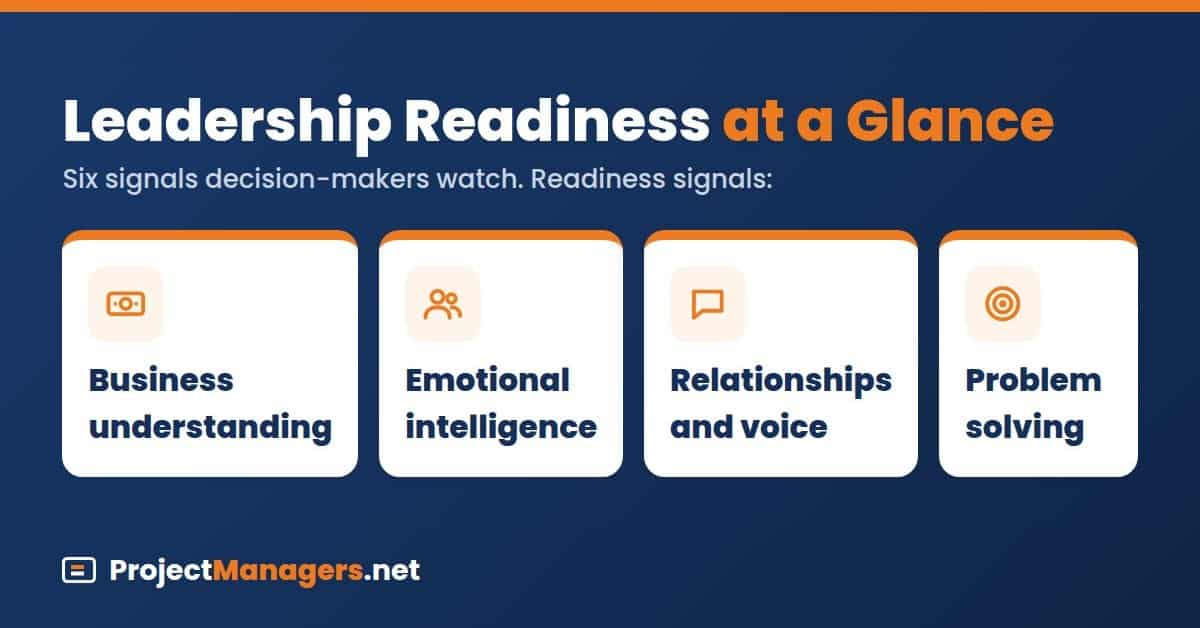
- Business Acumen: Understanding how the organization earns revenue, controls costs, and measures performance lets an aspiring leader connect daily project work to the goals executives use when they judge promotion candidates.
- Emotional Intelligence and Mentoring: Self-awareness, empathy, and regular feedback, supported by a mentor or coach, help future leaders handle conflict and pressure in ways colleagues and managers notice before any promotion.
- Relationships and Strategic Voice: Cross-functional connections and prepared, outcome-focused contributions in meetings show that a candidate can work beyond their own project team and think about risks, priorities, and results.
- Problem Solving Builds Trust: With DDI reporting that trust in immediate managers fell to 29% in 2025, people who bring clear problem statements and workable fixes stand out as ready to lead.
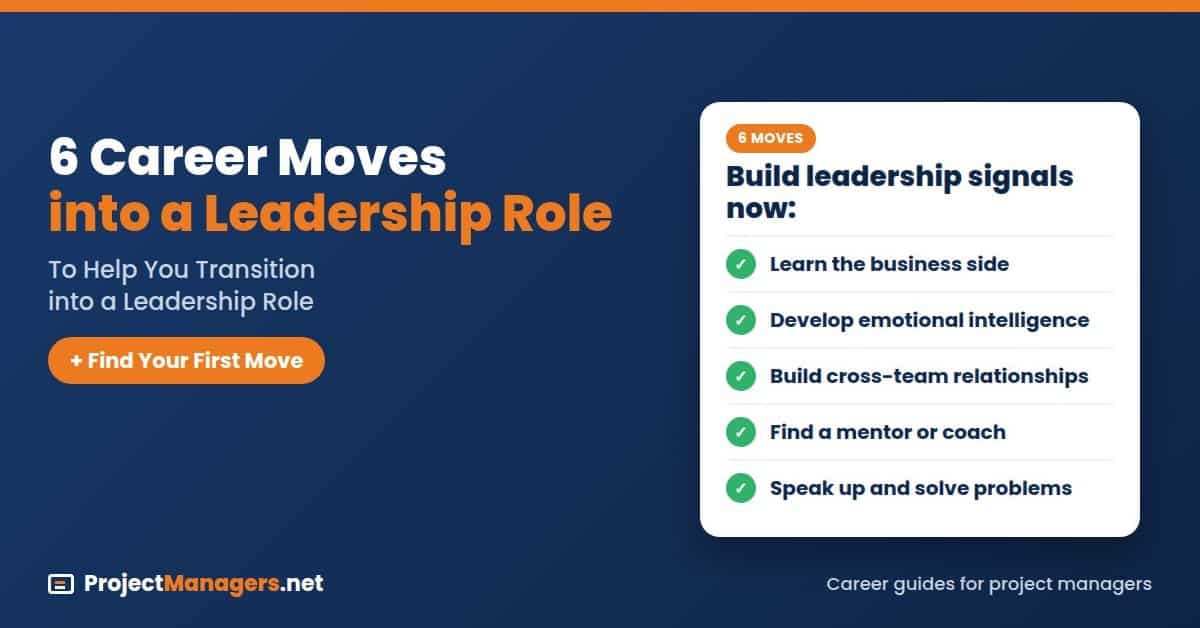
Those signals come from six practical career moves: learning the business, developing emotional intelligence, building cross-functional relationships, finding a mentor or coach, speaking up in strategic conversations, and solving problems before you are asked. Each section below explains one move with habits you can start on your current project this month; then the guide covers common mistakes and how to pick your first move.
1. Learn the Business Side of Things
Leaders understand how decisions ripple across projects, budgets, and outcomes, so learning the business side is the fastest way to show readiness. You do not need a finance title to start. Learn to read basic financial reports and understand profit margins. For a more structured path, many professionals pursue a two-year MBA designed for working people.
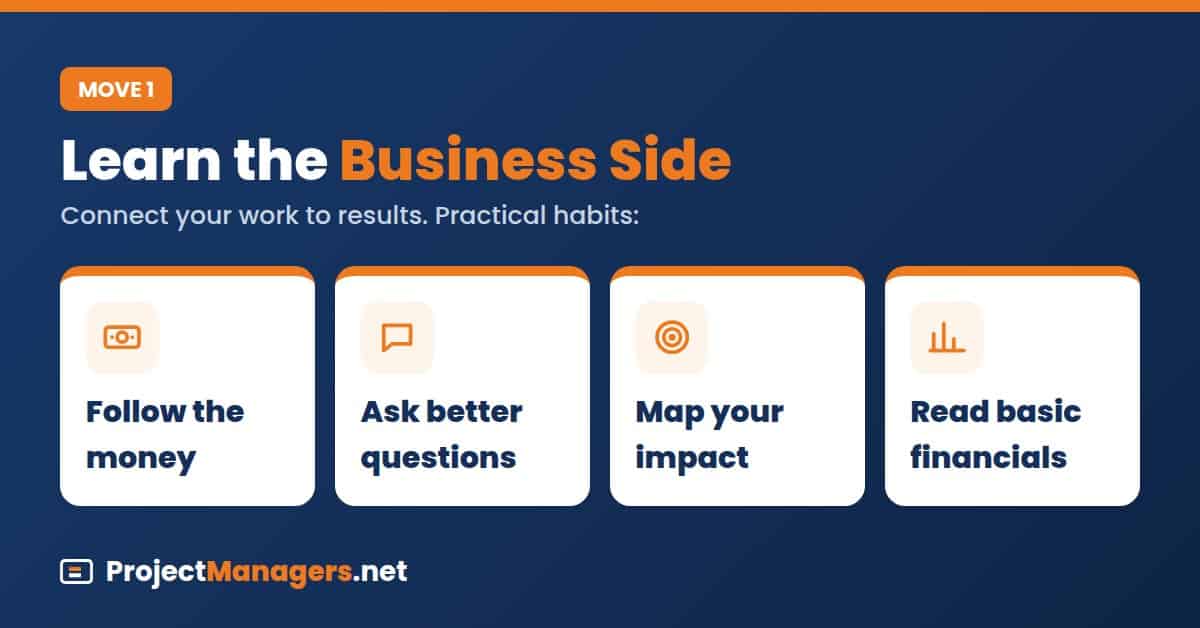
Build business awareness with these practical habits in your current project role:
- Follow the Money: Learn how the company earns revenue, where costs sit, and which metrics leadership reviews each quarter. Margins and cash flow connect your daily work to the results executives care about most.
- Ask Better Questions: Prepare questions about budgets, priorities, and trade-offs before meetings. Questions that link a decision to cost, risk, or customer impact signal that you think like an owner.
- Map Your Impact: Draw a simple line from your team’s work to a company goal, then share it with your manager, so they see how your projects support long-term performance.
Real-Life Example: A project coordinator asked a finance partner for a monthly budget walkthrough. Within three months, the coordinator spotted a recurring vendor overspend, proposed a cheaper option, and presented the savings to the director, who then invited the coordinator into quarterly planning discussions. The manager later cited that initiative in the coordinator’s promotion review as evidence of business judgment.
2. Develop Your Emotional Intelligence
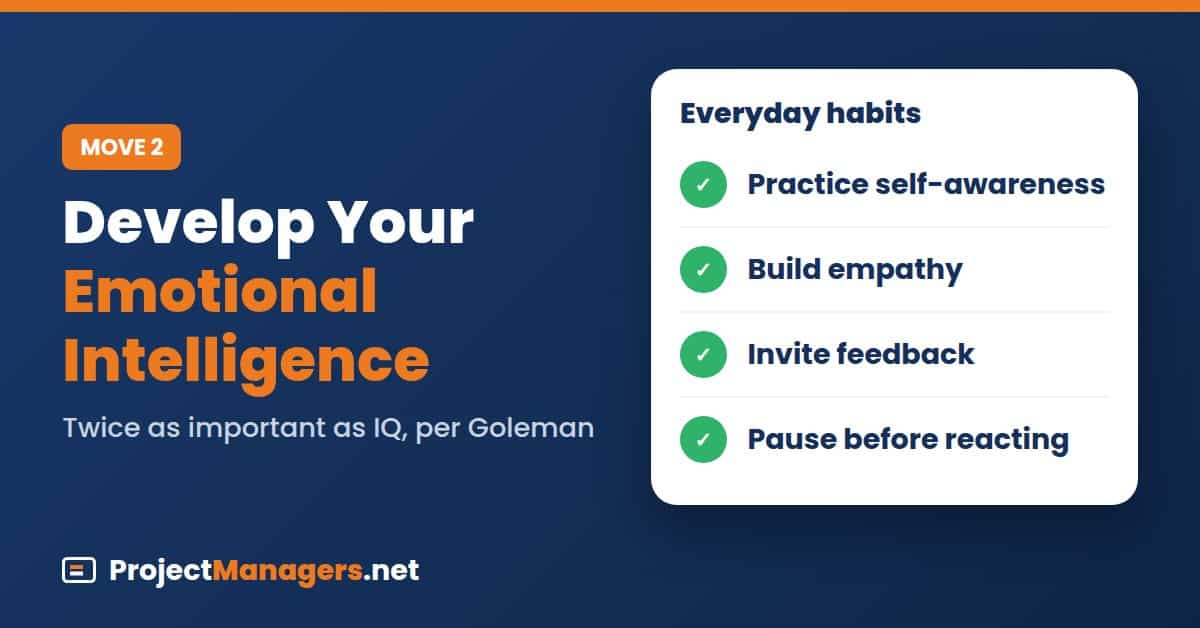
Emotional intelligence, or EQ, helps you connect with people, handle stress, respond calmly to setbacks, and keep a team steady. In a Harvard Business Review article on what makes a leader, Daniel Goleman reported that, across competency models from 188 companies, emotional intelligence proved twice as important as technical skills and IQ for jobs at all levels.
Strengthen your emotional intelligence by practicing these everyday project habits:
- Practice Self-Awareness: Notice how you react when things go wrong, and pause before speaking. Honest observation reveals habits you can adjust before you lead others.
- Build Empathy: Try to understand where coworkers are coming from, especially under project deadline stress. Listen without interrupting, and ask open-ended questions instead of jumping to conclusions.
- Invite Feedback: Ask peers and supervisors how you handle pressure and conflict. Outside views reveal blind spots, and emotional connections at work grow when people see you act on what they say.
Real-Life Example: After a tense project planning meeting, a team lead asked two colleagues how their tone had landed. The colleagues said the lead’s quick objections shut people down. The lead began summarizing others’ points first and asking questions before disagreeing. Within weeks, quieter teammates started sharing ideas, the manager noticed the change, and the lead kept asking for feedback every month.
3. Build Cross-Functional Relationships
Leaders work with marketing, finance, operations, and HR as much as with their own teams. That is why building relationships outside your department is a smart early move. Start by being curious about what other teams do, and you will quickly see where your work connects to theirs, which makes later project collaboration faster and easier.
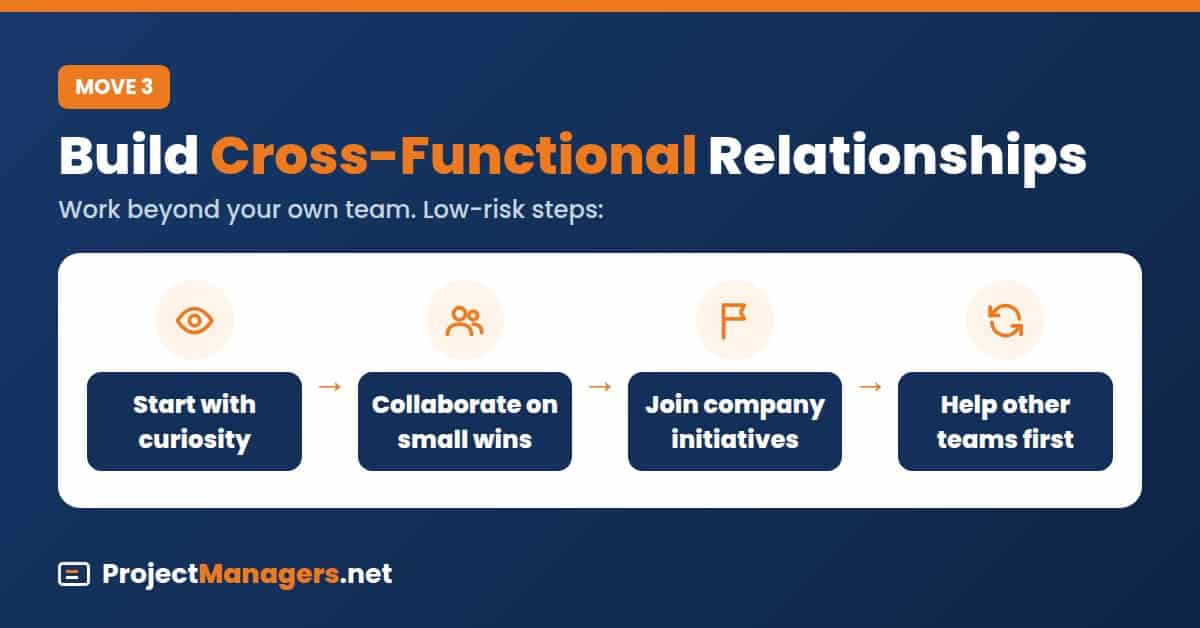
Widen your network across departments by taking these simple, low-risk steps:
- Start with Curiosity: Ask coworkers in other areas what they do, what slows them down, and how your team could help. Simple conversations build trust before any formal project begins.
- Collaborate on Small Wins: Offer to improve a shared process or coordinate on a report. Small joint efforts give both teams a visible result and show you can work across boundaries.
- Join Company Initiatives: Volunteer for task forces and company-wide projects that mix departments, so senior leaders see you bringing people together.
Real-Life Example: An operations supervisor offered to merge two overlapping weekly reports with the marketing team. The change saved both teams several hours a month. When a cross-department project later needed a lead, the marketing director recommended the supervisor because the two teams had already worked together successfully, and that one small favor turned into a lasting working alliance.
4. Find a Leadership Mentor or Coach
Preparing for a leadership role is easier when you learn from someone who has already faced the same project and people challenges. A mentor shares experience and honest feedback, while a coach provides structured support for specific skills. Understanding how mentors, sponsors, and coaches differ helps you ask for the right kind of guidance. Choose someone whose leadership style you respect.
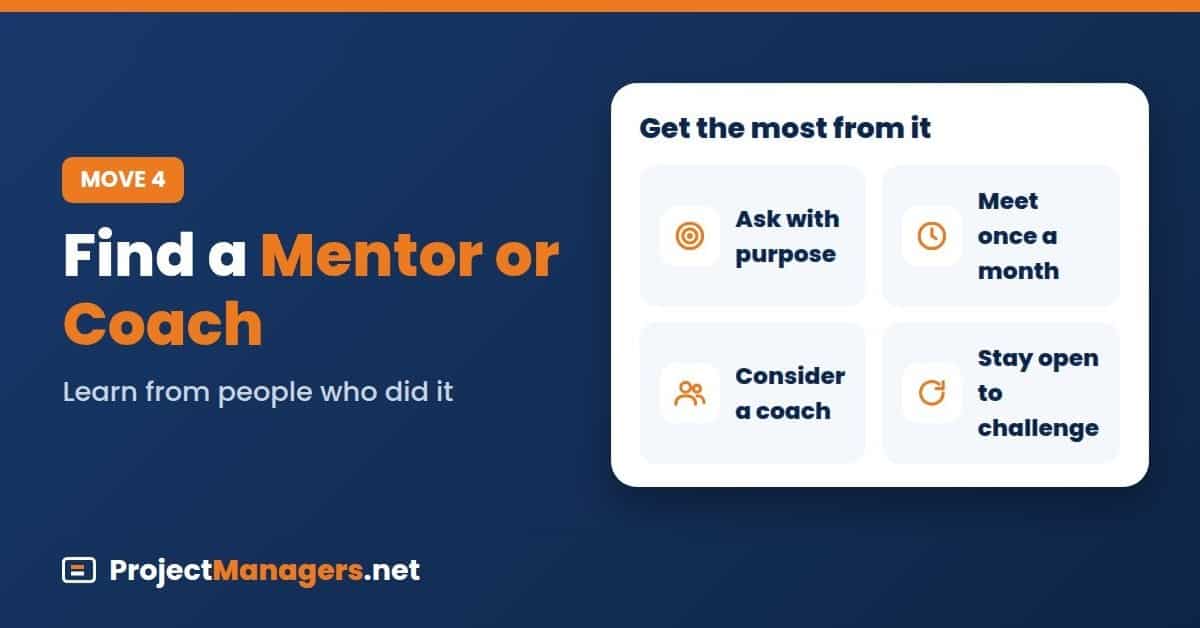
Get the most from a mentor or coach with these approaches:
- Ask with Purpose: Approach someone you admire with a specific request, such as a monthly thirty-minute chat about handling difficult decisions. A clear ask makes saying yes easier.
- Consider a Professional Coach: For structured support with confidence, communication, or interview preparation, a coach can use assessments that target the skills you want.
- Stay Open to Challenge: Work with people who question your assumptions, and treat their feedback as useful information rather than criticism.
Real-Life Example: A software project team member asked a director for one conversation a month. Together they reviewed how the team member handled disagreements and prepared for a hiring panel. After six months, the team member led a first hiring decision, using interview questions practiced with the mentor, and confidence grew with each conversation as the director gave more responsibility.
5. Contribute in Strategic Conversations
Employees who stay silent in important project and planning meetings miss chances to show leadership potential, even when they have useful ideas about scope, risk, or delivery. Leadership readiness means understanding wider priorities, weighing decisions, and adding perspectives that move the team forward. Learning how to speak up more during meetings helps you share those ideas with confidence and clarity.
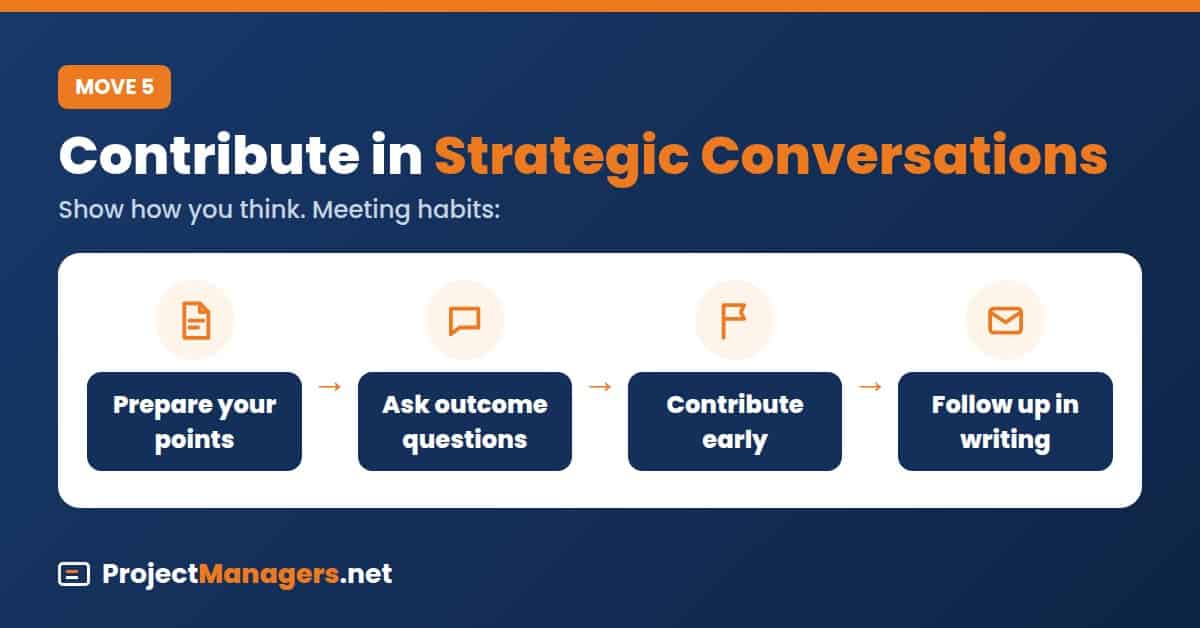
Contribute to strategic discussions with confidence by using these meeting habits:
- Prepare Your Points: Review the agenda, note where your experience applies, and write down one or two contributions beforehand to keep comments focused on outcomes.
- Ask Outcome Questions: Instead of defending the status quo, ask about risks, improvements, and results, which shows you think about progress.
- Contribute Early: Share a point or question in the first part of the meeting, before self-doubt takes hold, so you stay engaged in the rest of the discussion.
Real-Life Example: Instead of saying, “We’ve always done it this way,” a senior analyst asked whether the team had considered a different approach to improve efficiency. The question steered the discussion toward a cheaper reporting process, and the director asked the analyst to outline the idea at the next planning session. The analyst prepared one slide with costs and risks.
6. Position Yourself as a Problem Solver

Every workplace has people who point out problems and people who solve them, and leaders belong to the second group. Notice the daily frustrations your project team faces, such as an outdated process or slow communication. Rather than complaining, bring your manager clear problem statements with facts and likely causes, then offer to lead the fix yourself.
Become the go-to problem solver on your team by using these practices:
- Define the Problem Clearly: State what is happening, who it affects, and what you think is causing it, so your manager can decide quickly.
- Coach Coworkers through Issues: When someone brings you a problem, ask questions and help them reason toward a resolution instead of handing over a quick fix.
- Build Trust through Calm: Trust in immediate managers fell to 29% in the DDI Global Leadership Forecast 2025, so people who bring clarity and workable solutions stand out.
Real-Life Example: A customer support agent noticed that handoffs between shifts caused repeated errors. The agent documented five cases, identified the missing information, and drafted a one-page checklist. The manager adopted it, repeat errors dropped within a month, and the agent trained the next two shifts personally, which led to the agent being chosen when a team lead role opened.
Common Mistakes When Moving into a Leadership Role
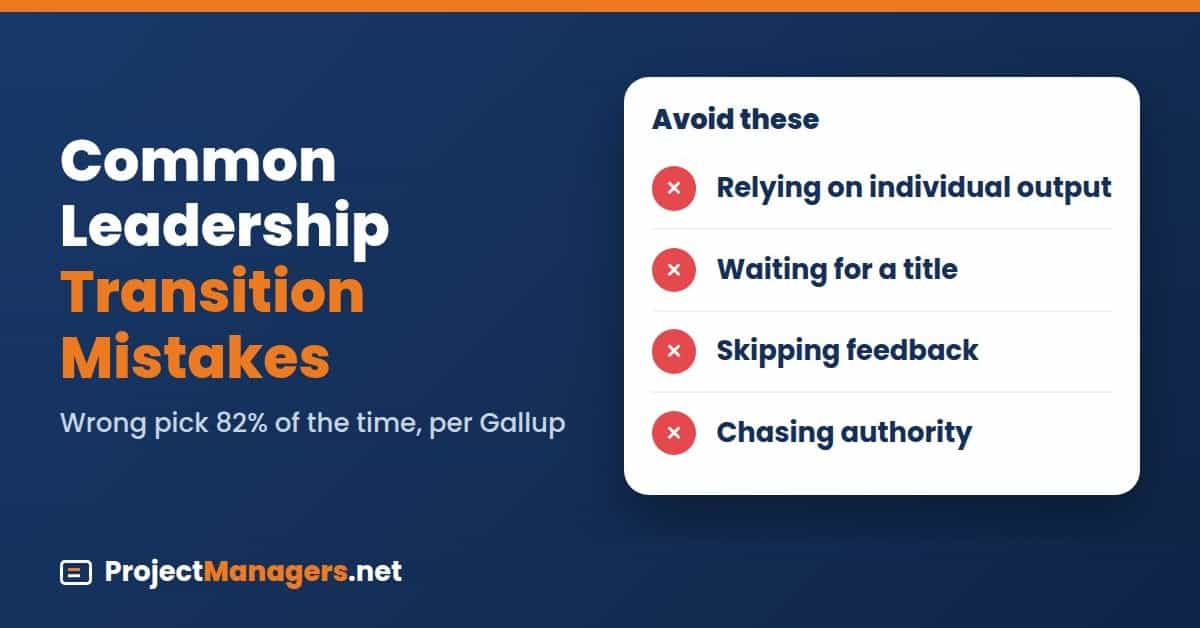
Strong performance alone does not make a strong leader, and treating it that way is a costly mistake. Gallup research on promoting based on tenure found that organizations choose the wrong person for management 82% of the time, and that only about one in 10 people has high natural talent to manage. Avoid these habits:
- Relying on Individual Output: Leadership adds coaching, delegation, and influence, so keep investing in people skills as well as results.
- Waiting for a Title: Delaying leadership behavior until you hold the title gives decision-makers nothing to evaluate, so lead a small project now.
- Skipping Feedback: Ask peers, supervisors, and mentors for specific feedback on communication, decisions, and stress, then act on it.
- Chasing Authority over Influence: Influence comes from credibility, relationships, and clear communication, which matter more than any promotion announcement.
How to Choose Which Career Move to Start With
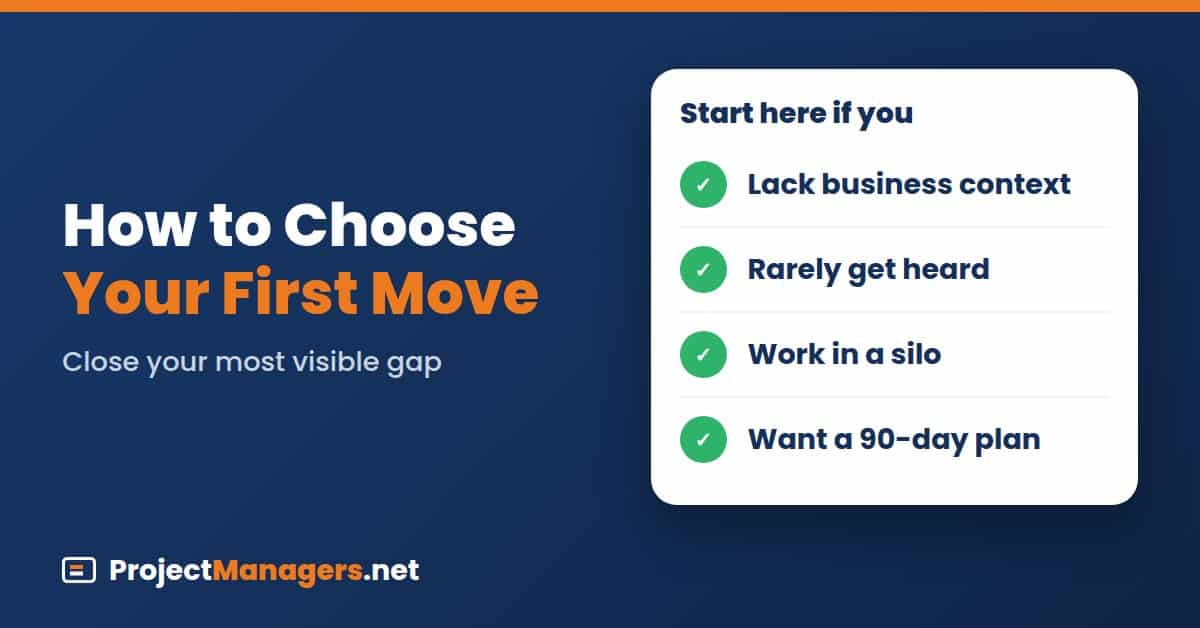
Start with the move that closes your biggest visible gap instead of trying all six at once. Ask your manager and two trusted peers where they see your strengths and weaknesses, then pick one move to practice over the next ninety days. Small, consistent action builds a track record that decision-makers can observe at your next review. Match your starting point to your situation:
- If You Lack Business Context: Begin with the first move. Schedule a budget walkthrough, ask which two metrics leadership watches most, and link your next project to one of them.
- If People Rarely Hear Your Ideas: Begin with the fifth and sixth moves. Prepare one contribution for each meeting, and bring one problem statement with a proposed fix to your next one-on-one.
- If You Work in a Silo: Begin with the third and fourth moves. Book two conversations with colleagues in other departments, and ask a leader you respect for a monthly check-in.
Leadership Readiness Insights at a Glance
Leaders rarely appear overnight, and preparation before a promotion often decides who is considered and who is overlooked. The table below collects the most useful insights from this guide, with the reason each one matters for anyone planning a move into management. Use it as a quick reference when you decide where to focus first:
Leadership Readiness Insights
| Aspect | Key Insight | Why It Matters |
|---|---|---|
| Best Starting Point | Begin with the one move that closes your most visible gap, then build a track record on visible projects over about ninety days. | Focused effort is easier to sustain and easier for decision-makers to notice. |
| Business Understanding | Leaders connect decisions to revenue, costs, and goals, so reading basic financial reports is a core readiness signal. | It lets you speak the language executives use when they judge promotion candidates. |
| Emotional Intelligence | Self-awareness, empathy, and calm responses help leaders manage conflict and keep morale high. | Teams respond better to leaders who stay thoughtful under pressure. |
| Relationships | Cross-functional connections build a reputation for seeing the whole picture. | Decision-makers favor candidates already respected across the organization. |
| Strategic Voice | Prepared, outcome-focused questions show that you think about risks and improvements, not only tasks. | It moves you from executor to contributor in leaders’ eyes. |
| Problem Solving | Clear problem statements paired with workable fixes show initiative and judgment. | It builds trust and shows you can lead others toward resolution. |
Video: What Gets People Promoted
This February 2026 video from Leaders Talk explains which workplace habits make managers see someone as ready for a bigger role, from taking ownership to communicating results. It pairs well with moves five and six in this guide. Watch it before your next project review or one-on-one, and note one habit you will practice and report back on within a month.
Do This at Work to Get Promoted and Earn More (Leaders Talk, 11:00)
Practical habits that signal leadership readiness to managers and promotion panels.
Moving into Leadership FAQs
Moving into Leadership FAQs
How Long Does It Take to Move into a Leadership Role?
Timing depends on your company, your industry, and when roles open, so there is no fixed timeline. Build business knowledge, relationships, and a visible record of solving problems now, because decision-makers promote people they have already watched take on wider responsibilities.
Do I Need an MBA to Become a Leader?
No. An MBA can add structured business knowledge, but leaders also grow through on-the-job learning, mentoring, and stretch assignments. Focus first on the behaviors decision-makers observe, then add a degree if it suits your goals and budget.
How Can I Show Leadership Potential without a Title?
Connect your project work to company goals, volunteer to lead a cross-team project, bring solutions with problems, help coworkers think through issues, and collaborate with other departments. Consistent, visible behavior gives decision-makers specific examples to point to.
What Is the Best First Career Move for Aspiring Leaders?
The best first move closes your most visible gap. Learn how the company makes money if you lack business context, prepare meeting contributions if your ideas go unheard, and meet other departments if you work in a silo.
How Do I Find a Leadership Mentor at Work?
Identify someone whose leadership style you admire, then make a specific request, such as a short monthly conversation. Explain what you want to learn, and consider a professional coach if you want more structure.
Why Is Emotional Intelligence Important for Leaders?
Daniel Goleman’s analysis of competency models from 188 companies found emotional intelligence twice as important as technical skills and IQ for jobs at all levels. It helps leaders handle conflict, stress, and morale.
Why Do Many New Managers Struggle?
Gallup found that organizations choose the wrong person for management 82% of the time, often by promoting on tenure or individual output. New managers who keep building coaching and influence skills adjust faster.
Conclusion
Promotion panels rarely ask whether you hit your numbers, because they already know. They look for evidence that you understand the business, keep your head in conflict, work across departments, and fix problems without being told. The six moves in this guide create that evidence in ordinary project weeks, long before a leadership role is advertised or a manager starts asking around.
Pick the one move that closes your most visible gap, and practice it for ninety days. Ask your manager at the start what good progress would look like, and report back at the end with two or three concrete examples. That conversation turns quiet effort into a record, which is exactly what decision-makers need when the next role opens.
Suggested Articles:
- Beyond the Plan: How Leadership Skills Can Transform Your Project Management Career
- How Project Managers Can Prepare for Executive Leadership Opportunities
- 13 Types of Leadership Reward Power at Work

Daniel Raymond, a project manager with over 20 years of experience, is the former CEO of a successful software company called Websystems. With a strong background in managing complex projects, he applied his expertise to develop AceProject and Bridge24, innovative project management tools designed to streamline processes and improve productivity. Throughout his career, Daniel has consistently demonstrated a commitment to excellence and a passion for empowering teams to achieve their goals.