
In product management, defining a go-to-market (GTM) strategy is an essential piece of the puzzle. It ensures that your entire organization truly understands the customer’s mindset before a product ever reaches the market. Without this clarity, even the best products can fail to connect with the right audience at the right time.
Amazon famously revealed in its book Working Backwards that the company uses a Press Release template that teams spend hours refining and reviewing before a single line of code is written or a product is built. This discipline forces teams to think from the customer’s perspective first, which is exactly what a strong GTM strategy demands.
A good go-to-market strategy template sets the plan for success by answering critical questions: What problem are you solving by launching this product? Who is the target customer, and what are their pain points? What does the competitive landscape and market demand look like? And how will you create demand and effectively reach those target customers? Answering these questions before launch dramatically improves your chances of success.
That is why the online Word-based go-to-market strategy template from Aha!, a leading product management company, is one of the most reliable starting points when developing any comprehensive marketing strategy. It is structured, thorough, and adaptable to businesses of all sizes.
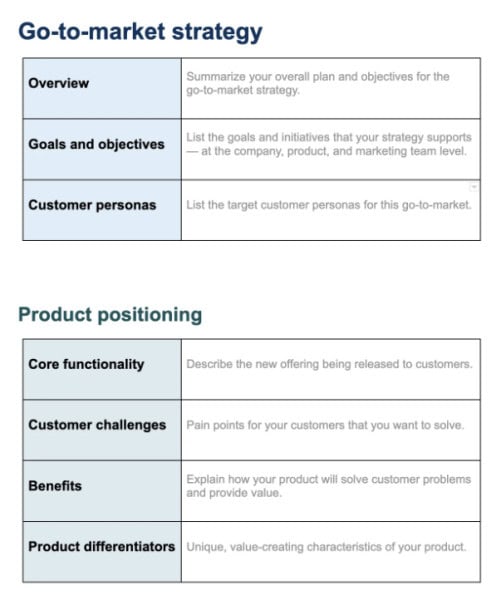
Go To Market Strategy aha! Template
Go-To-Market Strategy Template vs. a Marketing Plan
A go-to-market strategy and a marketing plan are related but serve different purposes, and it is important not to confuse the two. A go-to-market strategy is specifically designed for a new product launch or the expansion of an existing product into a new market. A marketing plan, on the other hand, explains how you will execute your broader strategy over time across all products and channels. While a go-to-market strategy is drawn from the overall marketing plan, it is launch-specific and far more focused in scope and timeline.
Why You Need a Go-To-Market Strategy
A go-to-market strategy is critically important for organizations of any size, but especially for those experiencing rapid growth. As organizations scale, teams must make quick decisions that have long-lasting consequences on revenue, brand, and customer relationships. When resources are limited — as they often are — it becomes even more important that no team operates in isolation or works from a different playbook.
When teams across marketing, sales, engineering, and product are not aligned on the same goals, priorities, and messaging, the result is wasted time, duplicated effort, and missed opportunities. A go-to-market strategy template solves this by providing a single source of truth that every team member can reference. It ensures that everyone, regardless of department, is working toward the same objective, with a shared understanding of the target customer, the product’s value proposition, and the path to launch.
Go-To-Market Strategy Templates for Word
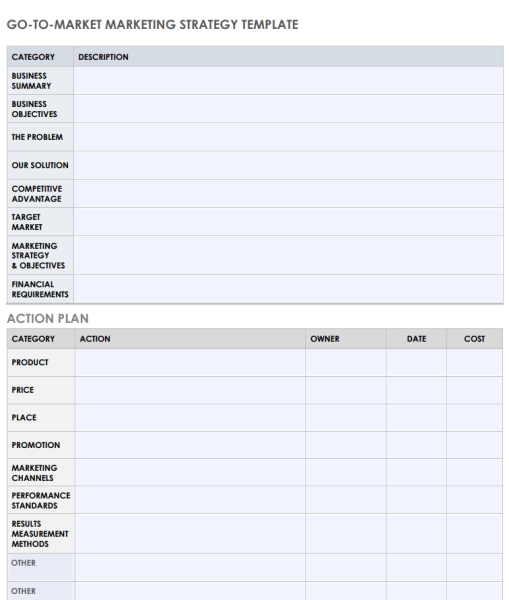
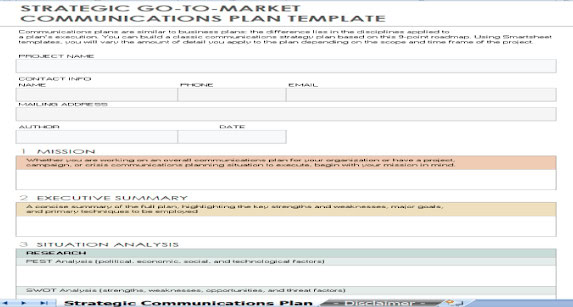
Word-based GTM templates are ideal for teams that need a straightforward, text-driven document they can collaborate on, edit quickly, and share across departments. A Word template gives you the flexibility to customize sections based on your product type and target market without requiring specialized software.
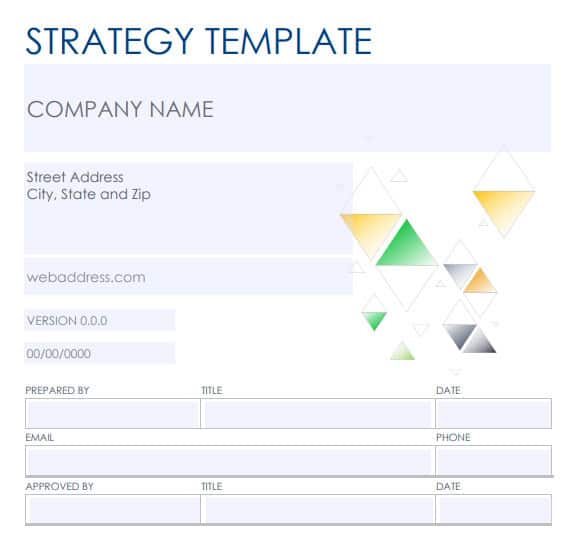
Go To Market Strategy Template Word 1
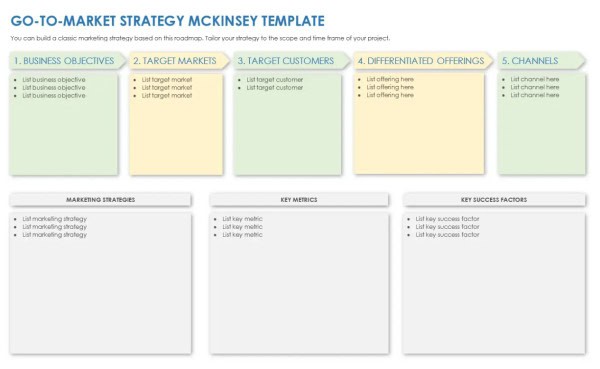
Go To Market Strategy Template Word 2
Go-To-Market Strategy Templates for Excel
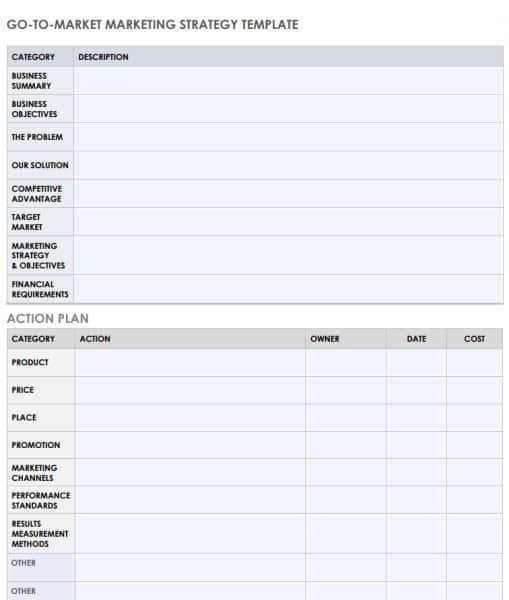
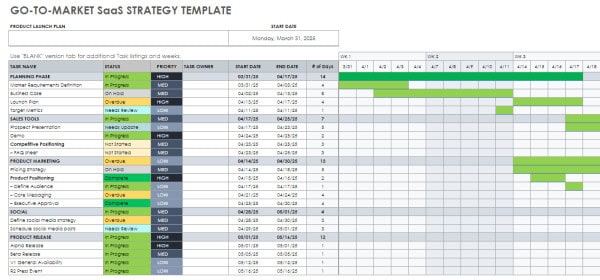
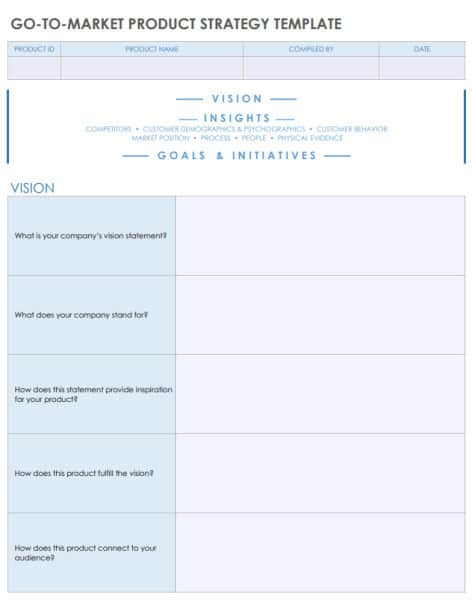
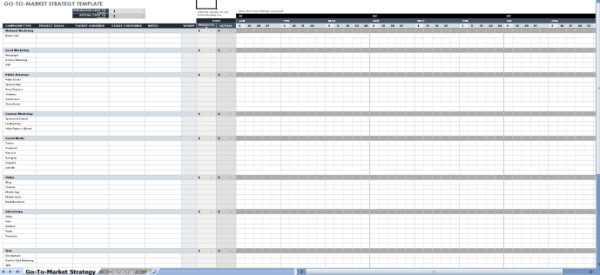
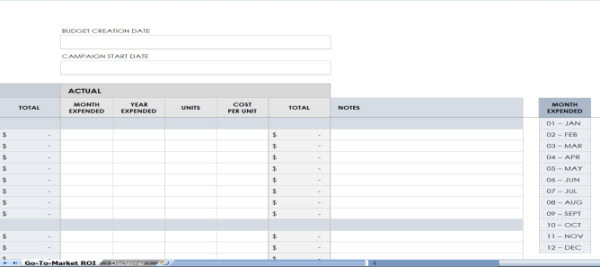
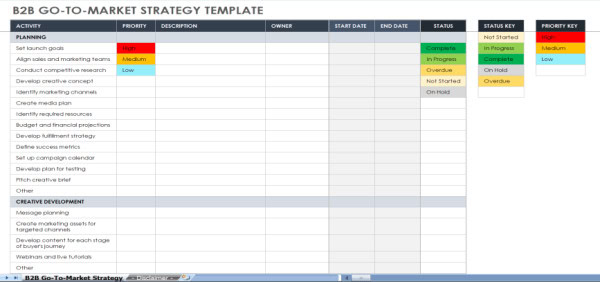
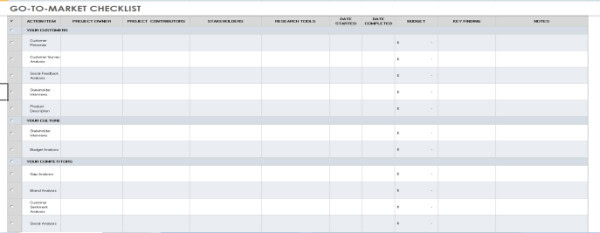
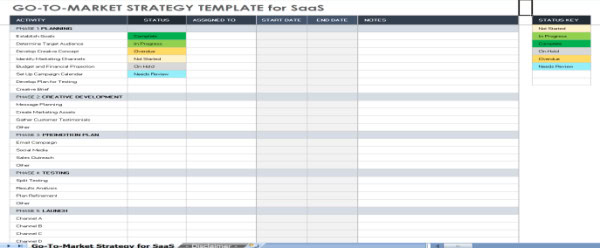
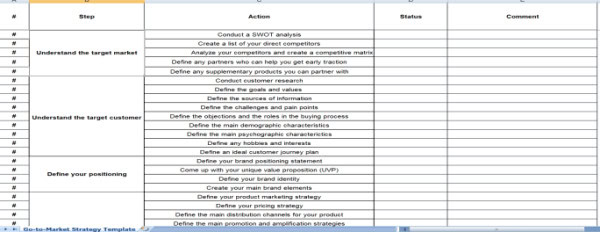
Excel-based GTM templates are best suited for teams that need to track tasks, timelines, budgets, and metrics in a structured, data-driven format. Spreadsheets allow you to build out detailed plans with dependencies, assign ownership to specific team members, and calculate resource requirements — all in one place. They are particularly useful during the planning and execution phases of a product launch.
Go To Market Strategy Template Excel 1
Go To Market Strategy Template Excel 2
Go To Market Strategy Template Excel 3
Go To Market Strategy Template Excel 4
Go To Market Strategy Template Excel 5
Go To Market Strategy Template Excel 6

Go To Market Strategy Template Excel 7
Go To Market Strategy Template Excel 8
Go To Market Strategy Template Excel 9
Go To Market Strategy Template Excel 10
Go To Market Strategy Template Excel 11
Go-To-Market Strategy Templates for PowerPoint (PPT)
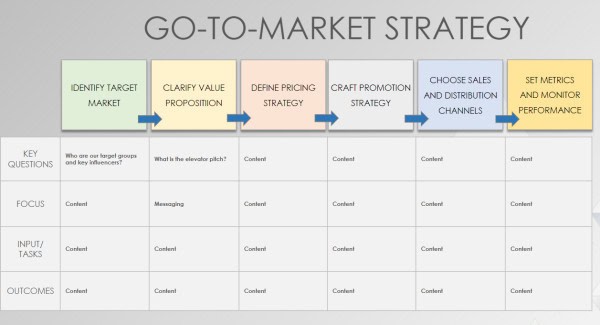
PowerPoint GTM templates are designed for presenting your strategy to stakeholders, leadership, investors, or cross-functional teams. A well-structured slide deck communicates the key pillars of your go-to-market plan visually and concisely, making it easier for decision-makers to understand the strategy at a glance and align behind it quickly.
Go To Market Strategy Template PPT 1
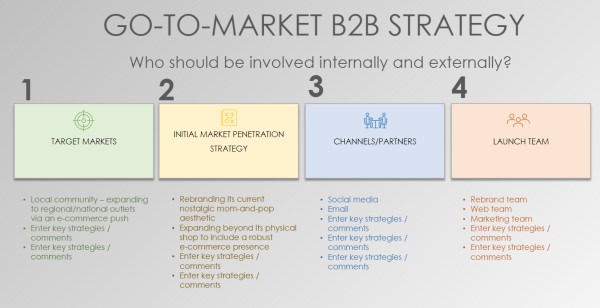
Go To Market Strategy Template PPT 2
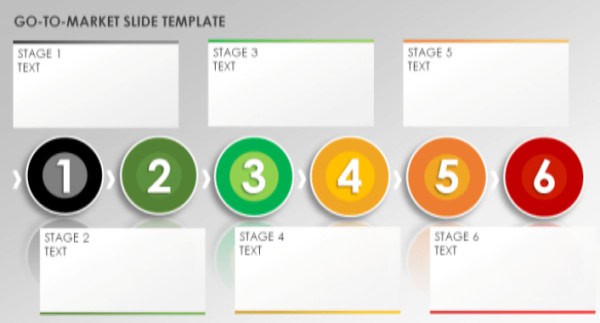
Go To Market Strategy Template PPT 3
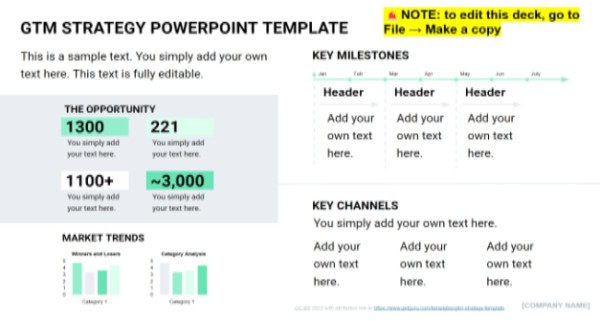
Go To Market Strategy Template PPT 4
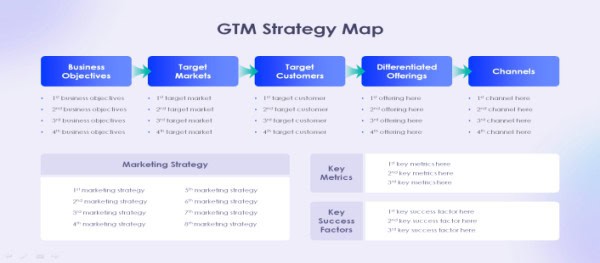
Go To Market Strategy Template PPT 5
Go-To-Market Strategy Templates for PDF
PDF templates provide a polished, fixed-format version of your go-to-market strategy that is easy to distribute, print, and reference. They are especially useful when sharing a finalized strategy with external partners, clients, or stakeholders who only need to review — and not edit — the document.

Go To Market Strategy Template PDF 1
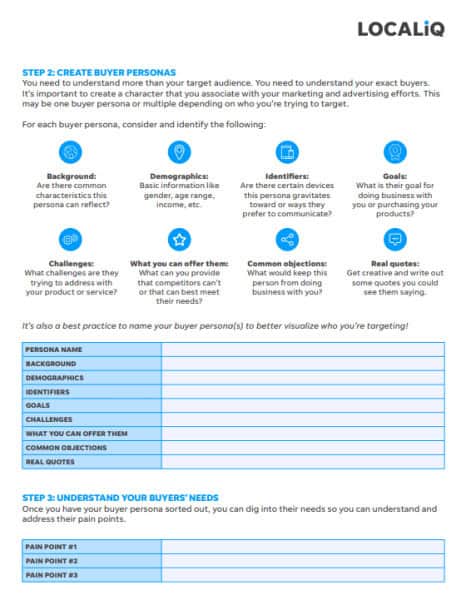
Go To Market Strategy Template PDF 2
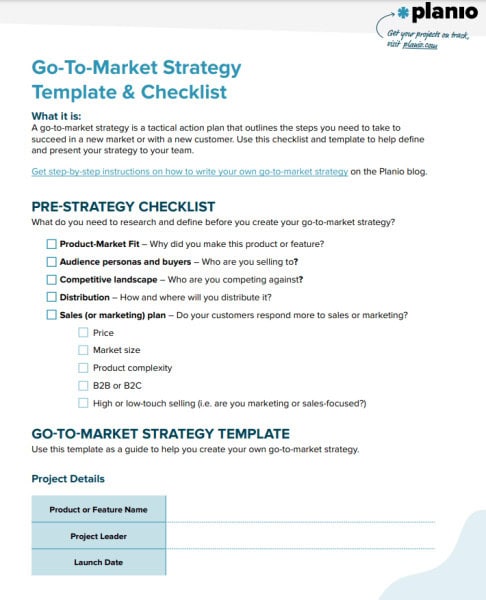
Go To Market Strategy Template PDF 3
Go-To-Market Strategy Online Tools
ClickUp
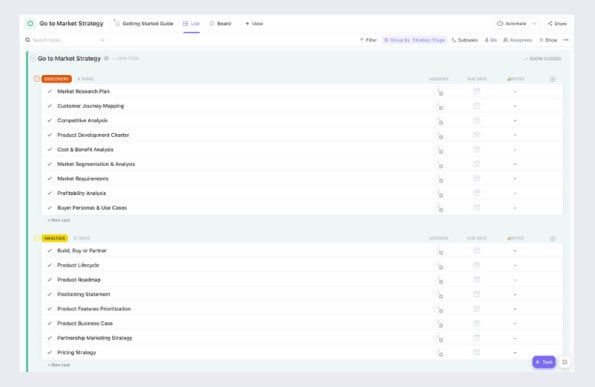
Use the ClickUp GTM template to organize the entire process of bringing a new product to market in one centralized workspace. You can align your goals, collaborate with team members across departments, and map out every task required for launch. The template also enables you to predict completion dates by adding due dates and dependencies for every task, keeping the entire team accountable.
Asana
Whether you are expanding an existing product into a new market, launching a brand-new product, or relaunching an updated version of an existing one, your go-to-market strategy will have many moving parts. The Asana go-to-market strategy template helps keep your team on track by organizing tasks, assigning owners, and surfacing blockers early — ensuring nothing falls through the cracks during a high-stakes launch.

Miro
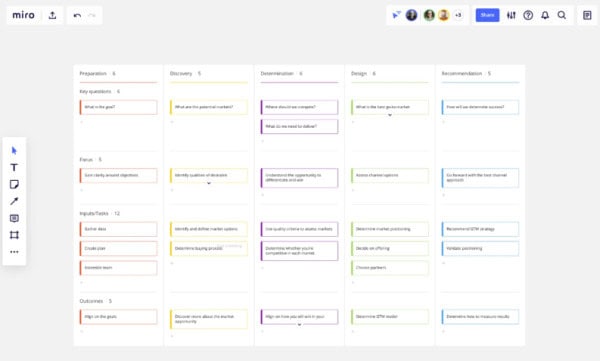
The Miro GTM template takes a visual, collaborative approach to go-to-market planning. It outlines how your company will bring a new product to market and helps align company goals and team members in a single shared digital workspace. Miro is particularly valuable for remote or distributed teams that need a real-time whiteboard environment to brainstorm and map out strategy together.
Lucidchart
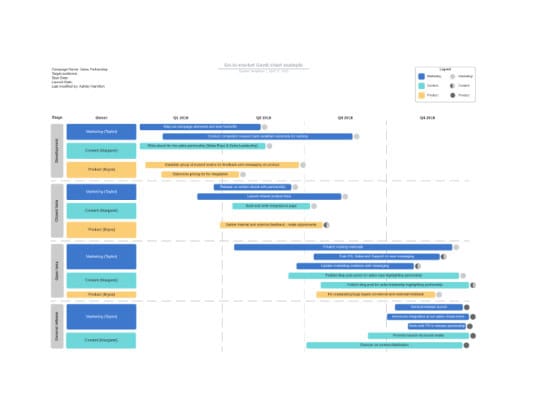
The Lucidchart GTM template is built for teams that need both clarity and structure in their planning process. It allows you to assign specific tasks to individuals or teams, use visual icons to indicate the status of each action item, collaborate with colleagues in real time, and build a comprehensive project timeline. The template also includes a sample GTM Gantt chart that can be fully customized to fit your product launch schedule.
Lucidspark
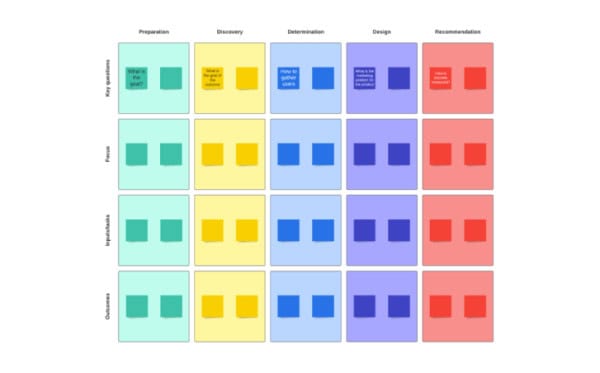
The Lucidspark GTM template is designed for early-stage ideation and strategic planning. It enables teams to develop a flexible framework for bringing new ideas and products to market, starting from concept through to launch. Like Miro, Lucidspark excels in collaborative brainstorming environments where teams need room to think visually before committing to a structured plan.
Figma
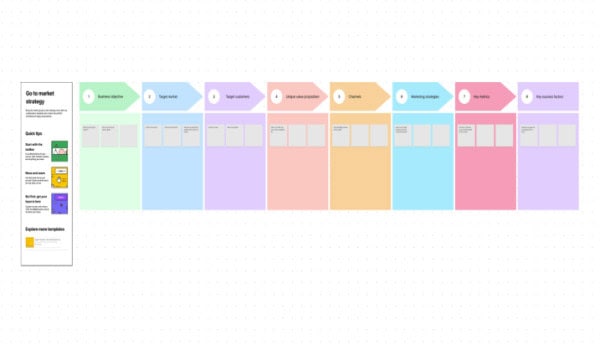
The Figma GTM template is ideal for product and design-driven teams. It brings your group into a shared digital workspace where members can collaborate in real time to build and refine an effective go-to-market strategy. Figma’s visual interface makes it especially useful for teams that want to create customer journey maps, personas, and positioning frameworks alongside their core GTM planning work.
Go-To-Market Strategy Best Practices
1. Identify the Problem Your Product Solves
Before anything else, clearly identify the specific problem your product is designed to resolve. This is the foundation of the product-market fit concept, which measures the degree to which a product satisfies real and meaningful market demand. Understanding this problem deeply helps you build the right product, communicate its value clearly, and gain a genuine competitive edge over alternatives already in the market.
2. Define Your Target Audience
To build an effective go-to-market strategy, you must develop a thorough understanding of your target audience. The two most commonly used methods are buyer personas — detailed profiles of your ideal customers based on research and data — and ideal customer profiles (ICPs), which define the characteristics of the accounts or individuals most likely to buy. Together, these tools help you narrow your focus, personalize your messaging, and avoid wasting resources on audiences unlikely to convert.
3. Research Market Demand and Competition
After defining your target audience and clarifying your product’s value proposition, conduct thorough market research before committing significant resources to the launch. Specifically, assess the level of demand for your product and the intensity of competition in your target market. A competitive analysis will help you identify both direct and indirect competitors, as well as uncover their key weaknesses and strengths — giving you the intelligence needed to position your product more effectively.
4. Develop Your Key Messaging
Determine the core message you want to communicate to your customers and ensure it resonates with their specific needs. The most effective approach is to tailor messaging for each buyer persona you have defined, addressing the unique frustrations, goals, and values of each segment. Consistent, targeted messaging builds trust, differentiates your product from competitors, and increases the likelihood that prospects will engage and convert.
5. Map the Buyer’s Journey
Carefully map the full path your customer takes from first recognizing a problem, to considering your product as a potential solution, to making a final purchase decision. Understanding this journey is one of the most important components of content marketing, as it allows you to surface the right message, resource, or piece of content at exactly the right stage. A well-mapped buyer’s journey reduces friction and shortens the sales cycle.
6. Select the Right Marketing Channels
Choose your marketing channels based on where your target audience spends their time and where they are in their buyer’s journey. Not every channel will be appropriate for every product or audience segment. Common channels to evaluate include paid search advertising, organic SEO content, social media platforms, email marketing, influencer partnerships, and community-driven platforms. Prioritize the channels where your audience is most active and most receptive to your message.
7. Create a Sales Plan
Since the ultimate objective of your go-to-market strategy is to sell your product, you need a clear and actionable sales plan that defines how you will convert prospects into paying customers. Your sales plan should outline your sales process, define roles and responsibilities, identify key tools and resources, and set targets for your team. Without this plan, even strong marketing efforts can fail to generate the revenue your product launch requires.
8. Set Concrete, Measurable Goals
Your go-to-market strategy must begin with clearly defined objectives that are specific, measurable, achievable, relevant, and time-bound. Goals give your team specific targets to aim for, a timeline to work within, and a clear way to measure whether the strategy is working. Without concrete goals, it becomes nearly impossible to evaluate the success or failure of your launch and make informed adjustments along the way.
9. Build Clear, Repeatable Processes
Develop documented processes for executing every aspect of your go-to-market strategy so that your team can operate efficiently and consistently. Even the best strategy will fail if it exists only as a document rather than a set of actions that teams understand and follow. Clear processes ensure that responsibilities are assigned, handoffs between teams are smooth, and the strategy is executed with the level of coordination and discipline a successful product launch demands.
Video About How to Create a Go-to-Market Plan
Watch this step-by-step video walkthrough to see how a go-to-market plan comes together in practice — from defining your target audience to mapping out your launch strategy.
Conclusion
A well-crafted go-to-market strategy is the difference between a product launch that gains traction and one that fades into obscurity. Whether you are a startup introducing your first product or an established company entering a new market, having the right framework in place ensures your entire team is aligned, focused, and working toward the same goal.
The 28 templates featured in this guide, spanning Word, Excel, PowerPoint, PDF, and leading online tools like ClickUp, Asana, Miro, and Figma, give you a strong starting point for building a strategy tailored to your unique product and audience. Choose the format that best fits your team’s workflow, apply the best practices outlined above, and you will be well-positioned to launch with clarity, confidence, and purpose.
Go-To-Market Strategy FAQs
What are the 4 Ps of a go-to-market strategy?
The four Ps of a go-to-market strategy are Product, Price, Promotion, and Place. These four elements form the foundation of your marketing mix and together determine how you position and sell your product in the market. Getting each of the four Ps right — and ensuring they work cohesively — is critical to a successful product launch.
What are the three phases of a go-to-market strategy?
The three core phases of a go-to-market strategy are: first, research and planning, where you define your audience, assess competition, and clarify your product’s value; second, developing the marketing strategy, where you establish messaging, select channels, and build campaigns; and third, developing a launch roadmap, where you sequence activities, assign ownership, and set timelines for execution.
How long does it take to develop a go-to-market strategy?
Most go-to-market strategies can be developed and finalized within 8 to 12 weeks. The exact timeline depends on several factors, including the complexity of the product, the size of the team, the available budget, and the scope of the target market. The process typically begins with deep research into the business, competitive landscape, historical initiatives, best-fit customers, relevant industry statistics, and target market segments before moving into strategy development.
What is the central challenge of any go-to-market strategy?
The most common challenges organizations face when developing a go-to-market strategy include an unclear definition of the target market, a failure to align the strategy with a concrete marketing and sales plan, and ambiguous roles and responsibilities across teams. When these issues are not addressed early, they lead to misaligned efforts, wasted resources, and ultimately a launch that underperforms its potential.
Suggested articles:
- 18 x Product Launch Plan Templates
- 18 X Product Canvas Template PPT, Word
- 10 Free Product Backlog Templates

Shane Drumm, holding certifications in PMP®, PMI-ACP®, CSM, and LPM, is the author behind numerous articles featured here. Hailing from County Cork, Ireland, his expertise lies in implementing Agile methodologies with geographically dispersed teams for software development projects. In his leisure, he dedicates time to web development and Ironman triathlon training. Find out more about Shane on shanedrumm.com and please reach out and connect with Shane on LinkedIn.