
Throughout a career in digital product and project delivery, few decisions feel more consequential than choosing between product management and project management. Both paths offer meaningful work, strong compensation, and genuine career growth. Having worked across both disciplines and holding certifications including PMP, PMI-ACP, Scrum Master, and Product Owner, the crossovers and distinctions between these roles become very clear.
Understanding the salary landscape, the core differences in mindset, and the soft skills each role demands will help you make a more confident, informed decision. Whether you are drawn to customer advocacy or structured delivery, this guide breaks down everything you need to know to choose the right path.
The Customer Champion
Project managers have the potential to be great product people, but without empathy, it is not going to be a good fit. Empathy is the defining quality of a fantastic product person. They need to understand the customer’s emotions, wants, and needs to deliver a product that truly resonates. The product manager is the customer’s advocate inside the company, and that orientation shapes every decision they make about what to build, when to build it, and why.
The Arthur Christmas Analogy
If you have watched Arthur Christmas, think of Arthur as the perfect product manager. He is the customer advocate who will do everything to ensure the right thing is delivered to every customer. He goes out of his way to make sure one little girl gets her present on Christmas Eve, even convincing an elf to help him do it. His commitment to the individual customer is total, and no efficiency argument will talk him out of it.
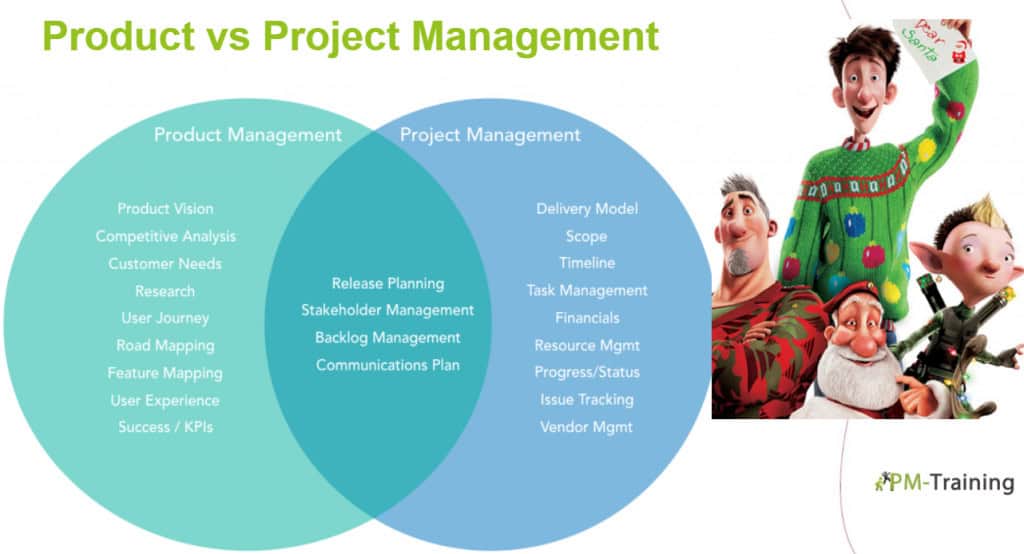
His brother, by contrast, takes a military approach focused on efficiency and on-time delivery within budget. For him, delivering 99.9999% of presents on Christmas Eve is considered objective complete, with an acceptable defect rate built in. It is not about the individual customer; it is about the delivery metrics. The two characters illustrate the fundamental tension between delivery excellence and customer obsession that plays out in organisations every day.
Product Vision and Influence
The ability to communicate a compelling vision and then bring others along on that mission is one of the most important skills a product manager can develop. This is particularly challenging because product managers typically have no direct line authority over the engineers, designers, or marketers they depend on. Success depends entirely on the clarity of the vision, the strength of the relationships built, and the ability to make others care about the outcome as much as you do. That is a very different leadership muscle from the one project managers are trained to use.
Understanding the Two Roles
Before comparing salaries, it is worth establishing what each role actually involves. The two functions are closely related, and professionals frequently cross between them, but they differ in focus, scope, and the type of value they deliver to an organisation.
What Is Product Management?
Product management is an organisational function that guides every step of a product’s lifecycle, from initial development through to positioning, pricing, and ongoing iteration. It places the product and its customers at the centre of every decision. Product managers sit at the intersection of business, technology, and user experience, making prioritisation calls that affect the entire organisation.
Product management typically involves the following activities:
- User Research: Gathering qualitative and quantitative insights through interviews, surveys, usability testing, and data analysis to build a clear picture of the problems the product needs to solve and the people it serves.
- Strategy Development: Creating a product roadmap that connects customer needs to business goals, defining the metrics that will measure success, and making deliberate trade-off decisions about what to build and what to defer.
- Stakeholder Communication: Sharing product vision, roadmap updates, and sprint review outcomes with internal teams and senior leadership, ensuring alignment across functions and maintaining transparency about progress and priorities.
- Cross-Functional Coordination: Working daily with development, design, and marketing teams to keep delivery aligned with strategy, resolving blockers, clarifying requirements, and ensuring the team always understands the context behind the work.
- Backlog Management: Continuously reviewing customer feedback, support data, and usage analytics to reprioritise the backlog so the team is always working on the highest-value items available.
What Is Project Management?
Project management focuses on the successful delivery of a defined initiative within agreed constraints of scope, schedule, and budget. Unlike product management, which is a continuous organisational function, a project has a clear beginning and end. The project manager’s role is to plan the work, coordinate the people and resources required, manage risk proactively, and bring the initiative to a successful close.
Project management follows five core process groups:
- Initiating: Securing executive sponsorship, defining the project charter, identifying key stakeholders, and obtaining formal approval to proceed with an agreed statement of work and budget.
- Planning: Developing a comprehensive project plan covering scope definition, project schedule, budget, resource allocation, communication protocols, and a risk register that documents known threats and mitigation strategies.
- Executing: Directing the project team in carrying out the planned work, managing vendor relationships, tracking resource utilisation, and ensuring quality standards are maintained throughout delivery.
- Monitoring and Controlling: Measuring performance against the baseline plan, managing change requests through a formal change control process, and taking corrective action when the project deviates from its planned trajectory.
- Closing: Obtaining formal acceptance of all deliverables, releasing project resources, documenting lessons learned, and archiving project records for future reference.
Soft Skills That Define Success
Certifications from bodies such as PMI provide a strong technical foundation, but the professionals who advance furthest in either role tend to be those who invest equally in their interpersonal capabilities. Communication planning is one area where project management training is especially rigorous, teaching practitioners how to tailor messages for different audiences, manage expectations proactively, and document decisions clearly. These habits translate directly into stronger product management practice.
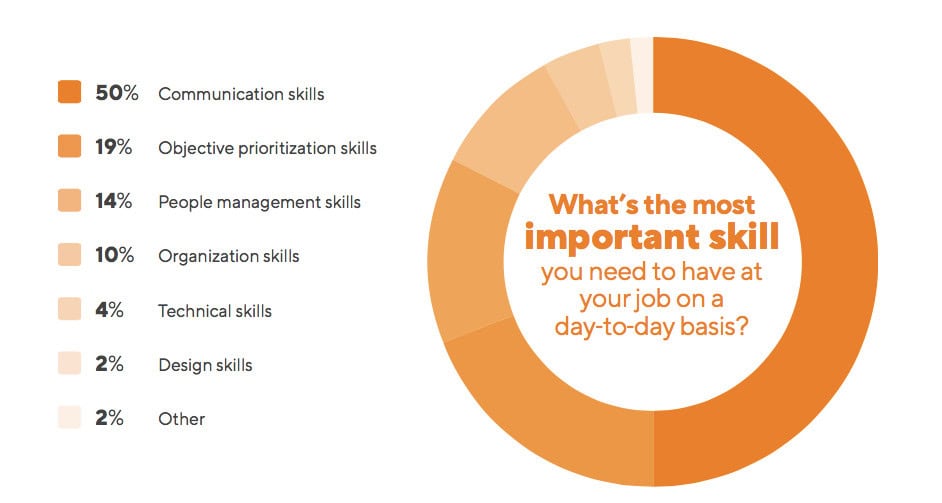
Conflict resolution is another area where both roles demand real competence. Product managers regularly navigate disagreements between engineering teams who want to address technical debt and business stakeholders who want new features delivered faster. Project managers face similar tensions between scope, timeline, and budget. The ability to surface these tensions early, facilitate honest conversations, and reach workable agreements without damaging relationships is a skill that takes years to develop and is worth investing in deliberately.
Product Manager vs Project Manager Salary
Salary is one of the most practical considerations when choosing between these two career paths. Both roles are well compensated, but there are meaningful differences depending on location, experience level, employment type, and the industry you work in.
Salary Overview by Experience Level
For those early in their careers, project management tends to offer a more structured entry pathway, with recognised certifications and clearly defined salary bands at each level. Junior product managers face more variability, with compensation depending heavily on the size and maturity of the product organisation, the industry vertical, and whether the role sits within a technology company or a business where product is a secondary function.
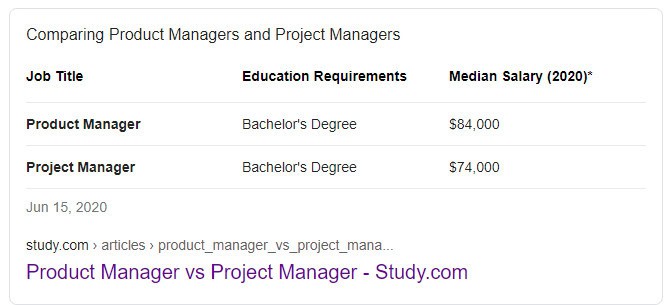
With five or more years of experience, both roles become increasingly lucrative. In the United States, the median salary for product managers sits around $109,000, rising significantly in major metropolitan areas where technology companies are concentrated. Outside the US, markets such as the United Kingdom, Australia, and Canada offer competitive salaries, though typically at a lower absolute level than equivalent roles in San Francisco or New York.
Project Manager Salary Benchmarks (United States)
The following salary percentiles provide a useful benchmark for project management professionals at different career stages. Here’s a Complete Guide to Product Manager Salaries | Aha!
| Project Management Manager Salary Percentile | Salary | Location |
|---|---|---|
| 25th Percentile Project Management Manager Salary | Approximately $122,819 per year, representing early career professionals or those working in smaller organisations with limited programme complexity and scope of responsibility. | US |
| 50th Percentile Project Management Manager Salary | Approximately $137,969 per year, reflecting mid-career professionals managing moderately complex projects across multiple teams or workstreams. | US |
| 75th Percentile Project Management Manager Salary | Approximately $154,447 per year, typical of senior professionals with a strong delivery track record and experience managing high-stakes or strategically significant projects. | US |
| 90th Percentile Project Management Manager Salary | Approximately $169,451 per year, representing experienced leaders managing enterprise-level programmes with significant budgets, cross-functional teams, and executive visibility. | US |
Read more information at salary.com
Other salary guide resources for PMs
- Project Management Manager Salary in the United States
- Hudson Project Management Salary Guide in Australia
- Project Manager Salaries in the United Kingdom by Glassdoor
Contracting vs Permanent Employment
Project management is a profession with strong contracting demand, and many experienced practitioners choose independent consulting over permanent employment. Day rates for experienced contractors can translate to annual earnings well above the permanent salary benchmarks, making contracting financially attractive in the short term. However, it comes with significant trade-offs: no paid leave, no sick pay, no employer pension contributions, no job security, and the ongoing overhead of managing your own business and pipeline of work.
Product management roles are more commonly structured as permanent positions, particularly within technology companies, where continuity of product knowledge and customer relationships makes long-term employment a natural fit. Senior product roles at established technology companies also frequently include equity compensation, which can significantly increase total remuneration over a multi-year horizon in ways that contracting income typically cannot replicate.
Choosing the Right Path for You
Salary data is a useful input, but it rarely tells the whole story. The more important question is which role aligns with how you naturally think, where your energy comes from, and what kind of problems you find genuinely interesting to solve. If you are energised by customer problems, comfortable operating in ambiguity, and motivated by long-term product outcomes over short-term delivery milestones, product management is likely to be the more fulfilling path.
If you thrive on structure, find satisfaction in bringing clarity to complex multi-team initiatives, and take genuine pride in delivering on time and within budget, project management may be the better fit. It is also worth noting that the two roles are not mutually exclusive as career choices. Many professionals spend time in both disciplines at different stages, and that cross-pollination of skills almost always makes them more effective. A product manager who understands project delivery is a more credible partner to engineering. A project manager who understands product thinking adds more strategic value to every initiative they run.
Video Comparing Differences Between Product Manager vs. Program Manager vs. Project Manager
Still unsure which role suits you best? This video breaks down the key differences between Product Manager, Program Manager, and Project Manager — helping you quickly visualise how each role compares in practice.
Conclusion
Both product management and project management offer compelling careers with strong salaries, genuine intellectual challenge, and meaningful growth opportunities. Understanding the core differences in orientation, the specific skills each role demands, and the salary landscape at different experience levels gives you a solid foundation for making a decision that reflects both your strengths and your long-term ambitions.
Ultimately, the best career choice is the one that combines financial sustainability with work you find genuinely meaningful. Whether you are drawn to the customer advocacy and vision-setting of product management or the structured delivery discipline of project management, both paths reward those who invest seriously in their craft, commit to continuous learning, and build strong, trust-based relationships with the people around them.
Frequently Asked Questions
Is a product manager paid more than a project manager?
Salaries for both roles are competitive and overlap significantly depending on experience and location. In the United States, product managers at the mid-career level earn around $109,000 annually, while project managers at the 50th percentile earn approximately $137,969. Senior product managers at major technology companies can earn considerably more when equity and bonuses are included, making total compensation comparisons more nuanced than base salary figures alone suggest.
Can a project manager transition into product management?
Yes, and it is a well-worn career path. Project managers bring valuable strengths to product roles, including structured thinking, stakeholder management experience, and delivery discipline. The main areas to develop are customer empathy, comfort with ambiguity, and the ability to make prioritisation decisions based on user insight and business strategy rather than scope documents and delivery timelines.
What qualifications are most useful for these roles?
For project management, the PMP certification from PMI is widely recognised globally and valued by employers across industries. Agile certifications such as PMI-ACP and Certified Scrum Master are particularly valuable in software and technology environments. For product management, the Certified Scrum Product Owner designation provides a useful foundation, though most hiring managers weigh practical experience and a demonstrable track record of product decisions more heavily than formal credentials.
Do both roles require technical knowledge?
Neither role requires deep technical expertise, but both benefit significantly from a working understanding of how software is built and delivered. Product managers who can engage fluently with engineering teams, understand the implications of technical trade-offs, and participate meaningfully in sprint ceremonies tend to build stronger relationships and make better-informed decisions. The same applies to project managers working in technology contexts, where familiarity with Agile and Scrum methodologies is increasingly a baseline expectation rather than an optional extra.
Which role offers better long-term career progression?
Both offer strong and well-defined career trajectories. Project managers can advance into programme management, portfolio management, and PMO leadership, with some moving into broader operational or transformation roles. Product managers typically progress from individual contributor through senior product manager, director of product, VP of product, and, in some cases, Chief Product Officer. In technology companies, senior product leadership roles carry highly competitive total compensation packages, particularly where equity forms a significant portion of the offer.
Suggested articles:
- Scrum Master vs. Product Manager: Roles and Responsibilities Defined
- 10 Ways a Project Manager Can Upskill to Be a Product Manager
- Career Paths for Project Managers: From PMP to the C-Suite

Shane Drumm, holding certifications in PMP®, PMI-ACP®, CSM, and LPM, is the author behind numerous articles featured here. Hailing from County Cork, Ireland, his expertise lies in implementing Agile methodologies with geographically dispersed teams for software development projects. In his leisure, he dedicates time to web development and Ironman triathlon training. Find out more about Shane on shanedrumm.com and please reach out and connect with Shane on LinkedIn.