

Managing a private lending portfolio is relatively straightforward when you have a handful of loans. As the portfolio grows, however, servicing becomes considerably more complex. Payment schedules, interest calculations, borrower communication, collateral, escrow, delinquencies, reporting, and investor requirements can quickly overwhelm spreadsheets and disconnected systems.
That is where loan servicing software becomes valuable. The right platform can centralize loan data, automate repetitive servicing tasks, improve portfolio visibility, and provide lending teams with the infrastructure they need to scale without adding additional administrative overhead. Below are 10 loan servicing software options worth evaluating for a growing private lending business.
What Should Private Lenders Look for in Loan Servicing Software?
Before comparing platforms, it helps to identify the capabilities that matter most. Private lenders should generally look for:
- Automated payment processing and allocation
- Flexible amortization and loan schedules
- Loan modification capabilities
- Delinquency and collections management
- Borrower and investor portals
- Collateral, escrow, and insurance tracking
- Custom reporting and portfolio analytics
- Document and communication management
- API and third-party integrations
- Configurability as loan volume and product complexity increase
Scalability is particularly important. A platform that handles today’s portfolio should also be capable of supporting new loan products, more borrowers, additional team members, and more complex servicing requirements tomorrow.
1. Bryt Software
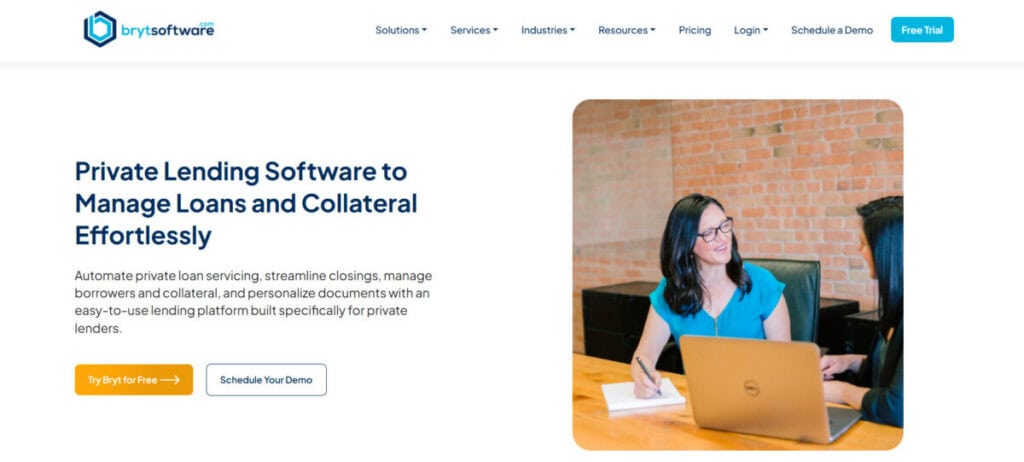
Bryt’s private lending software is designed specifically around the operational requirements of private lending. The platform brings loan servicing, borrower management, collateral tracking, documentation, and portfolio oversight into one cloud-based environment.
One of its strengths for growing private lenders is flexibility. Bryt supports different amortization structures, loan modifications, custom document templates, asset and insurance tracking, escrow or impound management, and automated loan processing. Its Loan Wizard also helps lenders configure loans without relying on extensive manual setup.
The platform also provides portfolio reporting and centralized loan tracking, allowing teams to monitor payment activity, loan schedules, notes, files, and other servicing information from one system. Additional modules can be added for capabilities such as ACH, borrower portals, investor management, API access, and custom reporting. B
Best for: Private lenders looking for a configurable platform that combines loan servicing with portfolio and collateral management.
2. Nortridge
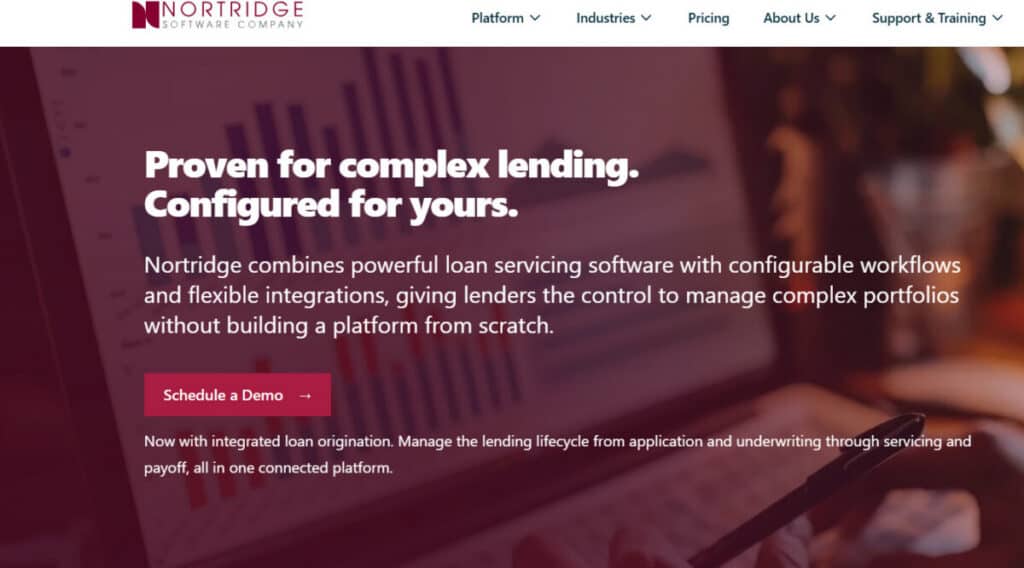
Nortridge provides configurable loan management and servicing software designed to support the full loan lifecycle. Its platform includes payment processing, collections, reporting, workflow automation, borrower records, and configurable loan products.
For lenders managing more complicated portfolios, Nortridge offers features such as configurable payment waterfalls, escrow management, participation loans, multi-book accounting, and API capabilities. It also provides more than 150 standard reports and supports both cloud-hosted and on-premise deployment.
Best for: Established lending operations that need deep configuration and sophisticated servicing workflows.
3. LendingWise
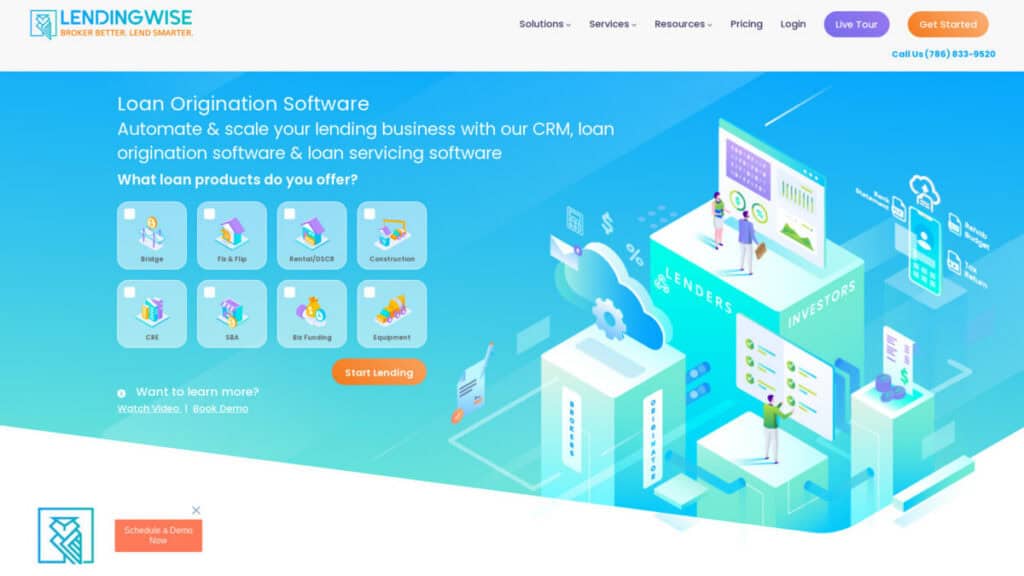
LendingWise combines CRM, loan origination, servicing, and capital marketplace functionality in one platform. It is particularly relevant to private and commercial lenders working with bridge, fix-and-flip, construction, CRE, DSCR, and other lending products.
Its servicing capabilities include automated payments, detailed payment ledgers, draw management, borrower portals, and investor reporting. Fractional investor functionality can also help lenders track ownership shares and expected payouts.
Best for: Private lenders that want origination, CRM, servicing, draw management, and investor functionality in a broader lending platform.
4. TurnKey Lender

TurnKey Lender offers an end-to-end lending platform covering origination, underwriting, servicing, collections, and reporting. Its servicing product includes automated workflows, borrower and staff portals, reporting, collection tools, and integrations.
The platform also includes a configurable credit product builder that supports complex schedules, fees, taxes, interest structures, and other lending rules. Its integration ecosystem is another consideration for lenders that need to connect servicing with other business systems.
Best for: Lenders seeking a broader lending automation platform rather than a servicing-only solution.
5. LendFoundry
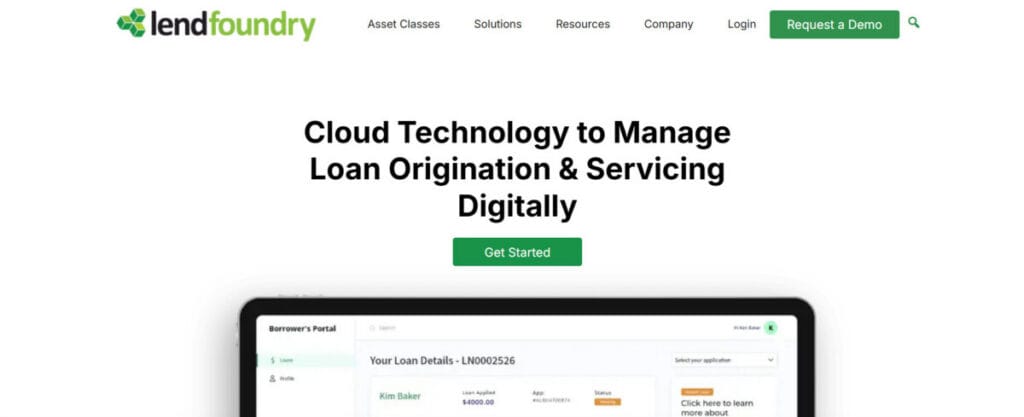
LendFoundry focuses on scalable loan servicing infrastructure for lenders that need automation, analytics, integrations, and operational controls. Its recent platform guidance emphasizes payment management, collections, audit trails, reporting, portfolio migration, and configurable servicing rules. For a growing portfolio, those capabilities can become increasingly important. Payment exceptions, reversals, delinquency tracking, portfolio migration, and reporting are often where manual servicing processes become difficult to maintain.
Best for: Lenders with growing operational complexity that need strong servicing controls and scalability.
6. CloudBankIN

CloudBankIN provides a cloud-native loan management system covering the servicing lifecycle from disbursement through closure. The platform supports loan accounts, repayment monitoring, delinquency tracking, configurable repayment schedules, fees, amortization methods, and other product parameters. Its low-code configuration approach can be useful for lenders that want to adjust loan products and workflows without extensive development work. The broader platform also includes capabilities around collateral management, borrower profiles, notifications, and integrations.
Best for: Lending organizations looking for configurable, cloud-based loan management infrastructure.
7. Finflux

Finflux is another option worth considering for lenders looking for a broader digital lending and loan management platform. Its positioning around configurable lending infrastructure makes it relevant for organizations managing multiple products or seeking to modernize lending operations.
When evaluating a platform such as Finflux for private lending, lenders should pay particular attention to how well its configuration capabilities translate to their specific loan structures, payment rules, servicing workflows, and reporting requirements.
Best for: Lenders looking for configurable digital lending infrastructure that can support multiple lending products.
8. Mambu

Mambu is a cloud-native banking and lending platform that can serve organizations looking to build flexible financial products and lending operations. Rather than focusing solely on traditional loan servicing, its broader approach makes it relevant for businesses that want lending capabilities integrated into a larger financial-services architecture.
For private lenders considering a platform at this level, the key consideration is whether the broader infrastructure matches the organization’s servicing requirements and implementation resources.
Best for: Larger or technology-focused organizations building broader financial services infrastructure around lending.
9. HES FinTech
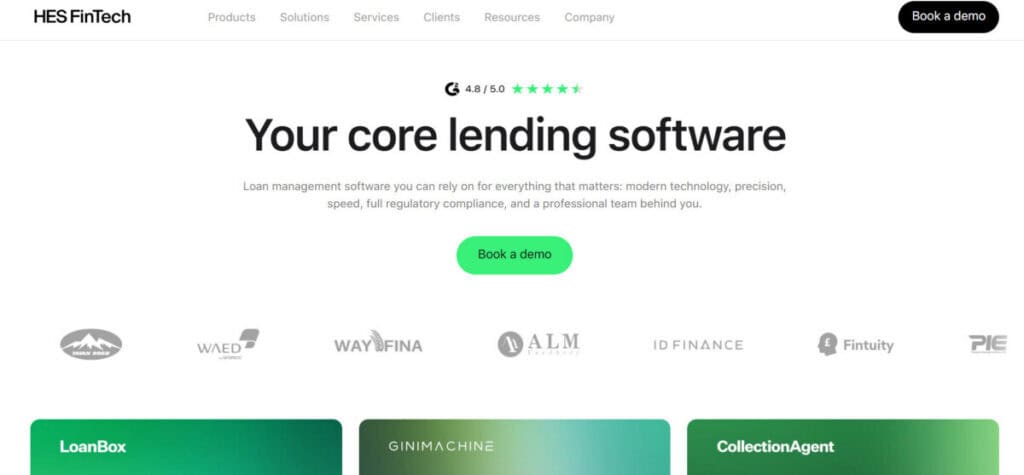
HES FinTech provides lending software designed to support loan origination, management, servicing, and related lending processes. Its platform is positioned for organizations that need configurable lending workflows and support for different financial products.
As with any enterprise-oriented lending system, private lenders should evaluate implementation requirements, customization, integrations, reporting, and the exact servicing functionality available for their portfolio before making a decision.
Best for: Lenders looking for configurable lending technology that can support diverse loan products and workflows.
10. LendSolo

LendSolo is a loan management platform built specifically for private lenders and smaller lending operations. Its focus is on helping lenders move away from spreadsheets and manage their loan portfolios through a centralized system.
The platform provides tools for managing loans, ledgers, documents, reminders, funding visibility, and portfolio reporting. It is particularly positioned toward solo private lenders and small lending businesses that may not need a large enterprise lending system. L
For smaller portfolios, this type of focused approach can make the transition from spreadsheets to dedicated loan management software easier without introducing unnecessary complexity.
Best for: Solo private lenders and small lending operations looking for focused loan management and portfolio tracking.
How to Choose the Right Loan Servicing Software
The best software depends on the size and complexity of your lending portfolio. A private lender managing 50 loans may have very different requirements from a company managing several thousand accounts or working with multiple investors.
Before committing to a platform, consider these questions:
1. Can it Handle Your Loan Structures?
Private loans can involve interest-only payments, balloon payments, partial amortization, extensions, variable rates, custom fees, and other non-standard structures. Make sure the platform can model your actual loans rather than forcing your business into rigid templates.
2. How Much Servicing Can Be Automated?
Look beyond basic payment recording. Ask whether the platform can automate payment allocation, notices, late fees, accruals, borrower communications, collections workflows, and other recurring tasks.
3. Can it Grow with Your Portfolio?
The software should support additional loans, users, borrowers, investors, products, and reporting requirements without creating another layer of manual work.
4. Does it Provide Adequate Portfolio Visibility?
Your team should be able to quickly determine which loans are current, delinquent, approaching maturity, modified, or otherwise require attention.
5. How Easily Can You Customize Reporting?
Private lenders often need reports that reflect their own portfolio structure and investor requirements. Standard reports are useful, but custom reporting can become essential as the operation grows.
6. What Happens When a Loan Changes?
Loan modifications are common in private lending. Test how the system handles changes to principal, interest rates, payment amounts, maturity dates, fees, extensions, and amortization.
7. What Integrations are Available?
Payment processing, accounting, document management, CRM, credit reporting, investor systems, and other integrations can reduce duplicate data entry and help create a more connected servicing operation.
Final Thoughts
Scaling a private lending portfolio isn’t simply about originating more loans. It is about building an operational infrastructure capable of servicing those loans accurately and efficiently. The right loan servicing platform can replace spreadsheets and fragmented processes with centralized data, automated workflows, reliable payment tracking, stronger reporting, and better borrower management.
Among the options above, Bryt Software stands out for private lenders that want a configurable loan servicing environment with capabilities extending into collateral tracking, documentation, escrow, loan modifications, reporting, and portfolio management. Its modular approach also allows lenders to add capabilities as their servicing requirements evolve. Ultimately, the best choice is the platform that fits your current portfolio while giving you enough flexibility to support the loans, borrowers, investors, and operational complexity you expect to manage in the future.
Frequently Asked Questions
1. What is loan servicing software?
Loan servicing software is technology that helps lenders manage loans after origination. It can automate or centralize activities such as payment processing, interest calculations, amortization, borrower management, loan modifications, reporting, documentation, and collections.
2. Why do private lenders need loan servicing software?
Private lenders often deal with customized loan structures and growing portfolios. Dedicated servicing software can reduce manual data entry, automate repetitive processes, centralize loan information, and make it easier to monitor portfolio performance.
3. What features should private lenders look for in loan servicing software?
Important features include payment processing, flexible amortization, interest and fee calculations, loan modifications, borrower management, collateral and insurance tracking, document management, reporting, escrow management, automation, and integrations.
4. Can loan servicing software handle customized private loans?
Many platforms support configurable loan structures, but capabilities vary. Before choosing a system, lenders should confirm that it can handle their specific interest calculations, payment schedules, fees, extensions, modifications, and other loan requirements.
5. How does loan servicing software help lenders scale?
It can automate repetitive servicing tasks and centralize portfolio information. This can help lenders manage more loans without relying on spreadsheets and manual processes for every account.
6. Can loan servicing software manage collateral?
Some loan servicing platforms include collateral and insurance tracking. For example, Bryt’s private lending software includes an Asset and Insurance Tracking Module that helps lenders manage collateral information and insurance requirements.
Suggested articles:
- 7 Essential Tips for Finance Project Managers
- AI Agents in Finance Compliance & Risk Management: A Complete Guide
- A Project Manager’s Guide to Organizing Personal Finances Like a Portfolio

Daniel Raymond, a project manager with over 20 years of experience, is the former CEO of a successful software company called Websystems. With a strong background in managing complex projects, he applied his expertise to develop AceProject.com and Bridge24.com, innovative project management tools designed to streamline processes and improve productivity. Throughout his career, Daniel has consistently demonstrated a commitment to excellence and a passion for empowering teams to achieve their goals.