
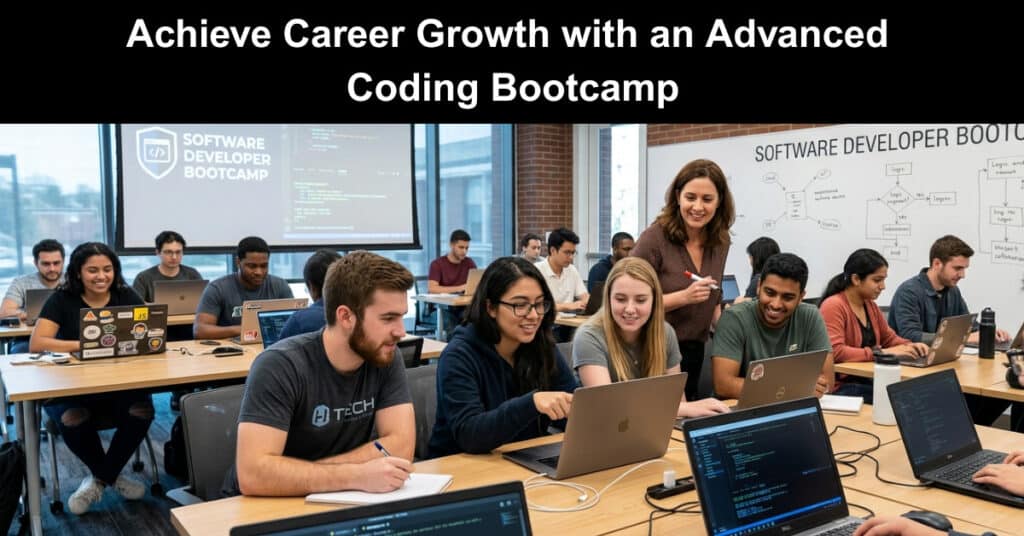
Coding bootcamps have grown into one of the most common paths into the technology industry, with tens of thousands of students graduating from these programs each year. A coding bootcamp condenses the practical skills of software development into a focused curriculum that takes months rather than years to complete. For career changers weighing their options, the real costs and outcomes matter more than marketing claims.
This guide breaks down what a Coding Bootcamp actually involves, how much it costs, and what graduates can realistically expect in terms of job placement and salary growth. Coding skills built in these programs translate directly into real work, from building project management applications to full websites and production software. The sections below walk through each of these factors in detail.
How to Pick the Right Coding Bootcamp for Your Career
Choosing a coding bootcamp is less about finding the most popular name and more about matching a program’s structure, cost, and outcomes data to your own circumstances. The right fit depends on your prior experience, financial situation, preferred learning format, and the specific tech role you are targeting. The factors below outline what actually separates a strong program from a weak one.
Understanding the Value
Coding bootcamps offer a targeted, intensive path to acquiring job-ready programming skills without the time commitment of a traditional four-year degree. They also create networking opportunities through cohorts, mentors, and alumni communities that often lead directly to job referrals. Prospective students should still weigh the financial investment carefully against verified outcomes data rather than marketing claims alone.
Curriculum and Cost Efficiency
Bootcamp tuition in the United States now averages around fourteen thousand dollars for a program lasting roughly fourteen weeks, though prices range from under four thousand dollars for part-time options to over twenty thousand dollars for elite programs. That figure remains far below the cost of a four-year computer science degree, where annual tuition can exceed sixty thousand dollars at top private schools.
These cost categories explain why tuition varies so widely between providers:
- Format: Full-time, in-person immersives generally cost more than part-time or fully online programs because of classroom overhead and instructor staffing.
- Specialization: Data science and machine learning tracks tend to run higher than general web development tracks due to more specialized instruction.
- Career Services Depth: Programs offering daily mock interviews, dedicated career coaches, and employer demo days typically charge a premium reflected in stronger placement outcomes.
- Payment Structure: Income share agreements and deferred tuition models shift cost risk onto the school, which can mean higher effective costs if a graduate lands a high-paying role quickly.
Advantages of Enrollment
Graduates of reputable coding bootcamps report a median salary increase of roughly fifty percent when moving into a first tech role, with average first job salaries landing near seventy thousand dollars. This figure varies by location, with graduates in California and New York reporting the highest average salaries. Career services like resume rewrites and mock interviews are now standard offerings.
Important Considerations
Despite the upside, signing up for coding bootcamps demands a serious time commitment, often fifty or more hours per week during full-time immersive formats. Program quality also varies enormously, with verified placement rates ranging from roughly sixty-four percent to over ninety percent depending on the school. The list below highlights what to verify before committing tuition money to any program.
Before enrolling, confirm these details directly with admissions staff rather than relying on landing page claims:
- Audited Outcomes Reporting: Ask whether the school reports to the Council on Integrity in Results Reporting, since CIRR uses standardized, audited definitions of employment that prevent inflated marketing statistics.
- Definition of Job Placement: Clarify whether placement figures count only full-time, in-field roles or also include part-time, unrelated, or administrative positions at the school itself.
- Refund or Guarantee Terms: Review the exact eligibility requirements for any tuition refund guarantee, since most require active, documented job searching to qualify.
- Instructor-to-Student Ratio: A lower ratio generally means more individualized feedback during code reviews and technical mentoring sessions.
Networking Opportunities
Cohort-based learning creates a built-in professional network that many graduates say outlasts the technical curriculum itself. Bootcamps that actively cultivate alumni communities, employer partnerships, and demo days tend to produce graduates who land roles faster than those relying solely on cold job applications. This collaborative structure is one of the most underrated advantages of the bootcamp model compared to self-directed learning.
Top Benefits of Completing a Coding Bootcamp
Beyond the headline statistics, completing a coding bootcamp reshapes how a career changer approaches problem-solving and long-term career trajectory. The benefits extend well past the initial job placement into how graduates continue to grow once they are working professionally in a technical role. The sections below break down these benefits in more depth.
Unlock Your Potential with Coding
Coding is the practice of writing precise instructions that direct computers to perform specific tasks, from rendering a webpage to processing a financial transaction. Mastery of even one or two programming languages expands job prospects across industries that increasingly depend on custom software and automation. Strong coding ability also builds a transferable problem-solving skill set, breaking large problems into smaller, testable steps.
Foster Creativity and Professional Growth
Programming is often described as logical, but it is also a creative discipline that lets developers turn an idea into a working product. Engaging with developer communities on platforms like GitHub and Stack Overflow allows coders to exchange techniques and get feedback on real projects. Structured programs like bootcamps accelerate this growth by focusing instruction on practical, job-relevant tasks.
Effective Learning Strategies
Bootcamps demonstrate that job-ready programming skills can be built through a tightly structured curriculum rather than years of open-ended study. Programs typically combine lecture, paired programming, and project-based assessments to reinforce concepts through repetition. Compared to a traditional degree, this approach trades breadth of computer science theory for depth in tools employers are hiring for now.
Enhanced Career Prospects
Course outcome data consistently shows that bootcamp graduates see meaningful salary growth, with many reporting a jump of twenty thousand dollars or more annually within their first year of work. Employer attitudes have also shifted: a majority of hiring managers now say they consider bootcamp graduates just as prepared as candidates holding a traditional computer science degree for entry roles.
This shift shows up clearly in how employers are adjusting their hiring criteria:
- Reduced Degree Requirements: A growing share of employers have removed four-year degree requirements from job postings for entry-level developer roles.
- Skills-Based Assessments: Technical interviews and portfolio reviews increasingly carry more weight than the name of a candidate’s school or degree.
- Direct Employer Partnerships: Many bootcamps now maintain hiring pipelines with specific companies, creating a more direct path from graduation to interview.
- Apprenticeship Style Onboarding: Some employers pair new bootcamp hires with senior engineers during an extended onboarding period to close any experience gaps.
Choose Quality and Network Effectively
The intensity of a coding bootcamp is not optional, and students who treat it like a part-time commitment generally see weaker outcomes than those who approach it as a full-time job. Researching a program’s accreditation status and verified outcomes data before enrolling is the single best predictor of a positive experience. Programs emphasizing teamwork tend to produce stronger professional networks.
How AI Is Changing Coding Bootcamps and the Job Market
Artificial intelligence tools are reshaping both what bootcamps teach and what employers expect from junior developers entering the workforce today. Many programs have added modules on AI-assisted coding tools, prompting them to rethink curricula once focused purely on syntax memorization. AI is also automating repetitive tasks that used to make up most entry-level development work.
Several concrete shifts illustrate how this transition is playing out across the industry:
- AI Tool Fluency as a Baseline Skill: Many programs now train students on tools like GitHub Copilot and similar AI coding assistants as a standard part of the curriculum rather than an optional add-on.
- Greater Emphasis on Portfolio Depth: Hiring managers increasingly want to see substantive, demonstrable projects rather than simple tutorial clones, since AI tools have made surface-level code easier to produce.
- Faster Curriculum Refresh Cycles: Bootcamps are updating course material more frequently to keep pace with rapidly changing AI and cloud computing tools used in production environments.
- Continued Demand for Fundamentals: Despite AI assistance, employers still expect graduates to understand the logic behind the code they ship, since debugging AI-generated output requires real comprehension.
Financing a Coding Bootcamp
Tuition remains the biggest barrier to enrollment for many prospective students, which has pushed bootcamps to experiment with a range of payment structures beyond simple upfront billing. Understanding these options in detail can make the difference between a manageable investment and an overwhelming one. The list below covers the most common financing paths available today.
Most students choose from one of the following arrangements when it comes to financing a coding bootcamp:
- Upfront Payment: Paying tuition in full before the program starts, often with an early enrollment discount, remains the simplest option for students with savings or employer support.
- Income Share Agreements: Some programs let students pay zero dollars upfront and instead pay a percentage of their income for a set period after landing a qualifying job, shifting financial risk onto the school.
- Workforce Development Grants: Government programs such as the Workforce Innovation and Opportunity Act fund bootcamp tuition in select states for eligible career changers and unemployed workers.
- Scholarships for Underrepresented Groups: Many bootcamps offer dedicated scholarship funds aimed at increasing diversity in tech, covering a meaningful portion of total tuition costs.
Conclusion
A software developer bootcamp can meaningfully accelerate a career change into technology, but the real value comes from verified outcomes data rather than marketing claims alone. Tuition, format, career services depth, and AI literacy training all vary significantly between programs, which is why comparing audited placement rates and salary figures matters far more than brand recognition or a polished landing page.
For the right candidate, a well-chosen bootcamp delivers a faster, less expensive path into a tech role than a traditional computer science degree. Anyone considering this path should research CIRR-verified outcomes, compare financing structures carefully, and treat the application and enrollment process with the same rigor as any other major financial and career investment they would make.
Frequently Asked Questions About Coding Bootcamps
How much does a coding bootcamp typically cost?
Coding bootcamp tuition in the United States averages around fourteen thousand dollars for a full-time program lasting about fourteen weeks. Prices range from roughly two thousand dollars for part-time, self-paced programs to over twenty thousand dollars for elite immersive courses, with data science and specialized tracks generally costing more than general web development programs.
How reliable are coding bootcamp job placement rates?
Placement rates vary widely by reporting standard, so figures should be compared carefully. Programs that report to the Council on Integrity in Results Reporting use audited, standardized definitions showing roughly sixty-four to seventy-nine percent of graduates landing in field, full-time roles within six months, while self-reported marketing claims from non-audited schools can be significantly less reliable.
How long does it take to find a job after graduating?
Most graduates report finding their first tech role within one to six months of completing a program, though this depends heavily on specialization, location, and how actively a graduate networks and applies for open roles. Building a strong portfolio and practicing technical interviews consistently shortens this timeline for most candidates entering a competitive job market.
Is a coding bootcamp better than a computer science degree?
A bootcamp is generally faster and significantly cheaper than a four-year computer science degree, making it well suited for career changers who need to start earning sooner. A traditional degree offers broader theoretical depth, which can matter more for certain specialized roles, so the better choice depends on a candidate’s career goals, timeline, and budget.
What financing options exist for coding bootcamp tuition?
Common options include paying tuition upfront, income share agreements that defer payment until after employment, workforce development grants through government programs, and scholarships aimed at underrepresented groups in tech. Reviewing the exact terms of any deferred payment plan carefully is essential before signing, since added finance charges can meaningfully increase the total cost over time.
Suggested articles:
- Top 10 AI Courses for Working Professionals Who Want Career Growth
- 10 Steps to Career Growth From Project Manager to Chief Project Officer (CPO)
- Career Paths for Project Managers: From PMP to the C-Suite

Daniel Raymond, a project manager with over 20 years of experience, is the former CEO of a successful software company called Websystems. With a strong background in managing complex projects, he applied his expertise to develop AceProject.com and Bridge24.com, innovative project management tools designed to streamline processes and improve productivity. Throughout his career, Daniel has consistently demonstrated a commitment to excellence and a passion for empowering teams to achieve their goals.