
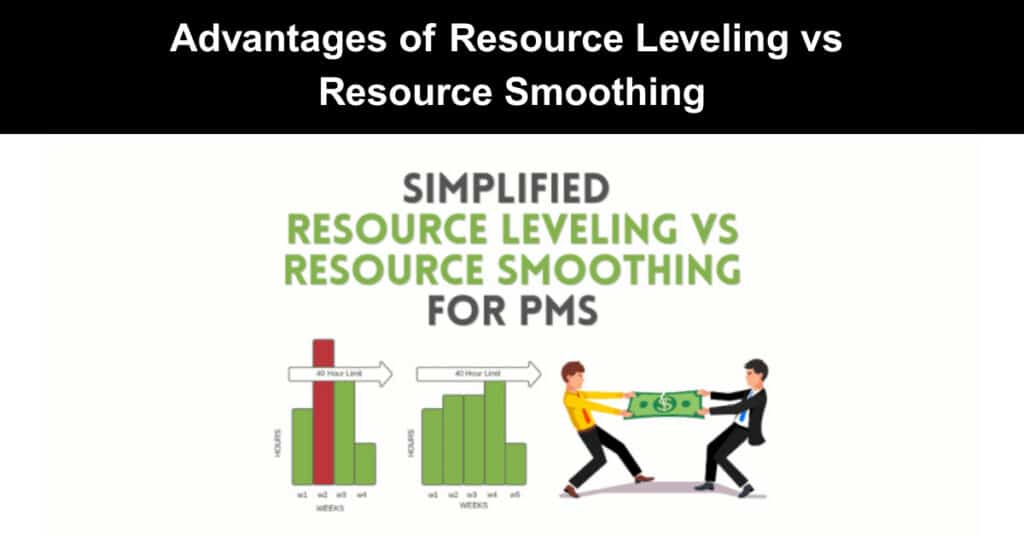
Effective project management depends on how well teams allocate and adapt resources when circumstances change. Two of the most widely used resource optimization techniques are resource leveling and resource smoothing. While both tools address resource conflicts, they serve distinct purposes and offer different advantages depending on the project environment.
Understanding what sets them apart and when each delivers the most value is essential for any project manager aiming for consistent, high-quality results.
What Is Resource Leveling?
Resource leveling is a project management technique that resolves scheduling conflicts and resource allocation issues to ensure a project can be completed using available resources. It works by adjusting task start and finish dates based on actual resource availability rather than ideal conditions. When shared resources are over-allocated, unavailable, or limited in quantity, leveling steps in to balance demand against supply without compromising the overall integrity of the project plan.
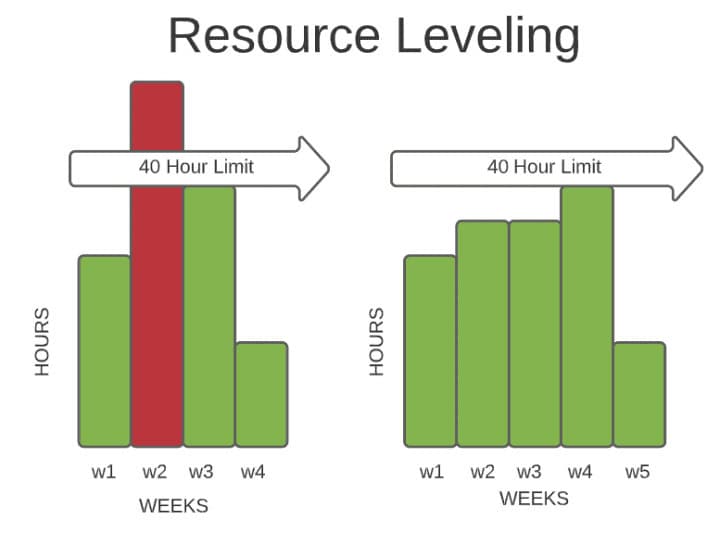
The technique applies across a wide range of situations, from a team member being unexpectedly reassigned to a stakeholder changing project requirements mid-cycle. Rather than forcing the team to absorb these disruptions without structure, resource leveling provides a systematic way to redistribute work and restore balance. It is most effective when applied early and revisited regularly, giving project managers the control they need to keep delivery on track despite changing conditions.
Key Advantages of Resource Leveling
Resource leveling offers measurable benefits when projects face over-allocation, competing priorities, or sudden changes in resource availability. By adjusting task start and finish dates to match available supply, it resolves conflicts before they escalate into costly project failures. Managers who apply leveling effectively gain greater control over workload distribution, team performance, and overall project health. These advantages make it a foundational technique in complex, resource-constrained project environments.
1. Prevents Over-Allocation and Burnout
One of the most significant advantages of resource leveling is its ability to prevent team members from being assigned more work than they can realistically handle. Over-allocation leads to burnout, reduced productivity, and a higher likelihood of errors in deliverables. By redistributing tasks across available resources and adjusting timelines accordingly, managers create a more sustainable workload. This not only protects team well-being but also maintains the quality and consistency of project output throughout the entire lifecycle.
2. Improves Resource Utilization
Resource leveling ensures that every available resource contributes meaningfully to project goals rather than sitting idle or being stretched beyond capacity. When resources are matched to tasks based on actual availability, waste is reduced, and efficiency improves across the board. Managers gain a clearer picture of how resources are being used, which supports better decision-making. This visibility allows teams to identify underutilized capacity and redirect it toward high-priority tasks that need additional support.
3. Reduces Project Risk
By resolving scheduling conflicts and eliminating resource bottlenecks early, resource leveling significantly reduces the risk of unexpected delays and budget overruns. When over-allocation is addressed proactively, teams are less likely to encounter cascading failures where one delayed task disrupts the entire project sequence. Leveling also gives managers the flexibility to respond to unforeseen events without destabilizing the broader project plan, making the overall delivery process more resilient and predictable.
4. Supports Realistic Project Planning
Resource leveling grounds project plans in reality by aligning task schedules with what resources can actually deliver. Plans built without considering resource constraints often collapse under pressure because they are based on theoretical capacity rather than actual availability. Leveling corrects this by building constraints directly into the schedule from the start. The result is a more credible project baseline that stakeholders can trust and that teams can execute with confidence, reducing the need for constant reactive adjustments.
5. Enhances Team Productivity and Morale
When workloads are distributed equitably and team members are not constantly pulled in multiple directions, overall productivity improves, and morale remains higher throughout the project. Resource leveling creates a structured environment where individuals understand their responsibilities, have adequate time to complete their tasks, and are not penalized for conflicts created by poor planning. This clarity reduces friction, encourages accountability, and fosters a more collaborative team dynamic that sustains performance across the full project duration.
When to Use Resource Leveling
Resource leveling is best applied when a project is experiencing over-allocation, when team members are stretched across too many concurrent tasks, or when an unexpected change in resource availability has disrupted the original plan. A practical example helps illustrate this: imagine a designer assigned to two projects simultaneously, both with overlapping deadlines. Rather than forcing substandard output on both, the project manager delays one task until the designer is available, preserving quality without abandoning either commitment.
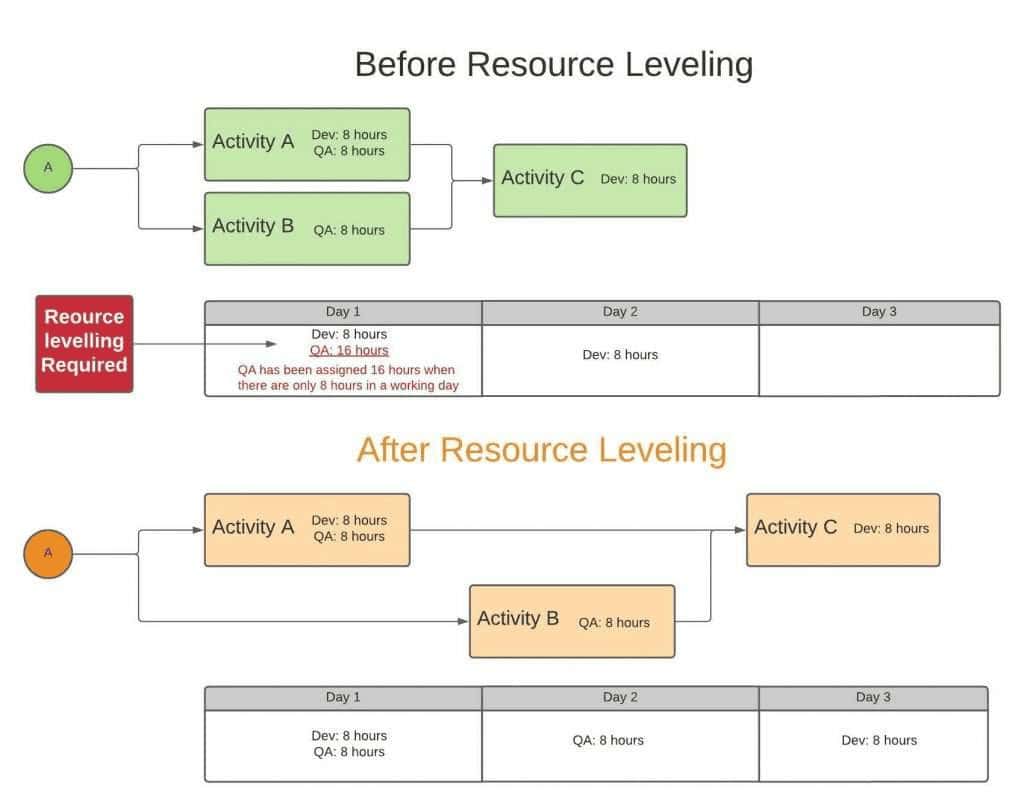
In project terms, this means adjusting task start and finish dates to reflect what resources can realistically deliver rather than what the original schedule assumed. Leveling is typically applied during the planning phase, but remains relevant throughout execution whenever resource conflicts emerge. When applied correctly, it produces a more credible and achievable project baseline, reduces the risk of burnout, and gives managers a structured way to respond to disruptions without destabilizing the broader delivery plan.
Risks Associated With Resource Leveling
The primary risk associated with resource leveling is that it can extend the project timeline, which may conflict with stakeholder expectations, contractual deadlines, or strategic commitments. Because leveling resolves conflicts by shifting task dates, the critical path often changes and, in many cases grows longer. This means that activities that were previously non-critical may become critical, leaving less room for error across a wider range of tasks. Managers must communicate these timeline implications clearly before and during implementation.
Additionally, resource leveling introduces complexity into the scheduling process, particularly when multiple projects compete for the same shared resources. Resolving one conflict can inadvertently create another if dependencies are not mapped thoroughly in advance. Teams that apply leveling reactively rather than proactively often find themselves managing a cycle of recurring conflicts. A thorough understanding of task relationships, resource constraints, and project priorities is essential for leveling to deliver its intended benefits without introducing new scheduling problems.
What Is Resource Smoothing?
Resource smoothing is a scheduling technique used to adjust project activities so that resource requirements do not exceed predetermined limits at any point during the project. Unlike resource leveling, it does not alter the project’s critical path or push back the finish date. Instead, it works within the existing schedule by redistributing tasks across available float to create a more balanced and consistent resource usage profile. It is best understood as an optimization tool rather than a conflict resolution tool.
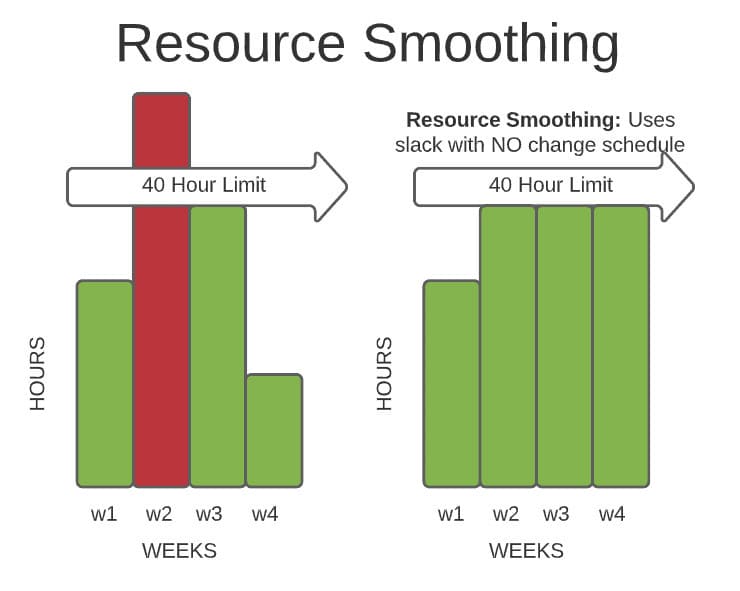
The technique is most relevant in environments where the project deadline is fixed and cannot be moved, making it impossible to extend the timeline the way resource leveling does. Resource smoothing is typically applied after leveling has already resolved major allocation conflicts, serving as a secondary refinement step. By delaying non-critical tasks within their float windows, smoothing reduces the peaks and troughs in resource demand that make projects costly and difficult to manage. The primary constraint it operates under is time, not resource availability.
Key Advantages of Resource Smoothing
Resource smoothing offers a distinct set of advantages, particularly in environments where the project end date is fixed and cannot be moved. Rather than adjusting timelines, smoothing redistributes resource-intensive tasks within available float to create a more consistent usage profile. This approach is best applied after resource leveling has resolved major conflicts, serving as a refinement that optimizes how resources are consumed over the course of the project without disrupting its critical path.
1. Maintains the Project End Date
The most notable advantage of resource smoothing is that it preserves the project’s finish date under all circumstances. For projects with contractual deadlines, regulatory requirements, or strategic milestones, this is a critical benefit. Smoothing works entirely within the boundaries of the existing schedule, ensuring that no adjustments compromise the project delivery timeline. This makes it the preferred technique when time is the primary constraint and stakeholder expectations around the finish date are non-negotiable.
2. Creates a More Consistent Resource Profile
Resource smoothing eliminates the peaks and troughs in resource demand that often make projects difficult to manage and budget accurately. When resource usage fluctuates dramatically from week to week, teams experience unnecessary stress, and costs become harder to predict. By spreading resource-intensive tasks more evenly across the available schedule, smoothing creates a steadier, more manageable workload. This consistency benefits both the team executing the work and the stakeholders monitoring project costs and progress.
3. Improves Cost Efficiency
A more consistent resource usage profile directly translates into better cost management. When resource demand is unpredictable, organizations may need to bring in additional staff or pay overtime to meet sudden spikes in workload. Resource smoothing reduces these situations by distributing effort more evenly across the project timeline. This allows project budgets to remain more stable and predictable, reducing the likelihood of cost overruns caused by inefficient or reactive resource allocation patterns.
4. Reduces Team Fatigue During Execution
By avoiding concentrated bursts of high-intensity work followed by periods of low activity, resource smoothing creates a more sustainable pace for the project team throughout execution. When project workload is distributed evenly, team members can maintain consistent performance levels without the physical and mental strain that comes from irregular demand patterns. This steadier rhythm reduces errors caused by fatigue, improves the quality of deliverables, and helps teams stay engaged and focused from project start through to completion.
5. Strengthens Stakeholder Confidence
A project that maintains a consistent resource profile and delivers against a fixed end date is far easier to report on and defend to stakeholders. Resource smoothing gives project managers cleaner data to present, more predictable cost trajectories, and fewer reactive conversations about why the schedule has shifted. When stakeholders can see that resources are being managed methodically and that the finish date remains intact, their confidence in the project team grows. This trust supports smoother approvals, fewer escalations, and a more collaborative working relationship throughout delivery.
When to Use Resource Smoothing
Resource smoothing, also referred to as time-constrained scheduling, is best applied when the project’s finish date is non-negotiable, and resources must be optimized within that fixed boundary. A practical analogy helps clarify the concept: imagine setting aside 60 hours to study for an exam over three months. If the only available exam slot is four months away, those 60 hours can be redistributed across four months instead, resulting in 15 hours per month rather than 20. This reallocation eases pressure without compromising the total study effort or the outcome.
In project terms, this means distributing resource-intensive tasks more evenly across the available schedule rather than front-loading or back-loading them. Smoothing is typically performed after leveling has already been applied, as it assumes that resource conflicts have been resolved, and the focus now shifts to optimization. When executed correctly, it results in a more manageable workload distribution and a more predictable project execution timeline.
Risks Associated With Resource Smoothing
The primary risk associated with resource smoothing is reduced scheduling flexibility. Because tasks are delayed to the edge of their available float, there is less room to accommodate unexpected delays later in the project. This reduction in slack means that even minor disruptions can push non-critical tasks onto the critical path, increasing overall project risk. Managers must monitor float closely throughout execution to avoid this outcome.
Additionally, as float is consumed during the smoothing process, the number of critical and near-critical activities typically increases. This effectively expands the critical path, making the project more sensitive to delays in a broader range of tasks. Teams that rely heavily on smoothing without actively managing this risk may find themselves with limited options when unforeseen issues arise. Awareness of this dynamic is essential for informed project planning.
Comparing the Advantages: Leveling vs Smoothing
Understanding where each technique delivers the most value helps managers make informed decisions about which approach to apply and when. Both offer clear advantages, but they are designed for different constraints and project conditions:
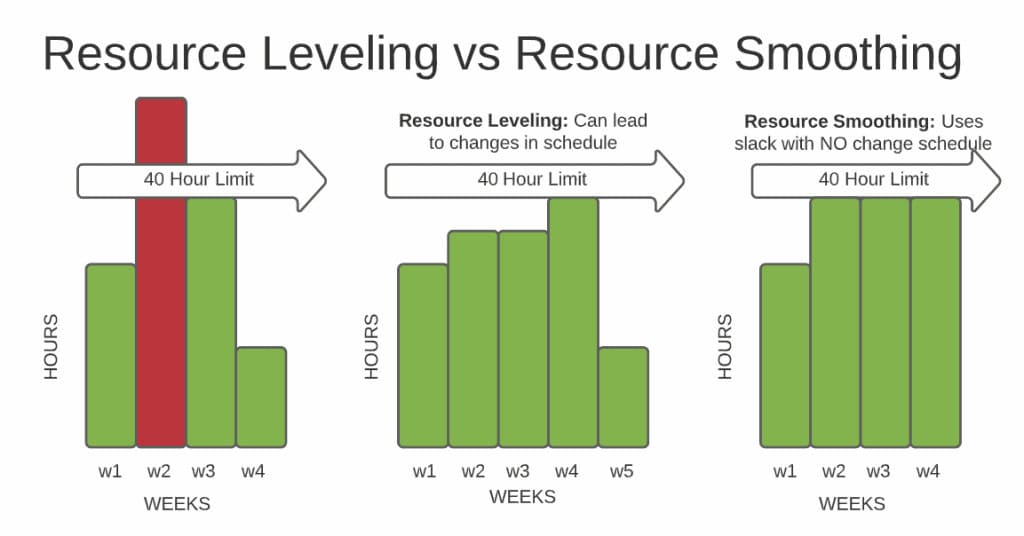
- Conflict Resolution: Resource leveling resolves deep-seated scheduling and allocation conflicts, while resource smoothing refines an already stabilized plan by optimizing how resources are distributed across available time.
- Schedule Flexibility: Leveling offers greater flexibility by allowing the project end date to shift when necessary, while smoothing operates within a fixed timeline and maximizes efficiency without altering delivery commitments.
- Risk Management: Leveling reduces the risk of over-allocation and burnout across the project team, while smoothing reduces the financial and operational risk of unpredictable resource demand and associated cost spikes.
- Application Timing: Leveling is typically applied first to resolve resource conflicts, while smoothing is applied afterward as a secondary optimization step to improve resource usage consistency.
- Best Fit: Leveling is ideal for projects where resources are the primary constraint, while smoothing is best suited for projects where the end date is fixed, and resource distribution needs to be made more even and sustainable.
Video Comparing Resource Leveling and Resource Smoothing
Watch this video for a clear visual breakdown of how resource leveling and resource smoothing differ, how each technique works in practice, and when to apply them in your projects.
Conclusion
Resource leveling and resource smoothing each offer distinct advantages that address different aspects of resource management across the project lifecycle. Leveling prevents over-allocation, reduces risk, and supports realistic planning by giving managers the flexibility to adjust timelines when resource constraints demand it. Smoothing preserves deadlines, improves cost efficiency, and creates a more consistent workload by optimizing resource distribution within a fixed schedule. Together, they provide a powerful and complementary framework for managing competing project demands.
The decision to use one or both techniques depends on understanding the primary constraints facing a project and the flexibility available within its schedule. Managers who can confidently assess when to level, when to smooth, and how to apply both in sequence are better equipped to deliver projects on time, within budget, and to the expected standard. As project complexity continues to grow, mastering these tools is a fundamental competency for any professional committed to delivering consistent and high-quality outcomes.
Resource Leveling and Smoothing FAQs
What is the main difference between resource leveling and resource smoothing?
Resource leveling adjusts task start and finish dates to resolve resource conflicts, which may alter the project’s critical path and end date. Resource smoothing, by contrast, redistributes tasks within available float to create consistent resource usage without changing the project’s finish date. Leveling addresses over-allocation directly, while smoothing refines distribution after major conflicts have already been resolved through the leveling process.
When should a project manager choose resource leveling over resource smoothing?
Resource leveling is the better choice when a project is experiencing significant over-allocation, when team members are assigned to too many concurrent tasks, or when unexpected resource changes have disrupted the original schedule. If the project deadline has flexibility and resolving resource conflicts is the priority, leveling is the appropriate technique. Smoothing is only practical once those deeper conflicts have been addressed and the schedule is otherwise stable.
Can resource leveling and resource smoothing be used together?
Yes, and in most cases they should be. The standard practice is to apply resource leveling first to resolve over-allocation and scheduling conflicts, then apply resource smoothing to optimize resource distribution across the remaining schedule. Used in sequence, they complement each other effectively. Leveling establishes a realistic and conflict-free baseline, while smoothing refines that baseline to improve cost predictability and workload consistency throughout execution.
What are the risks of relying too heavily on resource smoothing?
Over-reliance on resource smoothing can significantly reduce scheduling flexibility, as the technique consumes available float to redistribute tasks. Once the float is depleted, even minor delays can push non-critical tasks onto the critical path and threaten the project’s finish date. Managers who apply smoothing without monitoring float levels closely may find themselves with very limited options when unexpected issues arise later in the project lifecycle.
How does resource leveling support better project outcomes?
Resource leveling improves project outcomes by preventing burnout, reducing bottlenecks, and aligning the project schedule with realistic resource availability. When tasks are assigned based on actual capacity rather than assumed availability, teams perform more consistently and deliver higher-quality results. Leveling also reduces the likelihood of reactive decision-making mid-project, which is often more costly and disruptive than proactive resource conflict resolution during the planning phase.
Suggested articles:
- 11 Free Resource Planning Templates
- Resource Histogram PMP: What It Is & How to Use It
- What Is Resource Loading And How Can It Help Your Project Management?

Shane Drumm, holding certifications in PMP®, PMI-ACP®, CSM, and LPM, is the author behind numerous articles featured here. Hailing from County Cork, Ireland, his expertise lies in implementing Agile methodologies with geographically dispersed teams for software development projects. In his leisure, he dedicates time to web development and Ironman triathlon training. Find out more about Shane on shanedrumm.com and please reach out and connect with Shane on LinkedIn.
I found the article really insightful! Resource leveling seems like a crucial strategy for managing project resources effectively. I’m definitely going to implement some of these techniques in my upcoming projects. Thanks for sharing!