
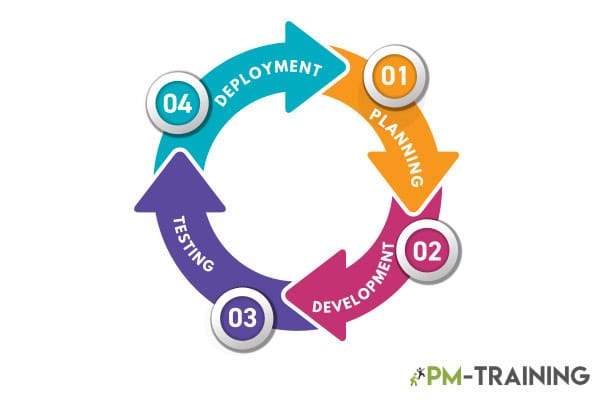
More businesses are adopting the Agile way of working. Far from being simply a modern trend in project management, Agile is a flexible methodology that accommodates frequent change and evolving priorities. The Agile working model is designed to be adaptable: projects are structured so requirements and deliverables can be adjusted to meet stakeholder needs as they emerge. Agile is commonly structured around four phases — planning, development, testing, and deployment.
This article examines the essential elements of the Agile working model and how each phase contributes to delivering value.
What is the Agile Working Model?
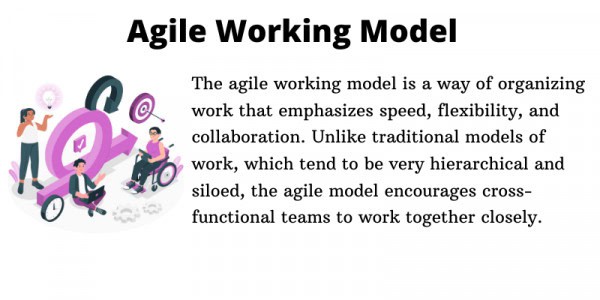
The agile working model is a way of organizing work that emphasizes speed, flexibility, and collaboration. Unlike traditional models of work, which tend to be highly hierarchical and siloed, the agile model encourages cross-functional teams to work closely together. This model is often used in software development, but can be applied to any work. One of the Agile model’s key benefits is that it helps reduce the risk of problems or errors.
By working in smaller, more focused teams, there is less chance for things to fall through the cracks. In addition, the agile model promotes creativity and innovation by giving team members the freedom to experiment and take risks. As a result, the Agile model is increasingly being adopted by organizations across various industries.
What are the Phases of the Agile Working Model?
Planning Phase
The planning phase is essential because it sets the foundation for the rest of the project. The planning phase is where the project manager works with the team to determine the project’s objectives. It is also where the project manager creates a timeline for the project and assigns tasks to each team member.
Development Phase
The development phase is where the team starts working on the project. It is where they will write code, create prototypes, and test their work. The development phase can be divided into two parts: sprints and iterations. Sprints are shorter periods (usually two weeks) where the team focuses on a specific task. Iterations are extended periods (usually four weeks) where the team works on multiple tasks.
Testing Phase
The testing phase is where the team tests their work to ensure it meets the project’s objectives. It is done by creating test cases and running them against the software. The testing phase can be divided into two parts: unit testing and integration testing. Unit testing is when each component of the software is tested. Integration testing is when all of the components are tested together.
Deployment Phase
The deployment phase is when the software is actually deployed to production. It includes installing it on servers, configuring it, and ensuring it is accessible to users. The deployment phase can be divided into two parts: staging and production. Staging is when the software is installed on a server that only a few people can access. Production is when the software is installed on a server that everyone can access.
The Agile Model Diagram
Requirements
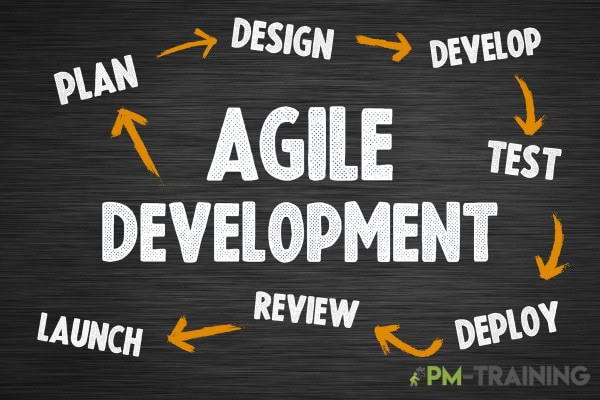
The first step in the agile model is to determine the requirements of the customer or client. It is typically done through a process of gathering information and analyzing the needs of the customer. Once the requirements have been determined, you can create a product backlog, which is a list of all the features that need to be implemented to meet the customer’s needs.
The product backlog is then used to populate the sprint backlog, a list of tasks that need to be completed to implement a particular feature. The development team then uses the sprint backlog to create working software during each sprint. Finally, the software is delivered to the customer or client once all the features have been implemented.
Design
Design is an essential part of the agile process and should be noted. The design phase is where the project team creates a product vision, determines the project’s scope, and creates a high-level plan. During this phase, the team will establish any risks or dependencies that could impact the project.
Once the design is complete, the team will clearly understand what needs to be done and can begin to create a more detailed plan. A well-designed project will be easier to execute and more likely to succeed. This clarity ensures roles, priorities, and deliverables are defined so the team can act quickly and avoid rework.
Develop
During development, designers and developers work closely to turn user needs and product strategy into usable features. Designers handle UX, interaction, and visual clarity while developers write scalable, maintainable code. Regular handoffs, design reviews, and paired work reveal constraints early and cut rework. Continuous integration and automated tests ensure new components integrate with the architecture.
The team also integrates with external systems—APIs, authentication, databases, and third-party tools—to confirm compatibility and performance. Iterative prototypes and frequent demos let stakeholders validate progress, guiding refinements and resolving integration issues to deliver a cohesive product aligned with business goals.
Test
The agile model diagram test phase is vital for ensuring that the product meets quality standards. This phase includes both manual and automated testing. Manual testing is conducted by a human tester and can be used to identify errors that may not be detectable by automated tests.
On the other hand, automated agile tests run by software can more accurately identify bugs and errors. In addition to identifying errors, the test phase also helps to ensure that the product meets customer requirements. The team can be confident that they are delivering a high-quality product by conducting thorough testing.
Deploy
The deployment phase transitions the product from development into live environments, including staged testing and full production releases. Teams coordinate releases, apply deployment automation, and confirm configuration, security, and rollback plans are in place to reduce risk. Depending on testing outcomes, final adjustments or hotfixes may be implemented quickly to stabilize functionality before full user exposure.
After release, continuous monitoring of performance, error rates, and user feedback is essential so the team can detect regressions or usability issues early. Well-orchestrated deployment combined with clear communication minimizes user disruption and supports rapid iteration based on real-world usage.
Review
The review phase validates readiness for release through structured evaluations involving stakeholders, product owners, QA, and end users. This stage includes end-user acceptance testing, usability checks, performance assessments, and management reviews that verify scope, schedule, and budget alignment. Feedback gathered is categorized into critical fixes, enhancement requests, and longer-term backlog items to guide subsequent sprints.
Lessons learned are documented in retrospectives to improve processes, reduce future defects, and refine estimates. By combining objective test results with stakeholder input, the review phase ensures the product meets business goals and customer expectations before broader adoption.
Agile Model vs. Waterfall Model
| Aspect | Agile | Waterfall |
|---|---|---|
| Purpose | Prioritizes flexibility, iterative delivery, and rapid adaptation to change. | Emphasizes predictability, sequential planning, and upfront definition of scope and requirements. |
| Structure | Work is organized into short cycles (typically sprints) producing functional increments. | Project phases (requirements, design, implementation, testing, deployment) occur in a linear sequence. |
| Collaboration | Emphasizes cross-functional teams, continuous stakeholder involvement, and frequent communication. | Roles and responsibilities are more defined; stakeholder involvement is heavier during upfront planning and final review. |
| Advantages | Work is organized into short cycles (typically sprints), producing functional increments. | Clear documentation, easier budgeting and scheduling, and suitability for regulated environments. |
| Best For | Projects with evolving requirements, products needing frequent releases, and teams that benefit from close stakeholder collaboration. | Projects with well-defined requirements, fixed budgets or timelines, and environments where changes are costly or constrained. |
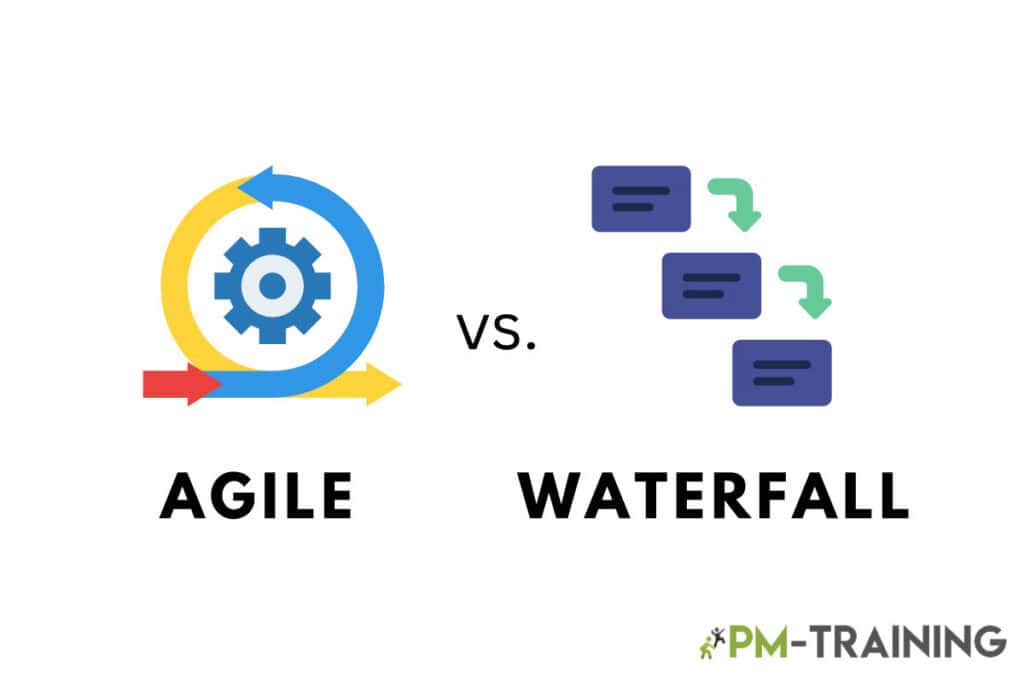
Both Agile and Waterfall have distinct strengths and trade-offs, and the best choice depends on the project’s context. Agile is preferable when requirements are likely to change, and rapid iteration or frequent releases are important. Waterfall can be a better fit when requirements are stable, scope must be tightly controlled, or regulatory and documentation demands require comprehensive up-front planning.
Video About Agile Methodology
This short video walks you through the Agile methodology step‑by‑step, from planning and sprinting to testing and deployment, showing how teams deliver value faster through iterative cycles and continuous feedback.
Conclusion
Agile working models empower teams to deliver value faster by embracing iteration, collaboration, and continuous feedback. By breaking projects into planning, development, testing, and deployment cycles, teams reduce risk, adapt to changing priorities, and improve product quality. Clear backlogs, frequent demos, automated testing, and retrospectives keep work focused and aligned with stakeholder needs. While Agile isn’t a one-size-fits-all solution, its principles help teams respond to uncertainty, shorten delivery cycles, and continuously refine both product and process.
For managers, fostering cross-functional collaboration, removing impediments, and maintaining transparent communication are key to successful Agile adoption. When applied thoughtfully, Agile transforms how organizations learn, deliver, and grow—turning change from a threat into a competitive advantage.
FAQ
What is Agile in simple terms?
Agile is an iterative approach to delivering work where teams break projects into short cycles, prioritize high-value items, and collaborate closely with stakeholders. It emphasizes adaptability, frequent feedback, and continuous improvement to deliver usable increments quickly and adjust to change.
How long is a typical sprint?
A typical sprint lasts one to four weeks, with two-week sprints being most common. Sprint length balances delivery cadence and predictability; shorter sprints increase feedback frequency while longer ones allow more scope per cycle, depending on team and project needs.
How does Agile handle changing requirements?
Agile welcomes change by maintaining a prioritized backlog and planning short iterations. New requirements are evaluated, prioritized, and scheduled into upcoming sprints, allowing teams to respond rapidly without derailing long-term delivery while preserving focus on current commitments.
What roles are essential in Agile teams?
Essential Agile roles usually include the Product Owner (prioritizes backlog), Scrum Master or Agile Coach (removes impediments and facilitates process), and cross-functional team members (designers, developers, testers). Collaboration and shared responsibility are core to success.
When is Waterfall preferable to Agile?
Waterfall can be preferable when requirements are fixed, regulatory constraints demand exhaustive upfront documentation, or budgets and timelines are rigid. Its sequential structure suits projects with low uncertainty where changes are costly or impractical.
Suggested articles:
- Agile Project Management Guide (Skills & Methodologies)
- 11 Best Agile Templates For Project Management
- Don’t Misapply the Principles of Agile Methodology

Shane Drumm, holding certifications in PMP®, PMI-ACP®, CSM, and LPM, is the author behind numerous articles featured here. Hailing from County Cork, Ireland, his expertise lies in implementing Agile methodologies with geographically dispersed teams for software development projects. In his leisure, he dedicates time to web development and Ironman triathlon training. Find out more about Shane on shanedrumm.com and please reach out and connect with Shane on LinkedIn.