

When you’re a project manager, the last thing you want to happen is for your project to get delayed. After all, delays can impact not just your project’s timeline but also your budget and quality. Following the project timeline is challenging, but it’s not impossible to do. You need to be extra careful in monitoring the project’s progress and schedule using the right tools and methods.
One of the most popular scheduling methods today is the critical path method (CPM). In this blog post, we’ll discuss the fundamentals of CPM, its benefits for project managers, and how to use it to have a successful project.
What is the Critical Path Method (CPM)?
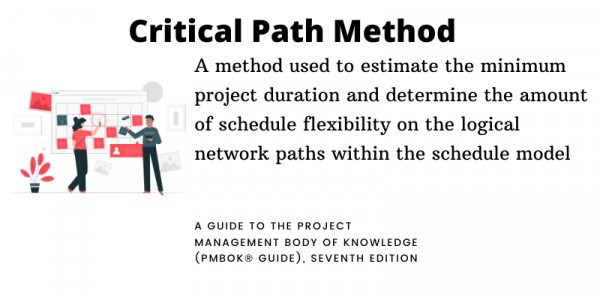
Developed in the late 1950s by James E. Kelly and Morgan R. Walker, the critical path method (CPM) determines the project’s critical path by considering the activities’ durations, sequences, and connections. CPM establishes the entire timeline for the project. It pinpoints which activities are crucial to finish on time so the whole project will be on track. This step-by-step approach to project management is widely used in many industries and has proven to help minimize project delays.
Why is Critical Path Method Scheduling Important for Project Managers?
Critical Path Method (CPM) scheduling is a game-changer for project managers. It streamlines project planning, enhances team coordination, and minimizes costly delays. Understanding its importance helps you leverage CPM effectively, ensuring your projects are completed on time and within budget.
Helps Finish the Project on Time
By understanding the dependencies among activities and considering their durations, project managers can better plan their project’s progress. This way, you can ensure that no activity is delayed, potentially impacting the entire project. This is also helpful in software engineering projects.
Reduces the Risk of Delays
A comprehensive understanding of the project’s timeline and task dependencies enables project managers to proactively identify activities at risk of falling behind schedule. With this insight, timely corrective measures can be implemented to prevent or minimize potential delays, such as reallocating additional resources to high-risk tasks before they impact the overall project timeline.
Helps Utilize the Resources Better
CPM can also help you better utilize your resources because it considers the duration of activities. By understanding how long each activity will take, you can allocate your resources (e.g., workforce, materials) to different tasks more efficiently. You can avoid having too many or too few resources for specific activities.
Increases Visibility of the Project’s Progress
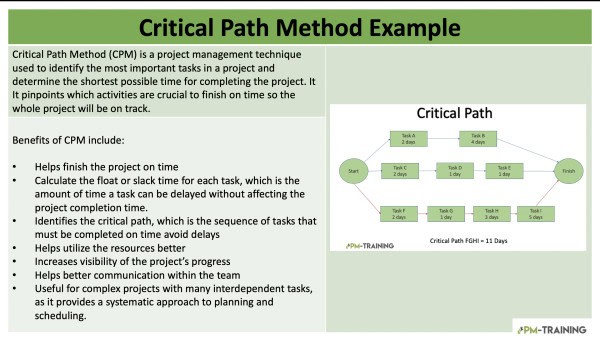
The critical benefit of CPM scheduling is that it increases the visibility of the project’s progress, which can help to identify potential problems and delays early on. In addition, CPM scheduling provides a clear picture of which activities are most likely to cause bottlenecks.
Helps Improve Communication Within the Team
CPM can also help you improve communication with your team by providing a clear picture of the project’s timeline and progress. By understanding the different tasks and their dependencies, you can easily explain to your team members what needs to be done and when. Team members will not be confused regarding the project’s tasks and objectives.
How to Find Your Project’s Critical Path?
Finding your project’s critical path doesn’t have to be overwhelming. By following a structured, step-by-step process, you can identify the longest sequence of dependent tasks and keep your project on schedule. Here’s a straightforward guide to help you get started.
Determine All Project Activities
Use the work breakdown structure to map out all tasks included in the project. The list should only contain higher-level activities; otherwise, the critical path analysis will be too complicated to manage efficiently. Identify the main deliverables first, then break them down into smaller chunks of tasks. You use a tree structure or tables, but an outline is the easiest way to create the work breakdown.
Identify Dependencies of Tasks
Some project activities are dependent on the completion of other tasks. You can easily determine the completion order by identifying the immediate action that must come before each task. You can use the questions below as your guide:
- Which activity should happen first before this task?
- Which tasks should be completed at the same time as this activity?
- Which activity should happen after this task?
Use your discretion and gather feedback from team members to help you define task dependencies correctly. Failing to do this will make the critical path method obsolete.
Do the Critical Path Diagram
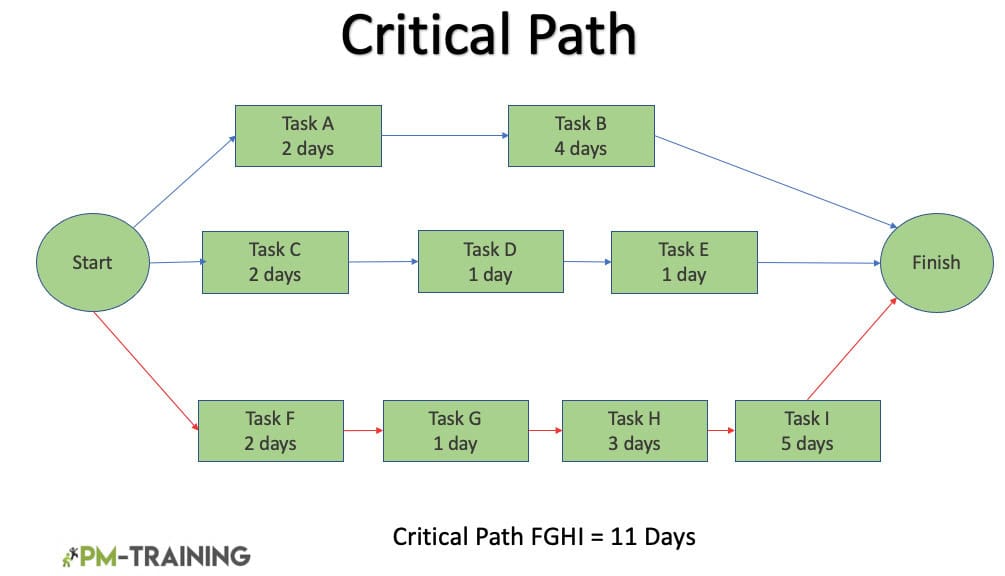
A critical path analysis chart (also called a network diagram) visually maps project activities and their dependencies. Historically hand-drawn, these diagrams are now typically produced with scheduling software. A network diagram represents tasks and responsibilities as nodes (boxes) and shows sequencing and dependencies with arrows, creating a timeline of work. Project managers use these diagrams to identify task order, spot dependencies and bottlenecks, and monitor progress throughout the project lifecycle.
Create Timelines
Using the data from past projects or information from experienced team members, you need to know the estimated time required to complete each task. You can likely finish more minor activities in days, while complex projects may take weeks. Always add a buffer to your estimates to account for unexpected setbacks or resource constraints.
Identify the Project’s Critical Path
Identify the critical path by finding the longest-duration sequence of dependent activities in the network. Use the forward-pass and backward-pass calculations to determine each task’s earliest and latest start and finish times. If a project has multiple critical paths, the schedule is sensitive—critical paths can shift as work progresses, increasing the likelihood of schedule changes.
Update the Critical Path
As the project progresses, record actual activity completion times and update the network diagram accordingly. Regularly recalculating the diagram with current data refines the critical path and yields a more accurate, realistic projection of the project completion date. Recalculate the critical path weekly or immediately after any major task change to keep the schedule accurate and actionable.

When is the Best Time to use CPM scheduling?
The CPM plan works best for complex projects with numerous stakeholders who must be informed of the project’s overall goals. It is particularly effective when managing large-scale projects that involve multiple teams, departments, or external vendors, where coordination and timing are critical to success.
CPM scheduling is most valuable in the following scenarios:
- Complex, Multi-Phase Projects: When a project consists of many interdependent tasks that must be completed in a specific order, CPM helps clarify the sequence and ensures nothing falls through the cracks.
- Projects with Strict Deadlines: If your project has a fixed delivery date — such as a product launch, construction completion, or software release — CPM helps you identify which tasks are non-negotiable in terms of timing and where you have flexibility.
- Resource-Intensive Projects: When limited resources such as personnel, equipment, or budget must be carefully allocated across multiple tasks, CPM allows project managers to plan resource usage more strategically and avoid bottlenecks.
- High-Stakeholder Environments: When numerous stakeholders need to stay informed of the project’s overall goals and progress, CPM provides a transparent, visual framework that makes it easy to communicate timelines and expectations.
Risk management, cash flows, and communication are the three most significant advantages of CPM scheduling. By clearly mapping out the critical path, project managers can proactively identify risks, better forecast cash flow needs at each phase of the project, and maintain open, informed communication with all parties involved.

Tips for Using CPM Scheduling
Applying CPM scheduling effectively requires careful planning, clear thinking, and consistent execution. Follow these practical tips to maximize the value of your critical path analysis and keep your projects running smoothly.
- Reflect on All Project Activities: Take time to thoroughly review every task involved in the project before building your critical path. Missing even a single activity can lead to inaccurate scheduling and unexpected delays down the line.
- Exclude Irrelevant Activities: Only include tasks that have clear logic and direct implications for the project’s outcome. Adding unnecessary activities clutters the network diagram and makes the critical path harder to manage and interpret effectively.
- Properly Allocate Resources: Assign the right resources — people, equipment, and budget — to every activity in a balanced and strategic way. Proper allocation prevents overloading team members and ensures each task has what it needs to succeed.
- Set Realistic Timelines: Establish achievable deadlines for each task without overwhelming your team with too many milestones. Overly tight or excessive deadlines create unnecessary stress and reduce the overall accuracy of your project schedule.
- Align Schedules with Execution Strategies: Make sure your project schedule reflects your team’s actual execution approach and operational capacity. Misalignment between planning and execution leads to confusion, missed deadlines, and reduced team productivity.
- Create a Logical Task Sequence: Arrange all tasks in a clear, logical order with properly defined links and dependencies between them. A well-structured sequence ensures smooth workflow progression and reduces the risk of bottlenecks during project execution.
- Validate Your Critical Path: Always review the critical path to confirm it is accurate, realistic, and makes sense in the context of your project. An invalid critical path leads to poor decision-making and unreliable project completion estimates.
- Define Your Project’s Baseline: Establish a clear project baseline at the start to serve as a reference point for measuring progress. A well-defined baseline helps you track deviations, manage changes, and keep stakeholders informed throughout the project.
Video About the Critical Path Method
Want to see the Critical Path Method in action? Watch the video below for a clear, visual walkthrough of how CPM works and how you can apply it to your own projects.
Conclusion
While project scheduling may introduce additional demands on project managers, the long-term benefits far outweigh the initial investment of time and effort. By developing a thorough understanding of the critical path and its associated concepts, you can confidently drive your project to completion on time and within budget.
The Critical Path Method is an invaluable tool for managing complex projects with precision and clarity. When applied correctly, it enables project managers to validate timelines, optimize execution strategies, and make informed decisions at every stage. For teams seeking a more structured, efficient, and accurate approach to project scheduling, a CPM plan remains the gold standard.
Suggested articles:
- Top 10 Cons or Disadvantages: Critical Path Method (CPM)
- What Is A Forward Pass In Critical Path Method: Project Scheduling
- 5 Advantages of Critical Chain vs Critical Path

Shane Drumm, holding certifications in PMP®, PMI-ACP®, CSM, and LPM, is the author behind numerous articles featured here. Hailing from County Cork, Ireland, his expertise lies in implementing Agile methodologies with geographically dispersed teams for software development projects. In his leisure, he dedicates time to web development and Ironman triathlon training. Find out more about Shane on shanedrumm.com and please reach out and connect with Shane on LinkedIn.