
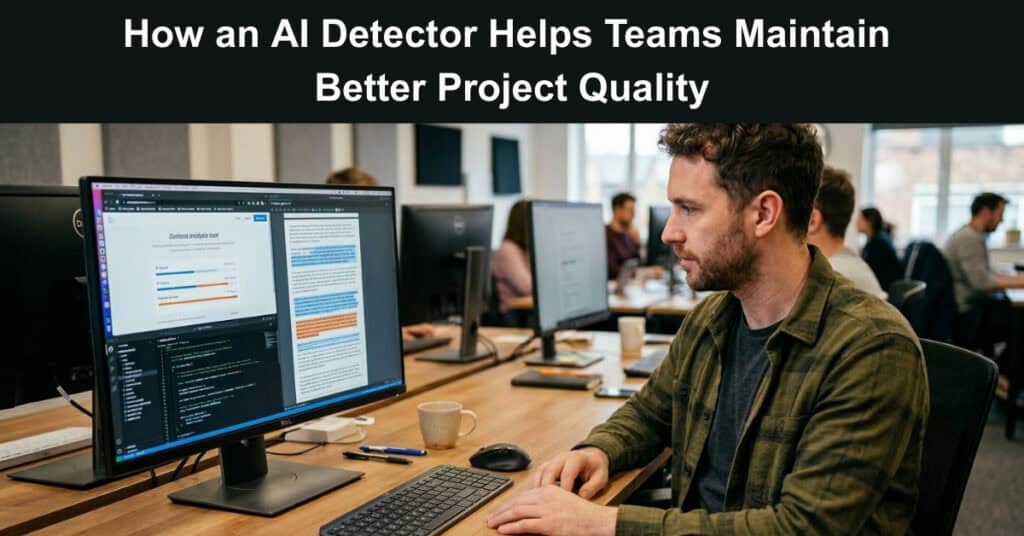
Project quality is the backbone of any successful team effort. Whether a group is working on marketing campaigns, software development, research, or written content, the final outcome reflects the discipline and attention of everyone involved. Teams today often rely on artificial intelligence tools to speed up their workflow. These tools can draft content, summarize research, and assist with creative tasks. While this can boost productivity, it also raises an important question about quality control.
When artificial intelligence becomes part of the workflow, teams need a way to monitor how it is used. This is where an AI detector can play a helpful role. Instead of replacing human judgment, it supports teams by offering insights into how content is produced and whether it meets expected standards.
The Growing Use of AI in Team Projects
Artificial intelligence has quickly become a common tool in professional environments. Writers use it to brainstorm ideas. Developers rely on it to generate snippets of code. Marketing teams use it to draft emails and campaign copy. These tools can save time, but they also introduce new challenges. Sometimes, AI-generated material may sound generic.
In other cases, it may include inaccurate information or lack the human nuance needed for certain audiences. Because of this, teams must balance speed with careful review. Project quality depends not only on completing tasks quickly but also on ensuring that the final output reflects expertise, clarity, and originality.
Why Quality Control Matters More Than Ever
In collaborative environments, one small issue can affect the entire project. For example, a content team may publish an article that sounds repetitive or unnatural. A research team might rely on information that has not been verified. These problems often occur when the process moves too fast, and proper checks are skipped.
Quality control helps teams catch these issues before they reach the final stage. It ensures that the work reflects the voice, standards, and expectations of the organization. Traditional quality checks focus on editing, proofreading, and peer review. These steps remain essential. However, when AI tools are involved, teams benefit from an additional layer of verification.
Monitoring the Role of AI in Content Creation
When multiple team members collaborate on the same project, it can be difficult to track how much AI assistance was used. Some contributors may rely heavily on automated tools, while others prefer to write everything themselves. This difference in approach can create inconsistency in tone and style. One section of a report may feel natural and thoughtful, while another section may appear overly structured or repetitive.
Using an AI detector allows teams to analyze content and understand where AI may have played a role. This does not mean that AI-generated content is automatically bad. Instead, the goal is to create transparency. Once teams understand how the material was produced, they can refine it to ensure the final result feels cohesive and polished.
Supporting Editors and Project Managers
Editors and project managers often carry the responsibility of maintaining quality across an entire project. When deadlines are tight and multiple contributors are involved, reviewing every detail can be challenging. An AI detection tool can support these leaders by highlighting sections that may require closer attention. This allows editors to focus their time where it matters most.
Instead of reviewing every line with the same level of scrutiny, they can prioritize areas that might benefit from deeper editing or rewriting. This approach saves time while still maintaining high standards. As a result, the overall review process becomes more strategic, allowing teams to consistently deliver polished and professional work.
Encouraging Accountability Within Teams
Transparency is an important part of any healthy work environment. When team members know that project quality is being monitored carefully, they tend to approach their tasks with greater responsibility. An AI detection system encourages contributors to review their own work before submitting it. Writers may revise drafts more carefully.
Researchers may double-check their sources. Designers may refine their concepts before presenting them to the team. Even project managers may revisit timelines and deliverables to ensure everything aligns with the original goals. This culture of accountability naturally improves the overall quality of the project.
Maintaining a Human Voice
One of the most common concerns with AI-assisted work is the loss of authentic voice. Automated text can sometimes sound flat or overly predictable. Readers quickly notice when content lacks personality or a clear perspective. Teams that value strong communication must protect their unique voice. This is especially important for brands, publications, and organizations that rely on trust.
AI detection tools help teams identify sections where the writing may feel mechanical. Editors can then reshape those sections to reflect human insight, storytelling, and emotion. By doing this, teams maintain both efficiency and authenticity. The result is content that resonates with readers on a deeper level, strengthening the overall impact of the project.
Improving Long-Term Workflow
The benefits of AI detection extend beyond a single project. Over time, teams can learn from the patterns they observe. For instance, they may notice that certain tasks are ideal for AI assistance, such as generating outlines or organizing information. Other tasks may require deeper human involvement, such as crafting persuasive messages or developing complex strategies.
By understanding these patterns, teams can design workflows that make the best use of both human creativity and machine efficiency. This balanced approach strengthens productivity while protecting project quality. Teams that embrace this mindset are better positioned to adapt as AI technology evolves, ensuring their processes remain both innovative and consistently high in quality.
Building Trust With Clients and Audiences
Quality control is not only important within the team. It also affects how clients and audiences perceive the final product. Clients expect work that is thoughtful, accurate, and original. Readers expect content that feels engaging and trustworthy. When projects rely too heavily on automation without proper oversight, these expectations may not be met.
Using AI detection tools helps teams demonstrate that they take quality seriously. It shows that they are willing to review their work carefully and maintain high standards. This commitment builds long-term trust and credibility. Over time, that credibility becomes one of the most valuable assets a team can offer to the clients and audiences they serve.
The Human Element Still Leads
Despite all the advancements in artificial intelligence, the most valuable part of any project remains human judgment. Creativity, critical thinking, and emotional understanding cannot be fully replicated by machines. AI tools can assist with tasks and speed up certain processes, but they work best when guided by skilled professionals.
An AI detector simply acts as a supporting tool within that process. It provides useful information that helps teams make better decisions about their work. By flagging content that may need a closer human review, it ensures that every project meets the highest possible standards before it reaches its final audience.
Looking Ahead
As artificial intelligence continues to shape the way teams work, quality control will remain a priority. Organizations that combine technology with thoughtful oversight will be better prepared to deliver reliable and meaningful results. AI detection tools offer a practical way to monitor workflows, maintain consistency, and protect the human touch that makes projects truly valuable.
In the end, better project quality does not come from technology alone. It comes from teams that use technology wisely while staying committed to clarity, originality, and strong collaboration. By combining smart tools with clear processes and mutual responsibility, teams turn capabilities into consistently strong outcomes.
Suggested articles:
- 7 Ways Project Managers Can Use an AI Detector to Protect Project Deliverables
- Understanding AI Checkers: Why They Matter in Digital Writing
- AI in Project Management: Revolutionizing Efficiency and Success

Daniel Raymond, a project manager with over 20 years of experience, is the former CEO of a successful software company called Websystems. With a strong background in managing complex projects, he applied his expertise to develop AceProject.com and Bridge24.com, innovative project management tools designed to streamline processes and improve productivity. Throughout his career, Daniel has consistently demonstrated a commitment to excellence and a passion for empowering teams to achieve their goals.