
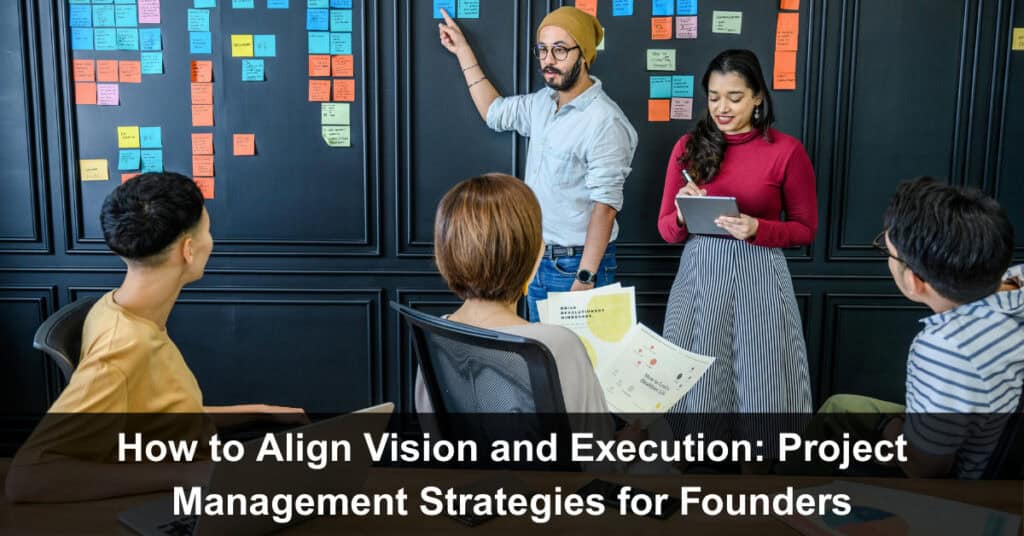
The journey of a founder is often defined by a perpetual tension between the horizon and the trenches. Vision represents the aspirational future, the “why” behind the venture, and the transformative impact the company aims to achieve in the marketplace. However, without a robust framework for execution, even the most brilliant vision remains a phantom, incapable of manifesting into a sustainable business. To bridge this gap, founders must transition from being mere dreamers to becoming architects of systems, ensuring that every daily task acts as a foundational stone for the long-term objective.
Effective alignment requires a psychological shift in how a leader perceives their role within the project management lifecycle. It is not enough to simply point at a destination; a founder must design the vehicle, map the route, and empower the crew to navigate the terrain. This article explores the multifaceted strategies, ranging from structured workflows to cultural shifts, that allow founders to maintain the integrity of their vision while achieving high-velocity execution. By studying the methodologies of successful leaders across diverse industries, we can uncover the universal principles that prevent organizational drift and foster disciplined growth.
The Duality of Leadership Roles in Modern Project Management
Founders must master the art of cognitive switching, alternating between the role of the visionary architect and the disciplined foreman. This duality is the cornerstone of project management in early-to-mid-stage companies, where resources are often lean, and the margin for error is razor-thin. When a leader fails to separate these roles, the result is often “visionary interference,” where new ideas disrupt ongoing workflows, leading to team burnout and stalled momentum. By treating vision and execution as distinct phases of a single cycle, a founder can provide the necessary inspiration without sacrificing the stability required for high-quality output.
To achieve this balance, founders must implement rigorous boundaries that protect the execution phase from the volatility of the creative process. This involves creating “safe spaces” for brainstorming that do not immediately translate into “to-do” lists for the staff. When the team understands that the vision is the compass but the project plan is the map, they gain the confidence to execute their specific duties without fearing a sudden change in direction. This structural clarity is what allows a business to scale beyond the founder’s personal capacity, turning a solo mission into a collective movement.
Vision Needs Clear Thinking, and Execution Needs Deep Focus
Danyon Togia, Founder of Expert SEO, emphasizes a fundamental truth: trying to inhabit two mental states simultaneously leads to friction. Visionary thinking is expansive, lateral, and often messy, requiring a mental environment free from the constraints of immediate deadlines. In contrast, execution is linear, rigorous, and demands a high level of concentration on the technical minutiae of a task. When these are blurred, the “big picture” becomes cluttered with trivialities, and the “real work” is interrupted by theoretical pivots that haven’t been fully vetted.
“When I’m working on my SEO Company, I first define the outcome and the impact I want to create. That’s the vision”. The key to Togia’s success lies in a sequential approach where the outcome and impact are defined before the first line of research is conducted. This separation ensures that when it is time to work, the “why” is already settled, leaving the mind free to solve the “how.” In a fast-paced environment like SEO or software development, this prevents the paralysis of analysis. By shifting fully into execution mode, a founder can drive their team toward a finished product with a level of intensity that is impossible to maintain if the strategy is constantly being questioned during the build phase.
- Establish specific “Strategy Days” where no operational tasks are allowed.
- Utilize a “Freeze Period” for project scopes to prevent mid-cycle changes.
- Document the intended “Impact” of a project before assigning it to a team lead.
The Importance of Writing the Vision Weekly to Translate it Into Milestones and Deliverables
Eric Turney, President of The Monterey Company, advocates for a rhythmic translation of abstract ideas into concrete actions. Many founders make the mistake of defining a vision once a year and then wondering why the daily tasks feel disconnected from the goal by month three. By rewriting or revisiting the vision on a weekly basis, the leader ensures that the strategic intent remains fresh and adaptable to market changes. This weekly cadence acts as a bridge, turning the ethereal concepts of leadership into a master project list that the entire organization can follow.
This methodology relies on the “next action” principle, which ensures that no project ever sits in a stagnant state. When every active project has a clear owner and a specific subsequent step, the organizational “engine” remains in gear. Furthermore, protecting “maker time” by batching administrative decisions prevents the founder from becoming a constant interruption to the team’s flow. This disciplined approach to communication ensures that the vision is a living document, constantly being distilled into the tangible milestones that define professional success.
- Create a single “Master Project List” that serves as the ultimate source of truth for the company.
- Assign a single “Owner” to every task to eliminate ambiguity in accountability.
- Implement “Decision Windows” to prevent the fragmentation of the workday for both leaders and employees.
Defining What We are Building and Who it is for Without Fluffy Mission Statements
JM Littman, Founder of Webheads, argues that clarity is the ultimate antidote to organizational “wobble.” Many companies hide behind vague, high-level mission statements that offer no practical guidance for a developer or a designer facing a difficult choice. Instead, a founder must provide a “tight” vision that answers functional questions about the target audience and the standard of quality expected. This level of detail acts as a self-service reference point for the team, reducing the need for the founder to micro-manage every micro-decision.
Once the parameters of “what good looks like” are established, the founder’s role shifts from a manager of tasks to a guardian of the system. Littman highlights the danger of founders “helping” too much, which often manifests as over-involvement in the day-to-day. If a process requires the founder to answer the same question repeatedly, it is a failure of documentation or system design, not a lack of talent in the team. By stepping back and trusting the established systems, the founder allows the execution to breathe, ensuring that the vision is realized through the collective expertise of the organization rather than the brute force of a single individual.
- Replace generic mission statements with a “Project Definition Document” for every new initiative.
- Identify “Signals for System Failure” such as repetitive questions or bottlenecked approvals.
- Empower “Project Leads” to make decisions within pre-agreed boundaries to maintain momentum.
Utilizing the Core Method to Separate Visionary Distractions from Daily Work
Leury Pichardo, Director of Marketing at Digital Ceuticals, introduces the C.O.R.E. method as a tactical solution to the “Founder’s Dilemma.” For a creative leader, a new idea can feel like a breakthrough, but to a team in the middle of a sprint, it feels like a distraction. The “Capture” phase is essential for psychological hygiene; it allows the founder to honor their creativity without derailing the current workflow. By externalizing the idea immediately, the “itch” to act on it is scratched, preserving the focus required for the tasks already at hand.
The “Review” phase is where the “CEO Hat” is donned, providing a structured venue for evaluating how new ideas fit into the long-term trajectory. This prevents the “shiny object syndrome” that plagues many startups. Once the review is complete and the plan for the week is set, the transition to the “Worker Hat” is absolute. During the “Execute” phase, the strategy is no longer up for debate. This rigid separation ensures that the ship is steered with wisdom but powered with unwavering efficiency, creating a culture where planning is thoughtful and action is relentless.
Disciplined Project Management and Clear Ownership in Large-Scale Infrastructure
Forrest Webber, Owner of Plastic Fusion, demonstrates how the alignment of vision and execution is not just a white-collar concern but a physical necessity in complex engineering environments. When dealing with environmental projects and large-scale infrastructure, the “Vision” is the completed, safe, and functional installation. However, the “Execution” involves a high-stakes ballet between engineering, fabrication, and field teams. In this context, project management is the glue that prevents a multi-million dollar initiative from collapsing due to a lack of coordination.
Structured planning in these industries requires a deep understanding of the dependencies between different departments. If the fabrication team is not aligned with the engineering specs, the field installation will fail, regardless of how “visionary” the initial proposal was. Webber’s approach underscores the importance of “ownership.” In a complex project, every individual must know exactly which part of the infrastructure they are responsible for. This discipline ensures that the final deliverable meets the rigorous standards required for environmental safety and structural integrity.
- Develop “Cross-Departmental Syncs” to ensure engineering and fabrication remain aligned.
- Use “Scope Verification” milestones to confirm that field reality matches the initial vision.
- Implement “Red-Flag Protocols” where any team member can halt execution if it deviates from the safety vision.
Treating Marketing Initiatives as Structured Project Workflows for Consistent Results
Forrest Webber, through his work with the Tradesmen Agency, highlights that even “creative” fields like marketing require the rigor of industrial project management. For trades and service businesses, marketing is not a nebulous expense but a critical engine for lead generation. By treating a digital marketing campaign with the same structured workflow as a construction project, founders can align their strategic goals, such as market dominance or brand repositioning, with measurable outcomes and timelines.
This approach transforms marketing from a series of ad-hoc posts into a “pipeline” of qualified jobs. It requires a clear understanding of the “strategy-to-execution” bridge: identifying the target demographic (Vision), setting the campaign parameters (Strategy), and managing the daily optimizations (Execution). When internal project managers are trained to see marketing through this lens, they can provide a consistent flow of work that sustains the business, proving that disciplined execution in one department fuels the success of the entire enterprise.
Grounding Execution in Technical Reality Through Machining Knowledge
A common pitfall for founders is setting “visionary” timelines that are physically or technically impossible. The quote regarding machining highlights a vital principle: the more a leader understands the underlying “machinery” of their business, whether that is actual CNC lathes or software code, the more realistic their execution plans will be. A founder who understands the constraints of different machining types and operations can set expectations that challenge the team without breaking them. This groundedness builds immense credibility with the staff, as they see that the leader’s vision is backed by technical competence.
When execution is divorced from technical reality, the vision becomes a source of frustration rather than inspiration. By investing time in learning the “operations” of the business, a founder can identify where bottlenecks are likely to occur and proactively manage them. This ensures that the project management strategy is not just a theoretical exercise but a practical roadmap that respects the laws of physics, the limitations of software, and the capacity of human labor.
Breaking Big Ideas Into Small Achievable Steps to Build Credibility
Katherine King, CEO of Dazychain Intuiy AI Legal Software, focuses on the “velocity of finishing.” In the high-pressure world of legal tech, a grand vision of AI-driven transformation can be overwhelming. To combat this, King emphasizes the importance of breaking these massive concepts into small, “bite-sized” steps. This creates a series of “mini-wins” for the team, which builds momentum and reinforces the belief that the long-term vision is actually attainable.
Steady execution is the primary driver of credibility, both internally with the team and externally with clients. A regular schedule of check-ins and reporting ensures that the founder is not an absentee visionary but a present leader who is ready to adjust when things aren’t working. This agility allows the organization to “finish what we start,” which is often the rarest and most valuable trait in a startup. By focusing on the discipline of the small step, King ensures that the “big idea” eventually becomes a lived reality.
- Utilize “Sprint Planning” to divide large software updates into manageable tasks.
- Schedule “Pivot Meetings” where teams can report roadblocks without fear of retribution.
- Celebrate “Completion Milestones” to build a culture that values finishing over just starting.
Connecting Strategic Vision With Daily Execution Through the People Value Impact Initiative
Giuseppe Bergonzi of MBE outlines a holistic system where vision and execution are synchronized through human capital development. At a global franchise level, the vision of “empowering SMEs” is too broad to be managed through tasks alone; it must be managed through people. The “People Value Impact” (PVI) initiative serves as a bridge, connecting the high-level corporate goals with the individual development goals of every manager and team member. This ensures that as the company moves toward its vision, the people within it are growing in the specific ways needed to sustain that growth.
By defining measurable training and support actions, MBE turns “learning” into a form of execution. When an employee improves their skills, the company’s internal capability to deliver on its vision strengthens. This creates a “shared language” across a fast-moving international environment. When everyone understands how their personal development contributes to the franchise ecosystem’s success, ownership and accountability become natural byproducts of the culture rather than enforced rules.
- Integrate “Performance Goals” with “Vision Benchmarks” during annual reviews.
- Establish a “Global Training Calendar” that reflects the skills needed for the company’s five-year plan.
- Create “Feedback Loops” where managers can report on how individual growth is impacting operational efficiency.
Separating Strategy Into Two Lanes to Prevent Vision from Drifting Into Theory
Nejc Rusjan, Managing Director at Essentia Pura, provides a clear framework for preventing the “ivory tower” effect. By separating strategy into “long-term direction” and “short-term delivery,” the leadership team can ensure that the vision is always informed by real-world data. The weekly review of customer feedback and revenue signals acts as a “reality check” for the vision. If the long-term goal is to be a market leader in a specific niche, but the weekly data shows customers are unhappy with a specific feature, the execution must address that bottleneck immediately to keep the vision viable.
This “two-lane” approach prevents execution from becoming “busywork”, tasks performed for the sake of activity rather than progress. Every Monday, the alignment is recalibrated. This prevents the vision from becoming a “nice story” and ensures it remains a functional guide for action. When the team sees that the strategy is responsive to the signals they see on the front lines, they are more likely to commit to the long-term journey, knowing that the founder is steering the ship based on facts rather than just intuition.
Conclusion
The alignment of vision and execution is not a one-time setup but a continuous, daily practice of disciplined leadership. As we have seen through the insights of various founders and directors, the most successful organizations are those that treat these two forces not as competitors, but as partners. A vision provides the “why” that keeps a team motivated during difficult periods, while execution provides the “how” that turns that motivation into tangible value. By implementing the strategies of compartmentalization, clear ownership, and systematic review, founders can escape the trap of the “stagnant dreamer” or the “mindless worker.”
Ultimately, the goal of project management for a founder is to create an environment where clarity is the default state. When a team knows what they are building, who they are building it for, and exactly what their role is in that process, the gap between the vision and the reality begins to close. Whether it is through the C.O.R.E. method, the PVI initiative, or simply the discipline of writing the vision weekly, the path forward is paved with structured action. As you move forward, remember that your vision is the destination, but your execution is the journey; master both, and the growth of your enterprise becomes inevitable.
Suggested articles:
- Data-Driven Project Management: Strategies for Smarter Decisions
- Agile Project Management Guide (Skills & Methodologies)
- New Project Management Firm? Your 5-Step Startup Checklist

Daniel Raymond, a project manager with over 20 years of experience, is the former CEO of a successful software company called Websystems. With a strong background in managing complex projects, he applied his expertise to develop AceProject.com and Bridge24.com, innovative project management tools designed to streamline processes and improve productivity. Throughout his career, Daniel has consistently demonstrated a commitment to excellence and a passion for empowering teams to achieve their goals.