
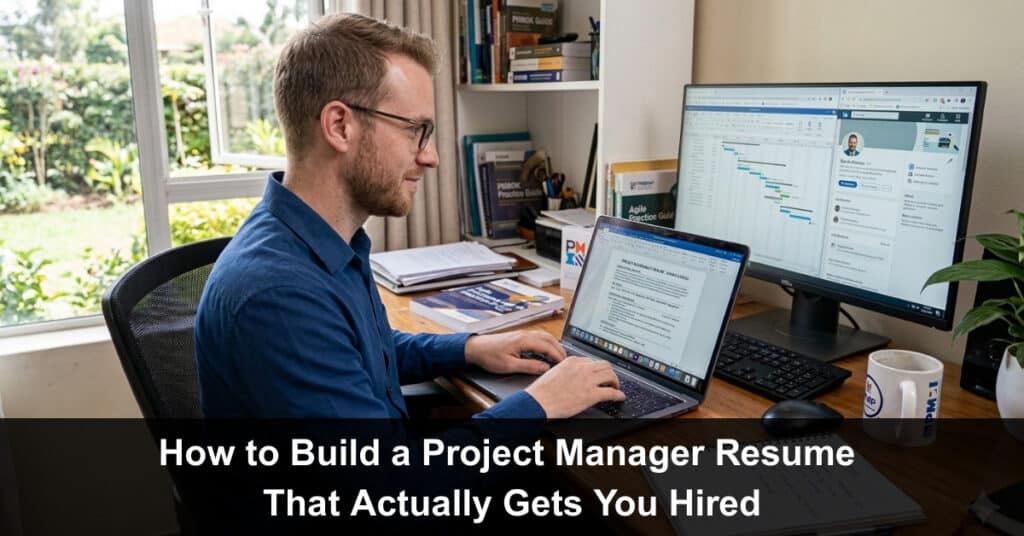
Landing a project management role isn’t just about showing that you can check boxes or move tickets across a digital board. Honestly, it’s about proving you can lead people through uncertainty. When a hiring manager opens your resume, they’re looking for a calm hand at the wheel. They want to see that you understand the balance between rigid structure and the messy, sometimes exhausting reality of human collaboration. Your resume needs to reflect that balance.
It should be clean, organized, and focused on the value you bring to a team rather than just a list of tasks you performed. But how do you actually show that on a flat piece of paper? I guess it starts with the document’s vibe.
The Foundation of a Great PM Resume
The visual layout of your resume is the first impression you’re delivering to your potential employer. If it’s cluttered, difficult to navigate, or lacks a clear hierarchy, you’re already failing the first test of a project manager. You want a design that breathes. White space is your friend. It signals that you know how to prioritize information and that you don’t feel the need to fill every square inch with noise. And that’s the point. First impressions are everything in this industry.
Using Monster resume templates is one of the smartest moves you can make to ensure your first impression is rock solid. These templates provide the perfect, industry-standard framework that hiring managers expect, making sure your contact info, summary, and core competencies are exactly where they need to be. By starting with the right tool, you’re free to focus on the fun part: tailoring that professional structure to tell your unique story. It’s about taking a proven, high-quality template and turning it into a narrative of successful delivery that feels authentic.
Crafting a Compelling Professional Summary
The top of your resume is your high-level project charter. You’ve got about six seconds to capture attention. Maybe less. Instead of a generic objective statement about what you want from the company, use a professional summary that highlights what you offer. Focus on your years of experience, your primary industry focus, and the scale of projects you’ve managed.
- Are you an expert in agile transformations for mid-sized tech firms?
- Have you led multi-million dollar construction projects from groundbreaking to completion?
State it clearly. Use this space to mention your certification status, whether that’s a PMP or a Scrum Master designation, as these are often the first things a recruiter looks for. It’s about showing you’ve been in the trenches.
Showing Results Over Responsibilities
The biggest mistake most project managers make is listing their job duties. A bullet point that says “Led weekly status meetings” does nothing to distinguish you from hundreds of other applicants. Everyone in this field leads meetings. I’ve sat through enough of them to know they can be a grind. So, what changed because you were in the room?
Instead, focus on the outcomes. Project management is a results-oriented business, and your resume should reflect that. Here are the types of impact-driven statements that actually catch a hiring manager’s eye:
- Reduced project slip by 15% by implementing structured weekly status meetings with clear action item tracking and accountability owners.
- Saved the company $50,000 by identifying and resolving a critical resource conflict before it escalated into a full project delay.
- Delivered a $2.3M infrastructure project 3 weeks ahead of schedule by proactively managing scope creep and realigning stakeholder expectations early.
- Led cross-functional teams of 10–25 members across multiple departments, maintaining team velocity during organizational restructuring.
- Improved on-time delivery rates by 30% by introducing Agile sprint planning and retrospective frameworks to a traditionally waterfall team.
The formula is simple: action verb + specific metric + business impact. Talk about the budgets you’ve managed, the team sizes you’ve led, and the methodologies you’ve employed. Your resume should always answer the question: What changed because you were in the room?
The Technical and Soft Skill Balance
A project manager lives at the intersection of technical skill and emotional intelligence. Your resume needs to reflect both. On the technical side, be specific about the tools you use. Whether it’s software for task tracking, resource planning, or complex scheduling, make sure these are easy to find. But can you lead a team through a crisis?
Don’t neglect the soft skills. Communication, stakeholder management, and conflict resolution are the gears that keep a project moving. Instead of just listing “Communication” as a skill, weave it into your experience. Describe a time you managed a difficult stakeholder or how you translated complex technical requirements for a non-technical executive team. This shows you’ve got the nuance required for the job. And let’s be real, that’s usually the hardest part of the work.
Education and Certifications
In the world of project management, certifications are often a baseline requirement, not just a nice-to-have. Ensure your PMP, CAPM, or Six Sigma credentials are easy to spot near the top of this section. If you’re currently working toward a certification, it’s perfectly acceptable to list it as “in progress” with a clear, realistic expected completion date to show forward momentum.
Here’s how a well-structured certifications and education section might look on a strong PM resume:
- PMP (Project Management Professional): PMI, 2022 | The gold standard for project managers, signaling you’ve logged the hours and passed the rigor.
- Certified ScrumMaster (CSM): Scrum Alliance, 2021 | Demonstrates hands-on fluency in Agile frameworks and iterative delivery.
- Six Sigma Green Belt: ASQ, 2020 | Shows your ability to drive process improvement and reduce waste across project workflows.
- CAPM (Certified Associate in Project Management): In Progress, Expected June 2026 | Ideal for early-career PMs building their foundational credentials.
Your education should follow your experience rather than lead it. Unless you’re a very recent graduate, your professional wins carry much more weight than your degree title alone. Keep this section concise and positioned at the bottom of the document. The goal is to show a solid foundation of academic knowledge that credibly supports your years of hands-on, practical application in the field.
Final Thoughts on Formatting
Consistency is the final touch that ties your resume together. Ensure your fonts are professional, your bullet points are perfectly aligned, and your dates are accurate throughout. A project manager who submits a resume with typos or formatting errors immediately signals a lack of attention to detail. Remember, this document is your very first deliverable to a potential employer, so treat it accordingly.
Make sure it’s a document you’re genuinely proud to sign off on. When you step back and look at the final product, it should feel like a well-managed project in itself — a clear start, a compelling middle, and a logical conclusion that leaves the reader eager to schedule a kickoff meeting with you. After all, you’re the one who makes things happen.
Suggested articles:
- How to Describe Project Management on Your Resume
- Top 10 Advantages of Including Leadership Skills in Your Resume
- The Role of Authenticity in Personal Branding and Job Hunting

Daniel Raymond, a project manager with over 20 years of experience, is the former CEO of a successful software company called Websystems. With a strong background in managing complex projects, he applied his expertise to develop AceProject.com and Bridge24.com, innovative project management tools designed to streamline processes and improve productivity. Throughout his career, Daniel has consistently demonstrated a commitment to excellence and a passion for empowering teams to achieve their goals.