
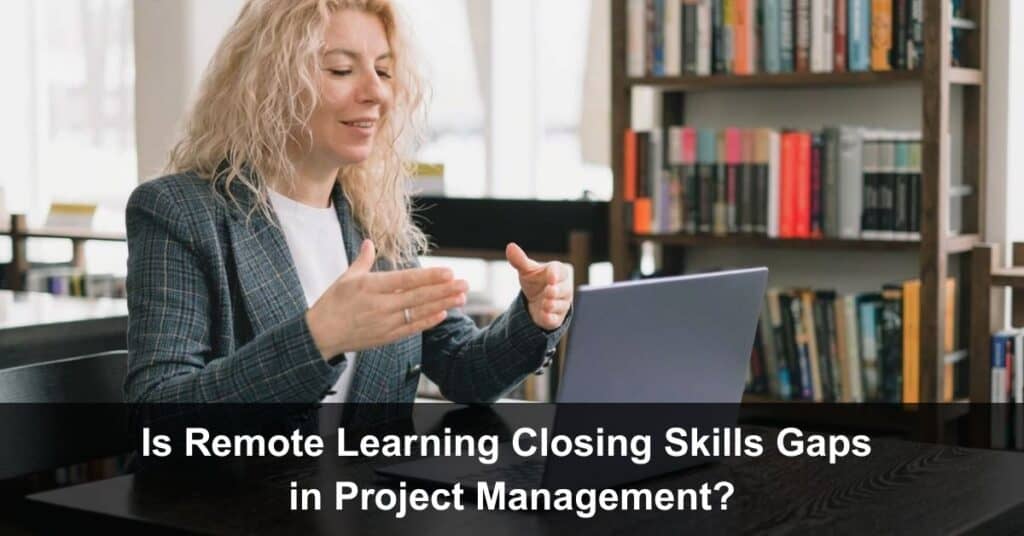
In a field defined by expertise and competition, project management (PM) has become an essential skill across nearly every industry. Driven by digital transformation, shifting market demands, and the rapid growth of remote work, the need for capable team leaders has never been greater. Organizations now rely on skilled PM professionals to deliver results, manage complexity, and keep projects aligned with evolving business goals.
However, a growing skills gap in project management can often threaten productivity and business scaling. But does remote learning effectively address the skills gap in project management? You may need to explore how online education is reshaping project management training, its impact, and why professionals like you have to embrace it to stay ahead.
The Growing Demand for Project Management (PM) Skills
At the outset, project management isn’t limited to people with “Project Manager” titles. Today, professionals across industries, including IT, healthcare, construction, finance, and creative sectors, are expected to plan, coordinate, and deliver projects efficiently and effectively. As digital transformation accelerates and work becomes more complex, these skills have become essential for supporting teams, meeting business goals, and driving measurable outcomes.
According to multiple industry agencies, employers may need more than 20 million additional project management professionals by 2030 to keep up with accelerating demand across sectors. At the same time, the talent shortage can restrict delivery capacity, delay critical initiatives, and weaken competitiveness. Some estimates suggest the gap could cost businesses up to 345.5 billion in lost GDP worldwide.
How Remote Learning is Bridging the Skills Gap
Learning from your office or after work hours is the new setup that’s transforming education by breaking down barriers to upskilling, especially for proactive and tech-savvy employees like you. Here’s a look at how online training is closing the skills gap in most office supervision needs today.
Accessibility for All Professionals
With more professionals accessing updated knowledge from leading institutions online, remote learning is changing how people build project management skills. You can study without taking time off, attend webinars and live sessions, and revisit materials whenever needed. This makes upskilling and reskilling more achievable, helping you apply new methods to real work faster and with greater confidence.
Whether you’re a working professional, a student, or a career switcher, you’ll soon gain the expertise you need wherever you are around the globe. In the UK, for example, there are courses for career changers, designed to give them a second chance at a new profession if they don’t hold a traditional qualification.
Flexibility to Learn While Working
Unlike traditional education, online courses, such as webinars, let learners study at their own pace. This flexibility helps leaders balance work responsibilities while still advancing their web-based skills development. You can move through content when it’s convenient, revisit key materials as needed, and apply what you learn directly to real projects. As a result, upskilling becomes more practical, consistent, and achievable.
In addition to your savvy PM office solutions that streamline day-to-day operations, these self-paced courses, live instructor-led sessions, and on-demand programs make it easy to fit learning around a busy schedule. You can progress when it suits you, revisit materials as needed, and apply insights directly to real projects without disrupting productivity.
Cost-Effective Training Solutions
Enrolling in a full-time degree program or attending on-site workshops can be truly expensive, especially when tuition, travel, and time away from work all add up. With remote learning platforms, you can access certification programs, micro-courses, and subscription-based learning at a fraction of the cost. Many also include study materials, flexible schedules, and updates that keep your knowledge current.
With these cost considerations, courses become quite affordable, inviting more leaders to advance professionally and close the skills gaps. For many busy PMs, lower tuition and flexible payment options reduce financial pressure while still providing recognized certifications. You can also choose targeted modules instead of committing to an entire program, helping you learn what your team needs right now.
Real-World, Industry-Relevant Training
Modern remote learning platforms partner with industry leaders to provide practical, real-world training. Learners gain hands-on experience with project management tools such as Asana, Trello, Jira, and Microsoft Project, making sure graduates like you are job-ready upon training completion.
Beyond tool training, these platforms often emphasize real workflows, such as building project roadmaps, defining milestones, managing dependencies, and tracking progress through dashboards. By practicing these tasks in guided exercises and portfolio-style projects, learners can translate what they study into confident, job-ready performance from day one.
Unitech Training Academy: Empowering Project Managers Through Online Education
Many online institutions today are committed to closing the skills gap. Through their online learning platforms and courses, like Unitech training programs, you can easily enroll in business advancement fundamentals courses and gain industry-recognized certifications, like:
- Project Planning & Scheduling: Then learn how to create realistic plans, define timelines, and coordinate tasks so teams stay on track and deliver on time.
- Risk Management & Mitigation: Then build skills to identify risks early, assess impact, and put practical mitigation strategies in place to protect budgets, timelines, and outcomes.
- Agile & Scrum Methodologies: Then understand how to run iterative work cycles, manage backlogs, deliver in sprints, and continuously improve using agile roles, ceremonies, and metrics.
- Stakeholder Communication & Leadership: Then strengthen how you communicate expectations, align teams and stakeholders, handle feedback, and lead effectively to maintain trust and momentum.
Budgeting & Cost Control
With expert-led instructions, interactive modules, and real-world case studies, these upskilling sessions help you build practical project management confidence from day one. You will learn how to plan and schedule work, assess risks, and coordinate stakeholders through guided examples that mirror real workplace challenges, so you can manage operations more effectively and with measurable results.
Why Professionals Need the Remote Learning Process
Whether you are an aspiring project supervisor or a seasoned leader, continuous learning is key to career growth in whatever field you’re thriving in. Here are some of the “whys” there’s every need to step into this tech-savvy learning style to keep up.
1. Stay Relevant in an Ever-evolving Industry
Project management today demands more than experience—it requires continuous readiness as methods, tools, and stakeholder expectations change. With remote and hybrid teams becoming normal, organizations need leaders who can adapt quickly, standardize delivery, and communicate with precision. That makes upskilling urgent for anyone aiming to reduce friction, manage complexity, and deliver measurable results.
So, why does the remote learning process matter right now:
- Online modules let you practice updated workflows, improving decision quality when requirements shift.
- New certifications strengthen your credibility, supporting promotion readiness across industries and roles.
- Ongoing learning reduces rework and delays by sharpening risk thinking and execution discipline.
2. Increase Job Opportunities & Career Mobility
Project management roles are increasingly specialized, and employers want evidence of relevant capability—not only job history. Remote learning helps you build that proof while you stay employed, so your development doesn’t pause career momentum. As digital tools and delivery methods advance, your ability to demonstrate growth becomes a deciding factor in hiring and advancement.
That’s why the remote learning process directly supports your next move:
- Credentials and skill signals make it easier for employers to evaluate fit during screening.
- You can stack targeted competencies that align with specific job postings and career goals.
- Fresh knowledge helps you step into leadership expectations with less ramp-up time.
3. Improve Productivity & Performance
Better learning doesn’t just add information—it improves how work gets organized, tracked, and communicated. Remote programs encourage ongoing practice and reflection, helping you refine your approach to leading teams through complexity. Over time, this creates smoother delivery rhythms and more confident decisions across project lifecycles.
You’ll feel the performance boost through these outcomes:
- More consistent delivery planning reduces churn and delays caused by missed assumptions.
- Clearer coordination with stakeholders improves speed, alignment, and accountability.
- Stronger execution discipline lowers risk of scope creep and downstream rework.
4. Gaining the Competitive Edge
To stand out in project management, you need more than experience—you need up-to-date judgment that reflects current industry expectations. Remote learning keeps your toolkit modern by supporting continuous skill upgrades without disrupting your workflow. That readiness helps you respond faster to change and deliver stronger outcomes under real constraints.
This is where remote learning helps you pull ahead:
- You adopt current practices that outperform outdated approaches used by many peers.
- You develop tool fluency that supports faster reporting and clearer decision-making.
- You build confidence applying learned methods to varied project scenarios.
Final Thoughts: Remote Learning is the Future of Project Management Training
Remote learning is quickly becoming the most practical way to close skills gaps in project management, especially for busy professionals. It removes the barriers of time, location, and cost, while still delivering structured, up-to-date training you can apply immediately. With flexible schedules, industry-relevant tools, and real-world scenarios, learners gain confidence in planning, risk management, agile execution, and stakeholder communication.
Just as importantly, remote programs help you stay current as methods and expectations evolve, protecting your productivity and long-term career growth. If you want to lead teams effectively and deliver results with less friction, start treating online training as a continuous advantage—not a one-time fix.
Suggested articles:
- Is Distance Learning the Future Skill Deficiency Solution?
- The Benefits of Advanced Education for Today’s Project Managers
- Better Communication in Remote Teams with Recording Software

Daniel Raymond, a project manager with over 20 years of experience, is the former CEO of a successful software company called Websystems. With a strong background in managing complex projects, he applied his expertise to develop AceProject.com and Bridge24.com, innovative project management tools designed to streamline processes and improve productivity. Throughout his career, Daniel has consistently demonstrated a commitment to excellence and a passion for empowering teams to achieve their goals.