
Buying metal is easy. Managing it for ten years without reacting to every price swing is harder. Precious metals investing becomes a long-term project when the holdings have written boundaries, known costs, scheduled reviews, and a defined exit.
Most guidance focuses on the initial purchase, yet many decisions that shape returns occur during the years that follow. As the investment horizon unfolds, allocation drift, ongoing expenses, market movements, and personal circumstances can all affect the position. Those factors also interact, so decisions about one part of the plan may influence how another part is managed.
A workable plan accounts for those moving parts while prices are calm, creating a consistent framework for managing the holdings over time. Establishing that framework begins with the core features of a well-run metals plan.
The Short Version of a Well-Run Metals Plan
A written investment portfolio allocation of 5%-10% provides the anchor for every later decision. Expressing it as a percentage rather than a fixed sum allows the target to remain relevant as the wider portfolio changes. The plan must also account for the spot price premium, storage, insurance, any fund expense ratio, and the eventual selling spread. Together, those charges determine the position’s actual cost.
Portfolio rebalancing dates and acceptable allocation bands belong on the calendar before markets become unsettled. Preset rules make it easier to respond consistently instead of reacting to a sudden price movement. Finally, the exit must identify where holdings will be sold, which units will go first, and how applicable tax rules could affect the gain. These commitments turn disconnected purchases into a position that can be managed consistently.
Choosing the Metals and the Form You Hold Them In
Once the allocation has boundaries, the next decision is what will fill it. Metal choice affects volatility, while ownership form affects costs, storage, and liquidity. Those choices should reflect the plan’s risk tolerance and investment horizon rather than whichever product happens to attract attention.
How Much Belongs in Metals, and Which Ones
Writing the allocation as a percentage band keeps it relevant as the wider portfolio grows or contracts. A 5%-10% range, for instance, creates room for ordinary price movement without requiring a trade whenever the balance changes slightly. Gold commonly takes the diversifying role because demand is not limited to one industrial use. Silver has greater exposure to industrial demand and generally brings sharper price movements, so it may warrant a smaller position when risk tolerance is limited.
Platinum and palladium are more closely tied to industrial consumption, making them less direct choices for someone whose main objective is an inflation hedge. Accordingly, a diversification-focused plan will usually place more weight on gold, while broader commodity exposure may include silver, platinum, and palladium.
Coins, Bars and Funds: Why Unit Size Matters
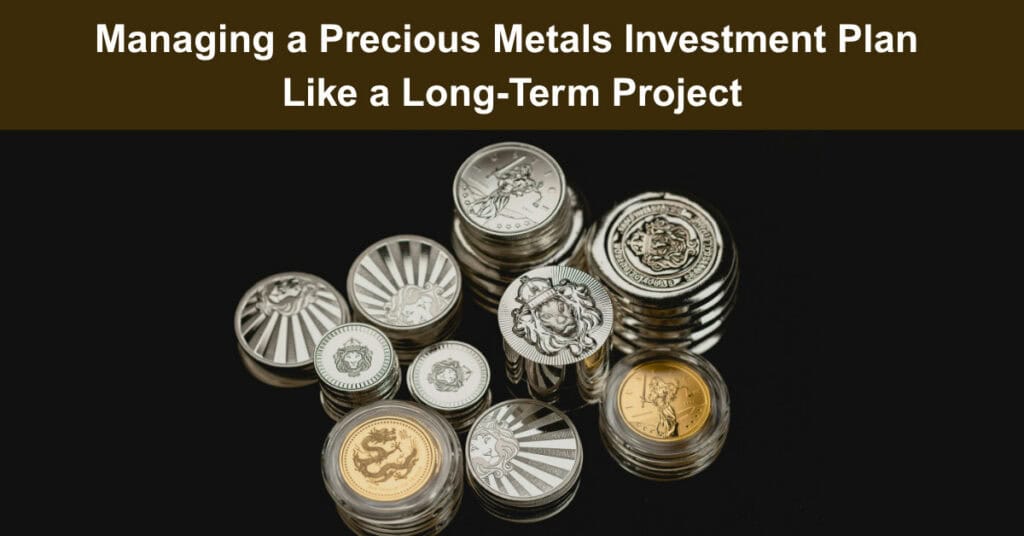
Physical bullion introduces a trade-off between lower purchase costs and easier partial sales. Premiums per ounce generally decline as units grow, meaning a 10 oz gold bar will typically carry a lower premium than ten comparable one-ounce coins. The full size ladder makes the trade-off clearer:
- Fractional and one-ounce coins support partial sales
- The 10 oz gold bar serves as a substantial holding investors like to keep in hand
- Kilo bars pursue the lowest premium with the least selling flexibility
Recognisability matters as much as size. An American Eagle gold coin or Canadian Maple Leaf gold coin has familiar specifications, while bars from PAMP Suisse or the Royal Canadian Mint are easier for dealers to identify than obscure products. For bars and many coins, .9999-fine investment-grade bullion provides a clear purity standard, though recognised coin specifications can differ.
SPDR Gold Trust (GLD) and iShares Silver Trust (SLV) offer exposure without physical storage. In exchange, the investor owns a financial claim rather than metal held directly and pays an ongoing expense ratio.

What the Plan Costs to Own Over a Decade
A useful cost record captures four buckets: the spot price premium paid at entry, storage and security fees, a fund’s expense ratio, and the dealer spread accepted at sale. Leaving out any one of them distorts the long-term comparison.
Premiums, Storage and Insurance
The entry premium and expected exit spread form the round-trip cost. If a hypothetical purchase carries a 3%-5% premium and the expected selling spread is 1%-2%, the market price must rise by roughly their combined effect before the position moves beyond transaction costs.
Third-party storage is often priced as a percentage of the metal’s value, so the bill rises if the holding appreciates. A home safe and insurance rider follow a different pattern, with more of the expense paid as a fixed amount. However, they transfer responsibility for access, security, and documentation to the owner. These costs belong in one annual record rather than separate mental estimates.
Fund Fees and the Spread on the Way Out
An expense ratio rarely arrives as a visible bill because the fund deducts it from assets. Even a small annual charge applies to the full position every year, unlike a one-time premium on physical bullion. The cheapest form therefore depends on the holding period.
Funds generally provide better liquidity for short or frequently adjusted positions, while larger physical units spread their initial premium across a longer investment horizon. The comparison should include every projected charge over the intended period, not only the purchase price.
Review Rules That Survive a Price Spike
Operating rules are best written when markets are quiet because calm conditions leave room for arithmetic rather than impulse. Once prices move sharply, an investor without a preset schedule must make decisions under pressure, often while headlines encourage the opposite response.
Rebalancing Bands and a Review Cadence
Portfolio rebalancing works best when the target includes a tolerance band. With a portfolio allocation of 5%-10%, the rule might require trimming only when metals move several percentage points beyond the chosen target rather than after every minor drift. An annual or semi-annual review is generally enough for an allocation of this size.
Weekly checking does not improve a multi-year plan. Instead, it creates more opportunities to mistake ordinary volatility for a change in the holding’s purpose. At each review, the investor can record the current allocation, total ownership cost, storage status, and whether the original investment horizon still applies.
Triggers Written Down Before You Need Them
A trigger pairs a condition with a response. Allocation drift might lead to a partial sale, a major life expense might prompt liquidation of smaller units first, or a change in risk tolerance could require a review of the metals mix. The response must be as specific as the condition.
“Review if gold rises” leaves the decision open to emotion. In contrast, “Sell enough one-ounce units to return to the target band” turns the situation into a repeatable instruction. Unit selection supports this process. Investors who bought smaller coins for liquidity already know which holdings can be sold without liquidating the entire position.
Selling, Tax Timing and the Paper Trail
Recognised coins and bars usually move through dealer buyback processes more directly because their weight, purity, and origin are familiar. Damaged, altered, or unbranded pieces can require assay testing, adding time and potentially widening the selling spread. Tax treatment also belongs in the exit plan. Depending on the jurisdiction and personal situation, physical bullion held outside a retirement account may receive collectible treatment rather than standard long-term capital gains treatment.
Metals held within an IRA follow the account’s distribution and tax rules. Professional tax guidance may be appropriate because classifications and timing rules vary. Receipts, serial numbers, storage records, insurance documents, and beneficiary instructions create the paper trail for a later sale or transfer. Without those records, ownership can be harder to verify when clarity matters most.
Treating the Plan as Work in Progress
Precious metals investing becomes manageable when allocation, cost accounting, review rules, and the exit operate as one continuous piece of work. The initial purchase sets the project in motion, but maintenance determines whether the holding continues to serve its intended role.
The next step is administrative rather than reactive: write down the target percentage, acceptable band, full cost structure, review dates, sales order, and recordkeeping system while nothing urgent is happening. Prices and personal circumstances will change. A well-run plan provides a consistent method for responding to them.
Suggested articles:
- What is the Role of Technical Due Diligence in Investment Decisions?
- How Investment Portfolio Management Tools Transform Project Accuracy
- A Project Manager’s Guide to Organizing Personal Finances Like a Portfolio

Daniel Raymond, a project manager with over 20 years of experience, is the former CEO of a successful software company called Websystems. With a strong background in managing complex projects, he applied his expertise to develop AceProject.com and Bridge24.com, innovative project management tools designed to streamline processes and improve productivity. Throughout his career, Daniel has consistently demonstrated a commitment to excellence and a passion for empowering teams to achieve their goals.