
Managing project risk is a critical responsibility for every project manager, whether working within agile or traditional project management frameworks. Effective project risk management involves identifying, documenting, and addressing potential risks that could impact project outcomes. This is an ongoing process that continues throughout the entire project lifecycle. We have developed a comprehensive collection of articles on risk management for you to explore in greater depth.
When managing any project, it is essential to recognize that various risks exist, both anticipated and unforeseen. To protect your projects and position them for success, you must proactively plan for potential risks and threats, establishing clear protocols for addressing them should they materialize. The risk management process in project management is universally applicable to any project or product. It enables teams to identify critical risks and develop appropriate response strategies to mitigate their impact.
Risk Management in Project Management
Risk management encompasses the systematic identification, analysis, and response to potential risks throughout the project lifecycle. This disciplined approach enables project teams to effectively monitor progress, maintain focus, and successfully achieve established objectives. Effective risk management must be integrated into the project planning phase to ensure excellence in project delivery. By proactively addressing potential risks during planning, teams can respond more efficiently and effectively when risks materialize.
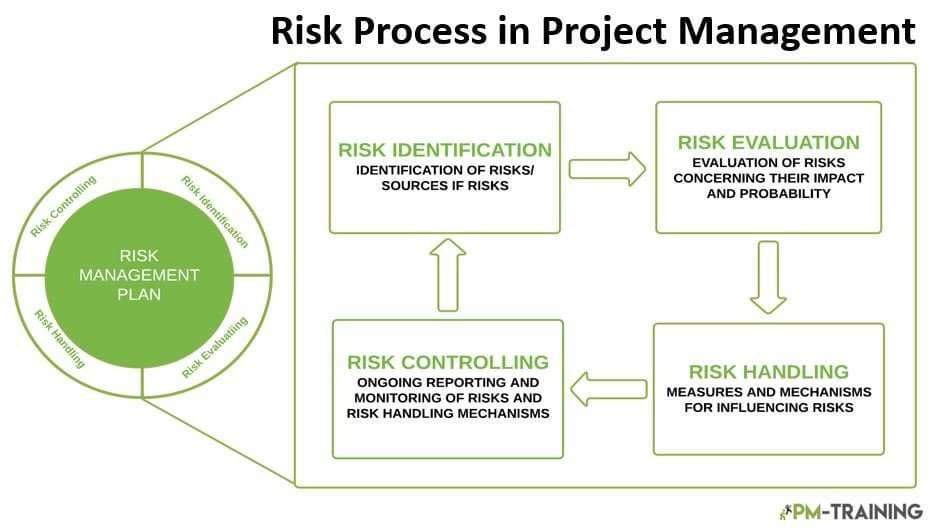
Effective risk management in project management requires a structured plan. This plan follows a systematic process designed to transform potential challenges into opportunities for improvement. The following steps outline the risk management process.
1. Identifying Probable Risks
The first step in risk management involves developing a comprehensive inventory of potential events that could jeopardize project success. Since risks can emerge during any phase of the project lifecycle, early identification is critical. As a project team member or leader, promptly recognizing and documenting threats enables timely intervention and minimizes potential damage.
2. Analyze the Risk
Risk analysis requires careful attention due to its inherent complexity and may demand significant time investment. Organizations should utilize a risk assessment matrix—an enhanced version of the standard risk register—to systematically evaluate identified threats. Project management software solutions provide valuable analytical capabilities that streamline this process.
Risk analysis employs two complementary methodologies: qualitative and quantitative approaches. Through thorough analysis, project managers can accurately assess potential impacts and develop appropriate response strategies. Tornado diagrams serve as effective visualization tools for comparing and prioritizing risks based on their potential influence on project outcomes.

3. Prioritizing Risk
Risk assessment reveals varying degrees of potential impact across different threat categories. Therefore, it is essential to categorize risks systematically to allocate appropriate resources for mitigation strategies. Risks should be classified as low, medium, or high priority based on their potential impact.
Understanding the severity level of each risk enables project managers to respond appropriately and efficiently. High-priority threats pose significant danger and may severely disrupt project progress, requiring immediate intervention. Effective risk categorization facilitates more accurate budget allocation and schedule planning, ultimately strengthening the project management framework.
4. Assigning the Risk to an Owner
Identify the person behind the occurrence of that risk. This initial step is crucial for establishing accountability and understanding the root cause. Afterwards, plan to start resolving it systematically by developing a comprehensive action plan with clear timelines and deliverables. During this problem-solving process, also identify a skilled or more suitable person to resolve the problem effectively. Consider their expertise, availability, and past performance in handling similar challenges.
The failure to identify and assign risk for people predisposes you to more risk, as unassigned risks often go unaddressed until they escalate into major issues. Proper risk ownership ensures dedicated attention, timely responses, and accountability throughout the mitigation process. This proactive approach strengthens your overall risk management strategy and protects project outcomes.
5. Monitoring
Effective project monitoring is essential from the project’s inception through completion. Continuously track progress to ensure you attain your objectives and identify potential risks before they materialize. Monitoring prevents risks from catching you by surprise and enables proactive intervention. Maintain regular communication with risk managers to ensure seamless workflow and information sharing. Keep the risk register current with real-time updates, documenting new threats and changes in risk probability or impact.
Foster a culture of transparency where team members feel comfortable reporting issues early. Implement regular status meetings and progress reviews to maintain visibility across all project dimensions. Establish clear escalation procedures and reporting protocols. This disciplined approach to monitoring strengthens your risk management framework and significantly improves project success rates.
6. Respond to Risk
When a risk materializes into an actual issue, immediate and decisive action is critical. Your risk management plan and risk register serve as essential frameworks for implementing your response strategy. These documents contain pre-planned mitigation tactics, assigned risk owners, and escalation procedures that guide your intervention efforts. Ideally, proactive monitoring and early warning systems enable you to prevent risks before they fully manifest.
However, when prevention isn’t possible, swift execution of contingency plans minimizes negative impact on project deliverables, timelines, and budgets. Document all responses and outcomes to strengthen future risk management processes. Effective risk response requires clear communication with stakeholders, resource reallocation when necessary, and continuous assessment of the situation until resolution is achieved.

Agile Risk Management
Agile project management brings unique advantages in flexibility and iterative development, but it also introduces distinct risk factors that require specialized attention. Unlike traditional waterfall approaches, agile methodologies emphasize rapid iteration, continuous collaboration, and adaptive planning—each presenting its own set of challenges and potential pitfalls. Understanding how to identify, assess, and mitigate risks within an agile framework is essential for maintaining project velocity while ensuring quality deliverables.
This section explores agile risk management examples and risk categories that commonly emerge in iterative development environments. Risk categories represent distinct areas where threats can emerge throughout your project lifecycle. Understanding these categories enables project teams to systematically identify, assess, and mitigate potential issues before they impact delivery. The following risk categories are commonly encountered across software development and agile projects:
Agile Risk Categories and Examples
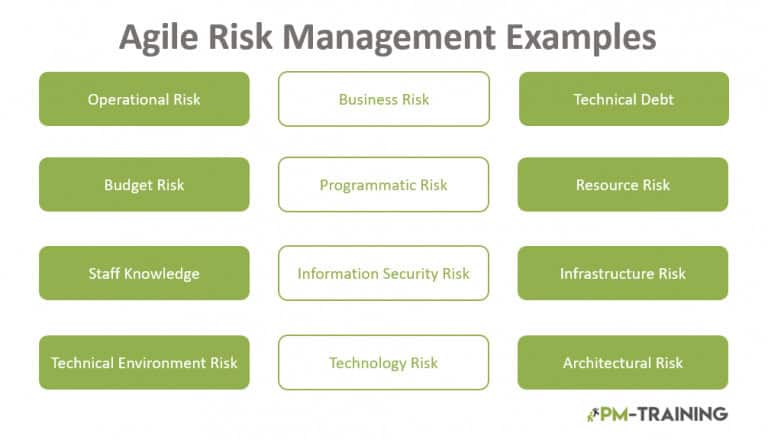
- Operational Risk: Risks from weak processes, unclear workflows, or poor coordination that disrupt sprint execution, reduce quality, and slow overall Agile delivery.
- Business Risk: Risks that delivered features fail to meet customer needs or business goals, resulting in low value, poor adoption, and wasted Agile investment.
- Technical Debt: Risks caused by rushed work or shortcuts that increase maintenance effort, slow future development, and raise defect rates over time.
- Budget Risk: Risks of cost overruns due to poor estimation, scope creep, rework, or inefficient Agile execution that threaten project viability.
- Programmatic Risk: Risks from misaligned teams, unmanaged dependencies, or weak coordination across multiple Agile teams that delay outcomes and reduce program effectiveness.
- Resource Risk: Risks from insufficient, unavailable, or overallocated team members, leading to burnout, missed sprint commitments, skill gaps, and inconsistent delivery performance.
- Staff Knowledge Risk: Risks when critical expertise is undocumented or held by a few individuals, causing delivery slowdowns and increased dependency risks.
- Information Security Risk: Risks of data exposure or compliance failures caused by rapid releases, weak controls, or inadequate security practices in Agile environments.
- Infrastructure Risk: Risks from unreliable tools, servers, or networks that interrupt development, testing, or deployment and reduce team productivity.
- Technical Environment Risk: Risks from unstable or inconsistent development environments that cause build failures, defects, and wasted sprint effort.
- Technology Risk: Risks from adopting immature or unsuitable technologies that fail to scale, integrate, or perform as required.
- Architectural Risk: Risks from poor system design that limit scalability and flexibility, making future Agile changes expensive and complex.
Project Risk Management Concepts
Understanding and managing risk is fundamental to successful project delivery. This section explores essential project risk management concepts that every project manager should master—from quantitative analysis methods to strategic risk response approaches. These foundational principles provide the framework for identifying threats, assessing their potential impact, and developing effective mitigation strategies that protect your project’s objectives.
Quantitative Risk Analysis
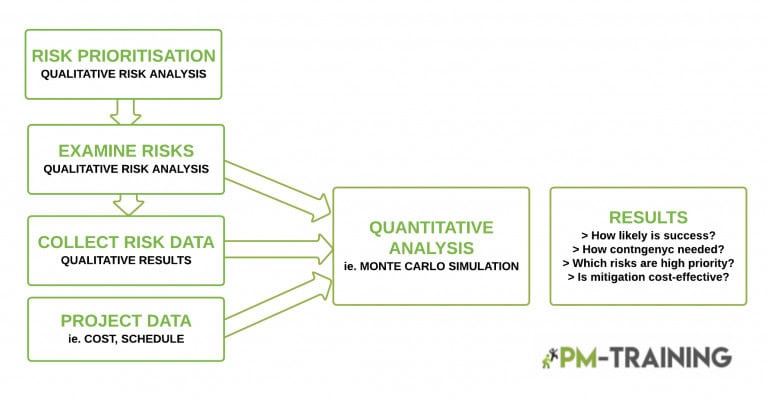
Quantitative Risk Analysis (QRA) is a systematic methodology that identifies and evaluates factors affecting individual projects or organizations. By applying rigorous research techniques, QRA enables practitioners to measure potential impacts and forecast future conditions with greater accuracy.
Risk Responses in Project Management
Project managers and leaders apply consistent risk management best practices across all project types, including marketing, sales, development, and operations initiatives. In software development environments, four fundamental best practices form the foundation of successful project completion:
- Avoid Risk
- Reduce or Mitigate Risk
- Transfer Risk
- Accept Risk
Risk Analysis
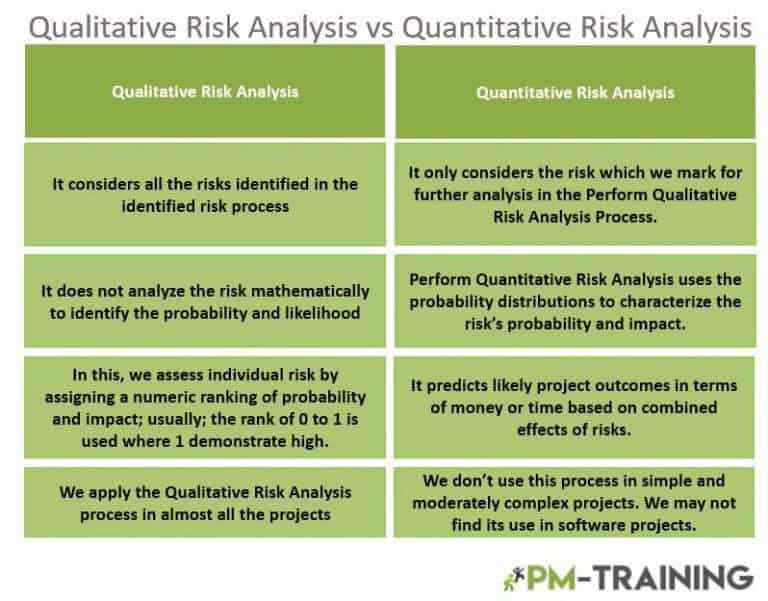
Risk analysis, integral to risk management, enables firms to calculate threat potential through two methods: qualitative analysis, which examines non-numerical factors like management and expertise, and quantitative analysis, which uses numerical data to measure probability and impact systematically.
Qualitative Risk Analysis
Qualitative risk analysis is a comprehensive evaluation method that assesses a firm’s value based on non-quantitative information, including management capabilities, labor relations, and organizational expertise (PMBOK®, 6th edition, ch. 11.3.3). Project leaders and subject matter experts systematically apply historical data and professional judgment from previous projects to accurately estimate the probability and potential impact of each identified risk.
Quantitative Risk Analysis
Quantitative risk analysis is the basis of decision-making in matters of controlling risks (PMBOK®, 6th edition, ch. 11.4). It reduces the level of uncertainty as it calculates the possible outcomes for each project and objective. Quantitative risk analysis helps the project manager to come up with budgets, targets, and work schedules.
Risk impact is measured on a scale of one to five, with five representing maximum impact. Risk probability is assessed on a scale of one to ten, where higher values indicate a greater likelihood of occurrence. These standardized scales enable systematic risk categorization and prioritization.
Understanding Risk Exposure
The success of a project depends on the management team’s ability to identify, assess, and control exposure to risk throughout the project lifecycle. Implementing targeted strategies to minimize or eliminate exposure reduces avoidable costs, preserves project timelines, and supports business continuity. Effective risk exposure management involves:
- Maintaining an up-to-date risk register
- Assigning clear ownership for each risk
- Applying appropriate responses—avoidance, mitigation, transfer, or acceptance—based on impact and likelihood.
Regular monitoring, transparent communication with stakeholders, and periodic reviews of mitigation effectiveness ensure risks are addressed proactively rather than reactively. Additionally, embedding risk-awareness into team practices and decision-making enhances resilience and enables the organization to adapt quickly to changing conditions. Read more on risk exposure here.
Residual Risk Explained
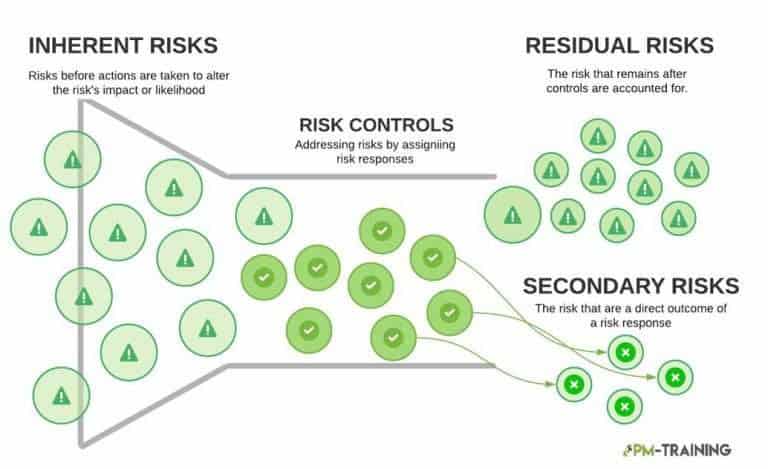
As a project manager, your primary responsibility is to deliver the promised outcomes while actively identifying and mitigating risks that could derail them. One often-overlooked area is residual risk—the exposure that remains after planned responses and controls are applied. Although residual risks may seem small, they can cascade into significant issues if ignored, causing schedule delays, cost overruns, or scope changes.
To manage residual risk effectively, document it clearly in the risk register, assign ownership, and define monitoring and escalation triggers. Reassess residual risk regularly—especially after major milestones or changes—and update mitigation plans as needed. Communicate residual risks and their potential impacts to stakeholders so expectations remain realistic and contingency resources are available if escalation becomes necessary.
Conclusion
Effective project risk management is not optional—it’s essential for delivering outcomes on time, on budget, and to the required quality. By systematically identifying, analyzing, prioritizing, assigning ownership, monitoring, and responding to risks, teams reduce uncertainty and preserve value throughout the project lifecycle. Agile practices add speed and adaptability but require deliberate risk controls around technical debt, dependencies, and security.
Combining qualitative insight with quantitative analysis sharpens decision-making and clarifies exposure and residual risk. Maintain an up-to-date risk register, assign accountable owners, and embed regular reviews and transparent communication into your workflow. When risk management becomes routine, organizations transform potential threats into manageable challenges and opportunities, increasing resilience and consistently improving project success rates.
Frequently Asked Questions (FAQs)
What is project risk management, and why is it important?
Project risk management identifies, assesses, and responds to potential events that could affect project objectives. It reduces uncertainty, prevents costly surprises, and improves decision-making. By documenting risks, assigning owners, and applying mitigation strategies, teams protect timelines, budgets, and quality while increasing the likelihood of successful delivery.
When should risk management start during a project?
Risk management should begin during project initiation and planning phases and continue throughout execution and closure. Early identification enables proactive mitigation, while continuous monitoring captures new threats. Integrating risk activities into regular meetings and updates ensures timely responses, accountability, and adaptation to changing project conditions and constraints.
How do you prioritize risks effectively?
Prioritize risks by assessing likelihood and impact using qualitative and quantitative methods, such as probability-impact matrices or scoring scales. Focus resources on high-probability, high-impact risks first, then address medium risks. Reassess priorities regularly as project conditions change and when new information modifies probability or consequence estimates.
What are common risk response strategies?
Common strategies include avoidance, mitigation, transfer, and acceptance. Avoidance eliminates the risk source; mitigation reduces the likelihood or impact; transfer shifts consequences to third parties (e.g., insurance or contracts); acceptance acknowledges residual risk with contingency plans. Choose strategies based on cost, feasibility, and effect on project objectives.
How should residual risks be handled and communicated?
Document residual risks in the risk register with owners, monitoring triggers, and contingency plans. Reassess after controls are applied to confirm remaining exposure. Communicate residual risks transparently to stakeholders during status reports and reviews, ensuring expectations align and contingency resources are available if escalation becomes necessary.
Suggested articles:
- 7 Best Strategies for Managing Unexpected Project Risks
- How AI Transforms Risk Management in Project Delivery
- Avoid Risk in Project Management

Shane Drumm, holding certifications in PMP®, PMI-ACP®, CSM, and LPM, is the author behind numerous articles featured here. Hailing from County Cork, Ireland, his expertise lies in implementing Agile methodologies with geographically dispersed teams for software development projects. In his leisure, he dedicates time to web development and Ironman triathlon training. Find out more about Shane on shanedrumm.com and please reach out and connect with Shane on LinkedIn.