
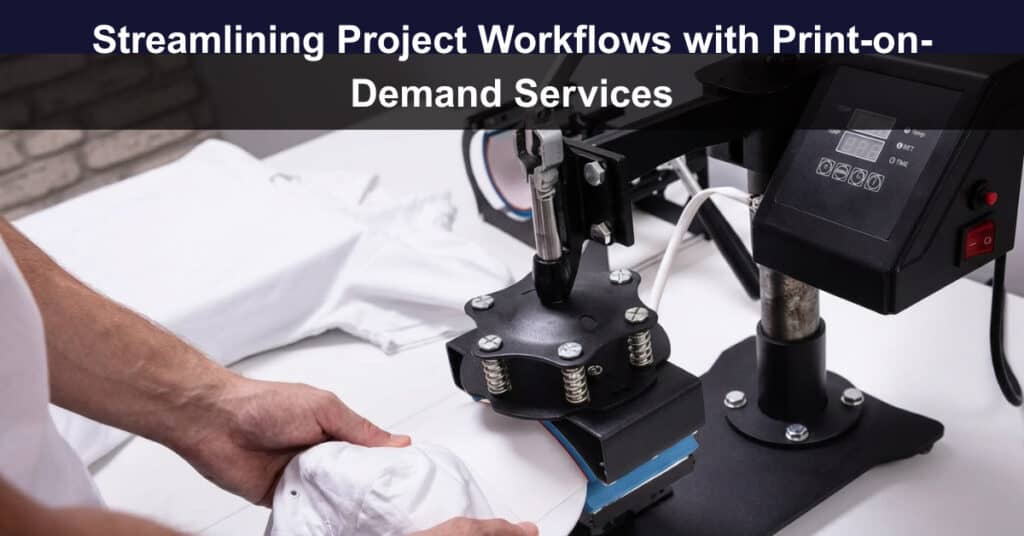
Project managers juggle tight deadlines, changing requirements, and limited budgets, so every process that adds delay or waste becomes a liability for the whole team and the project itself. Traditional printing, with its minimum order quantities, long production runs, and slow revision cycles, has frustrated teams for decades. Print-on-demand flips that model by producing materials only when they are needed, in exactly the quantities required.
From marketing collateral and training manuals to branded merchandise and event materials, on-demand services now handle nearly any printed deliverable a project needs today. The rise of eco-friendly print-on-demand gives project managers a tool that is faster, more cost-effective, and greener than traditional printing methods. This guide explores the key benefits of print-on-demand and how to integrate on-demand services into your project workflows effectively.
What Are Print-on-Demand Services?
Print-on-demand is a production model where items are manufactured only after a customer places an order, eliminating the need for warehouses full of pre-printed stock. Every product, whether a brochure, training manual, or branded t-shirt, is printed digitally only when requested by the project team. This is the opposite of traditional mass printing, where huge batches are produced speculatively and stored until sold.
The rise of sustainable on-demand printing has made the model even more attractive, since digital printing produces less waste and many platforms now offer eco-friendly materials by default. Whether the goal is marketing collateral, event materials, or employee merchandise, teams can upload files and receive finished products within days, not weeks. The model fits naturally into modern, fast-moving, distributed project environments.
Three defining characteristics explain how print-on-demand actually works for teams:
- Digital-First Production: Print files are uploaded online and processed through digital printing presses, so there is no physical plate setup or minimum batch requirement. Each unit is printed to order, which keeps unit costs predictable and quality consistent. This is what makes single copies and small batches economically viable for projects of any size.
- Integrated Fulfillment and Shipping: Most providers handle printing, quality checks, packaging, and shipping under one roof, delivering directly to the destination you specify. Project managers can send materials straight to event venues, offices, or individual team members. This removes the coordination burden of managing multiple vendors and delivery stages.
- Real-Time Order Tracking: Online dashboards show order status, estimated delivery dates, and shipment tracking from upload to arrival. Teams can adjust quantities or delivery addresses quickly while an order is in progress. This transparency gives project managers the same visibility they expect from their other digital tools.
The Benefits of Print-on-Demand for Project Managers
The most immediate benefit of print-on-demand is minimizing lead time, since materials ship within days of placing an order instead of weeks after a long production run. That speed matters across every phase of the project lifecycle, from initiation through implementation, monitoring, and evaluation. When marketing materials, training documents, or team merchandise are needed, on-demand printing delivers them quickly without the traditional wait.
This model suits projects that undergo multiple revisions, because updated content can be reprinted in real time without absorbing the high costs of a full reprint. Rather than ordering thousands of copies up front and hoping that requirements hold, teams print fresh versions as scope evolves. Small, frequent orders keep inventory lean and project budgets predictable from kickoff to closeout.
Print-on-demand services deliver these five key advantages for project teams:
- Shorter Lead Times: Materials ship within days of placing an order, letting project managers set the pace of their team instead of waiting on a print shop’s schedule. Last-minute revisions are easy to accommodate because nothing has been printed in bulk yet. The agility this creates is impossible to replicate with conventional offset printing, which still requires minimum runs and scheduled press time.
- Lower Costs Without Minimum Orders: Traditional printing only becomes economical with large order quantities, forcing teams to overbuy and overspend. Print-on-demand lets you order small batches of flyers, manuals, or merchandise exactly as needed, cutting both waste and expenses. For those looking for affordable, high-quality custom lanyards, 4inlanyards is an excellent option to meet your needs without breaking the bank.
- Real-Time Revisions: Projects with frequent content changes benefit enormously, because updated files can be re-uploaded and reprinted within hours. There is no need to scrap thousands of obsolete copies or absorb expensive reprint costs. Teams iterate on documentation and marketing assets freely without financial penalty or wasted materials.
- Scalability Up and Down: Whether the project starts with three employees or grows into a full department, on-demand printing scales to match demand. Order one sample for approval or hundreds for a launch event, with no long-term contracts or minimum commitments. This flexibility suits businesses experiencing growth and projects with variable demand throughout the year.
- Quality and Brand Consistency: Modern digital printing produces rich, professional results across apparel, packaging, and documents, so teams never trade quality for convenience. Centralizing production with a reliable provider keeps colors, materials, and branding consistent across every campaign. Stakeholders receive polished deliverables that reflect well on the project and its sponsor.
Integration Into Agile Workflows
Agile methodologies depend on flexibility, collaboration, and rapid iteration, which means the tools supporting them must adapt as project requirements change over time. Print-on-demand aligns naturally with this mindset, because it lets teams produce materials at exactly the moment they are needed during each sprint and cycle. Instead of forecasting quantities months in advance, teams respond to what the project actually needs.
Consider a typical software development project running on two-week sprints, where user documentation must reflect every newly shipped feature and change. With print-on-demand, the team produces updated manuals, guides, and marketing materials quickly, without stopping the delivery process at all. Everyone stays fully informed, and the adaptive pace of the project is never slowed by outdated printed collateral of any kind.
Here is how print-on-demand services support agile project delivery today:
- Documentation That Stays Current: Software projects produce manuals, guides, and release notes that change with every sprint. Print-on-demand means the team can reprint updated documentation whenever a feature ships, without pausing development or discarding old inventory that quickly goes stale. Stakeholders always receive accurate materials that reflect the latest product state and functionality.
- Just-in-Time Marketing Materials: Campaign collateral can be produced to match the exact stage of a launch, from teaser assets to final product sheets. Teams avoid predicting months in advance how many brochures a campaign will need. This just-in-time approach keeps messaging aligned with the current sprint goals, audience feedback, and campaign milestones.
- Flexible Branding and Events: For conferences, demos, and stakeholder events, project teams can order branded merchandise and signage tailored to each occasion. Whether the event is small or large, quantities are ordered per event rather than in bulk. This flexibility extends to marketing-focused projects that need distinct merchandise without manufacturing large batches or holding stock.
- Efficient Supply Management: Agile teams also depend on reliable access to printer supplies, because running out of toner or paper mid-sprint stalls delivery and forces costly emergency orders. Managing printing supplies efficiently is crucial, and partnering with reputable buyers like Sell Toner helps streamline this aspect. Budget the recurring cost of consumables into each sprint’s operational planning.
Environmental and Sustainability Benefits
Sustainability has moved from a nice-to-have to a core consideration in modern project management, and procurement decisions now face growing scrutiny from stakeholders, customers, and regulators alike. Conventional printing generates waste through unsold inventory, excess packaging, and energy-intensive production runs at every stage. Print-on-demand directly addresses these problems by manufacturing only what is actually ordered, used, and delivered to real customers.
Companies pursuing formal sustainability strategies can find print partners whose operations match their stated environmental goals and commitments. Selecting an eco-conscious provider helps cut carbon emissions and waste while strengthening the organization’s reputation as a responsible business. For brands that compete on values, sustainable printing choices become a genuine competitive advantage, not merely a compliance checkbox or marketing talking point.
Eco-friendly print-on-demand services offer these major sustainability advantages for your project:
- Print Only What You Need: On-demand production eliminates the overproduction that plagues conventional printing, where warehouses fill with unsold catalogs and obsolete merchandise. Every item is created because someone actually ordered it, so waste is minimized from the start. This single change dramatically shrinks the environmental footprint of printed materials across the whole supply chain.
- Eco-Friendly Materials and Inks: Many print-on-demand providers offer recycled paper, organic textiles, water-based inks, and other sustainable options by default. Choosing a provider with green certifications lets project managers align procurement with corporate sustainability goals. Nearly half of consumers say they would pay more for products from sustainable brands, so these choices matter commercially too, not just environmentally.
- Reduced Carbon Emissions: Localized production and shorter shipping distances cut the carbon emissions associated with printing and logistics. Digital printing itself consumes less energy and generates less chemical waste than traditional offset methods. Companies that adopt sustainable print partners can cut their carbon emissions while strengthening brand image and demonstrating genuine responsibility toward the environment and society.
How to Choose a Print-on-Demand Provider
Choosing the right print-on-demand partner affects quality, cost, delivery speed, and sustainability outcomes across the entire project lifecycle. Providers differ widely in product catalogs, print technologies, eco-credentials, and geographic reach, so the best fit always depends on what your project needs to produce. A few practical criteria narrow the field quickly and help you avoid costly trial and error during selection.
Evaluate print-on-demand providers against these four selection criteria before committing:
- Product Range and Quality: Confirm the provider actually makes the items your project needs, from documents and apparel to packaging and signage. Request physical samples before large orders and check print resolution, fabric feel, and color accuracy. A provider that excels at t-shirts may deliver mediocre brochures, so match capability to your specific deliverables.
- Eco-Friendly Options: Look for recycled paper, organic textiles, water-based inks, and certifications that back up environmental claims. Nearly half of consumers will pay more for sustainable products, so green options protect both the planet and your brand. The growing availability of eco-friendly print-on-demand makes responsible sourcing easier than ever.
- Speed and Reliability: Review standard turnaround times, express shipping options, and customer reviews about on-time delivery. Ask about reprint policies and what happens when an order arrives damaged or late. Reliable partners ship within days and communicate proactively when anything changes with your order.
- Customer Support and Communication: Test how responsive the provider is before you commit by asking pre-sales questions. Strong partners assign account managers, answer quickly, and resolve issues without long email chains. The support experience during a trial order is a reliable predictor of what happens when a real deadline depends on them.
Conclusion
Print-on-demand has evolved into an essential tool for project managers who need speed, flexibility, and cost control without compromising on quality or customer satisfaction. The market reflects this momentum, with global print-on-demand revenue projected to grow from roughly thirteen billion dollars to well over one hundred billion dollars within a decade. Teams that adopt on-demand printing position themselves today for faster delivery and leaner operations.
Whether you run agile sprints, manage event logistics, or champion sustainability initiatives, print-on-demand adapts to your workflow rather than forcing you to adapt your entire process to it. Start small by printing a single project deliverable on demand and measure the time, money, and stress you save. The flexibility, lower waste, and faster turnaround will quickly make it a permanent part of your project toolkit.
Frequently Asked Questions About Print-on-Demand Services
How does print-on-demand reduce project costs?
Print-on-demand eliminates minimum order quantities, so project teams buy only the copies they need instead of overordering to justify a print run. There are no warehousing costs, no obsolete inventory, and no reprint fees when content changes. The pay-per-unit model keeps expenses proportional to actual use, which is ideal for projects with uncertain or fluctuating demand.
What types of materials can be printed on demand?
Print-on-demand covers an enormous range of products, including books, manuals, brochures, posters, business cards, apparel, mugs, stickers, signage, and packaging. Many providers also handle promotional merchandise like lanyards, tote bags, and corporate gifts. Nearly any branded or informational item a project needs, from training kits to event displays, can be produced in small quantities on demand.
Is print-on-demand more sustainable than traditional printing?
Yes, print-on-demand is significantly more sustainable because it produces only what customers order, eliminating unsold inventory and the waste it creates. Digital printing uses less energy and water than offset methods, and many providers offer recycled papers, organic textiles, and other eco-friendly materials. Shorter shipping routes further reduce the carbon footprint of every printed product.
How quickly can print-on-demand orders be delivered?
Most print-on-demand providers ship standard orders within two to five business days, with express options available when deadlines are tight. Because production happens after the order is placed, there is no waiting on minimum batch sizes or press scheduling. This turnaround lets project managers react to changes, stakeholder feedback, and last-minute requests without derailing their timelines.
How does print-on-demand fit into agile project workflows?
Agile teams value the ability to respond quickly to change, and print-on-demand supports that by producing updated materials on short notice during each sprint. Documentation, training guides, and marketing collateral can be revised and reprinted as features evolve. This removes the forecasting burden of traditional printing and keeps everyone working with current, accurate, up-to-date information.
Suggested articles:
- How Print on Demand Saves Money on Custom Apparel
- Converting Customers into Brand Ambassadors with Printed Apparel
- 8 Best Design Sprint Templates: The Complete Guide

Daniel Raymond, a project manager with over 20 years of experience, is the former CEO of a successful software company called Websystems. With a strong background in managing complex projects, he applied his expertise to develop AceProject.com and Bridge24.com, innovative project management tools designed to streamline processes and improve productivity. Throughout his career, Daniel has consistently demonstrated a commitment to excellence and a passion for empowering teams to achieve their goals.