
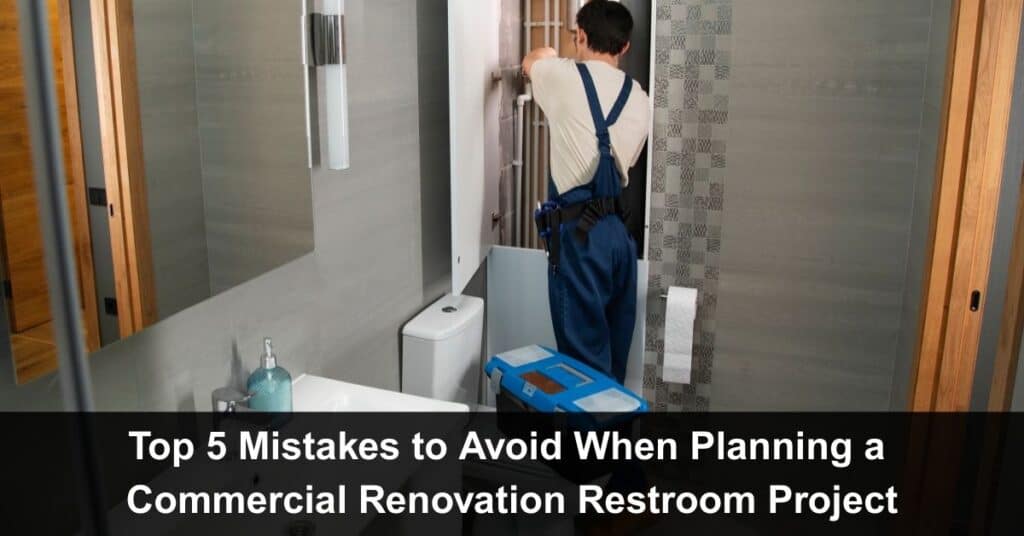
When you manage a large-scale commercial renovation, the restroom is rarely the part of the project that gets people excited. It is not the grand lobby with the marble floors or the high-tech conference room with integrated smart glass. However, as any seasoned project manager knows, the restroom is often where the most logistical headaches live. It is a high-traffic area where plumbing, electrical, and structural integrity all meet in a very tight space. If you get it right, nobody says a word.
If you get it wrong, it becomes the primary source of complaints for the building owner and a maintenance nightmare for years to come. But why is it so easy to overlook these small spaces? It may be because they feel utilitarian. Planning these areas requires precision beyond simply picking tiles. It is about flow, durability, and long-term value. Here are the five most common mistakes project managers make when overseeing a commercial restroom renovation and how you can steer clear of them.
1. Underestimating the Importance of Material Durability
One of the most common errors in the planning phase is choosing materials based on initial cost rather than the building’s lifecycle. In a high-traffic environment like a shopping center, an airport, or a large office complex, the wear and tear is relentless. Moisture, heavy cleaning chemicals, and constant physical use will quickly degrade inferior products. We’ve all seen those warped doors that don’t latch right anymore.
- When you specify materials that can’t withstand the environment, you’re scheduling a second renovation a few years down the line.
- It’s much better to advocate for a higher upfront investment in materials that are known for their longevity, and that is where the value truly lies.
For example, materials that resist corrosion and impact will save the client significant money on repairs. You know, choosing the wrong surfaces leads to rust, scratches, and a dated look that reflects poorly on the entire facility management team. Have you ever walked into a restroom that looked ten years older than the rest of the building? That is usually the result of a budget-friendly choice that didn’t age well. It’s a frustrating sight.
2. Ignoring ADA Compliance Until the Final Stages
Accessibility isn’t a “nice to have” feature. It is a legal requirement and a fundamental part of inclusive design. A common mistake is treating ADA compliance as a checklist to be verified at the end of the project. By the time the partitions are being installed and the sinks are mounted, it’s often too late to fix a structural layout issue without a massive change order. And that’s the point where budgets start to bleed.
Project managers need to ensure that the turning radius, grab bar placement, and commercial door swings are baked into the architectural drawings from day one. Failing to do so can result in failed inspections and costly tear-outs. But it’s more than just a legal hurdle.
- You have to think about the user experience for everyone who enters that room.
- If the space feels cramped or difficult to navigate for someone in a wheelchair, the design has failed its primary purpose.
- How would you feel if you couldn’t comfortably use a space you were meant to have access to? It is about dignity, really.
3. Overlooking Ventilation and Moisture Control
Restrooms are naturally humid environments. If the ventilation system is an afterthought, you’re inviting mold, mildew, and persistent odors into the building. Many project managers focus on the aesthetics of the fixtures but forget to verify that the HVAC system can handle the specific moisture load of a multi-stall restroom.
Proper airflow is essential for keeping the space feeling clean and fresh. Without it, even the most beautiful restroom will feel dingy and unappealing within months. And no one wants that.
- Make sure your mechanical engineers are prioritizing high-quality exhaust fans.
- They should also ensure that the ductwork is optimized for the specific layout of the room.
- This is one of those invisible details that makes a massive difference in the perceived quality of the renovation.
4. Poor Lighting Design
Lighting in a commercial restroom serves two purposes: safety and atmosphere. A common mistake is relying on a single overhead light source that creates harsh shadows and leaves stalls feeling dark and cavernous. Poor lighting can hide dirt, making the space look unhygienic even when it’s clean.
- A well-planned lighting scheme uses a mix of ambient and task lighting.
- You want bright, clear light around the vanities and mirrors where people need to see what they’re doing.
- Combine that with softer, more distributed light in the stall areas.
Energy-efficient LED fixtures are the standard now, but the placement is what really matters. When the lighting is right, the room feels larger, cleaner, and much more modern.
5. Failing to Account for Maintenance Access
Everything breaks eventually. Whether it’s a leaky flush valve or a clogged drain, your maintenance team will need to get into the walls or under the counters at some point. A major planning mistake is “sealing in” the utilities so tightly that a simple repair requires breaking through drywall or tile. Project managers should push for design features that allow for easy access.
- This includes removable panels, chase ways that provide enough room for a person to work, and fixtures that are easy to service.
- When you make maintenance difficult, you increase the downtime of the restroom and the cost of every single repair.
- It’s about thinking ten years into the future, not just until the day of the ribbon cutting.
Real-Life Example: The High-Traffic Transit Hub
To see how these choices play out in the real world, let’s look at a recent project involving a metropolitan transit hub. The original plan called for standard plastic laminate partitions to save on the initial budget. However, the project manager realized that with thousands of commuters passing through daily, those materials would be vandalized or worn down within eighteen months.
The team decided to pivot. They opted for Stainless steel restroom partitions because of their incredible strength and timeless aesthetic. While the initial cost was higher, the result was a restroom that looked pristine even after a year of heavy use. The stainless steel resisted the scratches and moisture issues that would have destroyed the laminate.
Conclusion
A successful commercial restroom renovation is a balancing act. You have to weigh the client’s budget against the reality of daily use, all while navigating strict building codes. By avoiding these five common pitfalls, you position yourself as a project manager who understands the big picture. Focus on durability, plan for accessibility from the start, and never underestimate the power of good lighting and ventilation. Your clients, and the people using the building every day, will thank you for it.
Suggested articles:
- Managing a Multi-Family Rental Property Upgrade: A Project Manager’s Guide to Budget Control
- Choosing the Right Window Installation Company for Your Home Renovation Project
- How to Scope HVAC Work for Facilities Projects

Daniel Raymond, a project manager with over 20 years of experience, is the former CEO of a successful software company called Websystems. With a strong background in managing complex projects, he applied his expertise to develop AceProject.com and Bridge24.com, innovative project management tools designed to streamline processes and improve productivity. Throughout his career, Daniel has consistently demonstrated a commitment to excellence and a passion for empowering teams to achieve their goals.