
Generative AI is moving past the hype phase. Standard chatbot wrappers hold no competitive value today. Enterprises need custom foundation models that operate securely on internal corporate data. Building these systems requires deep mathematical and infrastructure knowledge. Most agencies simply connect basic third-party APIs. Finding true generative AI development companies with actual production experience takes serious vetting.
Here is a breakdown of the top vendors building real custom generative tools right now.
1. S-PRO
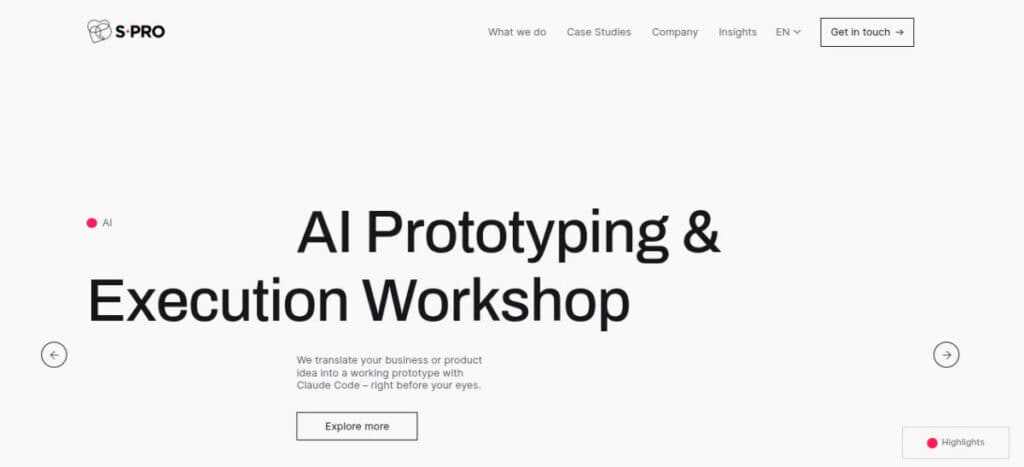
S-PRO leads as a pragmatic partner for artificial intelligence initiatives. They do not rely on basic public APIs. The engineers build custom Large Language Models trained strictly on secure corporate data. They dive into your codebase to resolve technical debt before deploying algorithms. Once the data foundation is in place, they move on to building generative pipelines for different use cases – including more complex ones like FinTech and healthcare. They fix the core architecture before launching predictive tools.
Recent enterprise demand has shifted heavily toward secure private AI deployments, and S-PRO benefits from this transition. Many companies now avoid generic cloud-hosted chatbot tools because of compliance risks and unreliable outputs. S-PRO’s engineering-first structure positions them well for businesses needing deeper infrastructure modernization before deploying production-grade generative AI systems.
- Team Size: 50-249 employees
- Year Founded: 2014
- Location: Switzerland, USA, Ukraine, Poland
- Cases: AI-driven compliance systems, financial data platforms, predictive maintenance, generative AI pipelines, enterprise data infrastructure
2. DataArt
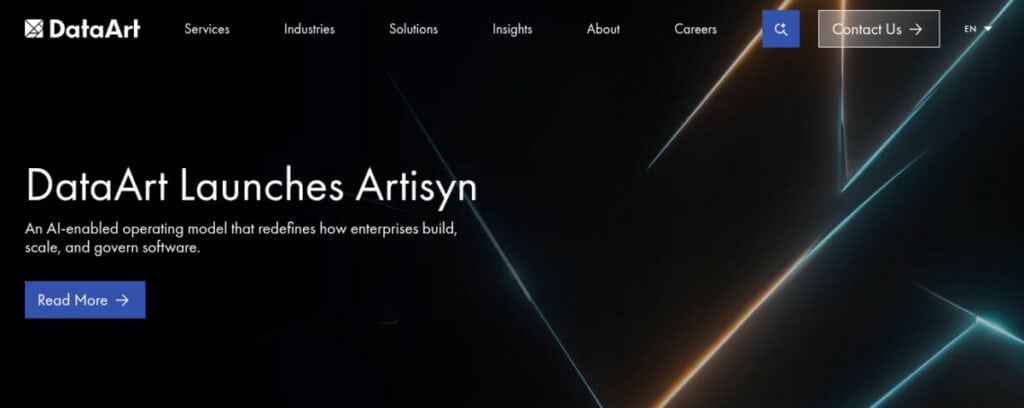
DataArt operates as a massive global network. Large financial institutions hire them to map out complex cloud transitions necessary for generative AI. They help old banks migrate decades of customer data into modern storage. This size brings deep corporate predictability. However, moving a project through their heavy administrative pipelines takes significant time. Recent investments show DataArt aggressively scaling its artificial intelligence division.
The company announced a $100 million commitment toward AI engineering, cloud infrastructure, and enterprise data modernization initiatives. Their partnerships with Google Cloud and enterprise AI providers also signal a stronger push toward governed agentic AI deployments for highly regulated industries like finance, insurance, and healthcare.
- Team Size: 1,000-9,999 employees
- Year Founded: 1997
- Location: USA, UK, Europe
- Cases: Legacy cloud migrations, Predictive maintenance models, Financial data lakes
3. ScienceSoft
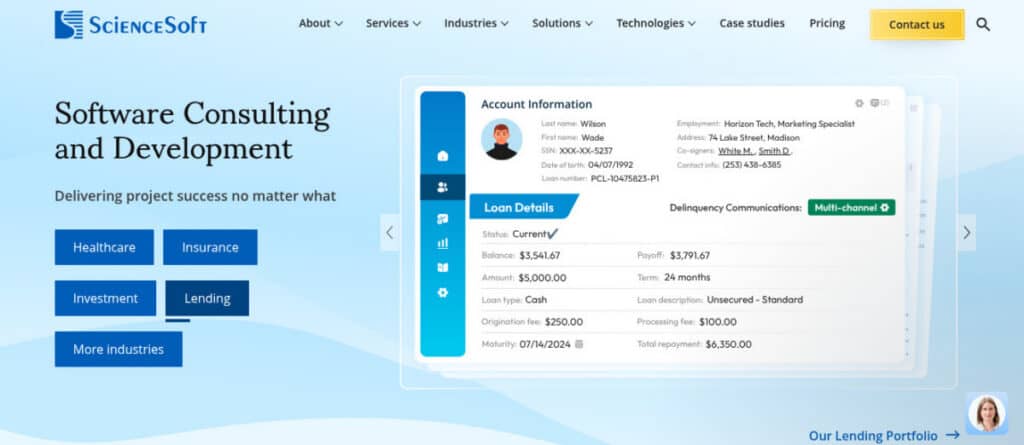
ScienceSoft holds decades of enterprise consulting experience. They specialize in healthcare and manufacturing data strategies. The consultants write exhaustive compliance documentation before touching any generative models. This rigorous approach functions well for risk-averse clients managing sensitive patient data. Fast-moving startups usually find this strict corporate pace overwhelming.
ScienceSoft has recently increased its focus on generative and agentic AI services across healthcare, insurance, and financial technology sectors. Their leadership continues to emphasize governance, model accuracy, and long-term operational stability rather than rushing experimental deployments. This conservative engineering culture appeals strongly to enterprises prioritizing compliance, documentation quality, and predictable implementation outcomes over rapid prototype delivery.
- Team Size: 500-999 employees
- Year Founded: 1989
- Location: USA, UAE, Europe
- Cases: Healthcare AI diagnostics, Corporate IT audits, Manufacturing data strategy
4. Eleks
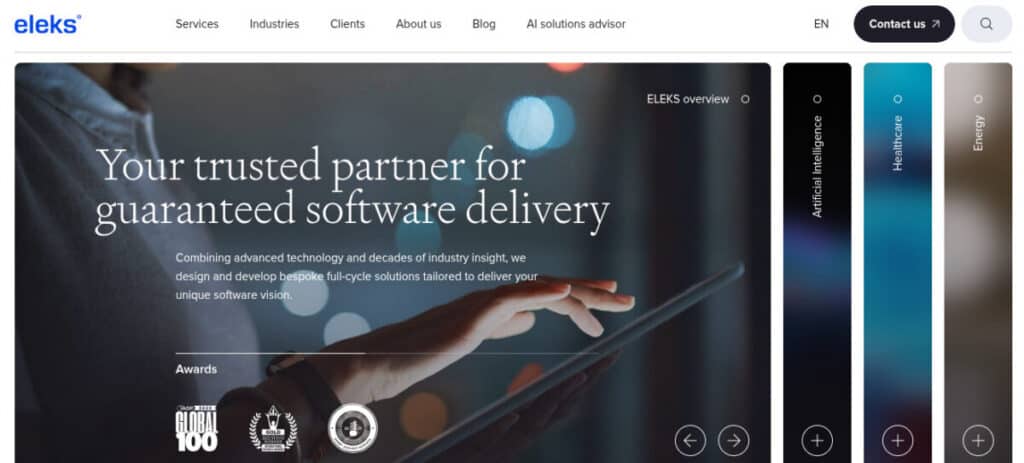
Eleks is a top destination for complex mathematical strategy. Their teams include PhD-level data scientists. They build highly specific generative models for heavy industries. A standard business looking for basic chatbot guidance will overpay here. Clients pay a high premium for deep algorithmic expertise and custom foundational model creation. Enterprise demand for specialized industrial AI systems continues to rise, especially in logistics, manufacturing, and energy operations.
Eleks benefits because their technical teams focus more on proprietary algorithms than generic chatbot implementation. Businesses needing optimization models, industrial simulations, or large-scale predictive systems usually value their advanced research capabilities despite the significantly higher project pricing structure.
- Team Size: 1,000-9,999 employees
- Year Founded: 1991
- Location: Estonia, Ukraine, UK, USA
- Cases: Algorithmic logistics routing, Precision agriculture models, Custom LLM deployment
5. LeewayHertz
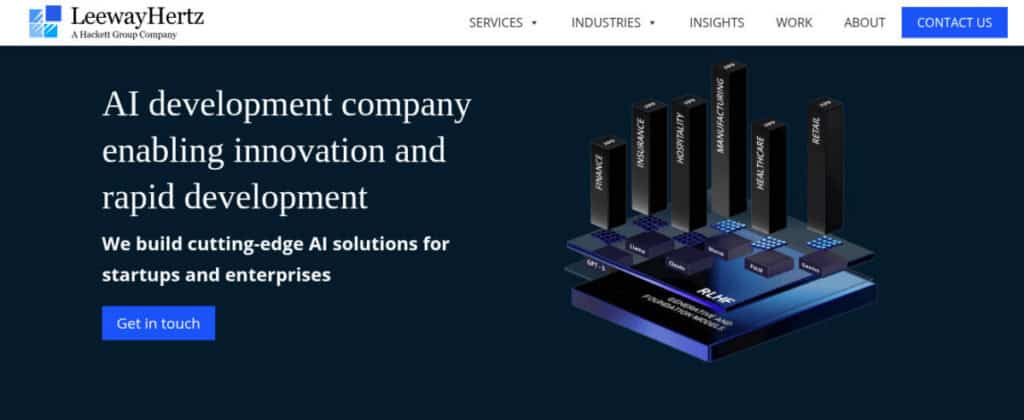
LeewayHertz focuses aggressively on emerging tech trends. They help companies deploy Large Language Models quickly. The consultants use existing open-source frameworks to speed up the rollout of internal HR and support tools. Projects requiring entirely custom foundational models push beyond their standard operating capacity.
The company has recently expanded its focus into agentic AI workflows and enterprise automation systems using open-source frameworks. This allows LeewayHertz to deliver working prototypes far faster than traditional enterprise consultants. Their strength lies in helping mid-sized businesses experiment with generative AI without committing massive budgets toward fully custom infrastructure development from day one.
- Team Size: 50-249 employees
- Year Founded: 2007
- Location: USA, India
- Cases: Generative AI chatbots, Enterprise LLM deployment, Workflow automation
6. Markovate
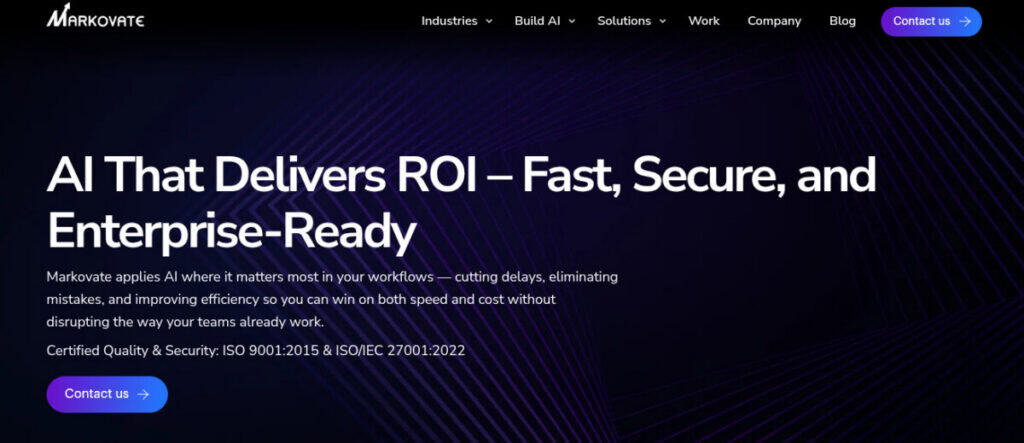
Markovate specializes in rapid AI deployment for retail and consumer brands. They build virtual assistants that process customer requests accurately. They rely heavily on fine-tuning existing open-source models. They move fast and deliver functional prototypes in weeks. Deep enterprise integrations with legacy banking software fall outside their primary focus. Consumer-facing businesses increasingly prioritize speed over technical perfection, and that trend directly supports Markovate’s positioning.
Many retail companies simply need functional AI assistants to improve customer engagement and operational efficiency quickly. Markovate performs well in these environments because they avoid overengineering projects and instead focuses on launching practical generative AI systems with measurable short-term business impact.
- Team Size: 50-249 employees
- Year Founded: 2015
- Location: USA, Canada
- Cases: Custom AI chatbots, NLP data extraction, Retail virtual assistants
7. Master of Code Global
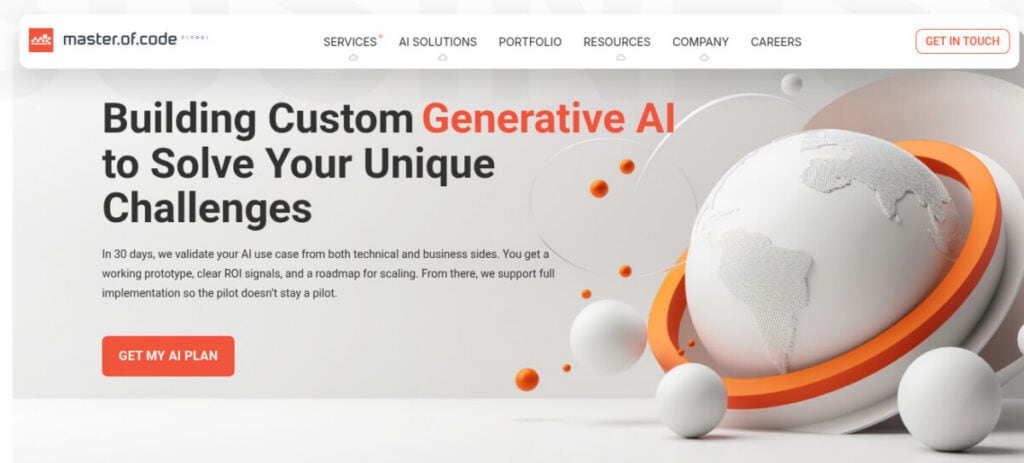
Master of Code Global dominates the conversational AI niche. They build highly engaging generative chat interfaces for consumer brands. They understand dialogue mapping and user intent perfectly. Their bots process complex customer support tickets without human intervention. If your generative AI project involves image creation or predictive financial modeling, their infrastructure becomes unnecessary overhead.
The conversational AI sector remains highly competitive, yet Master of Code Global continues to stand out through customer experience optimization and enterprise chatbot architecture. Businesses increasingly demand AI systems capable of handling complete support interactions instead of basic scripted conversations. This trend strengthens the company’s relevance as organizations push toward fully automated multilingual customer engagement operations across digital channels.
- Team Size: 250-999 employees
- Year Founded: 2004
- Location: USA, Canada, Ukraine
- Cases: Conversational AI interfaces, Customer support automation, eCommerce bots
Key Takeaways
A bad consulting partner burns through budgets without deploying usable technology. Many firms sell theoretical roadmaps that engineers can never actually build. The best technical partners run strict code audits immediately. Building generative artificial intelligence on top of messy legacy code causes massive system failures. An active consultant forces you to fix foundational issues before chasing the latest tech trends. Clean data always precedes intelligent automation.
Suggested articles:
- For What Business Is Generative AI Development Relevant?
- Transforming Customer Service: The 5 Best Benefits of Generative AI
- Top Pros & Cons of Using Generative AI for Business Automation

Daniel Raymond, a project manager with over 20 years of experience, is the former CEO of a successful software company called Websystems. With a strong background in managing complex projects, he applied his expertise to develop AceProject.com and Bridge24.com, innovative project management tools designed to streamline processes and improve productivity. Throughout his career, Daniel has consistently demonstrated a commitment to excellence and a passion for empowering teams to achieve their goals.