

Telecom expenses are one of the most reliably mismanaged line items in any project budget. According to Gartner, 80% of enterprise telecom invoices contain inaccuracies, and billing errors eat up 5-12% of total telecom spend. For project managers who own budget accountability, that’s not a procurement problem – it’s a financial control problem that lands squarely on your desk.
The telecom expense management (TEM) market has matured significantly. The global TEM market was valued at USD 4.10 billion in 2024 and is projected to reach USD 11.55 billion by 2033, growing at a 12.20% CAGR, according to SNS Insider’s 2025 market report. That growth reflects how seriously organizations are taking invoice accuracy, contract compliance, and spend visibility. Meanwhile, cloud-hosted TEM solutions now account for 69.5% of total market revenue in 2025, per Socium IT’s 2026 market analysis – meaning modern platforms are more accessible than they’ve ever been.
This guide cuts through the noise. Each company below is evaluated from the project manager’s perspective: budget integration, audit visibility, workflow fit, and speed to ROI. You won’t find generic feature checklists here – just what actually matters when you’re trying to stop telecom costs from quietly eating your project margins.
1. Tailwind Voice & Data – Strategic TEM Partner for Multi-Location Enterprises
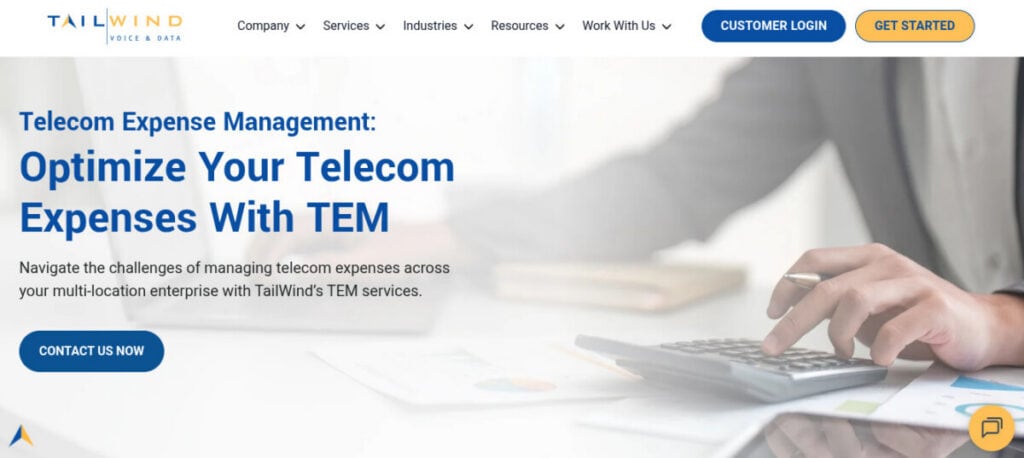
Project managers evaluating telecom expense management companies will find Tailwind Voice & Data’s model genuinely different from the standard software vendor approach. Rather than handing you a platform and a knowledge base, Tailwind acts as a strategic partner – your team gets a single point of contact, weekly reporting on billing disputes, and consolidated invoice validation across every location. The practical upside for PMs is significant.
Tailwind handles MACD (move/add/change/disconnect) services, contract renewals, usage analysis, and dispute resolution without requiring constant internal oversight. The company supports 40,000+ enterprise locations and has served clients like Hudson, TopBuild, Beacon, and LifeStorage. If your project environment spans multiple sites and you don’t have a dedicated telecom team, this managed-service model removes a substantial administrative burden from your plate. Pricing is available on request.
2. Tangoe – AI-Powered TEM for Fortune 500 Enterprises
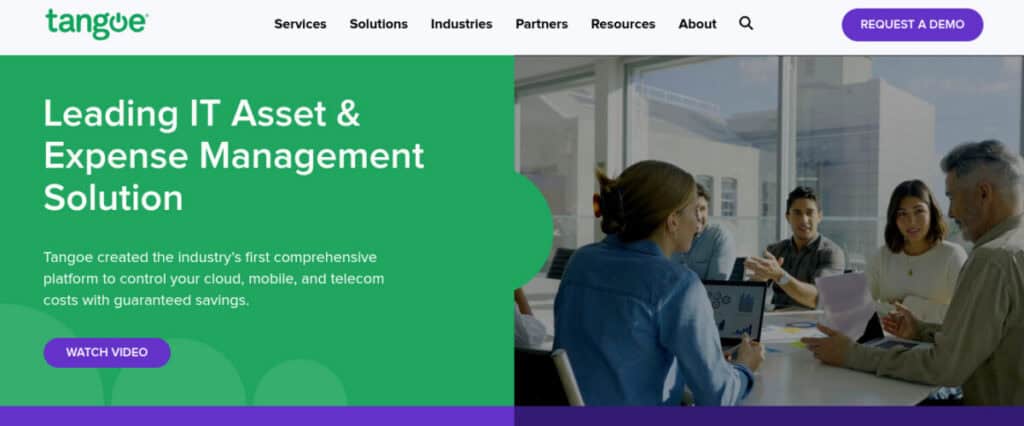
Tangoe is one of the most recognized names in enterprise TEM, and it earns that reputation with a platform – called Tangoe One – that covers telecom, cloud, and mobility expense management in a single interface. With 70+ patents supporting its automation engine, Tangoe processes invoices at a scale that manually intensive teams simply can’t match. The platform claims an average 15% cost savings for clients, according to Geekflare’s 2025 analysis of leading TEM solutions.
For project managers in Fortune 500 environments, Tangoe’s real-time analytics and global multi-currency support are particularly relevant. The Gartner Market Guide for Telecom Expense Management Services positions Tangoe among the market leaders in this category, which matters when you’re making the case internally for a TEM investment. Pricing is custom and enterprise-focused.
3. Calero – Network Visibility and SaaS Expense Management
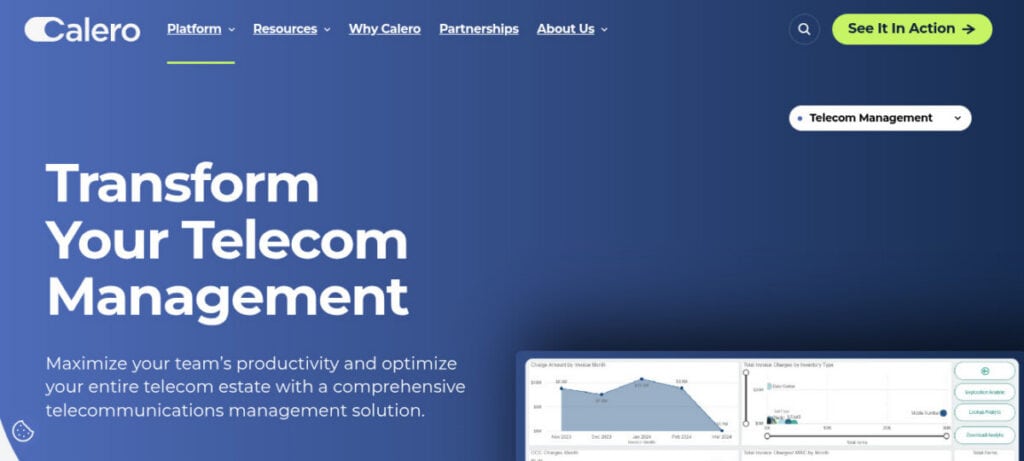
Calero takes a network-first approach to TEM. Its SaaS-based platform delivers full estate visibility through purpose-built network visualization tools, which are especially useful for project managers trying to map exactly what telecom assets exist across an organization before renegotiating contracts or cleaning up unused services.
The platform includes automated dispute management, wireline e-Bonding for data accuracy, and inventory lifecycle management. Benchmarking is also available, allowing teams to compare their telecom spend against industry norms. It’s enterprise-grade, so smaller teams without dedicated procurement staff may find the learning curve steep. Pricing is not publicly listed; a sales conversation is required.
4. Sakon – Modular TEM with ERP and ITSM Integration
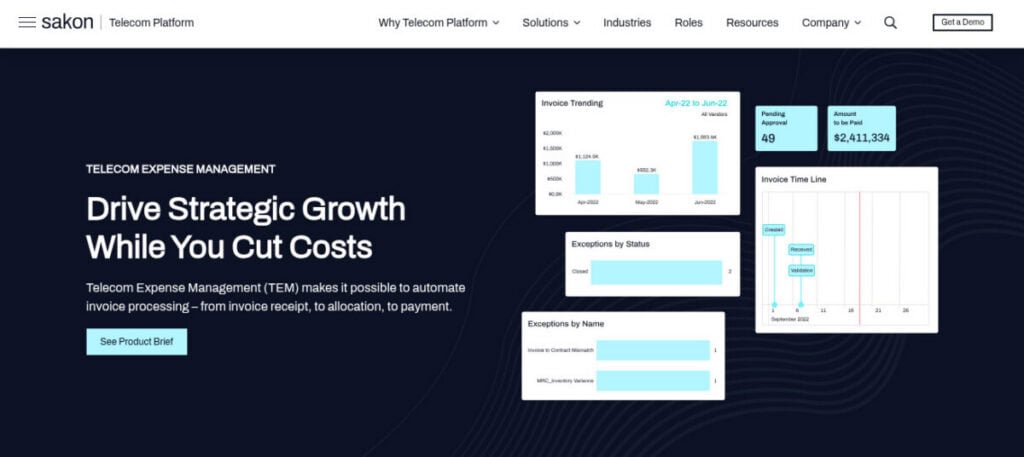
Sakon’s key differentiator is modularity. You buy what your project environment actually needs rather than absorbing the cost of a full-suite platform you’ll use at 40% capacity. Sakon delivers an average 20-30% reduction in telecom overspending for enterprise clients, according to Geekflare’s 2025 review, which is a meaningful figure for PMs managing tight budget targets.
The ERP and ITSM integrations are what push Sakon onto many shortlists. If your workflows already run through SAP, ServiceNow, or a similar system, Sakon connects invoice lifecycle management and expense allocation directly into those environments rather than creating a parallel data silo. Before committing to any platform, though, it’s worth investing time to understand how to do market research on TEM vendors specifically – the evaluation criteria vary more than most buyers expect. A demo is available on request.
5. Brightfin – TEM Built on the ServiceNow Platform
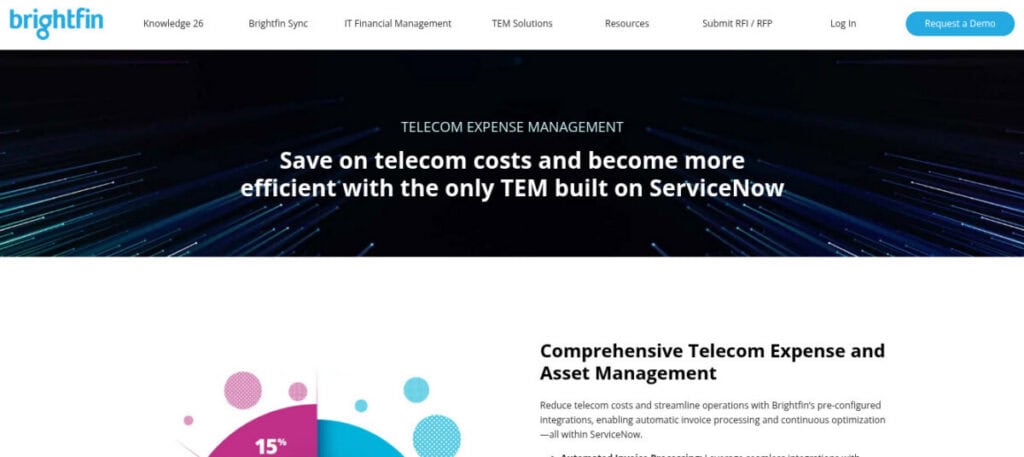
Brightfin is the only major TEM platform built natively inside ServiceNow. That distinction matters for IT-aligned project managers whose entire operational workflow already lives in ServiceNow – brightfin doesn’t create a new tool to manage; it extends what you’re already using. The platform handles automated invoice processing, anomaly detection for cost spikes, contract management, and forecasting using historical data.
Centralized IT and telecom inventory provides project managers with a single source of truth for expense tracking and auditing. The obvious limitation is that Brightfin is only a strong fit if ServiceNow is already in your tech stack. If it is, the elimination of context-switching alone justifies the evaluation. Pricing is on request.
6. Genuity – Affordable TEM for Smaller Project Teams
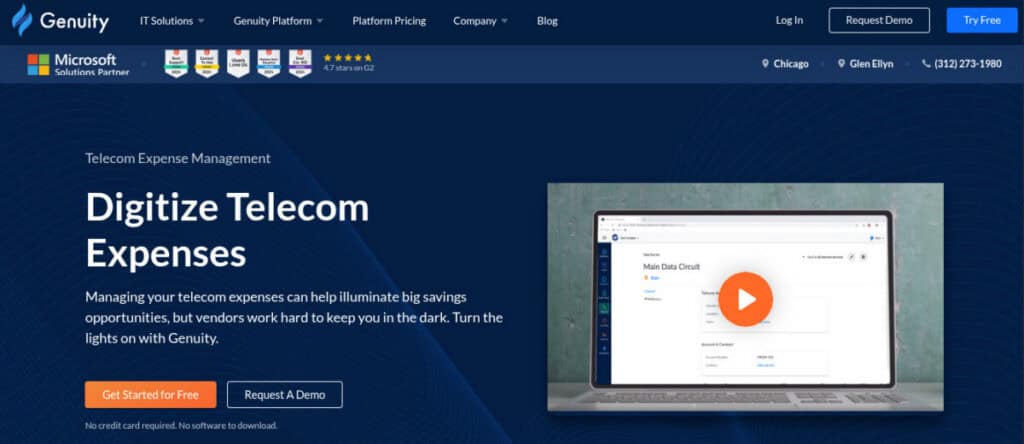
Genuity stands apart from every other company on this list for one simple reason: it publishes its pricing. At $29.99 per month for the entire platform, it’s the only major TEM option with transparent, accessible pricing – which makes budget conversations with stakeholders dramatically easier. The platform manages over $4.5 billion in IT spend across 800,000+ assets and 128,000 end users.
That’s not a small-time tool; it’s genuinely capable infrastructure at a price point that smaller project teams can actually get approved. Genuity covers usage tracking, cost allocation, benchmarking, vendor lifecycle management, and a unified view of SaaS, telecom, and cloud expenses. If you’re evaluating whether Genuity fits alongside your existing toolchain, the best project management software guide on projectmanagers.net is a useful reference for understanding integration requirements before you commit.
7. vCom Solutions – Managed TEM as a Service
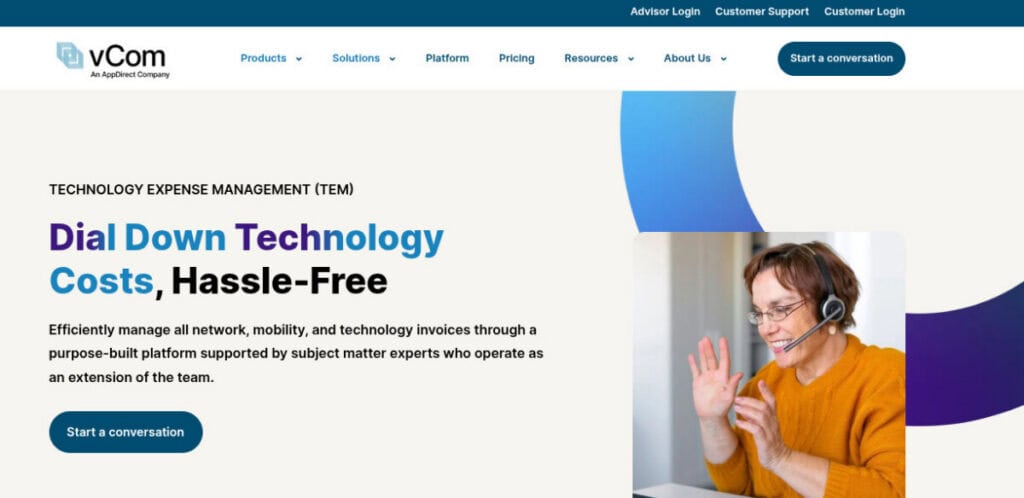
vCom Solutions offers what it calls TEMaaS – Telecom Expense Management as a Service – a hybrid model combining its cloud-based vManager platform with a dedicated account management team. For project managers who want TEM coverage without building internal expertise, this approach transfers much of the operational burden to vCom’s staff.
The platform handles centralized IT and telecom expense management, procurement support, and ongoing vendor management. vCom was named a Distinguished Vendor by Amalgam Insights in 2024, which reflects its standing in the managed-service segment of the TEM market. The main tradeoff is that TEMaaS works best when you’re comfortable with a third party having deep visibility into your telecom environment. Pricing is on request.
8. WidePoint – Secure TEM for Government and Regulated Enterprises
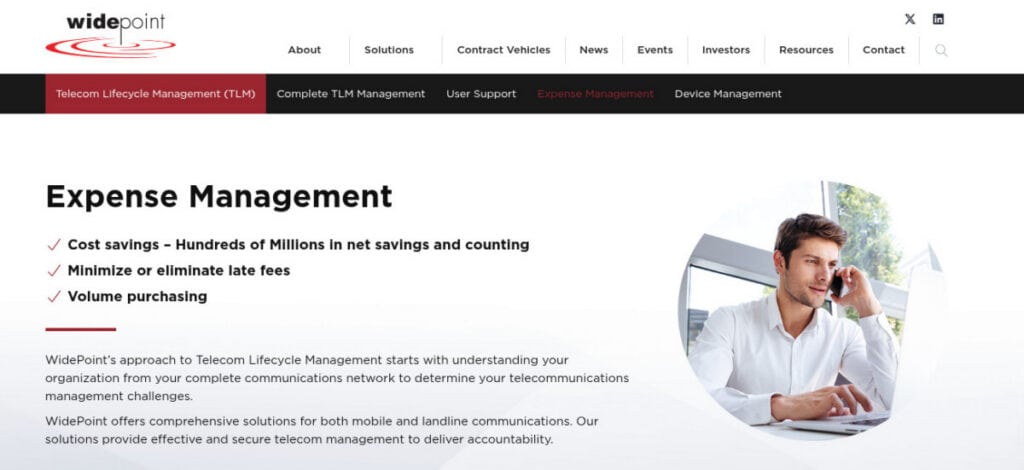
WidePoint is built for environments where security and compliance aren’t optional. The Fairfax, VA-based provider specializes in Technology Management as a Service (TMaaS) for government agencies and regulated industries, with federally certified capabilities in communications and identity management that most commercial TEM platforms don’t offer.
Project managers in defense, healthcare, or financial services environments will find WidePoint’s secure mobile management, interactive bill presentment, and IT-as-a-Service model more aligned with their compliance obligations. WidePoint reported trailing twelve-month revenue of $144M in 2025 (PitchBook), making it one of the larger specialized players in this space. According to Socium IT’s 2026 TEM market analysis, cloud-based TEM solutions are now dominant across both commercial and public-sector environments. Pricing is on request.
9. Upland Cimpl – Enterprise TEM with Real-Time Budget Optimization
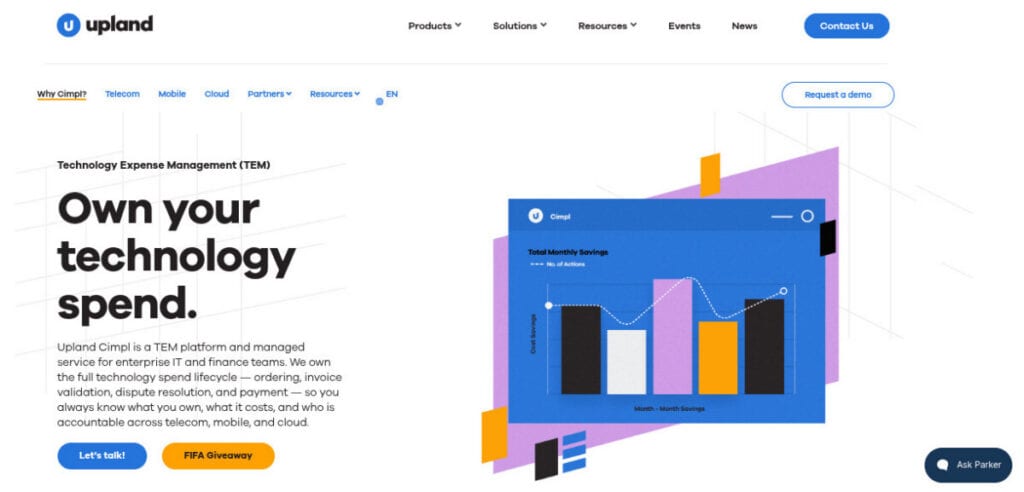
Upland Cimpl is part of Upland Software and targets large enterprises managing complex, multinational telecom environments. The platform automates ordering and billing, provides real-time budget optimization using live data feeds, and gives project managers full visibility across mobile, telecom, and cloud expenses in a single view.
One of Cimpl’s more practical features is its elimination of zero-usage device spend. The platform identifies services and devices that are being billed but no longer actively used, which is a surprisingly common source of waste in large organizations. It’s particularly valued by public sector and global enterprise IT teams managing procure-to-pay processes end-to-end. Pricing is on request; no public pricing is available.
10. Tellennium – Guaranteed ROI with No Implementation Fees
Tellennium makes two commitments that most TEM vendors won’t: zero implementation fees and a guaranteed positive ROI for every client. That’s not typical in this market, and it changes the risk calculation for project managers who need to justify a TEM investment to finance. The platform uses AI to reconcile telecom assets with charges, automatically runs contract compliance checks, and handles dispute management and rate benchmarking without requiring manual intervention from your team.
U.S.-based support and a 60-day go-live guarantee mean you’re not waiting quarters to see results. For PMs who want to understand how TEM feeds into a broader cost management process for projects, Tellennium’s transparent managed-service model is a natural fit. Pricing is on request; implementation is at no additional cost.
How to Choose the Right TEM Company for Your Project Organization
The right Telecom Expense Management (TEM) company depends less on feature lists and more on how your organization actually operates. Here are a few considerations to keep in mind before you start demos:
- Consider Scale: Tangoe, Sakon, and WidePoint are built for large, complex environments. Genuity works best for smaller teams or those just starting to formalize telecom management. Tailwind and Tellennium both offer managed-service models that work well for organizations that don’t want to staff internal TEM expertise.
- Look at Your Existing Tech Stack: If your team runs on ServiceNow, Brightfin becomes a strong default. If you’re deep in SAP or a major ITSM platform, Sakon’s ERP integrations are worth examining closely. Integration friction is real, and a TEM platform that doesn’t connect to your existing workflows creates more overhead than it removes.
- Understand the Managed vs. Self-Service Tradeoff: Platforms like Genuity and Calero lean toward self-service; Tailwind, Tellennium, and vCom offer more hand-holding. Neither is better by default – it depends on how much internal capacity you can actually commit to TEM operations.
The numbers support acting on this decision. The Enterprise Technology Management Association (ETMA) calculates that TEM optimization activities save organizations an average of 22% of their telecom budget annually, according to Tellennium’s 2025 analysis, citing ETMA benchmarks. With the TEM market projected to reach USD 11.55 billion by 2033 at a 12.20% CAGR (SNS Insider, 2025), vendor options and platform sophistication will only grow – but the billing errors won’t fix themselves in the meantime.
Conclusion
Telecom spend is one of the quietest budget drains project managers deal with. It’s not a glamorous problem, and most organizations don’t discover how much they’re losing until someone runs a proper audit. With Gartner estimating that 80% of enterprise telecom invoices contain errors, the return on a solid TEM program isn’t speculative – it’s mathematically predictable.
The 10 companies in this guide represent the best options across a wide range of organization sizes, technical environments, and budget realities. Pick the one that fits how your team actually works, integrates with what you’re already using, and gives your PM function real visibility into where telecom dollars are going. That visibility is the starting point for getting them back.
Suggested articles:
- 8 Benefits of Having Phone Systems for Small Businesses
- Top 5 Advantages of Using Phone Answering Services
- Integrating Brex’S Platform: A Game Changer For Project Management Expense Tracking

Daniel Raymond, a project manager with over 20 years of experience, is the former CEO of a successful software company called Websystems. With a strong background in managing complex projects, he applied his expertise to develop AceProject.com and Bridge24.com, innovative project management tools designed to streamline processes and improve productivity. Throughout his career, Daniel has consistently demonstrated a commitment to excellence and a passion for empowering teams to achieve their goals.