
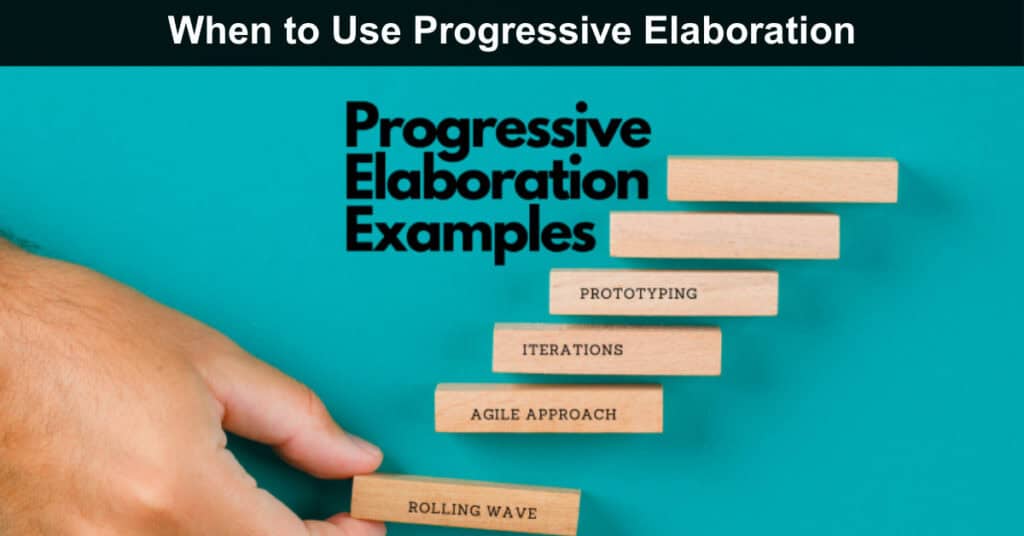
The primary purpose of progressive elaboration is to enable a team to gather and incorporate feedback from a broad range of stakeholders at each stage of a project. This iterative input often leads to adjustments in project requirements and provides the team with the information and insight needed to guide the project to successful completion.
As Agile project managers, we anticipate change: innovation and user feedback frequently inform our decisions about priorities and direction. In some traditional projects, unknowns remain early on; in those cases, applying rolling wave planning helps mitigate risk by delaying detailed planning until more information is available.
Progressive elaboration is particularly valuable for highly complex projects. By planning in waves, teams avoid becoming overwhelmed by the overall scope, can focus on the most immediate tasks, and execute each activity thoroughly and deliberately.
Progressive elaboration involves continuously improving and detailing a plan as more detailed and specific information and more accurate estimates become available. Progressive elaboration allows a project management team to define work and manage it to a greater level of detail as the project evolves – ProjectManagement.com
PMBOK 6th Edition mentions two types of progressive elaboration: rolling wave planning and prototypes.
Progressive Elaboration in the Waterfall Project Lifecycle
Progressive elaboration is a planning approach within the Project Planning Process Group, as defined by the Project Management Institute’s PMBOK. It involves continually refining and developing the project plan as new information and greater detail become available. By contrast, the waterfall method follows a more rigid, sequential lifecycle driven by well-defined requirements. Its phases typically progress in order from requirements and design to implementation, verification, deployment, and maintenance.
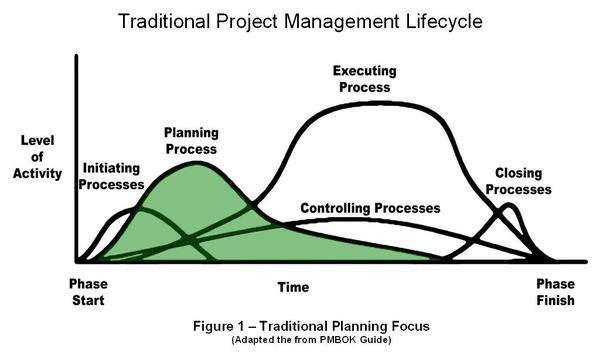
The waterfall method is best suited to projects with well-defined, stable requirements and many interdependent tasks or fixed deployment dates. It is easier to manage and monitor, often results in fewer production issues, and supports tighter budget control.
Change Requests as a Result of Progressive Elaboration
Using progressive elaboration methods can generate change requests. When new information, insights, or facts emerge, the project manager may need to propose amendments to the original plan. While preparing and managing such change requests increases the project manager’s workload, it is a necessary trade-off for reducing risk and ensuring the project remains aligned with reality.
In Agile environments, teams typically favor lighter documentation, but they still apply appropriate change control to keep scope and expectations under control. Clear, concise records of decisions and approved changes help maintain traceability and prevent misunderstandings as the project evolves.
Agile Project Management
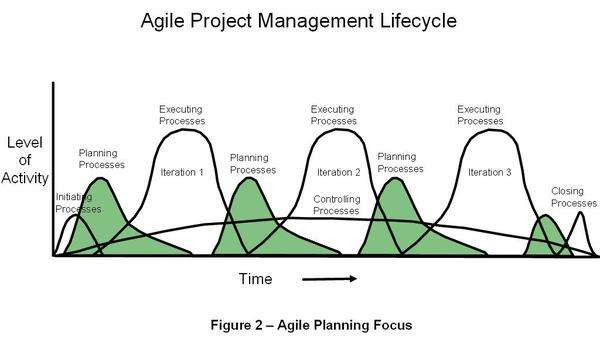
The agile method gives teams the power to adjust the project mid-course to address customer needs or to solve problems that arise. It works best on projects without known deadlines or a full scope of requirements. It tends to require a smaller budget and is perfect for projects that are more experimental in nature.
Rolling Wave Planning and Progressive Elaboration
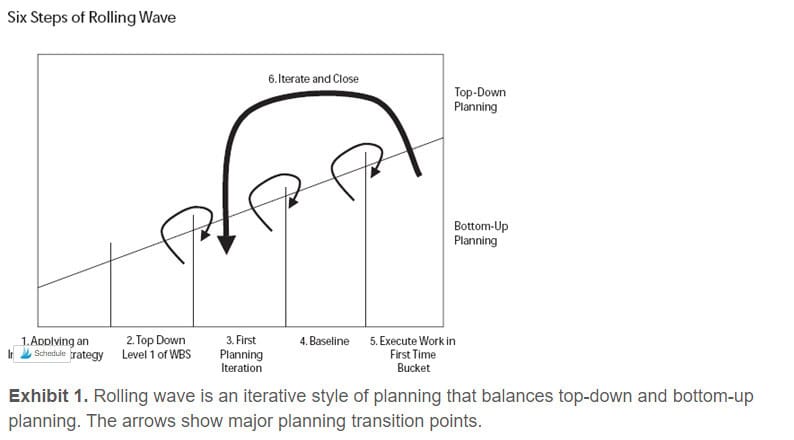
Rolling wave planning is a progressive-elaboration technique that focuses detailed planning on near-term activities while keeping later work at a higher level. By elaborating work in waves, teams concentrate effort and resources on what is imminent, reducing wasted planning on uncertain future tasks. This approach increases flexibility, improves the accuracy of estimates for upcoming work, and keeps the team aligned with immediate priorities.
To enhance this approach further, consider these practical insights:
- Focus detailed planning on the next one or two waves and allocate contingency for later waves to balance accuracy with flexibility.
- Hold time‑boxed reviews at wave boundaries to capture lessons learned, re‑prioritize work, and update estimates based on fresh stakeholder feedback.
- Maintain lightweight, consistent documentation of key decisions, assumptions, and approved changes to enable smooth handoffs and reduce rework in later waves.
- Use prototypes or minimum‑viable releases early to validate assumptions, lower technical risk, and improve estimate reliability for subsequent waves.
The 6 Steps of Rolling Wave
Below is a brief outline of the rolling-wave planning steps:
- Apply an Overall Schedule Strategy: The project team defines the overall scheduling approach, key milestones, and major sequencing decisions. This step provides strategic direction without excessive detail, ensuring alignment with business goals, constraints, and delivery expectations from the start.
- Top-Down Level 1 of WBS: The project scope is divided into major phases or deliverables using a high-level Work Breakdown Structure. This offers a clear structural overview while avoiding premature detailing of work planned for later stages.
- First Planning Iteration: Detailed planning focuses on near-term activities where information is most reliable. Future work remains broadly defined, enabling realistic estimates, early risk identification, and efficient allocation of planning effort.
- Establish the Baseline: Scope, schedule, and cost for the detailed portion of the project are approved and fixed. This baseline becomes the reference for performance tracking, change control, and progress measurement, while later phases stay flexible.
- Execute Work in the First Time Bucket: The team executes the planned activities for the immediate phase according to the baseline. Progress is monitored, issues are managed, and actual performance data is gathered to improve future planning accuracy.
- Iterate and Close: Once the current phase is completed, the next time period is planned in greater detail using updated information and lessons learned. This cycle repeats until all work is completed and the project is formally closed.
Prototyping vs Iterations in the Iterative Process
Knowing the difference between prototyping and iterations helps teams choose the right approach at each stage. Prototyping quickly validates assumptions and reduces risk before heavy investment; iterations deliver working increments and evolve the product over time. Using the appropriate method (or both together) saves time, reduces rework, and improves the chance of building something customers actually want.
Prototyping
Prototyping produces a tangible, often disposable model or mock‑up early in development to validate specific design choices, test usability, or prove technical feasibility. Prototypes are typically focused, time‑boxed, and created to answer particular questions (for example: “Will users understand this workflow?” or “Can this component meet performance requirements?”). They drive rapid feedback and targeted learning, and may be discarded or refined into the final product.
Iterations
Iterations are repeatable cycles of design, build, test, and refine applied across the product or product slices. Each iteration delivers a working increment that adds functionality, gathers broader stakeholder feedback, and progressively improves the product. Iterations emphasize incremental delivery, continuous improvement, and evolving requirements over multiple cycles.
When to Use Which
Use prototyping when you need quick, low‑cost validation of high‑risk assumptions (UX flows, technical feasibility, or critical interactions). Use iterations when you want to deliver usable increments, continuously refine requirements, and evolve the product toward a shippable outcome. Often teams combine both: prototypes to validate unknowns early, then iterative sprints to build and mature validated features.
Benefits of Progressive Elaboration Planning
These are some of the pros and cons of using progressive elaboration:
1. Efficient Project Goal Setting
Projects that succeed have clear, well‑defined goals. Progressive elaboration helps teams set SMART objectives—specific, measurable, attainable, realistic, and time‑bound—by refining requirements and estimates as the project evolves. SMART goals rooted in progressive elaboration increase accountability, reduce rework, and improve chances of on‑time, on‑budget delivery.
2. Better communications with Progressive Elaboration
Progressive elaboration simplifies managing project stakeholders by creating regular touchpoints for input and decision-making. It helps project managers retain cohesive teams, recruit organizational experts, and capture frontline feedback early. This collaborative, iterative approach strengthens buy‑in, uncovers hidden risks, and improves deliverable relevance and quality.
3. Accurate Project Risk Assessment
Progressive elaboration helps organizations identify major project risks early—often before work begins—so teams can develop contingency plans, prioritize mitigation, and allocate resources more effectively. Early risk insight improves decision-making, reduces surprises during execution, and increases the likelihood of delivering projects on time and within budget.
4. Avoiding Rigid Planning
There is also the risk of becoming too rigid in the execution of plans, which can create a stressful environment in the organization. The iterative process is a repeated cycle of designing, prototyping, testing, and refining multiple versions of a product. Rather than working in distinct stages, the project management team makes small adjustments to the proposed end-product in real-time
5. Identify Problems + Incorporate Feedback Earlier.
It enables teams to spot issues early, gather timely stakeholder feedback, and generate creative solutions throughout the project lifecycle. This iterative, hands‑on approach promotes continuous learning, reduces rework, and fosters collaboration, making project management more responsive, practical, and user‑centered overall.
Conclusion
Progressive elaboration empowers project teams to manage uncertainty by refining plans as new information emerges. Whether using rolling wave planning, prototyping, or iterative cycles, the approach helps teams focus on immediate priorities while keeping longer-term goals adaptable. It improves stakeholder communication, enables more accurate risk assessment, and supports setting SMART objectives that evolve with the project’s needs. Embracing progressive elaboration reduces the chance of costly rework and keeps teams aligned with real-world feedback and changing requirements.
Adopting progressive elaboration requires disciplined change control and clear documentation where needed, especially in traditional lifecycles. When balanced with appropriate governance, it delivers flexibility without sacrificing predictability—making it a practical strategy for complex, innovative, or uncertain projects that benefit from continuous learning and incremental planning.
Frequently Asked Questions (FAQs)
What is progressive elaboration?
Progressive elaboration is the practice of continuously refining project plans as new information becomes available. Teams add detail to near-term work while keeping long-term plans high-level, enabling better estimates, clearer priorities, and adaptive responses to changing requirements or stakeholder feedback.
When should I use rolling wave planning?
Use rolling wave planning when parts of the project are near-term and well-defined, while future work remains uncertain. It’s ideal for complex projects where breaking work into progressively detailed planning waves reduces risk and keeps the team focused on immediate deliverables.
How does progressive elaboration fit with Agile?
Progressive elaboration complements Agile by supporting incremental detailing and continuous learning. Agile iterations deliver working increments and gather feedback; progressive elaboration refines backlog items, estimates, and plans as the project evolves, improving alignment with stakeholder needs.
Will progressive elaboration increase scope creep?
Progressive elaboration can increase change requests if unmanaged, but disciplined change control and clear acceptance criteria prevent uncontrolled scope creep. Use governance, regular stakeholder reviews, and documentation proportionate to project complexity to keep changes intentional and traceable.
What documentation is needed?
Document decisions, updated plans, risk assessments, and approved change requests. Keep documentation lightweight where Agile applies, but sufficient to maintain traceability and stakeholder alignment. Focus on what adds value: clear requirements, acceptance criteria, and revised estimates for current planning waves.
Can progressive elaboration work in Waterfall projects?
Yes. In Waterfall, apply progressive elaboration primarily during planning and requirements phases to clarify unknowns. Use prototypes or phased releases to validate assumptions while maintaining the overall sequential lifecycle and change-control processes to preserve schedule and budget predictability.
Suggested articles:
- 15 Mistakes to Avoid with Stakeholders Communication Plan
- Mastering Stakeholder Communication: Tools and Techniques for Success
- 5 Ways to Prioritize Stakeholder Needs in Project Planning

Shane Drumm, holding certifications in PMP®, PMI-ACP®, CSM, and LPM, is the author behind numerous articles featured here. Hailing from County Cork, Ireland, his expertise lies in implementing Agile methodologies with geographically dispersed teams for software development projects. In his leisure, he dedicates time to web development and Ironman triathlon training. Find out more about Shane on shanedrumm.com and please reach out and connect with Shane on LinkedIn.