

Project management has shifted dramatically toward digital tools. We track tasks on cloud platforms. We communicate through messaging apps. We hold meetings over video calls. The software layer of project execution has never been more sophisticated. Yet something gets lost when we focus exclusively on digital infrastructure. The physical environment where project work happens continues to shape outcomes in ways that deserve more attention than they typically receive.
I have managed projects across industries and delivery models. The pattern is consistent. Teams with thoughtfully designed physical workspaces communicate better, collaborate more effectively, and deliver more reliably than those who treat the physical environment as an afterthought. This is not nostalgia for pre-digital project management. It is recognition that human collaboration remains fundamentally physical even when supported by digital tools. Understanding this helps project managers create conditions that actually enable the outcomes their digital systems are designed to track.
The Hybrid Reality
Most project teams now operate in hybrid configurations. Some members work on-site. Others work remotely. The mix varies by day, phase, and individual circumstance. This hybrid reality creates coordination challenges that neither purely co-located nor purely remote teams face.
- Information must flow across physical and digital spaces simultaneously.
- Meetings must accommodate participants in different modalities.
- Visual materials must be accessible regardless of location.
Many organisations responded to hybrid work by investing heavily in video conferencing infrastructure. This was necessary but insufficient. The harder problem is creating physical spaces that support effective hybrid collaboration rather than merely enabling remote participation. The distinction matters:
- A meeting room with a webcam allows remote attendance.
- A room designed for hybrid work enables genuine participation regardless of location.
- The former is a technical capability. The latter is a thoughtful integration of physical and digital elements.
Meeting Spaces That Actually Work
Project meetings vary widely in purpose and format. Status updates have different requirements than workshops. Stakeholder presentations differ from team retrospectives. Treating all meetings identically produces spaces optimised for none of them. Effective project spaces accommodate this variety through flexibility rather than specialisation.
- Furniture that reconfigures easily.
- Display technology that adapts to different content types.
- Acoustic properties that support both presentation and discussion.
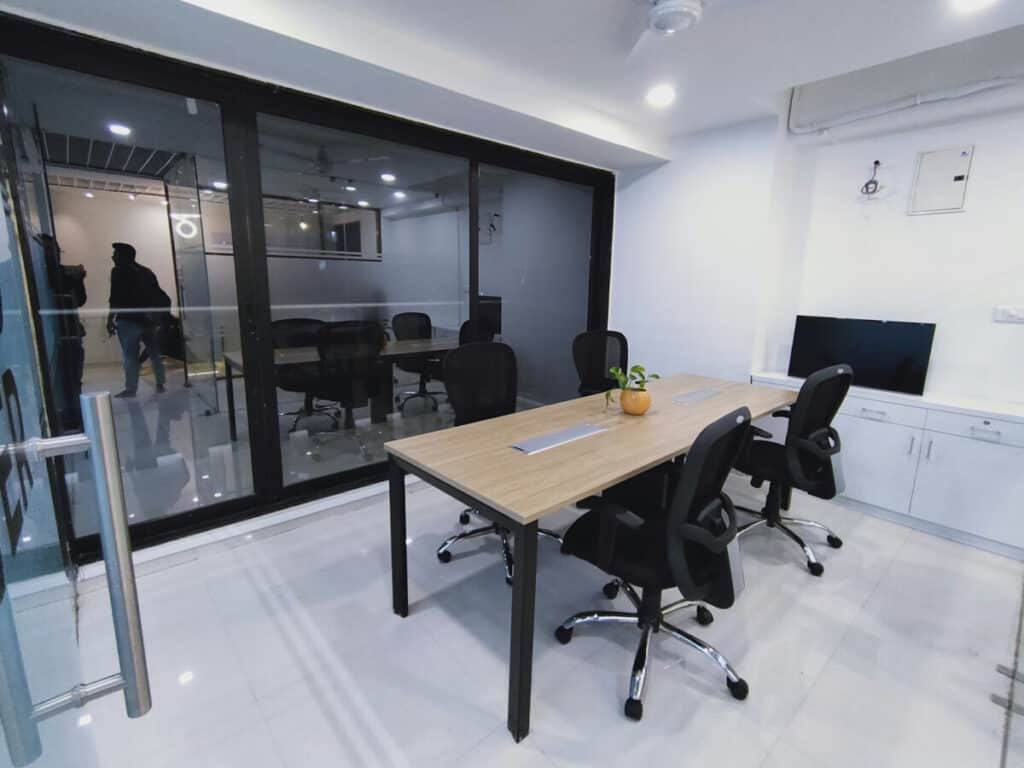
Visual display deserves particular attention. Project work generates visual artifacts. Roadmaps, architecture diagrams, workflow charts, and burn-down reports. These materials must be visible to all participants, whether present physically or joining remotely. Fixed displays limit flexibility. For instance:
- When the screen is mounted permanently on one wall, the room configuration must accommodate that constraint regardless of meeting type.
- When presenters cannot position displays optimally for their content and audience, communication suffers.
Many project teams have found that mobile display solutions provide the necessary flexibility. A mobile TV stand on wheels allows screens to be positioned optimally for each meeting configuration, moved aside when floor space is needed for workshops, or relocated entirely when project teams shift between spaces.
This flexibility supports the varied meeting formats that project delivery requires without permanent infrastructure commitment. The underlying principle matters more than the specific implementation. Physical workspace should adapt to project needs rather than forcing projects to adapt to workspace constraints.
The War Room Concept Revisited
Traditional project management valued dedicated war rooms. Spaces where teams could immerse themselves in the project context. Walls covered with schedules and status boards. Information is visible and current at all times. Digital tools were supposed to eliminate the need for these spaces. All that information could live in the cloud, accessible from anywhere. The war room seemed obsolete.
Experience suggests otherwise. Something valuable happens when project information occupies physical space. Team members absorb context passively. Conversations happen spontaneously around visible artifacts. The project becomes tangible in ways that screens alone cannot replicate. The modern war room looks different than its predecessors:
- It integrates digital displays showing real-time dashboards.
- It accommodates remote participants through thoughtful camera and audio placement.
- It remains flexible enough to support varied activities beyond passive information display.
But the core function persists. Creating physical space where the project context surrounds the team, enabling the ambient awareness that supports effective collaboration.
Agile Ceremonies in Physical Space
Agile methodologies emphasise face-to-face communication for good reason. Standups, retrospectives, planning sessions, and reviews all benefit from the rapid information exchange that physical presence enables. Remote-first agile implementations have proven workable. Teams have adapted ceremonies for virtual environments with varying degrees of success. But something is lost in translation. The energy of a well-run physical standup differs qualitatively from its virtual equivalent.

Hybrid agile creates particular challenges. When some team members are present and others remote, the in-room participants must consciously include remote colleagues. Without deliberate attention, the physical conversation dominates while remote participants become passive observers. Physical setup affects these dynamics significantly:
- Camera positioning that shows the room rather than just the speaker.
- Audio that captures all voices rather than just whoever sits nearest the microphone.
- Displays that remote participants can actually read.
- These technical elements enable the inclusive participation that agile ceremonies require.
Sprint retrospectives benefit especially from physical facilitation. The tactile experience of writing on cards, posting them on walls, clustering, and voting creates engagement that digital equivalents struggle to match. When possible, bringing teams together physically for retrospectives pays dividends in participation quality and insight generation.
Training and Knowledge Transfer
Projects require continuous learning. New team members need onboarding. New tools require training. Process changes demand communication. This knowledge transfer happens through formal sessions and informal interactions.
- Formal training sessions benefit from physical presence when possible.
- Trainers read audience reactions and adjust accordingly.
- Participants ask questions more readily.
- The social commitment of physical attendance increases engagement and retention.
Training space requirements differ from meeting requirements. Participants need surfaces for note-taking. Sight lines to displays matter more when the content is instructional. Break areas support the relationship-building that makes training sessions valuable beyond their formal content. Informal knowledge transfer happens in physical spaces that encourage interaction.
- Shared areas where conversations happen naturally.
- Visibility into what colleagues are working on.
- Proximity that enables quick questions and spontaneous collaboration.
Remote work has demonstrated that projects can succeed without this informal transfer. But it has also revealed the hidden costs. Onboarding takes longer. Knowledge remains siloed. The organic mentorship that develops through proximity must be deliberately manufactured through scheduled interactions.
Stakeholder Communication
Projects exist within organisational contexts. Stakeholders outside the delivery team need visibility into progress, issues, and decisions. This communication shapes perceptions that affect resource allocation, scope decisions, and career outcomes for project managers. Stakeholder communication formats vary by audience and purpose:
- Executive updates prioritise synthesis and decision support
- Technical reviews require detail and demonstration capability
- Steering committee meetings need structured agenda management
Physical presence for key stakeholder interactions often matters more than project managers recognise:
- The executive who experiences your update in person forms different impressions than one who watches through a screen
- The steering committee that gathers physically engages differently from one whose members dial in individually
- Location and preference constraints don’t always allow control over this factor
When choice exists, project managers should consider the value of physical presence for critical communication moments.
Preparation for these sessions deserves commensurate attention:
- Chaos and improvisation suggest the opposite, regardless of actual project health
- The physical environment reflects on the project
- A well-organised meeting space with appropriate materials ready suggests a well-organised project
Building Communication Infrastructure
Effective project communication requires infrastructure beyond software. Physical spaces, display capabilities, acoustic properties, and furniture configurations all contribute to communication effectiveness. This infrastructure deserves deliberate attention during project setup.
- What spaces will the team use regularly?
- How will those spaces support the communication patterns the project requires?
- What equipment or configuration changes would improve effectiveness?
These questions often go unasked. Projects inherit whatever spaces are available and adapt to whatever constraints those spaces impose. The accommodation happens unconsciously, with costs that remain invisible because no comparison exists. Taking workspace seriously means treating it as project infrastructure requiring the same deliberate selection and configuration as software tools. The investment is typically modest. The returns in improved communication and collaboration can be substantial.
The Integration Imperative
Digital and physical project infrastructure should integrate seamlessly. Information displayed physically should match digital systems. Meeting materials created digitally should translate effectively to a physical presentation. Remote participants should experience meaningful inclusion in physical gatherings. This integration requires intentional design. Default configurations rarely achieve it. Project managers must think systematically about how information flows between physical and digital spaces.
Then they can create processes and infrastructure that enable smooth movement. The goal is not to privilege either modality but to enable teams to use whatever combination serves each situation best. Some work benefits from physical collaboration. Some benefits from digital tool capabilities. Most benefit from a thoughtful combination of both. Projects that master this integration operate with advantages that their competitors lack. They capture the benefits of co-location without its constraints.
They leverage digital tools without losing the human connection that drives effective collaboration. The future of project delivery belongs to teams that treat physical and digital infrastructure as complementary rather than competing. Building this capability requires attention to the workspace that matches attention to tooling. The project managers who understand this will deliver better outcomes than those who remain focused exclusively on the screen.
Suggested articles:
- Top 5 Advantages of Using Coworking Spaces
- Managing Remote Teams Effectively in a Hybrid Work Environment
- Top 15 Best Tools for Remote Tech Companies in 2026

Daniel Raymond, a project manager with over 20 years of experience, is the former CEO of a successful software company called Websystems. With a strong background in managing complex projects, he applied his expertise to develop AceProject.com and Bridge24.com, innovative project management tools designed to streamline processes and improve productivity. Throughout his career, Daniel has consistently demonstrated a commitment to excellence and a passion for empowering teams to achieve their goals.