
The Product Canvas is a comprehensive yet concise strategic tool that clearly articulates a product’s identity and market position. This powerful framework enables teams to develop products with optimal features and exceptional user experiences. By integrating UX design principles with Agile methodologies, the Product Canvas enriches user stories through storyboards, personas, design sketches, usage scenarios, and other essential artifacts. It serves as a valuable instrument for developing compelling business cases and presenting product concepts to investors and stakeholders.
Additionally, the canvas facilitates team alignment on product functionality and integrates seamlessly with Lean Startup, Scrum, and Kanban frameworks. To fully leverage this tool’s potential, it’s essential to understand how it differs from related frameworks and when to apply it most effectively in your product development process.
Product Canvas VS Feature Canvas: Understanding the Key Differences
In product development, having the right strategic tools can make the difference between building products that truly resonate with users and those that miss the mark. Two complementary frameworks, the Product Canvas and Feature Canvas, serve distinct yet interconnected purposes in guiding teams through the product development journey. Understanding when and how to use each tool is essential for creating products that deliver real value.
- Product Canvas: A comprehensive strategic tool designed to build products by focusing on the systematic development of features and functionality. This framework enables product teams to map out the entire product vision, including target users, key features, competitive advantages, and value propositions. It provides a holistic view of what the product should accomplish and how it will deliver value to customers in the marketplace, serving as the big-picture strategy for product development.
- Feature Canvas: A more granular, problem-focused approach that uses a set of powerful, thought-provoking questions to help product teams stick to the problem space rather than jumping directly to solutions. The Feature Canvas serves as a strategic tool to start evaluating a feature or an idea while keeping the usage context and the customer’s actual problems at the forefront of decision-making. It encourages teams to deeply understand user needs, pain points, and desired outcomes before committing resources to feature development. By maintaining focus on the problem space, it helps prevent the common pitfall of building features that seem innovative but don’t actually address real customer needs.
Both tools complement each other in the product development process, creating a powerful framework for success. The Product Canvas provides the big-picture strategy and overall vision, while the Feature Canvas ensures each feature is justified and aligned with user needs. Together, they help product teams maintain strategic clarity while staying grounded in solving real customer problems, ultimately leading to products that are both strategically sound and genuinely valuable to users.
When to Use Product Canvas
The Product Canvas serves as a versatile strategic tool throughout the product development lifecycle, offering teams a structured approach to building, validating, and refining their products. Whether you’re launching a new product or iterating on an existing one, the Product Canvas provides clarity and alignment across all stakeholders. Understanding when and how to leverage this powerful tool can significantly impact your product’s success and team efficiency.
Key Applications of the Product Canvas:
- Vision Creation and Communication: Helps do more than just create a vision—it articulates and communicates the product strategy across teams and stakeholders
- Minimum Viable Product (MVP) Development: Facilitates building a minimum viable product or a product increment by focusing on essential features and core functionality
- Data Collection and User Feedback: Enables systematic collection of data and feedback from users and stakeholders to validate assumptions and measure success
- Iterative Learning: Helps the product owner learn from findings and insights, then update the product canvas as new information emerges
- Workshop Facilitation: Used in collaborative workshops where the team and the product owner update sections together and identify priorities
- Sprint Planning: Applied either during or before development sprints to ensure alignment on goals, features, and priorities
- Stakeholder Alignment: Brings together cross-functional teams, executives, and stakeholders to agree on product direction and key decisions
- Product Roadmap Validation: Serves as a checkpoint to ensure the product roadmap aligns with user needs, business goals, and technical feasibility
How to Create Your Product Canvas
Creating your product canvas is a straightforward process that transforms abstract ideas into concrete action plans. Using a template streamlines this process, making it easier to create, share, and collaborate on your product strategy. By following a systematic approach, you can ensure that all critical elements of your product are thoroughly considered and documented. Select a template that fits your needs and follow these essential steps:
Steps to Build Your Product Canvas:
- Name the Product: Choose a clear, strategic name that positions your product in the market. If the initial name isn’t quite right, add the version number or purpose to provide additional context and clarity.
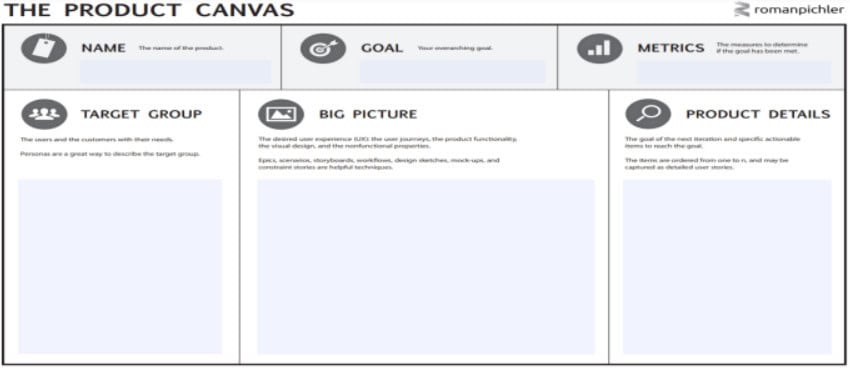
- Set the Goals: Define what you want to achieve with this release or product. Copy the relevant metrics and goals from your product roadmap directly into the product canvas template to maintain alignment.
- Define the Metrics: Establish both quantitative and qualitative measures that will help you understand whether your objectives have been achieved and track progress over time.
- Identify the Personas: Define the users who will use or buy the product, as they will guide feature prioritization. These are the customers for whom you will create the optimal user experience.
- Figure Out the Strategy: Outline the complete user journey, develop user stories, and establish the visual design direction of the product to create a cohesive experience.
- Add Details: Document specific action items needed to reach your next goal, address potential risks, capture key learnings, and plan feature releases.
- Use the Product Canvas for Roadmap and Backlog: Connect your canvas to product roadmaps (which visualize how the product will evolve and balance business needs with goals) and backlogs (which contain goal-oriented items that must be accomplished). Link your template to other strategic templates to maximize value and support continuous evolution.
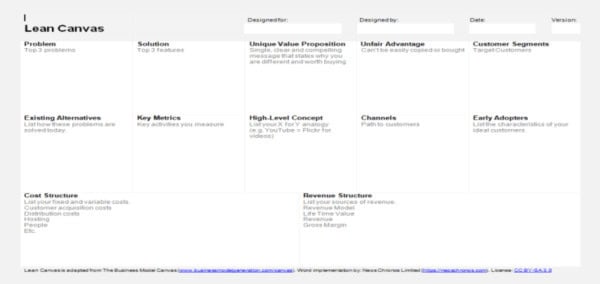
Product Canvas Template Word
Source: https://neoschronos.com/download/lean-canvas/docx/
Product Canvas Template PowerPoint

Source: https://wow.agiledata.io/project/information-product-canvas/
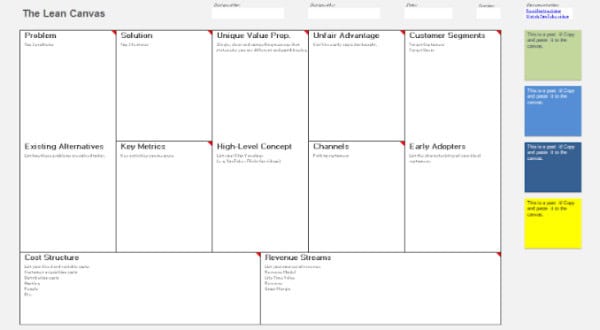
Product Canvas Template Excel
Source: https://neoschronos.com/download/lean-canvas/xlsx/
Product Canvas Template PDF
Source: https://www.romanpichler.com/downloads/tools/Romans-product-canvas-template-old.pdf
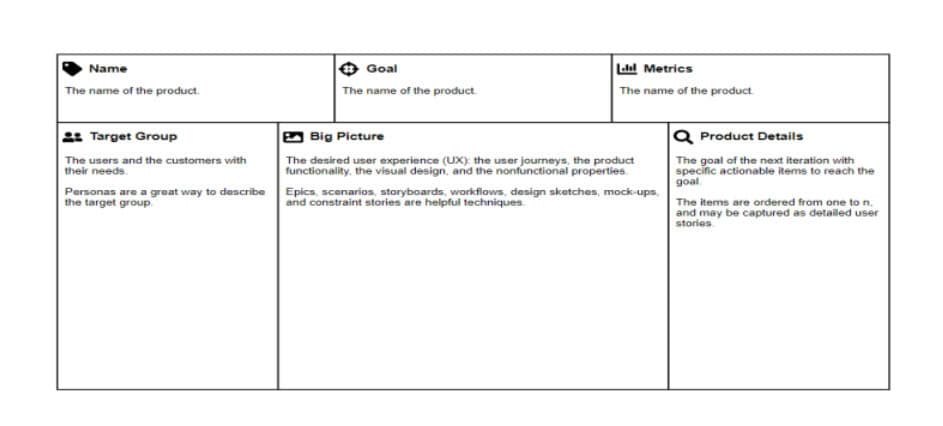
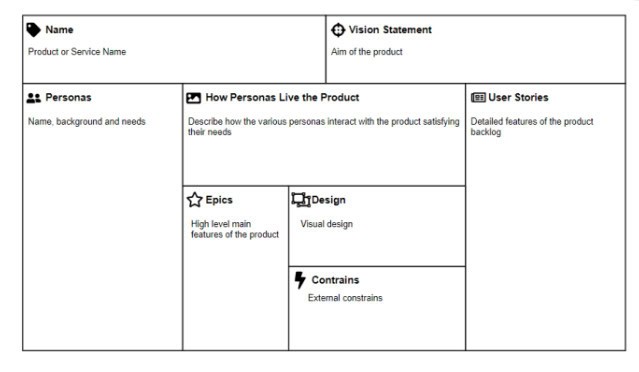
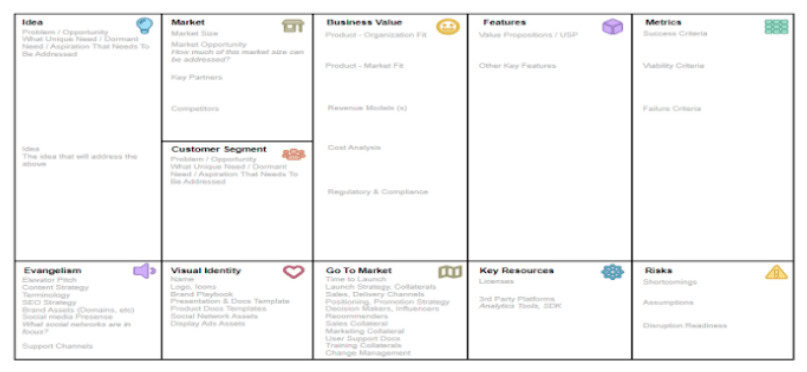
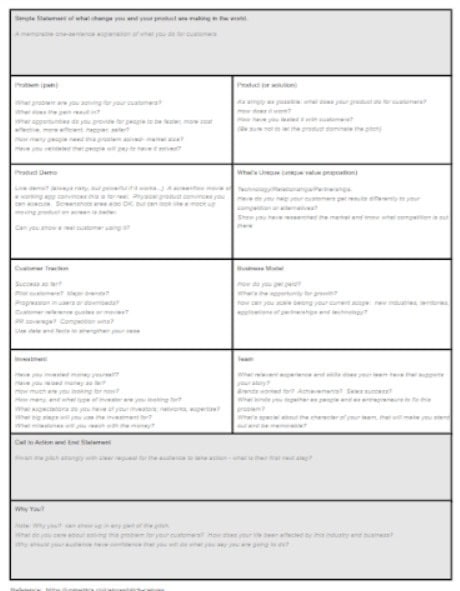
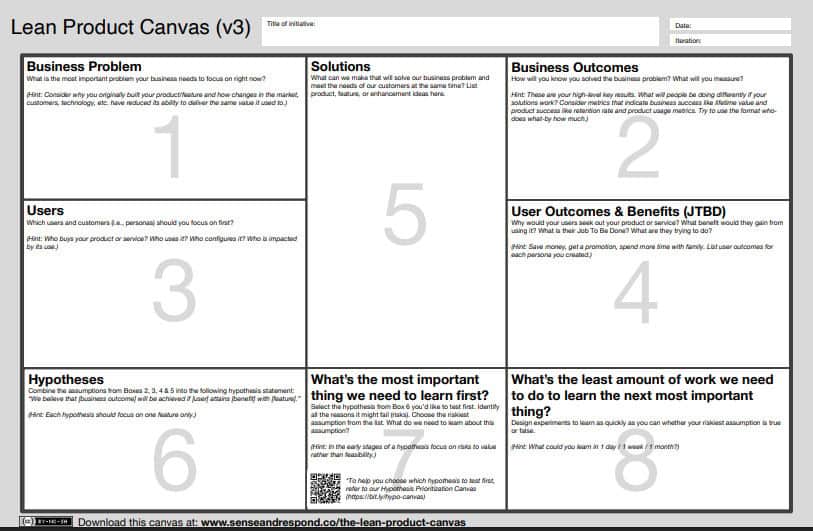
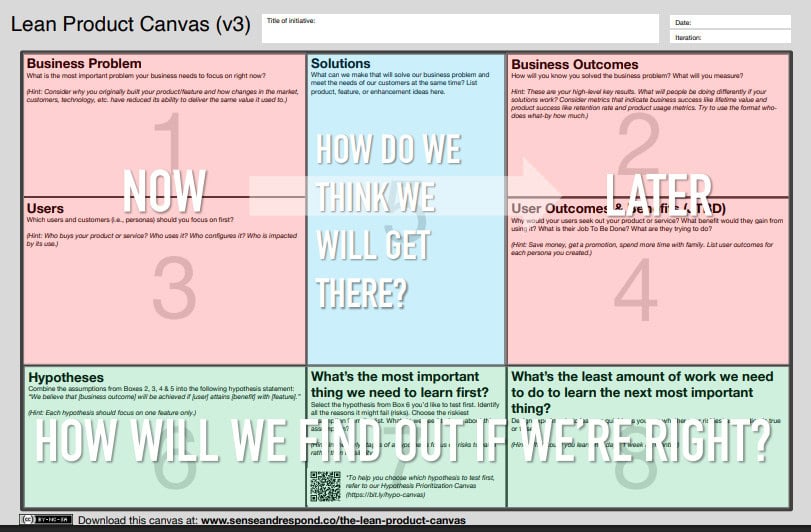
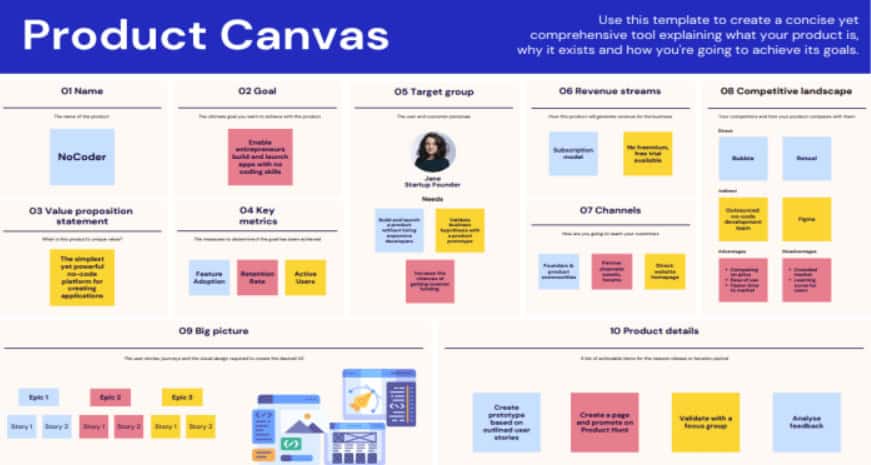
Source: https://www.fractionalteams.com/product-canvas-template-looking-at-a-big-product-picture/
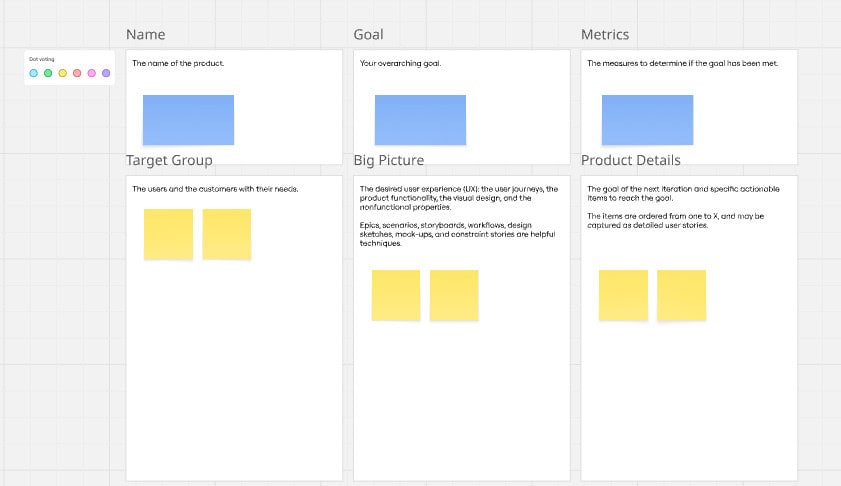
Source: https://miro.com/templates/product-canvas/
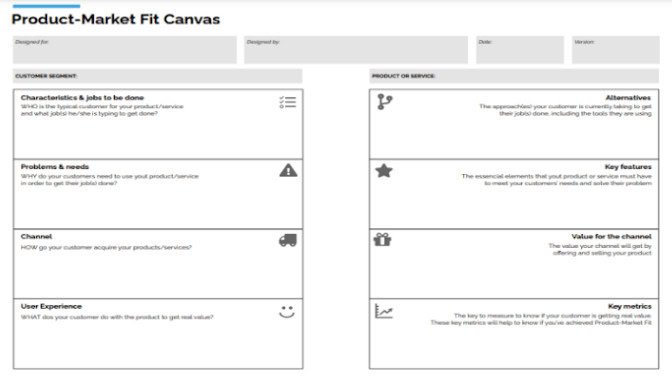
Source: https://businessmodelanalyst.com/downloads/product-market-fit-canvas-template/
Product Canvas Template Online Tools
Miro
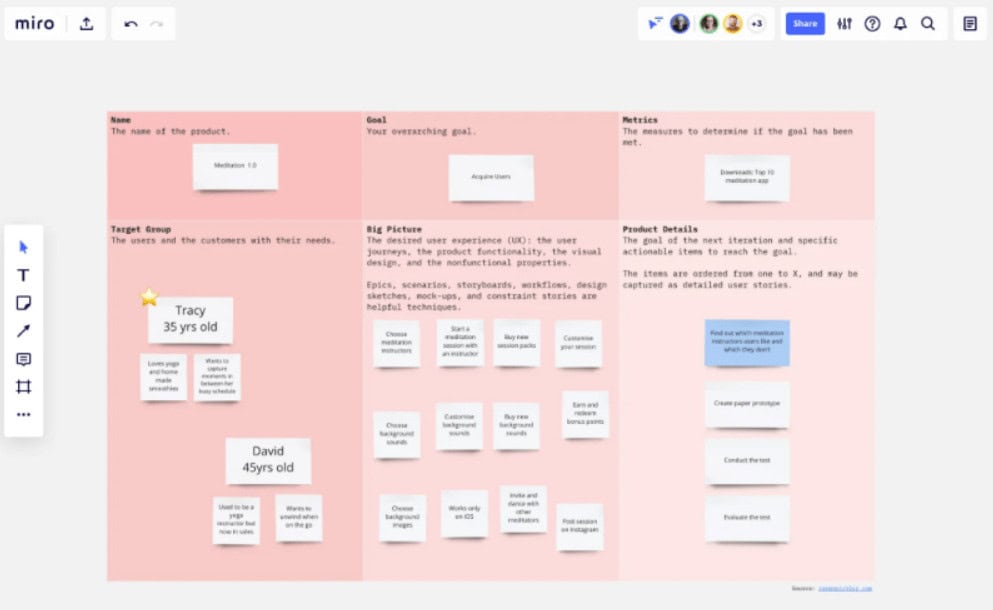
The Miro Canvas Template will help you define a prototype. It’s an important step in identifying the potential users, the basic functionality, the problem, advanced functionalities, potential gain, and the competitive advantage of the product.
Xtensio
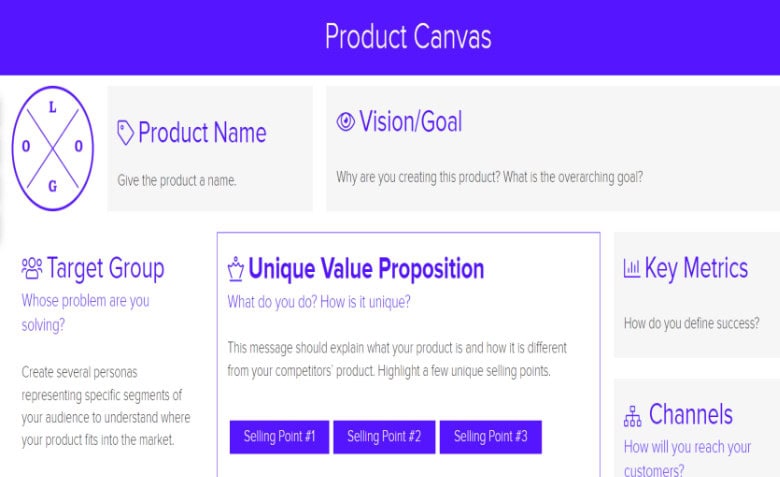
The Xtensio product canvas template displays the information needed to build a product. From market landscape to sales and marketing, and cost structures. This template helps product owners to align the team, validate solutions, and get the product idea ready for development.
Figma
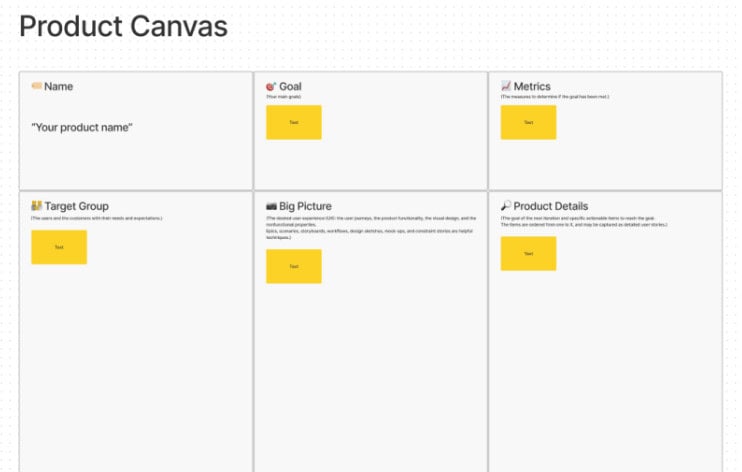
This is an overview of the product vision to understand the main points that define the success of the product.
Creately
The created product canvas template helps describe, design, and map your product strategy. Add this to your business plan and explain the concept of your service or product. Easily edit this template and export it in formats like PNG, JPEG, and SVG, and add it to a Word document.
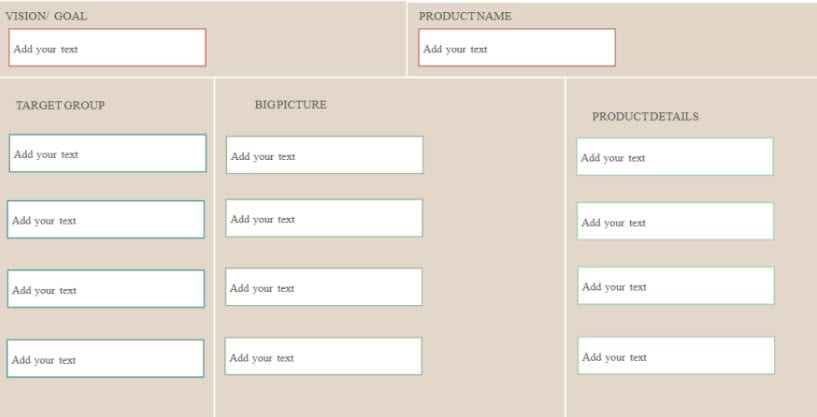
Best Practices
- Gather the team and discuss the values, vision, and what it should look like.
- Place the best ideas on a sticky note or text blocks.
- Debate on the technology and business goals, as well as the measures of benefits and success.
- Define product details and personas to have a full view of your project.
- Estimate a timeline for the process by using the product roadmap template.
- Turn your ideas into actionable items and start the delivery work right away.
Video About Product Canvas and How to Fill One Out
Understanding how to effectively use a Product Canvas can transform your product development process. This short video tutorial walks you through the essential components of a Product Canvas and demonstrates exactly how to complete one step-by-step. Whether you’re a product manager, startup founder, or development team member, this visual guide will help you leverage this powerful strategic tool to align your team, validate your product vision, and ensure you’re building features that truly matter to your users.
Conclusion
The Product Canvas stands as an invaluable strategic tool for modern product development teams seeking to create user-centric solutions while maintaining business viability. By bringing together UX principles, agile methodologies, and strategic planning in a single accessible framework, it enables teams to move beyond assumptions and build products grounded in real user needs and validated business goals. Whether you’re launching a new product, refining an existing one, or seeking better stakeholder alignment, the Product Canvas provides the necessary structure and clarity for success.
The templates and online tools highlighted in this guide offer multiple entry points for teams of all sizes and experience levels. Start with a format that fits your workflow, involve your cross-functional team early, and remember that the canvas is a living document meant to evolve as you learn. By embracing the Product Canvas methodology and combining it with complementary tools, you’ll be better equipped to build products that truly resonate with users and deliver measurable business value.
Product Canvas FAQs
What is the purpose of a product canvas?
A product canvas systematically guides feature development by integrating UX design principles with agile methodologies. It helps teams validate product solutions, align stakeholders on core functionality, and ensure user-centered development while maintaining focus on delivering measurable value throughout the product lifecycle.
What is a product strategy canvas?
Created by Melissa Perri, a product strategy canvas articulates product development direction and differentiates strategic vision from tactical execution plans. It communicates how products will evolve, aligning teams on competitive positioning, market opportunities, and long-term goals while ensuring clarity between strategy and implementation.
Why is a product canvas an essential tool?
This collaborative framework unites stakeholders and development teams around shared product understanding. It validates design thinking, supports agile methodologies, emphasizes user experience, and bridges strategic vision with practical development. The canvas serves as a critical validation checkpoint and launch foundation for successful product creation.
What is a Product Management canvas?
Understanding how to effectively use a Product Canvas can transform your product development process. This comprehensive video tutorial walks you through the essential components of a Product Canvas and demonstrates exactly how to complete one step-by-step. Whether you’re a product manager, startup founder, or development team member, this visual guide will help you leverage this powerful strategic tool to align your team, validate your product vision, and ensure you’re building features that truly matter to your users.
Suggested articles:
- 18 x Product Launch Plan Templates
- 10 Free Product Backlog Templates
- 3 Free Implementation Plan Templates

Shane Drumm, holding certifications in PMP®, PMI-ACP®, CSM, and LPM, is the author behind numerous articles featured here. Hailing from County Cork, Ireland, his expertise lies in implementing Agile methodologies with geographically dispersed teams for software development projects. In his leisure, he dedicates time to web development and Ironman triathlon training. Find out more about Shane on shanedrumm.com and please reach out and connect with Shane on LinkedIn.