
A stakeholder is any party with an interest in your project or initiative, whether an individual person, a specific group, or an entire organization with multiple members. Project managers carry the responsibility of identifying and selecting the right stakeholders at the outset, understanding that successful projects in any sector depend on both internal and external stakeholder engagement from start to finish.
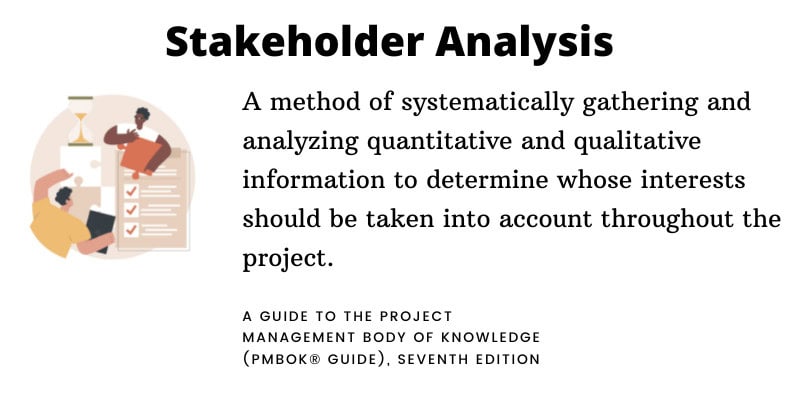
Stakeholder analysis is the systematic process of gathering and evaluating both quantitative and qualitative information to determine whose interests deserve attention throughout the full project lifecycle from start to finish. Internal stakeholders include senior management and project team members, while external stakeholders may include government bodies, customers, contractors, suppliers, and other interested parties with a stake in the final outcome of the project.
Why Is Stakeholder Analysis Important?
Conducting stakeholder analysis at the beginning of your project delivers important advantages that ripple across the entire project lifecycle and beyond completion. Understanding who your stakeholders are, what they care about most, and how they can influence outcomes helps you build a stronger foundation for project success from the very first planning session through final delivery and closure.
Here are the key reasons stakeholder analysis matters for your project:
- Enables Faster Project Start: The project takes shape quickly, and implementation begins much sooner when influential stakeholders provide their input early in the process. Their perspectives help define scope boundaries, priority items, and constraints before real work begins, reducing false starts and costly rework that commonly plague projects launched without proper stakeholder consultation and engagement from the beginning stages.
- Improves Overall Project Quality: Stakeholder input collected at the very start of the process directly improves the quality of your project outcomes and deliverables. Engaged stakeholders are more willing to contribute valuable resources, including financial support, time commitments from their teams, and access to key personnel. These contributions create a stronger foundation for delivering results that meet expectations.
- Prepares for Future Challenges: Stakeholder analysis helps you anticipate and predict reactions to your project as it develops and evolves over the course of delivery. Understanding stakeholder positions early allows you to address concerns before they become major obstacles, maintain support through difficult phases, and navigate organizational politics with greater confidence and strategic awareness throughout the project.
Examples Of The Stakeholder Analysis Model
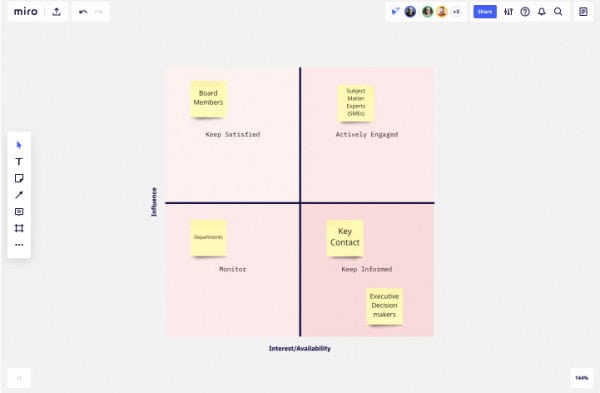
Creating your own stakeholder analysis model is straightforward once you understand the core framework and methodology involved in the entire process. The process involves populating a power-interest grid with stakeholders essential to your project, then determining the most effective ways to communicate with each group to secure their ongoing support and active participation throughout the project lifecycle.
Common project examples that benefit from stakeholder analysis include these:
- Software Development Projects: Customer relationship management systems, enterprise resource planning platforms, and supply chain management software all require careful stakeholder identification before development begins. Users, executives, IT teams, and external vendors each have distinct interests and influence levels that must be mapped and managed throughout the development lifecycle for optimal project outcomes and user satisfaction.
- Infrastructure and Construction Projects: Public infrastructure initiatives, commercial building developments, and facility renovation projects involve government agencies, community groups, contractors, and regulatory bodies with competing interests and needs. Mapping these stakeholders using a power-interest grid helps project managers prioritize stakeholder engagement efforts effectively and allocate limited resources toward the most influential and genuinely interested parties involved in the project.
- Organizational Change Initiatives: Digital transformations, corporate restructuring efforts, and process improvement projects affect employees across all levels of an organization in significant and lasting ways over time. Identifying change champions, potential resisters, and neutral parties through stakeholder analysis allows leaders to tailor communication strategies and build coalitions that support successful implementation and sustainable long-term organizational change.
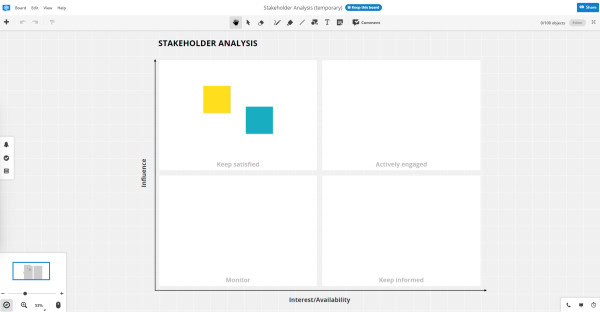
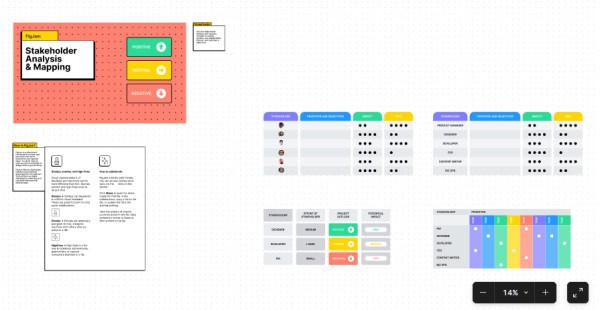
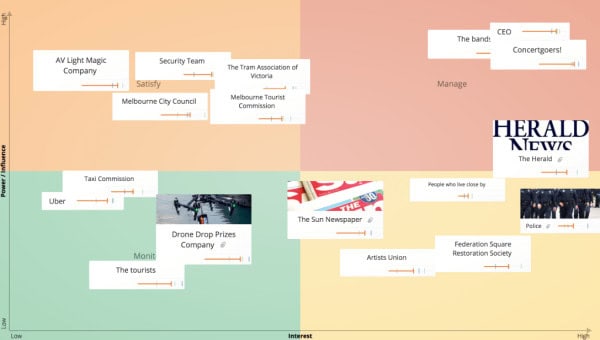
Explore examples of stakeholder analysis models below:
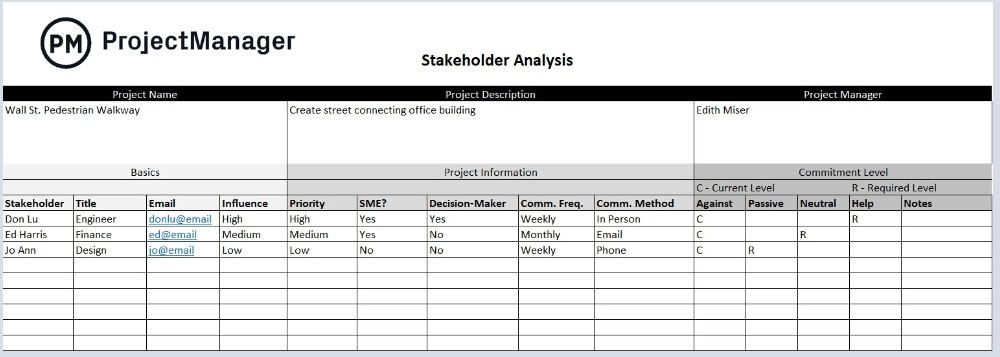
Stakeholder Analysis| Projectmanager
Benefits Of Stakeholder Analysis
Performing a thorough stakeholder analysis before launching your project delivers measurable benefits that compound throughout the delivery lifecycle from start to finish. These advantages extend far beyond simple identification of names and roles, creating a framework for better decision-making, resource allocation, and risk management that ultimately determines project success or failure in the end for teams.
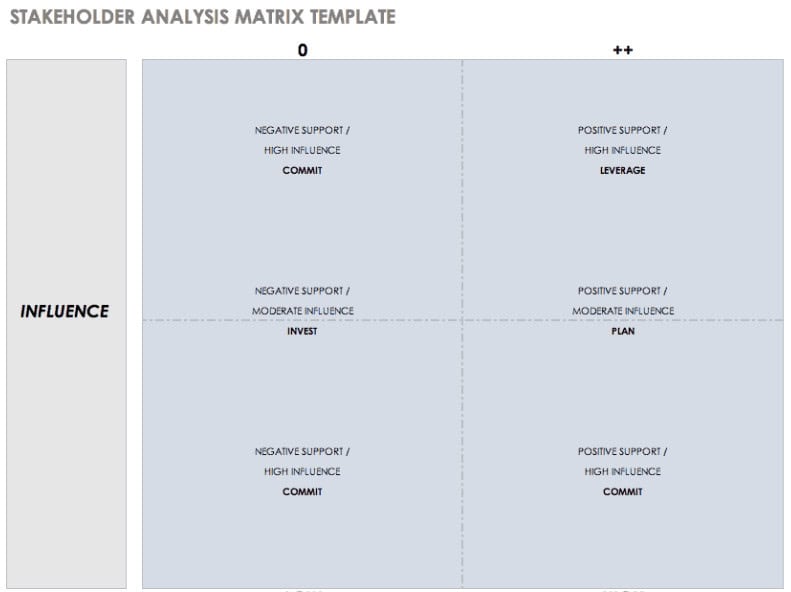
Stakeholder Analysis template| Smartsheet
The key benefits of stakeholder analysis include the following important points today:
- Identification of Right Information: Stakeholder analysis helps you determine exactly what information each group needs and how to present it effectively for maximum understanding and genuine impact. Clear, targeted communication increases stakeholder comprehension of project goals, timelines, and expectations from the very start. It also raises visibility among executive stakeholders who control resources and strategic direction for your initiative.
- Supports Quality Project Development: With proper stakeholder input gathered at the right time, you can develop realistic schedules and actionable plans that guide implementation smoothly. Identifying potential project management challenges and risks early becomes much easier when stakeholders share their unique perspectives. Developing effective mitigation strategies becomes more robust with diverse viewpoints informing your overall approach and planning work.
- Builds Trust and Accountability: When stakeholders understand the project adequately and feel heard throughout the entire process, they become more willing to offer financial support and other resources when needed. Knowing the right people to consult for specific issues builds trust and establishes clear accountability channels that serve the project well through challenging periods and difficult decisions.
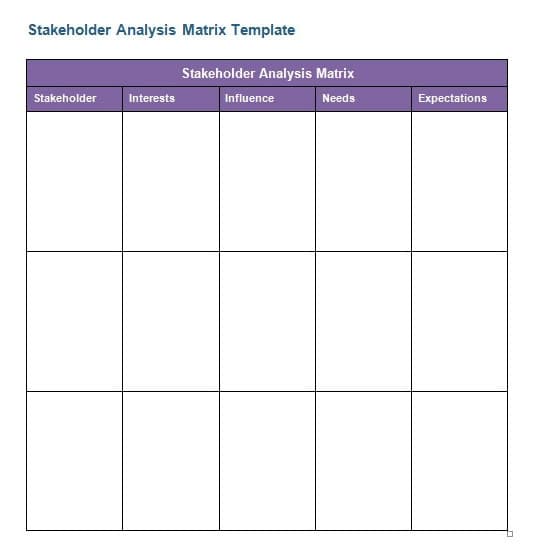
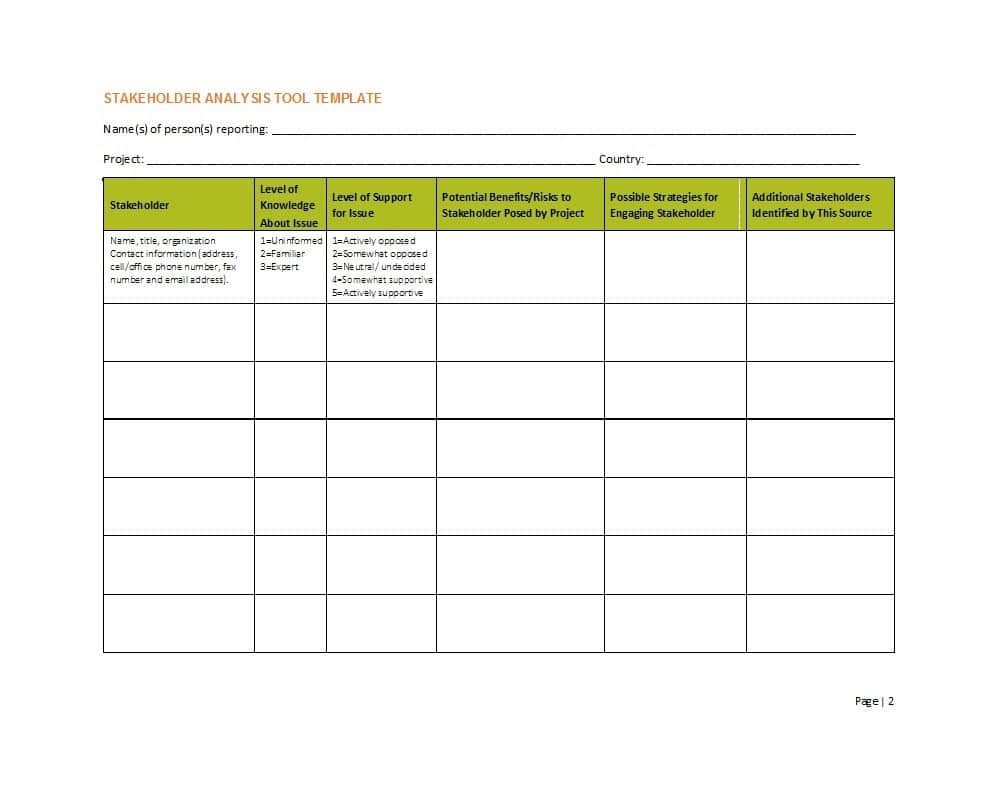
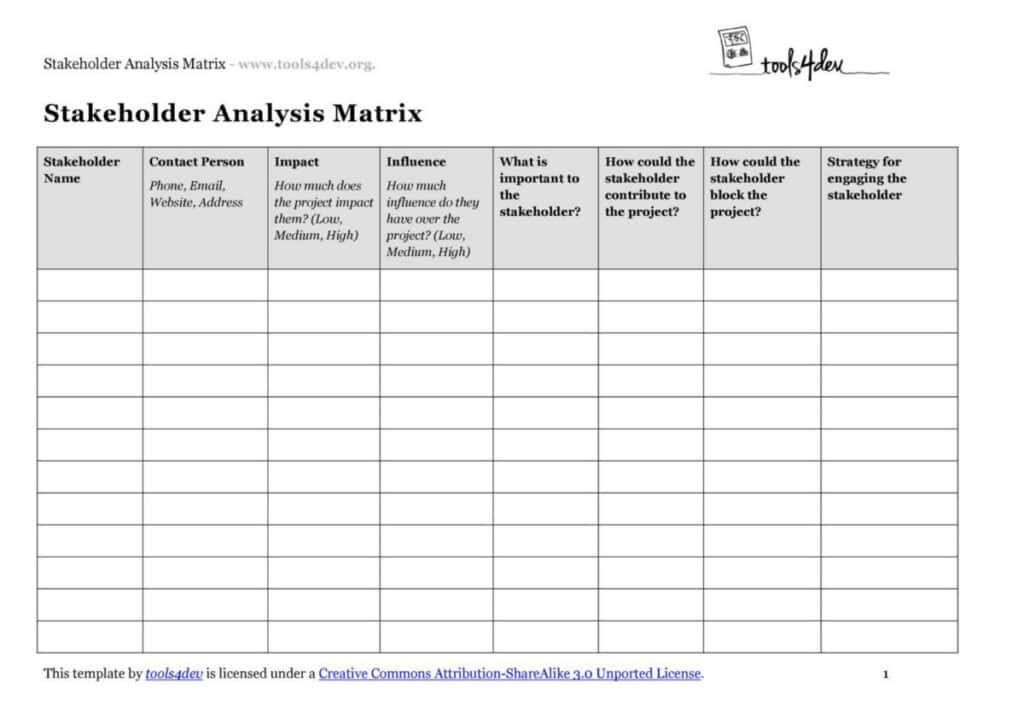
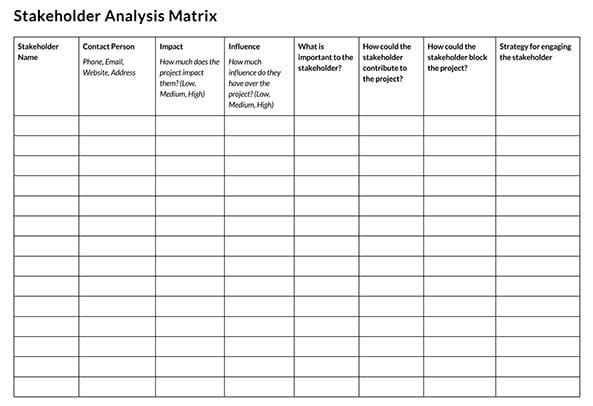
Stakeholder Analysis Matrix Templates (Word)
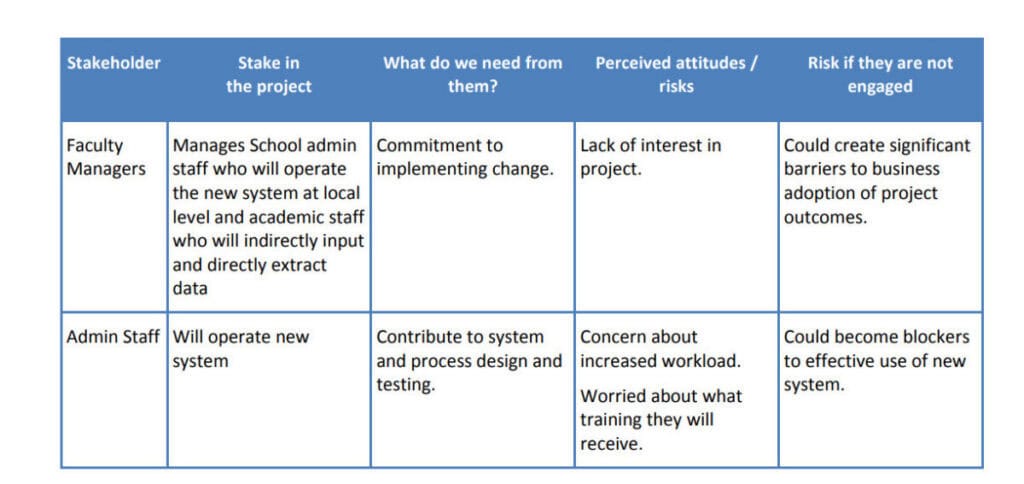
A stakeholder analysis matrix template helps you classify stakeholders systematically and assess their level of interest and influence on your project outcomes and results. This structured approach ensures consistent documentation of expectations, input planning, and engagement strategies across all identified stakeholder groups throughout the entire project lifecycle from initiation through final delivery and closure phases.
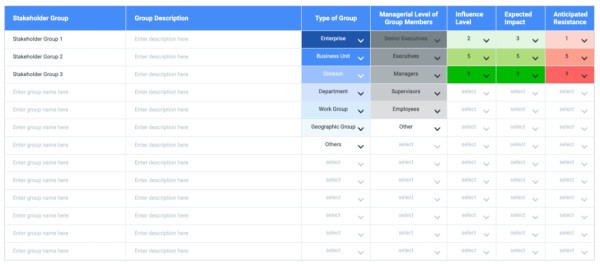
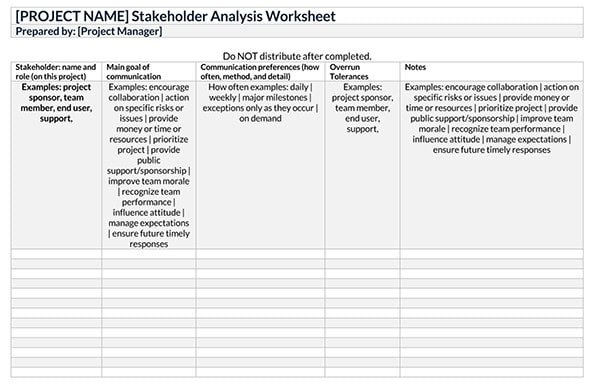
To guide your stakeholder analysis, create a structured table with columns capturing the essential details outlined below. This organized format ensures consistency across all stakeholder entries and simplifies the process of tracking engagement strategies, influence levels, and specific needs. Populate each column thoroughly to build a comprehensive reference that supports informed decision-making throughout your project’s lifecycle.
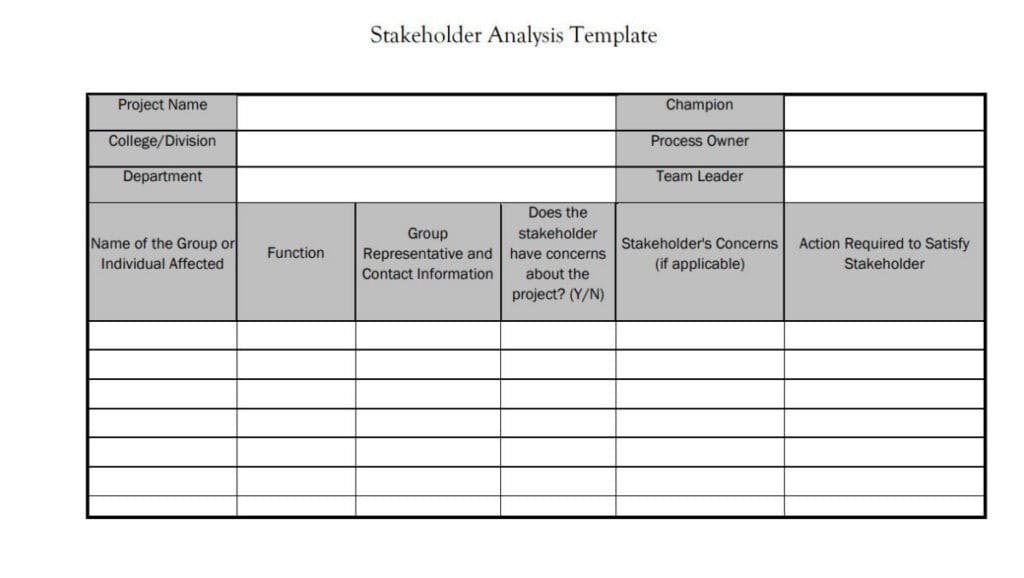
- Stakeholder or Group Name: Identify the specific person, team, or organization involved in or affected by the project.
- Internal or External Classification: Determine whether the stakeholder belongs within the organization (internal) or outside of it (external).
- Engagement Level: Unaware, Resistant, Neutral, Supportive, or Leading: Assess how involved and supportive the stakeholder currently is toward the project.
- Influence Level (1–5, with 5 being highest): Rate how much power this stakeholder has to affect project decisions or direction.
- Ability to Impact Resources (1–5): Rate how much control or access this stakeholder has over budget, staffing, tools, or other resources.
- Total Score: Combine the influence and resource-impact ratings to determine overall stakeholder priority.
- Stakeholder’s Needs and Key Concerns: Note what this stakeholder cares about most and what issues could affect their support.
- Requirements Needed From This Stakeholder: Specify what input, approval, or support you need from them for the project to succeed.
- Risk of Insufficient Engagement (incorporate into risk management plan): Describe the potential negative consequences if this stakeholder is not properly engaged, and how to mitigate that risk.
Explore these stakeholder analysis word templates:
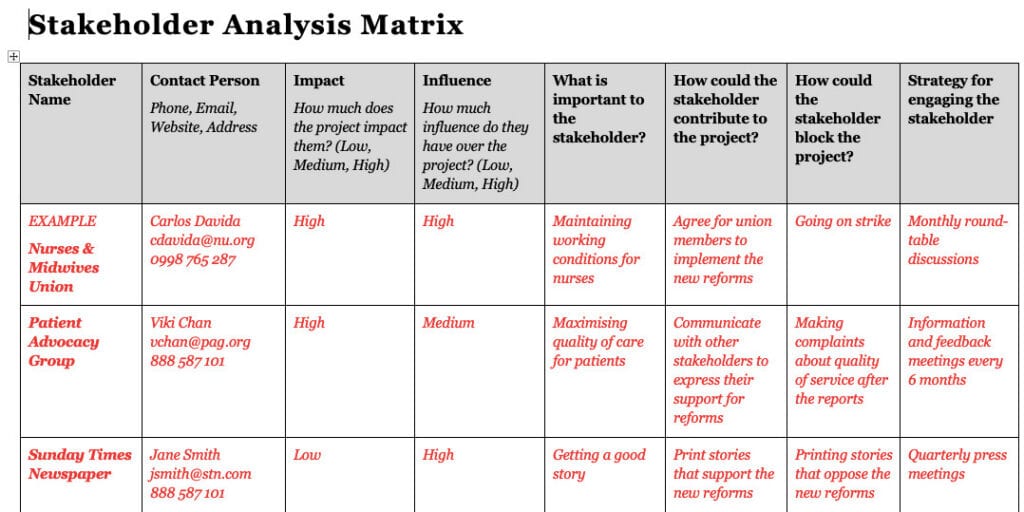
Stakeholder Analysis template| Tools4dev
How To Conduct Stakeholder Analysis?
Conducting stakeholder analysis follows a structured three-step process that helps project teams identify, prioritize, and engage the right people effectively and efficiently every single time. Following this proven methodology ensures no critical stakeholder is overlooked and that engagement strategies are tailored to each group’s unique needs, expectations, and preferred communication channels for the best possible results.
Follow these three core steps for effective stakeholder analysis every time:
- Identify All Relevant Stakeholders: Begin by listing every person, group of people, or organization that could affect or be affected by your project outcomes and activities. Cast a wide net during this phase to capture both obvious stakeholders like team members and sponsors, and less obvious ones like regulatory bodies, community representatives, and indirect beneficiaries of your project results.
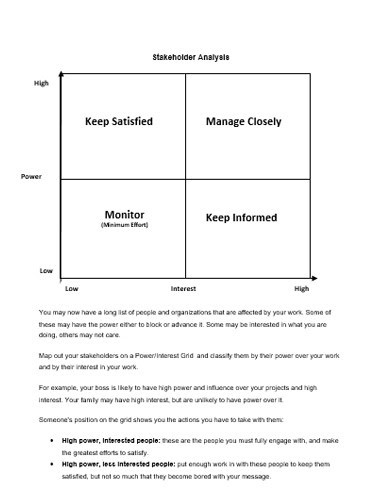
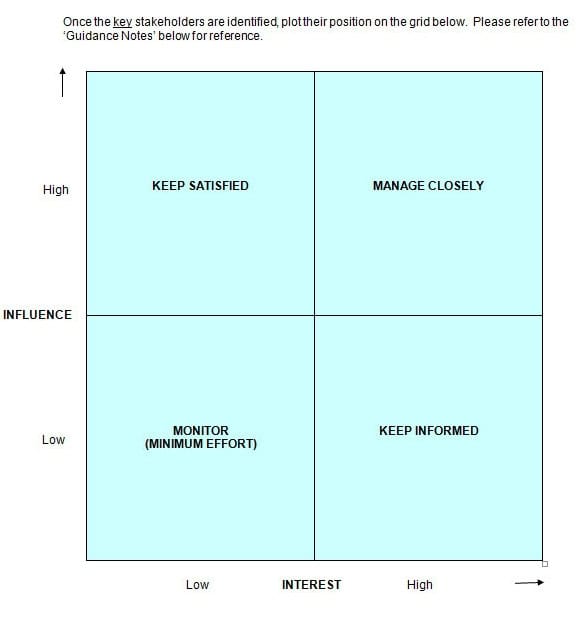
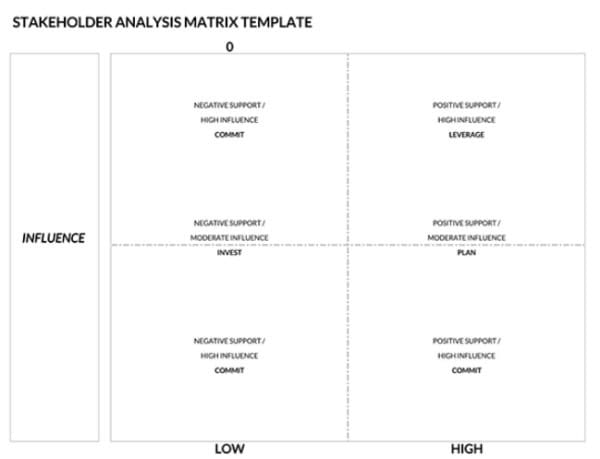
- Prioritize Based on Power and Interest: Assess each stakeholder’s level of power to influence the project decisions alongside their interest in its outcomes and results. Plot them on a power-interest grid to create four distinct categories requiring different engagement approaches and strategies. High-power, high-interest stakeholders need close management while low-power, low-interest ones need only periodic monitoring.
- Develop Targeted Engagement Plans: Determine the best approach for winning each stakeholder’s support based on their current position in the power-interest grid. Tailor your communication frequency, message content, and level of involvement to match each stakeholder’s expectations and concerns precisely. Document these plans formally and update them regularly as stakeholder positions shift during the project.
Stakeholder Analysis Templates (Excel)
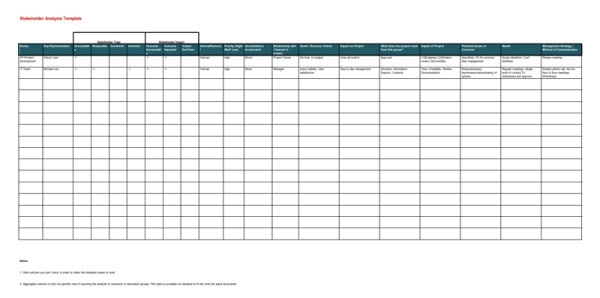
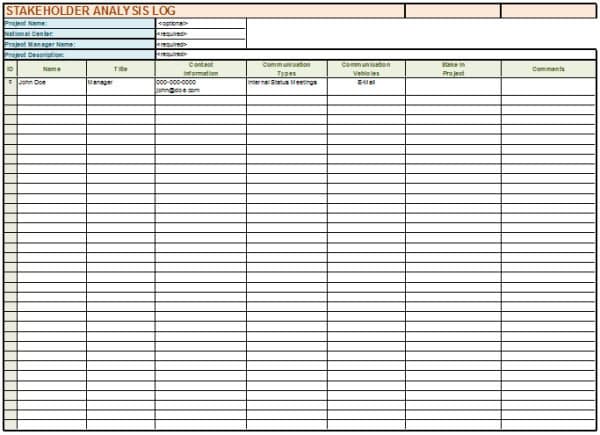
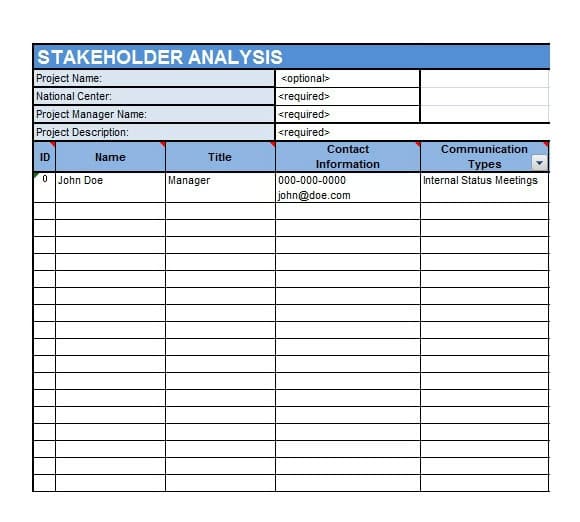
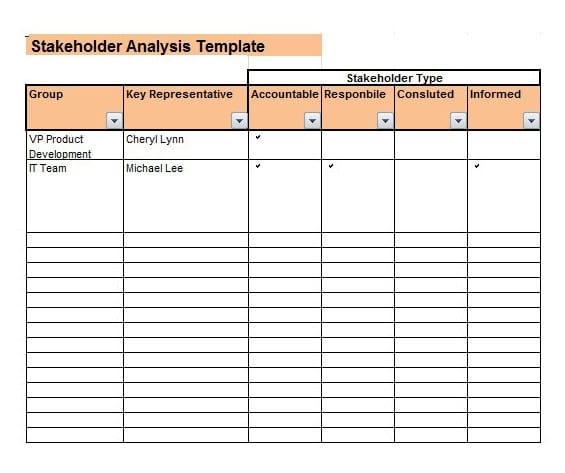
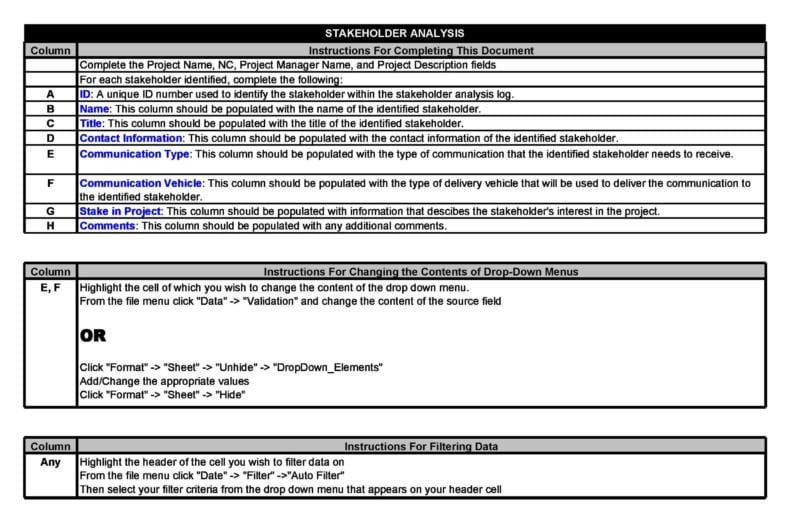
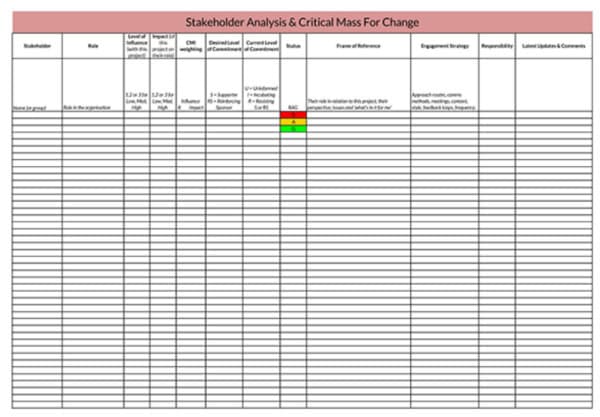
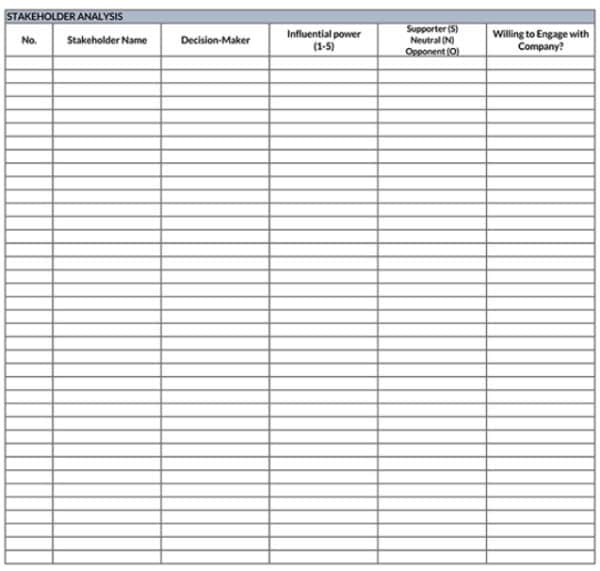
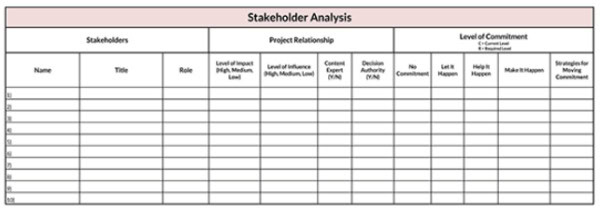
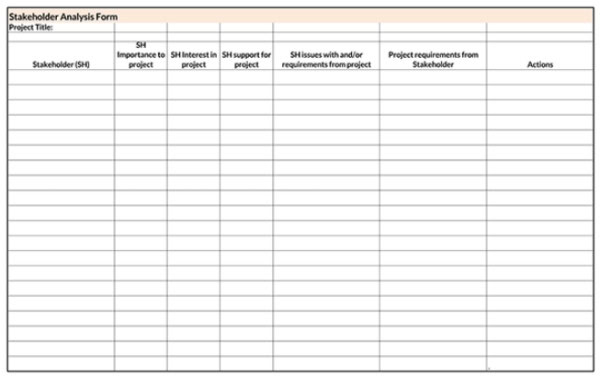
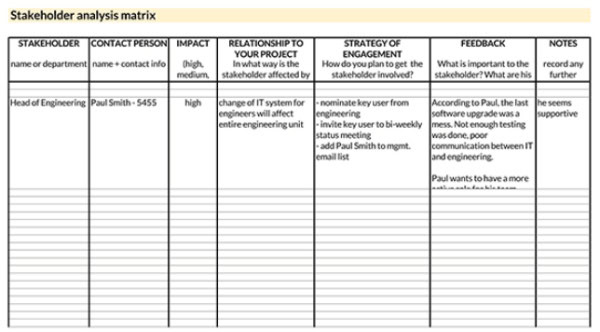
Excel-based stakeholder analysis templates offer powerful sorting, filtering, and visualization capabilities that standard Word documents simply cannot match for complex data sets and detailed analysis work. Spreadsheets allow project managers to manage larger stakeholder sets, create dynamic charts from power-interest data, and update information quickly as stakeholder positions change throughout the project lifecycle over time.
Advantages of using Excel for stakeholder analysis include the following benefits:
- Dynamic Data Management: Excel templates allow you to sort stakeholders by influence score, interest level, or engagement priority with a single click of the mouse. Filters help you focus on specific stakeholder categories quickly and efficiently without manual searching. Formulas can automatically calculate total scores and flag high-priority stakeholders who need immediate attention from your project management team.
- Visual Charting Capabilities: Create power-interest grids, bubble charts, and other visual representations directly from your stakeholder data within Excel worksheets and spreadsheets. These visuals make it easier to communicate stakeholder analysis results to project sponsors and team members during regular status meetings and updates. Charts can be updated automatically as new information is entered into the spreadsheet.
- Template Library Availability: Numerous free and premium Excel stakeholder analysis templates are available for download online, saving significant setup time and effort for busy project managers. These pre-built templates include formatted power-interest grids, automatic scoring systems, and professional layouts. Simply populate your stakeholder data, and the template handles the analysis calculations and visualizations automatically without extra work.
Explore these stakeholder analysis Excel templates:
When To Perform Stakeholder Analysis?
Performing stakeholder analysis early in the project lifecycle is essential for establishing a solid foundation for success from the start. Identifying stakeholders before significant work begins ensures everyone who matters is aware of the project objectives and has an opportunity to contribute their perspectives, concerns, and expectations from the very outset of the project activities.
Key moments when stakeholder analysis should be performed include these times:
- During Project Initiation: The most critical time for stakeholder analysis is during project initiation before any major decisions are made or resources committed. Early identification ensures all parties are fully aware of the project vision and objectives from the beginning. Structures for achieving project goals can be laid out properly, creating a high probability of smooth implementation throughout the entire lifecycle.
- At Major Milestone Transitions: Stakeholder analysis should be revisited at each major project milestone or phase transition point during delivery. Stakeholder positions, influence levels, and interests can shift significantly as the project progresses and new information emerges over time. Regular updates to your analysis ensure engagement strategies remain relevant and effective for the current circumstances.
- When Significant Changes Occur: Any significant change to project scope, budget, timeline, or business environment warrants conducting a fresh stakeholder analysis immediately. New stakeholders may emerge as a result of changes, existing ones may gain or lose influence, and attitudes may shift considerably. Revisiting your analysis during change events helps identify new allies and updated communication needs.
Stakeholder Analysis Templates (PDF)
PDF stakeholder analysis templates provide a portable, print-ready format that is ideal for sharing with stakeholders who prefer hard copies or need a quick reference document they can access. While they lack the dynamic interactive features of Excel spreadsheets, PDF templates offer consistent formatting and universal accessibility across all devices and platforms without compatibility concerns.
When to choose PDF templates over other available formats for your work:
- Distribution to External Stakeholders: PDF templates are ideal for sharing stakeholder analysis results with external parties who may not have access to your project management software or tools. The format preserves your carefully designed layout and formatting regardless of what device or software the recipient uses to view it. PDF files also prevent accidental edits to your carefully prepared analysis data.
- Print-Friendly Documentation: When stakeholder analysis needs to be included in printed project documentation packages, binders, or physical reports, PDF format delivers superior print quality consistently. Page breaks, margins, and font sizes remain exactly as intended across different printers and paper sizes. This reliability makes PDF the preferred format for formal project documentation packages and archives.
- Archival and Record Keeping: PDF files serve as excellent archival copies of stakeholder analysis snapshots captured at specific points in time during the project. Unlike editable formats, PDFs provide a permanent, unchangeable record of who was identified, their assessed influence levels, and planned engagement strategies. These records are valuable for project audits, lessons learned documentation, and future reference.
Explore stakeholder analysis PDF templates here:
Video About Stakeholder Analysis
Sometimes the best way to grasp a concept is to see it in action. This short video breaks down the fundamentals of stakeholder analysis, walking you through how to identify key players, evaluate their influence and interest, and apply proven frameworks to real project scenarios. Watch below for a clear, visual explanation that complements the templates and guidance covered in this article.
Conclusion
Stakeholder analysis is a foundational project management practice that directly influences project success rates across diverse industries and project types of all sizes and complexity levels. Identifying stakeholders early, assessing their power and interest levels thoroughly, and developing targeted engagement strategies helps project managers navigate complex organizational dynamics and build the support necessary for successful project delivery and positive outcomes.
The range of available templates across Word, Excel, and PDF formats means every project team can find a tool that fits their workflow and documentation preferences perfectly for their needs. Download the templates that match your specific requirements, customize them for your particular project context, and make stakeholder analysis a standard part of your project initiation process going forward for every new project.
Frequently Asked Questions About Stakeholder Analysis Templates
Who are the key stakeholders in a typical project?
Key stakeholders typically include the project sponsor, project manager, team members, customers or end users, suppliers and vendors, government regulators, and community representatives with an interest in the outcome. Internal stakeholders work within the organization while external stakeholders come from outside it. Each group has different interests, influence levels, and communication needs that must be addressed for success.
What is stakeholder mapping and why is it useful?
Stakeholder mapping is the process of visually plotting stakeholders on a grid based on their power to influence the project and their level of interest in its outcomes. This creates four distinct quadrants that determine the appropriate engagement strategy for each group, from close management to minimal periodic monitoring. It helps project managers prioritize limited time and resources toward the most important stakeholders effectively.
What are the three components of the salience model?
The salience model identifies stakeholders based on three key attributes: power to influence the project decisions, legitimacy of their relationship with the project, and urgency of their claims on project resources and attention. Stakeholders possessing all three attributes are considered definitive stakeholders who require the highest level of attention and engagement from the project management team throughout the lifecycle.
What is the purpose of stakeholder analysis in project management?
The purpose of stakeholder analysis is to systematically identify and assess the importance of every individual, group, or organization with an interest in the project outcomes. This understanding enables project managers to develop tailored communication strategies for each group, build coalitions of support among key players, anticipate potential resistance, and ensure stakeholder needs are addressed throughout the lifecycle.
How often should stakeholder analysis be updated during a project?
Stakeholder analysis should be reviewed at every major project milestone and whenever significant changes occur to scope, budget, timeline, or business environment conditions. Stakeholder positions naturally shift as projects progress and circumstances evolve over time, so quarterly reviews are recommended for longer-running projects. Regular updates ensure engagement strategies remain relevant and effective as conditions change.
Suggested articles:
- 11 Free Stakeholder Engagement Planning Templates
- 80+ Stakeholder Identification Templates
- 13 Free Stakeholder Map Templates

Shane Drumm, holding certifications in PMP®, PMI-ACP®, CSM, and LPM, is the author behind numerous articles featured here. Hailing from County Cork, Ireland, his expertise lies in implementing Agile methodologies with geographically dispersed teams for software development projects. In his leisure, he dedicates time to web development and Ironman triathlon training. Find out more about Shane on shanedrumm.com and please reach out and connect with Shane on LinkedIn.