
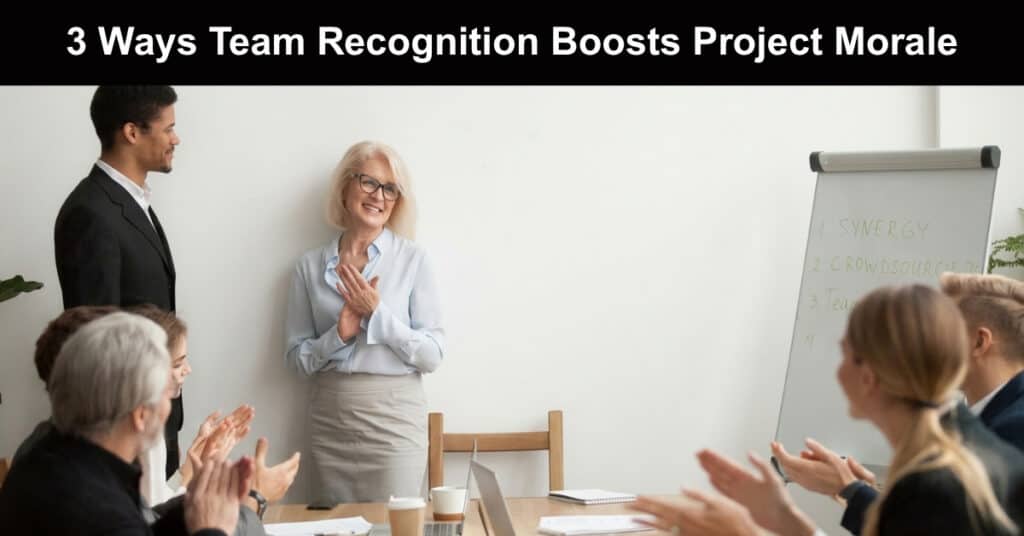
Team recognition does more than make people smile. Acknowledging real work builds trust, raises energy, and keeps projects moving when pressure climbs. When teammates see their effort noticed, they stay engaged, share ideas more freely, and press toward goals with renewed drive. Across a project team, the gap between a struggling group and a committed one often comes down to how each person feels valued.
Recognition is a practical lever, not a soft perk. Teams that acknowledge effort on a regular basis report stronger collaboration, fewer roadblocks, and steadier morale in delivered work. According to Gallup, only about one in three workers strongly agree they receive recognition, so most teams leave morale on the table. The three approaches below fit any budget and size, so begin using them this week.
1. Celebrating Milestones with Purpose
Celebrating team milestones marks genuine progress rather than staging a party. Each completed deliverable deserves real attention because it proves the plan is working, and teams that acknowledge milestones keep morale higher through long projects. When you acknowledge steps like reaching quarterly goals, you reinforce the effort behind them and lift employee engagement across the group.
Keep these celebration habits simple and genuinely consistent over time:
- Purposeful Timing: Tie each celebration to a real project win so the moment feels earned rather than staged, and people remember clearly why the hard work actually mattered to the outcome.
- Team Connection: Bring the whole group into the moment so every contributor hears the praise personally and shares in the satisfaction of seeing a hard-won phase finish on schedule.
- Consistent Rhythm: Mark milestones on a predictable cadence so celebrations become a normal part of the workflow rather than a rare surprise that quickly loses its meaning for the team.
Real-Life Example: A software team that just shipped a major release held a short lunch where each member described what they built and the obstacles they cleared. Attendance stayed high, the conversation turned warm, and the next sprint began with visible energy because everyone saw how their own contributions fit the finished product.
2. Leveraging Peer-to-Peer Recognition
Peer-to-peer recognition turns appreciation into a daily habit instead of a manager’s occasional speech. When teammates praise one another, the compliment lands with honesty and speed that top-down announcements rarely match. A team where colleagues routinely highlight each other’s wins builds trust, dissolves friction, and gives every person a reason to support the whole group.
Real peer praise grows naturally out of these simple habits:
- Public Shout-Outs: Share kudos in a team channel so the praise stays visible, giving the recipient a well-timed boost and modeling good recognition behavior for anyone watching the thread.
- Tangible Tokens: Offer a lasting keepsake for standout work, from team shirts to deciding to buy perpetual plaques that keep the honored achievement visible and meaningful for years.
- Paired Appreciation: Pair recognition with a specific reason for the praise so people know exactly what behavior to repeat and who truly earned the thanks that week.
Real-Life Example: A design studio started a weekly peer shout-out thread where any team member could thank a colleague for a specific contribution. Within a month, people rushed to recognize the quiet helpers who fixed bugs and kept deadlines alive, and the channel filled with sincere thanks instead of polite formality.
3. Long-term Benefits of Consistent Recognition
Recognition only pays off when it shows up on a regular schedule. When appreciation is done often, it lifts job satisfaction, strengthens bonds between colleagues, and cuts the turnover that drains project capacity. According to a Gallup report, high-engagement teams are about 23 percent more profitable and 14 percent more productive, so consistency compounds into measurable business results for the whole group.
These benefits become real once you set a few routines:
- Dependable Gratitude: Recognize people on a set schedule so appreciation is expected rather than a sudden surprise, which keeps morale steady instead of spiking and quickly fading after a single event.
- Shared Community: Build a norm where everyone gives and receives thanks, creating a supportive circle that carries teams through demanding stretches and keeps them connected and close.
- Low-Drama Recognition: Keep the process simple and consistent so it avoids the big ceremony that can make quiet contributors feel overlooked, and it stays comfortable for everyone involved.
Real-Life Example: A customer support team ran monthly awards tied to genuine customer outcomes, and the same names kept appearing on the wall week after week. Attrition declined, satisfaction scores climbed quickly, and managers noticed that merely anticipating recognition already lifted how people talked about their work throughout each cycle.
Looking Ahead: Nurturing a Culture of Recognition
A culture of recognition does not appear from a single award or one good meeting. It grows from small, repeated daily acts that people can count on, and it hardens as the team sees those acts produce real changes in morale and performance. Leaders set the tone by making acknowledgment ordinary, yet anyone can reinforce it, and every gesture shapes how the group works together.
The return on this effort is steady, visible, and worth building. Teams that keep recognition alive report tighter collaboration, fewer quiet departures, and a stronger sense of shared purpose across long projects. Begin with one simple habit, stay consistent, and expand as the team responds. A workplace where people feel genuinely seen and valued becomes a place where people want to do their best work.
Adopt these practices and weave them into your daily routine:
- Consistent Milestones: Recognize achievements on a steady schedule so praise becomes an expected part of team life rather than a rare event that people easily forget afterward.
- Peer Empowerment: Encourage team members to acknowledge one another’s work and contributions openly and often, building a supportive environment where appreciation flows in every direction across the group.
- Digital Tools Utilization: Use the technology the team already relies on each day to make giving thanks quick, visible, and effortless, so recognition fits naturally into the flow.
- Tailored Approaches: Customize recognition methods to match your unique team culture and personal preferences, so the celebration feels genuine to the people who actually receive the thanks.
- Impact Measurement: Track the outcomes of your recognition effort, such as morale, retention, and productivity, to confirm the approach actually works and to adjust it over time.
Creating a Recognition Calendar
A recognition calendar takes the guesswork out of appreciation. It spells out when the team will pause to celebrate, so praise becomes predictable rather than occasional. With dates planned in advance, managers can prepare thoughtful thank-yous, and employees learn to expect and even look forward to the attention. The result is praise that feels reliable instead of random.
Set up the employee recognition calendar by locking in these useful pieces:
- Named Celebrations: Assign specific events to dates on the calendar so each one has a clear owner, a planned format, and room for the whole team to join the moment.
- Seasonal Peaks: Add checkpoints at the end of phases and quarters so hard rows of work always end with a real acknowledgment rather than a flat, quiet transition between efforts.
- Visible Schedule: Post the calendar where everyone can see it, building anticipation and signaling that recognition is a genuine and valued part of the team’s shared rhythm.
Digital Tools for Easy Acknowledgment
Digital tools remove the friction that stops people from giving thanks. With a shared channel, a quick message, or a public badge, appreciation takes seconds rather than a formal meeting. Teams run a mix of platforms, so the smart approach is to use the tools people already open, whether a chat thread, a project board, or a kudos space.
Choose employee recognition tools that make daily appreciation feel truly natural everywhere:
- Instant Shout-Outs: Let people drop a quick note in a shared channel so recognition happens the moment someone finishes a useful task, and the thanks stays in plain view.
- Public Badges: Award visual marks and virtual acknowledgments that show up clearly on a profile, so progress becomes easy to see and celebrate across the whole team.
- Simple Workflow: Keep the recognition step inside the tools people already use and trust, so giving a thanks does not add another tab to an already crowded day.
Empowering Employees to Nominate Peers
Opening nominations to employees changes recognition from a manager’s choice into a true shared responsibility. When anyone can put a colleague forward, praise reflects what the whole group values, not what a single leader just happens to notice. That shift surfaces work happening outside the spotlight and gives quiet contributors a clear path to appreciation.
Make nomination simple, safe, and really trusted with these steps:
- Open Invitation: Let every team member submit a nomination at any time, with a simple form that takes minutes and a shared decision about who reviews the entries fairly.
- Clear Criteria: Publish what deserves a nomination, such as helping a teammate, solving a hard problem, or staying calm under pressure, so submissions stay fair and focused.
- Visible Outcome: Announce the selected nominee and the reason behind the choice so the whole team sees that peer input actually shapes who gets recognized each time.
What is the Ideal Recognition Frequency?
Recognition frequency decides whether appreciation changes behavior or fades into background noise. The most cited benchmark comes from Achievers and AWI, whose research found that employees who receive weekly recognition are about 2.6 times more likely to be their most productive selves. Spacing praise too far apart lets the momentum die between moments of acknowledgment.
The impact of each cadence breaks down like this:
| Frequency | Impact on Morale | Best Use |
|---|---|---|
| Daily | Keeps effort visible in real time and catches small wins. | Best for fast-moving sprints; risks feeling noisy if every note lacks a specific reason. |
| Weekly | Matches a natural work rhythm and sustains momentum. | Achievers links weekly recognition to 2.6x higher productivity; the strongest overall cadence. |
| Monthly | Good for milestone and outcome awards. | Lighter load for managers, but gaps can let quiet contributors feel overlooked between cycles. |
Conclusion
Team recognition is one of the few levers that lifts morale, retention, and delivery at the same time. The three approaches above show that acknowledgment works best when it is specific, peer-driven, and consistent rather than occasional and generic. Teams that build these habits report tighter collaboration and steadier performance across long, demanding projects that test everyone’s focus.
Start with one practice this week, measure how people respond, and expand from there. According to Nectar, about 81.9 percent of employees agree recognition improves their engagement, so the upside is broad and reachable. A workplace where effort is genuinely seen becomes a place where people choose to do their best work, and that choice compounds every single sprint.
Frequently Asked Questions About Team Recognition
Why does team recognition matter?
Team recognition matters because it turns effort into satisfaction and keeps people working toward shared goals. When individuals feel their contribution is noticed, they show up with more energy, collaborate with peers more freely, and stay through difficult stretches. Consistent praise also reduces turnover and strengthens trust, so the team holds on to hard-won skills rather than starting over with every departure.
What is peer-to-peer recognition?
Peer-to-peer recognition is when colleagues acknowledge one another’s contributions directly, rather than waiting for a manager to deliver praise. It often happens through shared channels, quick shout-outs, or nomination systems. Because the compliment comes from a teammate who worked alongside the person, it carries a credibility that top-down recognition sometimes lacks, and it helps appreciation spread broadly across the group.
How often should you recognize employees?
The ideal rhythm is regular and predictable. A weekly shout-out paired with a monthly or quarterly milestone celebration gives people steady feedback without making thanks feel routine or inflated. The exact cadence depends on your team’s size and workload, but the important part is consistency. Frequent, specific, and honest recognition beats rare, generic praise that arrives long after the effort has passed.
What are cheap ways to recognize a team?
Recognition does not need a large budget. A public thank-you in a team channel, a handwritten note, a shout-out at a meeting, or a small treat during a milestone all cost little and mean a great deal. Simple rituals like a monthly award or a dedicated time to celebrate wins cost almost nothing but show people that their work is noticed regularly.
What is a recognition calendar?
A recognition calendar is a planned schedule that lists upcoming celebrations, shout-outs, and milestone checkpoints so appreciation happens on a predictable pattern. It removes the uncertainty of when a team will acknowledge work and helps managers prepare in advance. Employees learn to expect the attention, and well-placed celebrations become a reliable part of the workflow rather than a sudden surprise.
How do you measure whether recognition is working?
Measure recognition the same way you would any other project lever, by tracking outcomes over time. Watch retention, engagement survey scores, and delivery metrics before and after a new routine starts, then compare the periods. If morale climbs and attrition eases, the approach is working. If nothing moves, shorten the cadence or make the praise more specific to real contributions.
Suggested articles:
- How Does Team Appreciation Impact Project Outcomes?
- Employee Recognition for Project Teams: Boost Velocity, Morale, and Retention
- How to Boost Team Morale with Virtual Recognition

Daniel Raymond, a project manager with over 20 years of experience, is the former CEO of a successful software company called Websystems. With a strong background in managing complex projects, he applied his expertise to develop AceProject.com and Bridge24.com, innovative project management tools designed to streamline processes and improve productivity. Throughout his career, Daniel has consistently demonstrated a commitment to excellence and a passion for empowering teams to achieve their goals.