
Project planning is the structured process of defining how a project will be executed within a specific timeframe, using allocated resources and clearly defined phases. It provides direction, aligns stakeholders, and reduces uncertainty before execution begins. Every successful project, regardless of industry, follows a consistent lifecycle that ensures clarity, accountability, and measurable progress.
Most projects move through five essential stages: initiation, planning, execution, monitoring and controlling, and closing. These stages create a repeatable framework that project managers can apply across different types of work. Understanding how these stages play out in real scenarios makes it easier to apply them effectively in your own projects.
Below are five practical project planning examples from different industries, each illustrating how these phases are applied in real-world situations.
1. House Construction Project
This example shows how structured planning supports a complex, resource-heavy project with multiple dependencies and stakeholders. Construction requires strict coordination, cost control, and quality assurance at every stage. Each phase must align precisely to avoid delays and budget overruns. The following breakdown demonstrates how this is achieved.
Initiation
The initiation phase establishes the foundation of the project by identifying stakeholders, defining the scope, and setting expectations. In a house construction project, stakeholders typically include the project manager, contractor, designer, and labor team.
Stakeholder Identification:
| Stakeholder Name | Role | Contact No. |
| James William | Project Manager | +614123456789 |
| Jackson | Contractor | +614123456789 |
| Henry | House Designer | +614123456789 |
| Flynn | Labor | +614123456789 |
- Project Budget: 500,000 AUD
- Project Duration: 6 months
- Desired Outcome: Construct a double-story, fully-furnished home with intelligent home automation systems.
Planning
Planning translates the vision into actionable steps. The focus here is on defining goals, timelines, and resource allocation.
- Project Objectives: Construct the house according to design specifications, ensure interior and exterior alignment with design standards, and complete the project within the approved budget and timeline.
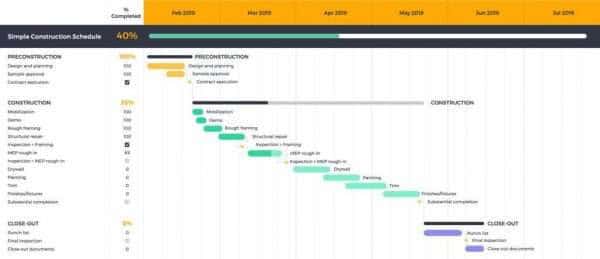
- Schedule Development: A structured timeline is created outlining each phase of construction, from groundwork to finishing.
This phase ensures that every team member understands what needs to be done and when.
Sample Schedule:
Execution
Execution is where the physical work begins. Teams follow the planned schedule and complete tasks in sequence.
- Foundation Work: Excavation and construction of a stable base for the structure.
- Structural Development: Installation of columns, walls, and framework.
- Utility Installation: Integration of plumbing, electrical, and mechanical systems.
- Finishing Work: Interior and exterior detailing, including masonry and fittings.
Each task is completed according to predefined quality standards.
Monitoring and Controlling
This phase ensures that the project stays on track in terms of quality, cost, and timeline.
- Quality Inspections: Regular checks on sanitary equipment, electrical systems, and woodwork.
- Structural Reviews: Evaluation of walls, ceilings, and tile installations to ensure compliance.
Continuous monitoring helps identify issues early and correct them before they escalate.
Closing
The closing phase finalizes the project and ensures readiness for handover.
- Final Inspection: Comprehensive review of interior, exterior, and structural components.
- Site Cleanup: Removal of debris and preparation of the house for occupancy.
A well-executed closing phase ensures client satisfaction and project completion without loose ends.
2. Remote Deposit Capture System
This example highlights how project planning applies to financial technology initiatives that require precision, security, and user adoption. Digital banking products must balance technical performance with customer experience. Each phase ensures compliance, usability, and reliability. The following structure outlines how such a system is successfully delivered.
Initiation
This project involves developing a banking application that allows customers to deposit checks remotely. Stakeholders include the CEO, IT leadership, developers, and marketing professionals.
Stakeholder Identification:
| Stakeholder Name | Role | Contact No. |
| Dorian Dankly | CEO of Bank | +614156789234 |
| Harold Johnson | VP of IT | +614127893456 |
| Mike Mustafa | IT Professional | +614456789123 |
| Sophie Smith | IT Developer | +614678912345 |
| Christian Jones | Marketing Professional | +614623457891 |
- Project Budget: 152500 AUD
- Project Duration: 6 months
- Desired Outcome: A finance scanner application that provides progressive Internet banking services to customers and allows customers to scan and deposit their checks instantly from any location.
Planning
Planning focuses on aligning the product with customer needs and business goals.
- Customer Growth Objective: Increase the number of users by offering convenient deposit options.
- Ease of Use: Simplify the deposit process for customers.
- Target Market Expansion: Appeal to tech-savvy users who prefer digital solutions.
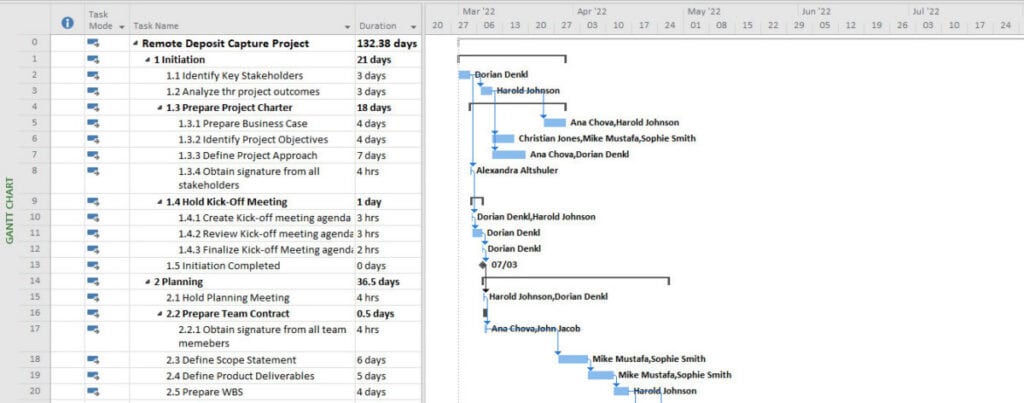
A high-level schedule outlines development, testing, and launch phases.
Sample High-level Schedule:
Execution
Execution involves building and deploying the system.
- User Research: Analyze surveys and collect feedback to guide development.
- Hardware Selection: Choose and procure suitable scanning devices.
- System Development: Build the application and integrate support systems.
- Marketing Activities: Promote the product to increase adoption.
Each step ensures the product meets both technical and customer expectations.
Monitoring and Controlling
Monitoring ensures the system performs reliably.
- Bug Identification: Detect and fix issues within the application.
- Performance Testing: Evaluate scanner functionality and system stability.
- Customer Feedback Collection: Gather insights to improve usability.
This phase ensures the product meets quality and performance standards before full release.
Closing
The project concludes with final approvals and documentation.
- Executive Approval: Obtain sign-off from the CEO.
- Documentation Delivery: Provide user guides and support materials.
- Lessons Learned Report: Analyze successes and challenges to improve future projects.
3. HealthyMe Diet Application
This example demonstrates how project planning supports long-term product development in health technology. The focus here is on user impact, research integration, and sustained engagement. Each phase ensures the application delivers measurable health value while remaining scalable and reliable. The breakdown below shows how this outcome is achieved.
Initiation
This project focuses on developing a mobile application to help users manage obesity and maintain a healthy lifestyle. Stakeholders include a sponsor, project manager, developers, and designers.
Stakeholder Identification:
| Stakeholder Name | Role | Contact No. |
| Haileab Goitom | Sponsor | +614678923415 |
| Daniel Mebrahtom | Project Manager | +614789345612 |
| Marcos Paul | Programmer | +616789123445 |
| James Dawson | GUI Designer | +614612345789 |
| Sujith Navin | System Analyst | +614578916234 |
- Project Budget: 200,000 AUD
- Project Duration: 1 year
- Desired Outcome: A mobile application that can efficiently address the problems of obese people who want to maintain good shape and health. It must ensure the health of obesity patients by providing well-organized information through the application.
Planning
Planning defines how the application will meet user needs.
- Multi-Platform Accessibility: Ensure compatibility across devices.
- Expert Integration: Connect users with health professionals.
- User Engagement: Design an interactive and motivating interface.
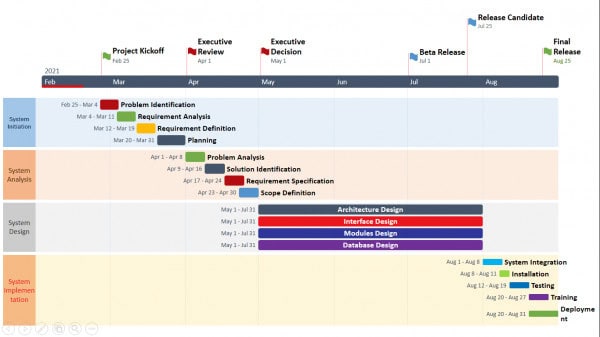
A structured schedule outlines research, development, and testing phases.
Execution
Execution involves building the application and supporting systems.
- Research Activities: Conduct medical and psychological studies.
- Data Analysis: Process research findings to inform features.
- System Development: Build databases and application architecture.
- Design Implementation: Create an engaging user interface.
Each step focuses on delivering a reliable and user-friendly product.
Schedule:
Monitoring and Controlling
This phase ensures the application meets performance and usability standards.
- Testing Procedures: Evaluate functionality and user experience.
- Performance Reports: Monitor system efficiency and reliability.
- Change Management: Implement approved updates and improvements.
Continuous refinement ensures the application remains effective.
Closing
The final stage delivers the completed product.
- Application Launch: Release the fully developed app to users.
- User Documentation: Provide guides to support adoption.
- Project Review: Document lessons learned for future improvements.
4. Customer Relationship Management System
This example focuses on enterprise system development where efficiency, integration, and scalability are critical. A CRM system must support multiple business functions while maintaining performance and reliability. Each phase ensures alignment with organizational goals and operational needs. The structure below explains how such systems are planned and delivered effectively.
Initiation
This project aims to develop a CRM system that streamlines business processes such as customer service, marketing, and support.
Stakeholder Identification:
| Stakeholder Name | Role | Contact No. |
| Abdullah | CEO | +614234156789 |
| Emanuel Macron | Project Manager | +614456127893 |
| Paul Smith | Front-end Developer | +614344578912 |
| David Johns | API developer | +614789612345 |
| Humaid | Database developer | +614623457891 |
| John | Server-side programmer | +614234567891 |
- Project Budget: 500,000 AUD
- Project Duration: 10 months
- Desired Outcome: CRM system must have Information Technology to manage, organize, automate, and synchronize the service activities and business processes such as customer service, marketing, and technical support. The owner must be able to communicate with the customers and clients and provide the services through this system.
Planning
Planning focuses on aligning the CRM system with business objectives.
- Revenue Growth Goal: Increase profitability through improved customer management.
- Customer Engagement: Enhance interaction and retention.
- Process Automation: Simplify marketing and service workflows.
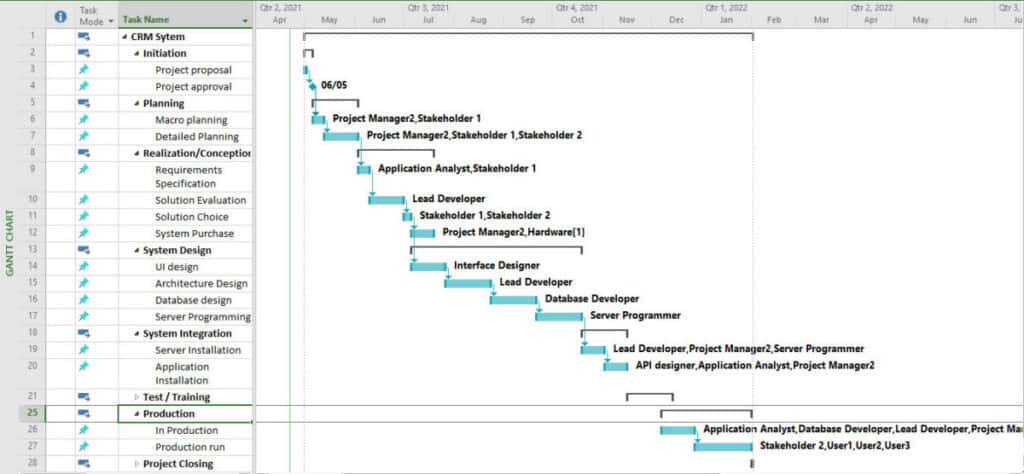
A high-level schedule outlines development milestones.
High-Level Schedule:
Execution
Execution involves building the system infrastructure.
- Interface Design: Develop a user-friendly front end.
- API Development: Enable system integration using backend technologies.
- Database Configuration: Set up data storage and retrieval systems.
- Admin Panel Creation: Build tools for managing operations.
Each component contributes to a fully functional system.
Monitoring and Controlling
Monitoring ensures system performance and reliability.
- System Testing: Evaluate modules and integrations.
- Bug Resolution: Identify and fix technical issues.
- Compatibility Checks: Test across different platforms and devices.
This phase ensures the system is stable and ready for deployment.
Closing
The project concludes with implementation and approval.
- Final Acceptance: Obtain approval from leadership.
- System Deployment: Install across the organization.
- User Training Materials: Provide guides for effective use.
5. Ginger and Smart Marketing Plan
This example illustrates how project planning applies to short-term marketing initiatives focused on measurable growth. Marketing projects require speed, adaptability, and clear performance tracking. Each phase ensures that campaigns are targeted, efficient, and results-driven. The following breakdown shows how structured planning drives successful marketing outcomes.
Initiation
This project focuses on increasing online traffic and user sign-ups for an e-commerce platform. Stakeholders include executives and marketing professionals.
Stakeholder Identification:
| Stakeholder Name | Role | Contact No. |
| Alexandra | CEO | +614278934156 |
| Genevieve Smart | CFO | +614789345612 |
| Paul Smith | Sales Manager | +614312445789 |
| Donald | Marketing Manager | +614567892341 |
- Project Budget: 50,000 AUD
- Project Duration: 2 months
- Desired Outcome: Increased user traffic and sign-ups on Ginger and Smart online store.
Planning
Planning defines the marketing strategy and goals.
- Engagement Increase Goal: Boost sign-ups by 20 percent.
- Campaign Strategy: Use email marketing to drive engagement.
- Performance Metrics: Track click rates and conversions.
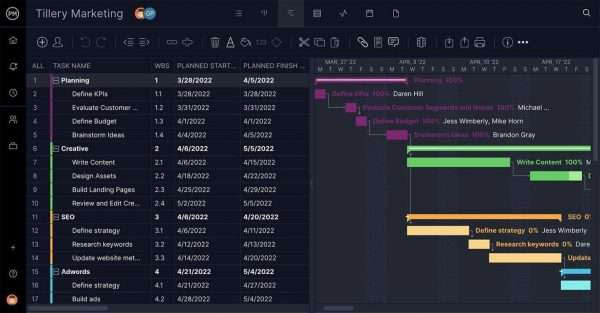
A campaign schedule outlines content and execution timelines.
Schedule:
Execution
Execution involves running marketing campaigns.
- Market Research: Identify target audience and trends.
- Content Creation: Develop social media posts and blog content.
- SEO Optimization: Improve keyword usage for visibility.
Each activity is designed to drive traffic and conversions.
Monitoring and Controlling
Monitoring evaluates campaign effectiveness.
- Customer Feedback Analysis: Understand user responses.
- Engagement Tracking: Measure interactions on social platforms.
- Conversion Monitoring: Track sign-ups and campaign results.
Adjustments are made based on performance data.
Closing
The campaign ends once objectives are achieved.
- Campaign Evaluation: Assess overall performance.
- Campaign Pause: Stop activities after reaching the target increase in sign-ups.
Video About Project Planning in Excel With Gantt Chart
Watch this step-by-step video to learn how to build a project plan in Excel using a Gantt chart. It covers planning, actual progress, and tracking, all in one clear, visual view.
Conclusion
Project planning is not optional if you want consistent results. It is the difference between controlled execution and chaos. Across construction, technology, healthcare, and marketing, the same five-stage framework proves reliable because it forces clarity, discipline, and accountability at every step. Each example shows that success is not about the industry; it is about how well the process is followed.
Strong initiation sets direction, detailed planning removes guesswork, execution drives progress, monitoring keeps everything in check, and closing ensures nothing is left unfinished. When applied properly, this structure reduces risk, improves efficiency, and delivers predictable outcomes. If you want better results in your projects, tighten your planning process and commit to following it without shortcuts.
Frequently Asked Questions
This section addresses common questions that clarify how project planning works in practice. It reinforces the core framework and helps resolve uncertainties that professionals often face when applying these principles across industries. The answers below provide direct, practical explanations that support better decision-making.
What are the five stages of project planning?
The five stages are initiation, planning, execution, monitoring and controlling, and closing. Each stage plays a specific role in ensuring that a project is completed successfully, from defining objectives to delivering final results.
Why is project planning important?
Project planning provides structure, reduces risks, and ensures efficient use of resources. It helps teams stay aligned, meet deadlines, and achieve defined goals without unnecessary delays or cost overruns.
Can project planning be applied to any industry?
Yes, project planning principles are universal. Whether in construction, technology, healthcare, or marketing, the same structured approach can be adapted to fit different types of projects and objectives.
What tools are commonly used in project planning?
Common tools include scheduling software, task management systems, and documentation templates. These tools help organize tasks, track progress, and improve collaboration among team members.
Suggested articles:
- Complete Guide To The Best Project Planning Techniques
- Project Planning: 10 Steps To Write A Project Plan
- 5 Ways to Prioritize Stakeholder Needs in Project Planning

Shane Drumm, holding certifications in PMP®, PMI-ACP®, CSM, and LPM, is the author behind numerous articles featured here. Hailing from County Cork, Ireland, his expertise lies in implementing Agile methodologies with geographically dispersed teams for software development projects. In his leisure, he dedicates time to web development and Ironman triathlon training. Find out more about Shane on shanedrumm.com and please reach out and connect with Shane on LinkedIn.