
The PMP audit scared the life out of me when I was applying for the PMP® examination. I’d heard all the horror stories—applications being rejected, months of waiting, managers not responding, and people scrambling to find old documentation from projects years ago. I didn’t want to be one of those stories. So, I overprepared. I spent nearly three months working on my PMP application, carefully mapping every bit of project management experience I had.
I documented every project I led, describing my role and responsibilities broken down by each of the five process groups: Initiating, Planning, Executing, Monitoring & Controlling, and Closing. Then I went a step further. I polished every paragraph with professional project management terminology, reviewed it multiple times, and even sent everything to my manager at the time—just in case I got audited.
Technically, you don’t need your managers’ approval before submission, but if your application is selected for an audit, PMI will require verification signatures from them. That precaution added almost two extra months to my application process—but it saved me from panic later. And that’s exactly what I want to help you avoid.
Understanding the PMP Audit
When you submit your application for any PMI® certification, including the PMP®, you’re agreeing to comply with PMI’s audit process. Every application is eligible for audit, but only a small percentage are randomly selected. If you’re chosen, it doesn’t mean you did something wrong. It just means PMI wants to verify your information—education, experience, and project details—to ensure integrity in their certification program.
However, while the selection is random, many PMP aspirants believe certain patterns and mistakes make their application more likely to be audited. These mistakes usually happen when applicants rush through their submissions or make frequent edits that raise red flags in PMI’s system. That’s where these five rules come in. But before we go into them, there are three core facts you need to know.
3 Things You Must Understand Before You Apply
Before you even start filling out your PMP application, there are a few ground rules you need to understand. These fundamentals determine how PMI calculates your experience and what they’ll actually accept. Missing or misunderstanding them is one of the fastest ways to trigger an audit—or worse, have your application rejected altogether.
- PMI Only Recognizes 40 Hours per Week: No matter how long or intense your project work was, PMI will only count a maximum of 160 hours per month (based on a 40-hour work week). Overtime doesn’t earn you extra credit. So don’t inflate your numbers—it’ll only make your application look suspicious.
- You Don’t Need to List Every Project: Many candidates feel compelled to include every project they’ve ever touched. That’s unnecessary. As long as you can demonstrate experience across all five process groups and meet the minimum required hours, you’re fine.
- Overlapping Projects Don’t Count: If you managed three projects simultaneously, you still can’t claim triple hours for the same month. PMI only counts non-overlapping time, not the total number of projects.
Understanding these basics will help you avoid the most common mistakes applicants make—and keep your application clean and audit-safe.
My Approach to Preparing the Perfect PMP Application
When I prepared my application, I treated it like a project of its own. I outlined clear objectives:
- To document my experience accurately and transparently.
- To ensure every process group was represented.
- To use PMI-appropriate terminology throughout.
I wrote detailed descriptions for every project I submitted—about 300–500 words each, even though PMI only asks for 300–500 characters per description. Why? Because the extra writing helped me refine my final summaries later. For each project, I wrote what I did in each domain: Initiation, Planning, Executing, Monitoring & Controlling, and Closing.
Then I condensed the information to fit PMI’s requirements. The extra effort was worth it. When I finally submitted my application, I was confident that even if I were audited, I had the backup documentation, clarity, and consistency to pass with ease.
5 Rules for the Perfect PMP Application
Although PMI insists that audits are random, most experienced PMP candidates and trainers agree that following these five rules significantly reduces your chances of triggering one. Let’s break them down one by one.
Rule #1: Don’t Constantly Edit or Resubmit Your Application
PMI’s system logs every change you make. If you keep modifying your application, it might create the impression that you’re unsure about your experience—or worse, that you’re trying to manipulate your data. Frequent edits, resubmissions, or corrections can send up red flags. Prepare everything offline first, double-check all entries, and only submit once you’re completely satisfied. Think of it this way: a clean, consistent submission looks professional and credible. A messy one looks suspicious.
Rule #2: Don’t Adjust Hours Just to Fit Requirements
A common mistake is tweaking your hours to “fit” PMI’s eligibility criteria. Maybe you fall slightly short in one process group, so you adjust numbers until they balance perfectly. Don’t. PMI reviewers can spot artificial adjustments easily. It’s better to describe your real experience honestly and explain your role in your own words. As long as it aligns with project management principles, it’ll be accepted. Remember—authenticity beats perfection. PMI wants to see real experience, not fabricated figures.
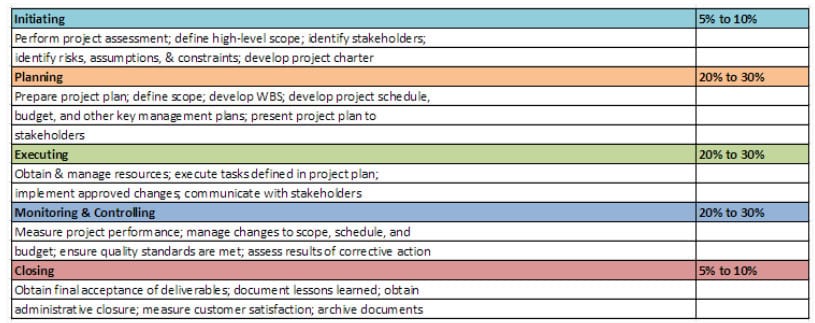
Rule #3: Follow the Recommended Percentage Distribution
PMI expects your experience hours to roughly align with their recommended distribution across process groups:
| Process Group | Recommended % of Hours |
|---|---|
| Initiating | 5%–10% |
| Planning | 20%–30% |
| Executing | 20%–30% |
| Monitoring & Controlling | 20%–30% |
| Closing | 5%–10% |
If your numbers are far outside these ranges—say, 50% in Executing and only 2% in Planning—it might signal that you don’t fully understand project management as PMI defines it. Keep your breakdown balanced. PMI doesn’t expect perfect ratios, but they do expect logical consistency.
Rule #4: Prepare Everything in a Separate Document First
This is one of the smartest things you can do. Draft your entire application—project descriptions, hour breakdowns, and responsibilities—in a separate document first. Why? Because PMI’s online form doesn’t save versions, and you can’t easily review your work once you submit. Having everything prepared separately allows you to:
- Edit and refine your wording easily.
- Avoid typos or formatting issues.
- Keep a personal backup for your records.
When you’re ready, just copy and paste your content into the PMI application form. It’s clean, fast, and prevents costly mistakes.
Rule #5: Use Proper PMP Vocabulary
PMI loves applicants who “speak the language.” Using correct PMP terminology not only shows professionalism but also assures reviewers that you understand PMI’s framework. Here’s a quick example:
| Instead of Saying | Say This Instead |
|---|---|
| “I worked with the client to define goals.” | “I performed project monitoring and controlling activities to track performance.” |
| “I worked with the client to define goals.” | “I facilitated requirements gathering and developed the project charter.” |
| “I handled risks and issues” | “I identified, analyzed, and implemented risk response strategies.” |
These phrases align with PMI’s PMBOK® Guide vocabulary and make your application sound credible, consistent, and professional.
What Happens If You’re Selected for an Audit
First, don’t panic. Being selected for an audit isn’t the end of the world. It just means PMI wants you to verify the information you submitted. You’ll be notified by email shortly after paying your examination fee. The email will include instructions and the required documents. Typically, PMI asks for:
- Copies of your diploma or global equivalent
- Signatures from supervisors or managers listed in your application
- Certificates or letters from the training institutes verifying your 35 contact hours of project management education
You have 90 days to gather and send all documentation in one envelope (not separate packages) to:
PMI Attn: Certification Audit
14 Campus Blvd.
Newtown Square,
PA 19073-3299 USA
Once PMI receives your package, they usually complete the audit in 5–7 business days. If all is well, you’ll get approval to schedule your PMP exam. After passing the PMI audit, you’ll have one full year to take the exam.
What If You Fail the PMP Audit?
If all your information is accurate, you shouldn’t fail the audit. Most failures occur because candidates submit incomplete documentation—like missing signatures, unverified certificates, or inconsistent project descriptions. If PMI can’t verify your experience or education, they’ll mark your audit as failed. You’ll receive a refund (minus a processing fee) and won’t be allowed to reapply for one year.
So double-check every piece of paperwork before you send it. Make sure your managers know in advance that PMI will contact them. And most importantly, make sure your records are consistent across your resume, LinkedIn, and application.
Final Thoughts
Preparing a PMP application can be stressful—but it doesn’t have to be chaotic. The key is preparation, honesty, and attention to detail. If you want to avoid being audited, focus on crafting a complete, consistent, and credible application. Don’t rush it. Don’t fudge your numbers. And don’t underestimate the value of using PMI’s own language.
Following these five rules will drastically reduce your chances of being audited—and even if you are, you’ll pass with ease because your application will be rock-solid. The PMP® certification isn’t just about proving you know project management. It’s about demonstrating integrity, discipline, and professionalism—qualities that define a true project leader. Take the time to do it right the first time.
Suggested articles:
- 200 Free PMP Exam Questions & Answers
- Free PMP Exam Study Guide Tips
- PMP Exam Prep: How to Pass the PMP Certification Exam

Shane Drumm, holding certifications in PMP®, PMI-ACP®, CSM, and LPM, is the author behind numerous articles featured here. Hailing from County Cork, Ireland, his expertise lies in implementing Agile methodologies with geographically dispersed teams for software development projects. In his leisure, he dedicates time to web development and Ironman triathlon training. Find out more about Shane on shanedrumm.com and please reach out and connect with Shane on LinkedIn.