
Managing an ecommerce project involves much more than choosing a platform or approving a new storefront design. Project managers may need to coordinate developers, designers, internal stakeholders, data migrations, third-party integrations, testing, launch timelines, and ongoing optimization.
The right ecommerce agency can make that process significantly easier. Strong partners should be able to handle complex technical requirements while maintaining clear project structure across migrations, integrations, custom development, and multi-team implementations.
The nine agencies below offer different combinations of ecommerce development, platform migration, systems integration, B2B functionality, and enterprise implementation experience. The list is not ranked from best to worst.
1. Fyresite

Fyresite is an ecommerce design and development agency and Shopify Premier Partner specializing in Shopify and Shopify Plus. For project managers overseeing complex Shopify initiatives, Fyresite can support projects involving platform migrations, custom applications, third-party integrations, B2B functionality, complex product catalogs, UI/UX, and ongoing ecommerce development.
Its migration experience is particularly relevant when a project involves more than moving products from one platform to another. Complex migrations can require teams to account for product data, customers, URLs, integrations, custom functionality, and specialized product relationships.
Fyresite’s automotive work provides examples of this complexity. The agency migrated Chassis Unlimited from Magento to Shopify Plus and Corbeau USA from BigCommerce to Shopify Plus. For Corbeau, Fyresite also developed a custom Year/Make/Model seat-bracket finder using Shopify metafields.
Key strengths:
- Shopify Premier Partner
- Shopify and Shopify Plus development
- Complex ecommerce migrations
- Custom Shopify applications
- Third-party integrations
- Shopify B2B development
- Complex catalog support
- Ongoing ecommerce development
Limitation:
Fyresite is primarily focused on Shopify, so projects centered on another ecommerce platform may require a different specialist.
2. Uncap
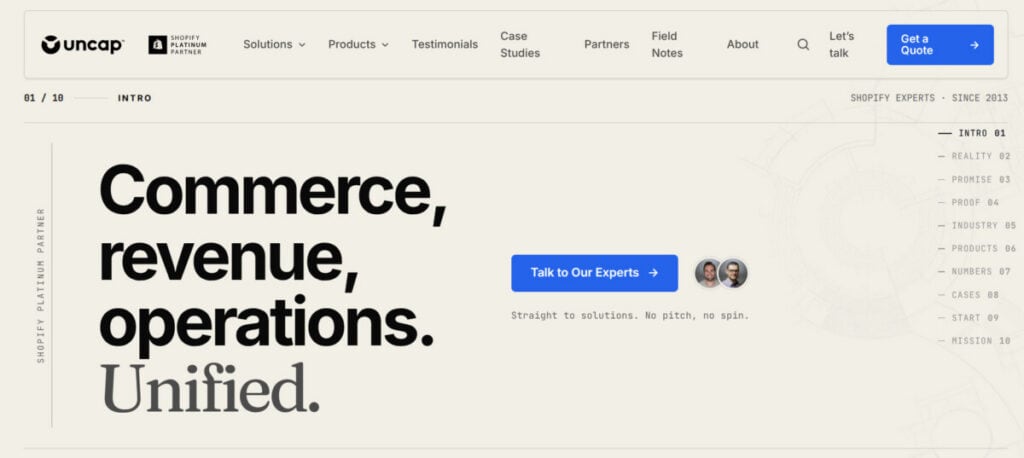
Uncap is a Shopify-focused ecommerce agency working across implementation, migration, B2B commerce, ERP integration, and custom development. Its capabilities can be useful for project managers coordinating ecommerce initiatives where the storefront needs to connect with existing operational systems.
Projects may involve product and inventory data, customer information, pricing, orders, dealer workflows, or B2B and DTC sales channels. Uncap also works with manufacturers, distributors, and businesses with complex catalogs, making it relevant to projects where ecommerce requirements extend beyond a conventional retail storefront.
Key strengths:
- Shopify development
- Ecommerce migrations
- ERP integrations
- Shopify B2B
- Custom development
- Complex catalogs
- B2B and DTC commerce
Limitation:
Its strong Shopify specialization makes it less suitable for projects committed to another ecommerce ecosystem.
3. Elogic Commerce
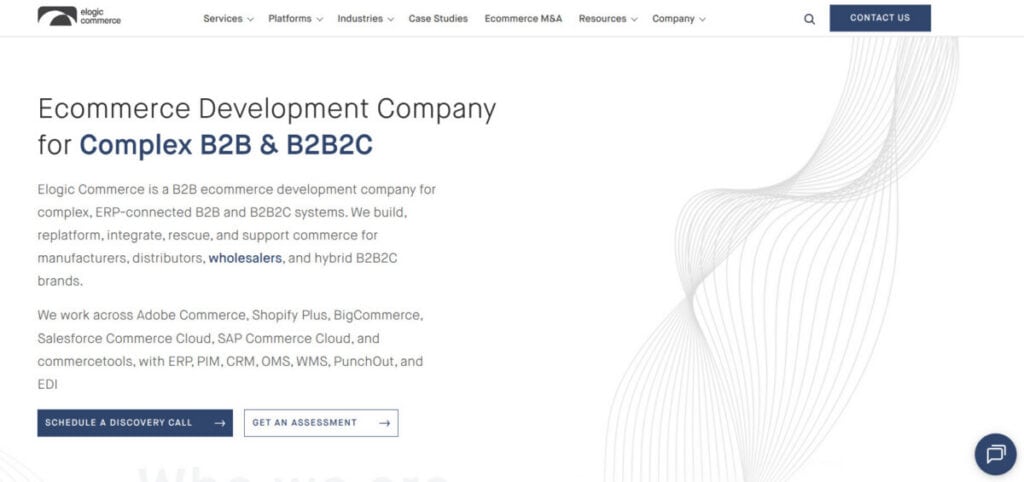
Elogic Commerce works on complex B2B, B2C, and B2B2C ecommerce implementations across multiple platforms. Its capabilities include ecommerce development, migrations, integrations, and connections with systems such as ERP, PIM, CRM, OMS, and WMS. This can make Elogic useful for project managers coordinating projects involving several technical systems and internal stakeholders.
Its work with Zeus Group, for example, involved moving a B2B ecommerce environment from WooCommerce to Shopify Plus and integrating SAP Business One, including customer-specific catalogs, pricing, inventory, and order workflows.
Key strengths:
- B2B and B2B2C ecommerce
- Platform migrations
- ERP and PIM integrations
- Complex system integrations
- Multi-platform development
- Enterprise ecommerce
Limitation:
Its enterprise capabilities may be broader than necessary for smaller or relatively straightforward ecommerce projects.
4. Americaneagle.com
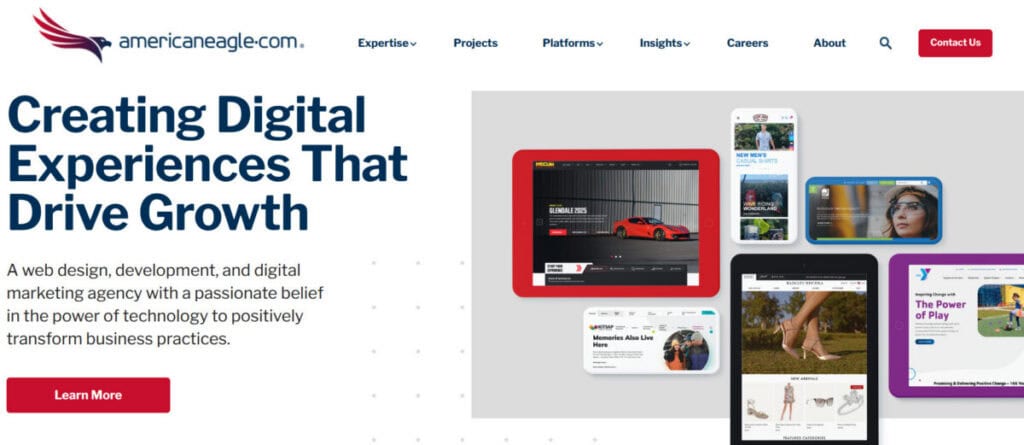
Americaneagle.com provides ecommerce development and digital services for organizations with complex online operations. Its ecommerce work can involve integrations with ERP and PIM systems, customer portals, large product catalogs, inventory visibility, custom purchasing workflows, and other requirements that often require coordination between ecommerce, IT, operations, and marketing teams.
The agency’s multi-platform capabilities can also be useful when platform selection or replatforming is part of the project scope.
Key strengths:
- Enterprise ecommerce
- ERP and PIM integrations
- Complex catalog support
- Customer portals
- B2B functionality
- Multi-platform capabilities
Limitation:
Its broad enterprise offering may be more extensive than project managers need for smaller ecommerce builds.
5. Absolute Web
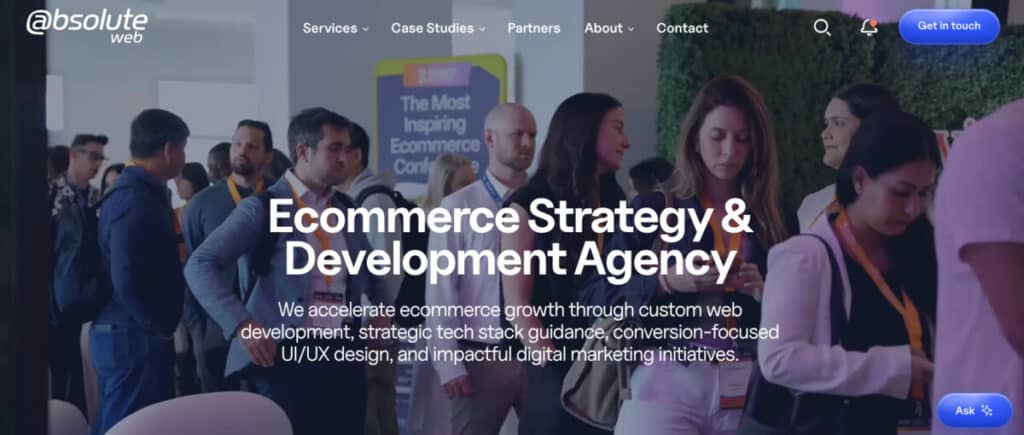
Absolute Web develops ecommerce experiences across Shopify and other commerce platforms, with capabilities spanning development, integrations, B2B functionality, and ongoing optimization. For project managers, its systems-integration experience can be particularly relevant when an ecommerce implementation depends on ERP, CRM, PIM, fulfillment, or other third-party technologies.
The agency also supports custom pricing, quoting, account workflows, and other functionality for projects with more specialized B2B requirements.
Key strengths:
- Ecommerce development
- Systems integration
- Shopify and B2B ecommerce
- ERP and enterprise integrations
- Custom workflows
- Multi-platform experience
Limitation:
Teams looking exclusively for a narrowly specialized Shopify agency may prefer a partner focused entirely on that ecosystem.
6. IWD Agency
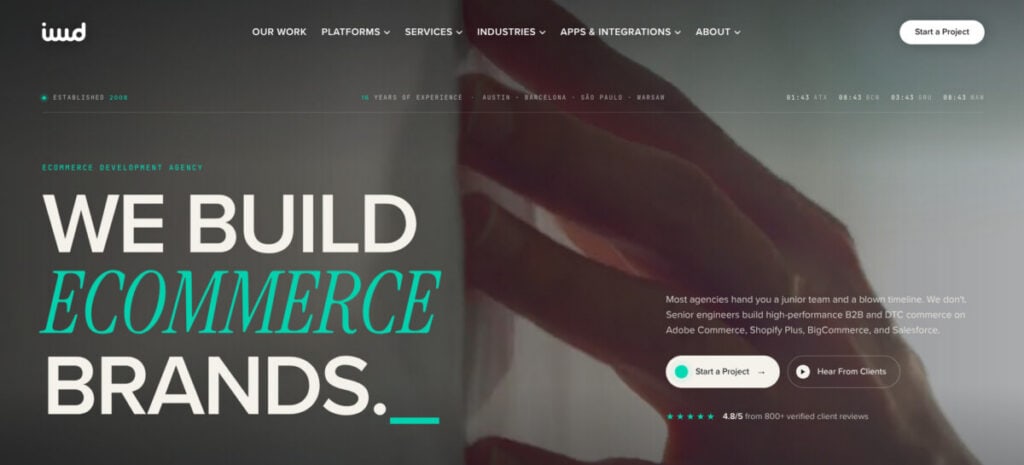
IWD Agency works across Shopify, Adobe Commerce, BigCommerce, and headless ecommerce environments. Its capabilities include migrations, B2B ecommerce, custom integrations, complex catalogs, product configuration, and specialized ecommerce development. This makes it relevant to project managers responsible for implementations where product architecture or purchasing workflows require substantial customization.
Its work with automotive, manufacturing, and other complex-product businesses also gives it experience with projects where standard ecommerce functionality may not be sufficient.
Key strengths:
- Multi-platform ecommerce
- Complex product catalogs
- B2B development
- Custom integrations
- Product configuration
- Migration projects
Limitation:
Its multi-platform approach may provide less platform-specific specialization than an agency dedicated exclusively to one ecommerce ecosystem.
7. Vaimo

Vaimo is a digital commerce agency focused on enterprise ecommerce, digital experience, and broader digital transformation projects. Its work spans commerce development, data management, strategy, integrations, and optimization. That breadth can make Vaimo relevant to project managers overseeing ecommerce initiatives that involve multiple markets, systems, business units, or digital channels.
The agency is particularly suited to projects where ecommerce forms part of a larger enterprise technology program rather than operating as a standalone storefront.
Key strengths:
- Enterprise ecommerce
- Digital commerce strategy
- Systems and data integration
- International ecommerce
- Complex implementations
- Digital transformation
Limitation:
Its enterprise orientation may be more extensive than mid-market businesses need for a focused ecommerce implementation.
8. 121eCommerce
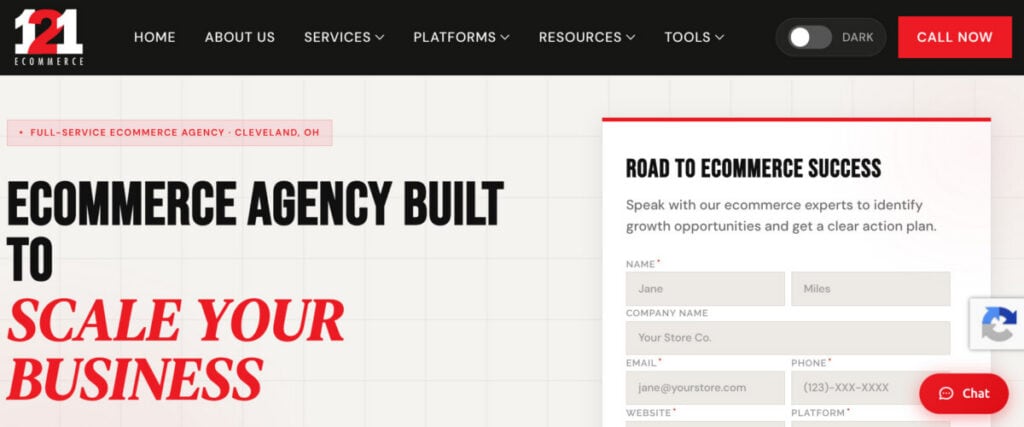
121eCommerce develops ecommerce solutions across Shopify, Adobe Commerce, and BigCommerce. Its experience includes migrations, B2B functionality, complex catalogs, product search, account-based purchasing, bulk ordering, and other specialized commerce workflows.
For project managers, this combination matters when a project involves both technical implementation and complex purchasing requirements, especially for B2B or technical-product businesses.
Key strengths:
- Ecommerce migrations
- B2B ecommerce
- Complex catalogs
- Product search and discovery
- Specialized purchasing workflows
- Multi-platform development
Limitation:
For projects involving highly specialized ERP environments, confirm the agency’s experience with the specific systems and data flows involved.
9. OuterBox

OuterBox combines ecommerce website development with SEO, UX, conversion optimization, and digital marketing. This combination can be useful for project managers responsible not only for launching an ecommerce site but also for ensuring that search visibility and customer acquisition are considered during the project.
Its broader marketing capabilities differentiate it from agencies focused primarily on ecommerce architecture and systems integration.
Key strengths:
- Ecommerce development
- UX and website design
- Ecommerce SEO
- Conversion optimization
- Digital marketing
- Search strategy
Limitation:
Projects requiring highly specialized ERP, B2B, or custom integration work should confirm that its technical capabilities align with the implementation requirements.
What Should Project Managers Look for in an eCommerce Agency?
The right agency depends on the scope and complexity of the project. Project managers should evaluate whether a potential partner has experience with the ecommerce platform being used, similar migration projects, required third-party systems, custom functionality, and the expected scale of the implementation.
Integration requirements should be identified early. ERP, PIM, CRM, inventory, fulfillment, payment, and other systems can create dependencies that affect project scope, testing, timelines, and launch readiness. Project managers should also consider what happens after launch.
Ecommerce platforms continue to evolve, so ongoing development, performance optimization, troubleshooting, and support may be just as important as the initial implementation.
Final Thoughts
The best ecommerce agency for a project manager is not necessarily the agency with the longest list of services. It is the one whose technical experience aligns with the actual scope of the implementation. Fyresite and Uncap are particularly relevant to Shopify-centered projects, while Elogic Commerce, Americaneagle.com, Absolute Web, IWD Agency, Vaimo, 121eCommerce, and OuterBox offer different combinations of multi-platform development, systems integration, enterprise commerce, and digital strategy.
For project managers, the key is to evaluate each agency against the project’s platform, integrations, migration complexity, internal resources, launch requirements, and long-term ecommerce roadmap.
Frequently Asked Questions
What are the best ecommerce agencies for project managers?
Fyresite, Uncap, Elogic Commerce, Americaneagle.com, Absolute Web, IWD Agency, Vaimo, 121eCommerce, and OuterBox all provide capabilities relevant to ecommerce implementation. The right choice depends on the platform, project scope, integrations, business requirements, and level of customization involved.
What should a project manager look for when choosing an ecommerce agency?
Relevant platform experience, migration expertise, integration capabilities, technical resources, experience with comparable projects, and ongoing support are important considerations. The agency should also be able to work effectively with the company’s internal stakeholders and existing technology environment.
When should an ecommerce project involve an ERP integration?
An ERP integration may be necessary when ecommerce needs to exchange information such as inventory, products, customer data, pricing, orders, invoices, or fulfillment status with back-office systems. Integration requirements should ideally be identified during project planning rather than after storefront development.
What should project managers plan for during an ecommerce migration?
Planning can include product and customer data, URLs and redirects, integrations, custom functionality, analytics, testing, SEO preservation, and launch sequencing. The exact requirements depend on the existing platform and ecommerce architecture.
Should project managers choose a platform before selecting an ecommerce agency?
Not always. If the platform has already been selected, working with an agency specializing in that ecosystem can be useful. For projects where platform selection is still open, a multi-platform agency may help evaluate options against business and technical requirements.
About the Author
Mika Kankaras is a B2B SaaS writer with over six years of experience covering marketing automation, AI workflows, customer experience software, and business technology. She specializes in testing and evaluating software and translating complex product features into clear, practical insights for business users.
LinkedIn: Mika Kankaras on LinkedIn.
Suggested articles:
- The Future of E-commerce: Key Insights for Success
- 10 Best Tech Solutions for Your E-Commerce Startup
- Benefits of Outsourcing for E-commerce

Daniel Raymond, a project manager with over 20 years of experience, is the former CEO of a successful software company called Websystems. With a strong background in managing complex projects, he applied his expertise to develop AceProject.com and Bridge24.com, innovative project management tools designed to streamline processes and improve productivity. Throughout his career, Daniel has consistently demonstrated a commitment to excellence and a passion for empowering teams to achieve their goals.